
Windows Errors? Fix Them Before They Spread
Repair common Windows errors and clear accumulated junk for a smoother, more stable PC - no reinstall needed.Free scan · no reinstallCrashes, No Sound, or Screen Glitches?
Random freezes, missing sound and display glitches usually trace back to one bad driver. Find and replace yours safely.Free scan · under a minuteiTechGuides is reader-supported. When you buy through links on our site, we may earn an affiliate commission. As an Amazon Associate I earn from qualifying purchases. Learn more
For stovetop popcorn, warm a thin layer of cooking oil in a covered pot, add kernels in a single layer, and shake the pot as they pop. Take it off the heat when the pops slow to about two seconds apart. For an air popper, follow the instructions for your exact model, use only the directed amount of kernels, and keep oil out of the popping chamber unless the manufacturer specifically says otherwise.
The methods share the same ingredient but not the same workflow. A pot requires hot oil, active listening, and careful lid handling. A hot-air appliance relies on forced air, a loading limit, and model-specific shutdown and cooling directions. In either case, stay close to the equipment while it runs, and season only after the kernels have popped.
Choose the method that fits your equipment
Both methods start with popcorn kernels, but they heat them differently. A stovetop pot uses cooking oil to transfer heat to the kernels; a hot air popper uses forced hot air. The stovetop method needs a lidded pot and attention while the kernels pop. An air popper needs an appliance and its model-specific instructions, including directions for kernel quantity and where the popped corn exits.
Do these 3 things before closing this tab:
1Repair Windows errors before they cause bigger problems2Fix the driver behind crashes, sound loss and screen glitches3Clear out junk files and repair common Windows errors| Method | What you need | How to manage the batch | Oil in the popping process |
|---|---|---|---|
| Stovetop | A large lidded pot or pan, kernels, and cooking oil | Shake the covered pot as needed; vent the lid away from your face when opening | Use a little cooking oil to cover the bottom of the pot |
| Hot air popper | An electric hot air popper and kernels | Follow the actual model’s loading and shutdown directions; allow hot parts to cool before handling | Do not put oil in the chamber unless the manufacturer explicitly instructs you to |
The practical trade-off is attention versus appliance setup. With a pot, you control the heat and can shake the batch, but you must listen and remove it promptly. With an air popper, the appliance supplies the heat movement, while you must respect its loading limit, chute arrangement, controls, and cool-down warnings. Neither method is established as a universal winner for taste or yield. Choose based on the equipment you have and whether you prefer to monitor a pot or use an appliance.
#1 Best Overall

- One 8 lb. jug of Orville Redenbacher's Original Gourmet Popcorn Kernels
- Enjoy light, fluffy popcorn with these 100% natural gourmet popcorn kernels
- Pop up some deliciousness with gluten free, Non-GMO Project Verified yellow popping corn
- Get creative with your snacking; add candies, pretzels, nuts, fruits or toppings for added yum
- Great for game night, movie night or anytime snacking
How to make stovetop popcorn
Ingredients and equipment
- Popcorn kernels
- Cooking oil, enough to cover the bottom of the pot with a thin layer
- A large pot with a lid
- Optional salt, herbs, or other toppings for after popping
Sunflower, olive, canola, corn, and coconut oils are among the options listed by the National Popcorn Board. The guidance is to use enough oil to cover the bottom, not to fill the pot deeply. Avoid popping in butter: it can burn at the high heat used to pop kernels. Add butter as a topping after popping instead. If you use a measured recipe, remember that the amount is an example rather than an equipment-independent rule; pot dimensions and batch size vary.
Set up before heating
Use a pot large enough to leave room for the kernels to expand into popped corn. Put the lid within reach before turning on the heat. Keep the pot handle positioned so it is not easy to bump while you listen and shake. Have a heat-safe place ready for the hot pot once it leaves the burner. These steps let you concentrate on the popping sound instead of searching for equipment during the short popping window.
Stovetop steps
- Pour enough oil into the pot to cover its bottom. Warm it over medium-high heat.
- Add enough kernels to form a single layer on the bottom, coat them in the oil, and cover the pot. A single layer helps the kernels contact the heated surface rather than sit in a pile.
- Stay nearby and listen. Shake the covered pot as needed to reduce the chance of kernels burning. Keep the lid on while the kernels are actively popping.
- When the pops slow to about two seconds apart, turn off the heat and move the pot off the burner. Durham County Public Health’s Fresh Popcorn recipe gives a similar stopping range of two to three seconds between pops.
- Lift the lid so steam escapes away from your face. Kernels can still pop as you open the pot, so keep your hands and face clear.
- Transfer or serve the popcorn, then season it with salt, herbs, butter, or other toppings.
The two-second cue is a practical signal, not a reason to wait for every last kernel. Removing the pot promptly helps limit scorching. The Popcorn Board’s advice is to stay nearby and use your ears rather than leaving the pot unattended. Its page summarizes the approach with the sentence, “The best tip is to stay near and play it by ear.”
Quick wins for a faster PC:
Clear out junk files and repair common Windows errorsFree Scan →Fix the driver behind crashes, sound loss and screen glitchesFind Drivers →What to listen for
Early pops may be separated by noticeable pauses. As more kernels open, the sound becomes rapid and continuous. Near the end, the gaps lengthen again. Start preparing to shut off the heat when the popping clearly slows, and use roughly two seconds between pops as the stopping point. Durham County’s recipe allows two to three seconds. Waiting for absolute silence exposes the already-popped corn to more heat and can scorch it.
Opening the lid safely
Steam collects beneath a covered pot. Open the lid so the first plume travels away from your face and hands, and do not lean over the pot. A few kernels may still pop when the lid is lifted. Once the steam has escaped, keep the hot lid on a heat-safe surface. The pot, lid, oil, and popcorn can all remain hot after the burner is off.
Rank #2
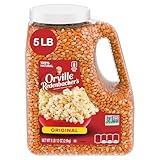
- Contains (1) 5 lb., 12 oz. container of Orville Redenbacher’s Original Yellow Gourmet Unpopped Popcorn Kernels, offering a bulk supply of popcorn
A measured recipe example
Durham County Public Health’s DINE / NC SNAP-Ed Fresh Popcorn recipe uses 2 tablespoons of vegetable oil and 1/4 cup of kernels in a large lidded pot. It directs cooks to shake the pot often and stop when pops are two to three seconds apart. Treat those quantities as one recipe example, not a universal ratio: pot size and shape, heat source, and batch size differ. If your pot cannot keep the kernels in a single layer at that amount, use a smaller batch or a larger pot rather than piling kernels deeply.
How to use a hot air popper
Follow the instructions for your model
Air poppers are not all identical. Check the appliance manual for how many kernels to add, where to load them, how to position the chute or bowl, and how the appliance signals that popping is finished. Do not assume that one model’s capacity, controls, timing, or accessories apply to another. The appliance’s directions take precedence over a generic air-popper routine.
- Place the popper on a stable surface and set up the chute or receiving bowl as its manual directs. Make sure the receiving vessel is positioned to catch the stream of popped corn.
- Measure and add the instructed amount of kernels to the designated loading area. Do not add an extra scoop simply because there is room in the bowl; the manual’s quantity is tied to the appliance’s airflow and capacity.
- Switch on the appliance using its controls. Do not add oil or butter to a hot air popper’s popping chamber unless the manufacturer explicitly directs you to do so. Oil belongs on the finished popcorn unless your model says otherwise.
- Remain nearby while the kernels pop and watch for the model’s normal end point. Follow the model’s shutdown instruction when popping ends. On the Cuisinart EasyPop CPM-150, the manual says to switch the appliance off when kernels stop popping.
- Let hot parts cool completely before handling the chute or chamber area. The CPM-150 manual warns that its popping chamber is extremely hot after use; that warning applies to that model, so check your own manual for its handling directions.
- Season the popped corn after it is collected. Keep the unpopped kernels and hot internal parts separate from hands until the appliance has cooled as directed.
What the cited Cuisinart example tells you—and what it does not
The manufacturer describes the EasyPop CPM-150 as a hot air popper that uses kernels without oil and can make up to 15 cups in three minutes or less. Those are the product’s stated features, not a promise for every air popper or every batch. A different appliance may accept a different kernel quantity, use different controls, or require a different chute arrangement.
The CPM-150C instruction booklet says not to put oil or butter in the popping chamber, to switch the appliance off when kernels stop popping, and to let the chamber cool completely before handling the chute or chamber area. These are manufacturer-specific operating and burn precautions. If your appliance manual differs, use its directions rather than transferring the CPM-150 procedure automatically.
What makes popcorn pop
A kernel contains water beneath a hard outer layer. As the kernel heats, that water expands under pressure until the outer layer bursts and the kernel turns inside out. The USDA National Agricultural Library describes this process in its explanation of how popcorn pops. The popping action therefore depends on more than surface heat: the kernel must retain enough internal moisture to build pressure.
Rank #3

- One 30 oz jar of Orville Redenbacher’s Original Gourmet Popcorn Kernels
- Unpopped popcorn kernels that you can pop at home for a fun and delicious popcorn experience
- Gourmet popcorn kernels that you can top with your favorite topping or Orville Redenbacher’s butter-flavored popcorn oil
- Tender popcorn kernels pop up light and fluffy and have a crispy exterior and a tender interior
- 100% whole grain popcorn kernels that are also gluten free and 100% natural
Moisture inside the kernel matters: the Popcorn Board says kernels need about 13.5%–14% moisture to pop properly. Kernels that have become too dry may leave more unpopped kernels, regardless of the method. Store unpopped kernels in an airtight container in a cool place to help preserve their moisture. The same storage principle applies whether you plan to use a pot or an air popper; changing the heating method does not restore moisture that has been lost.
Troubleshoot unpopped or scorched kernels
Many kernels remain unpopped
- Check kernel freshness and storage. Dry kernels may not pop as well because they cannot generate the needed internal pressure. Keep them airtight in a cool place.
- Consider the moisture remedy suggested by the Popcorn Board. It suggests adding a tablespoon of water to a jar of kernels, shaking the jar periodically until the water is absorbed, then waiting two to three days before trying the kernels again. This is a suggested remedy, not a guaranteed fix. Do not treat it as a substitute for following an appliance’s loading directions.
- Check the batch instructions. For an air popper, use the quantity and loading method stated in its manual. For stovetop cooking, keep the kernels in a single layer rather than piling them up.
- Use the sound cue rather than chasing every kernel. Once pops are about two seconds apart, remove a stovetop batch from heat. Some kernels may remain unpopped even when the batch is properly finished.
The popcorn scorches
- Stay beside the pot, shake it as needed, and take it off the heat as soon as popping slows to about two seconds apart.
- Do not wait for every kernel to pop; some unpopped kernels are preferable to scorching the popped batch.
- Use the recipe’s oil amount as a starting example only. A thin layer covering the pot bottom is the general stovetop direction; adding much more is not required by the cited method.
- If the bottom layer is crowded, adjust the batch so kernels can remain in a single layer. The Durham County quantities are illustrative, not a requirement for every pot.
The air popper seems to need oil
Do not pour oil into the popping chamber just to imitate the stovetop method. Hot air poppers use a different heating method, and a manufacturer may prohibit oil or butter in the chamber. Check the manual for your model; the CPM-150 manual specifically says not to put either in its chamber. Add any desired oil or butter after the popped corn has been collected, unless your appliance documentation expressly provides another procedure.
The batch is difficult to collect
Recheck the appliance’s chute and receiving-bowl directions. Air poppers differ in how popped corn exits, and the product page or manual may specify the bowl position. Do not handle a chute or chamber that is still hot; the Cuisinart manual identifies the popping chamber as extremely hot immediately after use and calls for complete cooling before handling those areas.
Yield, seasoning, and nutrition
The Popcorn Board gives a rough yield estimate of one ounce of unpopped kernels per quart of popped popcorn. It is an estimate, not a guaranteed conversion: kernel type and popping results can affect the amount. Use it for broad planning rather than as a promise that every ounce will fill exactly one quart.
USDA Agricultural Research Service reported in 2021 that a 3-cup serving of air-popped popcorn has about 100 calories before toppings. The same source says one serving provides about 15% of the amount of fiber most people need each day. Those figures refer to air-popped popcorn and do not include butter, salt, or other additions. Toppings change the nutrition of the finished snack, so account for them separately.
Rank #4

- One 30 oz jar of Orville Redenbacher’s Original Gourmet Popcorn Kernels
- 4g Fiber Per Serving
- With 4g Fiber Per Serving
- Add a pop of fun to everyday occasions
- These 100% natural, non-GMO popcorn kernels pop for a delicious treat or gluten-free snack after school
For a plain batch, season after popping with salt or herbs. If adding butter, drizzle it over the finished popcorn rather than using it as the popping fat. For oil-popped popcorn, the amount and type of oil used also affect the finished snack. Air-popping omits oil from the popping chamber in the cited Cuisinart model, but it does not make toppings calorie-free; measure or account for whatever you add afterward.
Independent reader supportYour contribution helps us test, update, and keep practical guides available for everyone.Stovetop or air popper: a practical comparison
Choose the stovetop route when you have a suitable lidded pot and want to control the oil and batch directly. It requires active listening, occasional shaking, and careful steam management. Choose an air popper when you have the appliance and prefer its forced-air process. That route shifts the key decisions to the manual: kernel amount, loading location, chute or bowl placement, controls, shutdown, and cooling.
On oil, the described stovetop method uses a thin layer to cover the pot bottom, while the cited hot-air model uses kernels without oil and prohibits oil or butter in its chamber. On batch handling, a pot is moved off the burner as popping slows; the CPM-150 is switched off when kernels stop popping. On capacity, the Cuisinart product page states up to 15 cups in three minutes or less for that model, while the Popcorn Board’s one-ounce-per-quart figure is only a rough general estimate. The sources do not establish a universal taste, speed, or yield winner.
Sources for the specific guidance
- National Popcorn Board, “Preparing Perfect Popcorn”: stovetop preparation, oil choices, popping cues, kernel moisture, storage, and the advice to stay nearby and listen.
- Durham County Public Health DINE / NC SNAP-Ed, “Fresh Popcorn”: an example recipe using 2 tablespoons of vegetable oil and 1/4 cup of kernels, plus its two-to-three-second stopping cue.
- USDA National Agricultural Library, “How Does Popcorn Pop?”: the kernel’s pressure and moisture mechanism.
- USDA Agricultural Research Service, “Popcorn: A Healthy, Whole Grain Snack” (2021): the 3-cup air-popped serving, calorie estimate, fiber context, and topping caveat.
- Cuisinart, “EasyPop Hot Air Popcorn Maker CPM-150,” and Cuisinart Canada’s CPM-150C instruction booklet: product claims and operating and burn precautions for that model.
Frequently Asked Questions
How much oil should I use for stovetop popcorn?
Use enough cooking oil to cover the bottom of the pot with a thin layer. Durham County’s example uses 2 tablespoons of vegetable oil with 1/4 cup of kernels, but those quantities are not universal requirements.
The Tool Desk
Outbyte Driver Updater FREEScan for outdated or missing drivers - takes under a minuteDriver Scan →Outbyte PC Repair FREEClear out junk files and repair common Windows errorsFree Scan →When should I stop stovetop popcorn?
Turn off the heat and move the pot off the burner when pops slow to about two seconds apart. Durham County’s recipe gives a two-to-three-second range.
Best Value

- One 32-ounce bag of Yellow Popcorn Kernels
- With Amazon Saver, you’ll find affordable staples without the frills. Our essentials will help your grocery budget go further
- Shop smarter with Amazon Saver
Can I put butter in the pot while kernels pop?
The National Popcorn Board warns that butter can burn at popping heat. Add butter after popping instead.
Can I add oil to an air popper?
Only if the manufacturer explicitly directs you to. The cited Cuisinart CPM-150 instructions say not to put oil or butter in the popping chamber.
Why are so many kernels unpopped?
Kernels may have lost moisture. The Popcorn Board says proper popping requires about 13.5%–14% moisture and suggests airtight, cool storage. It also suggests adding a tablespoon of water to a jar, shaking until absorbed, and waiting two to three days before trying again; that remedy is not guaranteed.
What’s actually slowing this PC down?
Pick the symptom - the matching free tool is one click away.
How do I avoid steam burns?
Open a stovetop lid so steam escapes away from your face and keep hands clear because kernels may still pop. For an air popper, let the hot chute and chamber cool completely as your manual directs.
How much popcorn does an ounce of kernels make?
The Popcorn Board gives one ounce of unpopped kernels per quart of popped popcorn as a rough estimate. Actual yield varies with kernel type and popping results.
How many calories are in plain air-popped popcorn?
USDA Agricultural Research Service reported in 2021 that 3 cups of air-popped popcorn contain about 100 calories before toppings. Butter, salt, oil, and other additions change the finished snack.
The Bottom Line
For a pot, use a thin oil layer, keep kernels in one layer, shake as needed, and stop at roughly two seconds between pops. For an air popper, measure the directed kernels, keep oil out of the chamber unless the manual says otherwise, switch off as instructed, and let hot parts cool before handling. Store kernels airtight in a cool place, and season after popping.
Quick Recap
Product prices and availability are accurate as of the date/time indicated and are subject to change. Any price and availability information displayed on Amazon at the time of purchase will apply.

