
iTechGuides is reader-supported. When you buy through links on our site, we may earn an affiliate commission. As an Amazon Associate I earn from qualifying purchases. Learn more
For the complete Geralt saga, play the main games in release order: The Witcher, The Witcher 2: Assassins of Kings, The Witcher 3: Wild Hunt, then its expansions Hearts of Stone and Blood and Wine. Treat Thronebreaker and GWENT as optional side experiences rather than required chapters.
The recommended order at a glance
The safest order is also the simplest: follow CD PROJEKT RED’s release sequence for the Geralt games, then play the two Wild Hunt expansions in their release order. This preserves the progression of the main continuity without asking you to insert a separate spin-off into the middle of the trilogy.
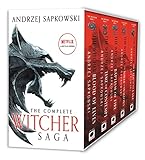

| Play position | Game | Release year | Format | How it fits |
|---|---|---|---|---|
| 1 | The Witcher | 2007 | Single-player role-playing game | Begins the post-book game continuity for Geralt of Rivia |
| 2 | The Witcher 2: Assassins of Kings | 2011 | Single-player role-playing game | Continues the first game’s continuity |
| 3 | The Witcher 3: Wild Hunt | 2015 | Single-player open-world role-playing game | Large-scale conclusion of the trilogy |
| 4 | Hearts of Stone | 2015 | Story expansion for Wild Hunt | First expansion; play after the base game |
| 5 | Blood and Wine | 2016 | Story expansion for Wild Hunt | Second expansion and the final step in this recommended route |
CD PROJEKT RED describes the series as following “the adventures of professional monster slayer Geralt of Rivia.” That description matters for ordering: the first three games form one Geralt-focused role-playing arc, while the expansions extend the third game rather than starting separate numbered entries.
Do these 3 things before closing this tab:
1Scan for outdated or missing drivers - takes under a minute2Repair Windows errors before they cause bigger problems3Fix the driver behind crashes, sound loss and screen glitchesWhy release order is the best first-play order
The first two games establish the game continuity
The novels and short stories are the broader literary background, but the games create their own post-book continuity. Starting with The Witcher lets you encounter that continuity at its beginning. The Witcher 2 then builds on the foundation established by the first game instead of making you reconstruct earlier game events after the fact.
#1 Best Overall
This is particularly useful if you care about how the series develops as a role-playing game. You see the design change from the 2007 release to the 2011 sequel and then to the much larger 2015 game. Playing backward would make the later interface, scale and presentation feel like the starting point and the earlier games like unexplained historical artifacts.
Wild Hunt is the trilogy’s destination
The Witcher 3: Wild Hunt is the open-world conclusion of the three-game Geralt arc. It can serve as an entry point because it is the most modern and expansive game in the trilogy, but a first-time player who starts there will meet a story designed as a culmination. The earlier games provide the context for why the third game carries that sense of continuity.
If you already know you will play only one game, Wild Hunt is the practical single-game choice. If your goal is to understand the series as a sequence rather than sample its most famous installment, begin with the 2007 game.
Outdated Drivers Are Slowing You Down
One free scan finds every outdated or missing driver and matches the right update for your exact hardware.Free scan · exact hardware matchPC Slower Than It Used to Be?
A free scan shows the junk files, broken settings and background clutter dragging Windows down - then fixes them in one click.Free scan · Windows 10 & 11The expansions have a clear internal order
Hearts of Stone was released before Blood and Wine, so it belongs first. Keeping that order avoids treating the second expansion as if it were the initial post-game chapter. Both are parts of the Wild Hunt experience, not separate numbered entries in a new trilogy.
What to expect from each main game
1. The Witcher (2007)
This is the starting point for the game-specific Geralt continuity. It is the correct first stop if you want every major game reference to arrive in the order the developers introduced it.
Do not judge the whole series by the age of this release. Its 2007 design reflects an earlier generation of computer role-playing games, and the later entries are substantially newer in presentation and scale. Its value in the sequence is narrative and historical: it establishes the version of Geralt and the game world that the sequels continue.
- Play it first when continuity is your priority.
- Expect a dated experience compared with the 2011 and 2015 releases.
- Keep notes on characters, decisions and terminology if you plan to take a long break before the sequel.
2. The Witcher 2: Assassins of Kings (2011)
The second game follows the first in release order and continues the post-book game continuity. It is the bridge between the original game and Wild Hunt, making it the most useful sequel to play before the third game if you want the trilogy’s development to feel deliberate rather than abrupt.
What’s actually slowing this PC down?
Pick the symptom - the matching free tool is one click away.
Because it is four years newer than the first game, you will notice a different technical baseline. That change is part of the appeal of release order: the series evolves in front of you instead of presenting its final form first and then moving backward.
Rank #2
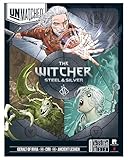
- HOW TO PLAY: Choose Geralt, Ciri, or the Ancient Leshen and duel opponents using unique decks, special powers, and sidekicks. Move across the map, play attacks and defenses, and reduce rival heroes to zero health to win the battle.
- ICONIC WITCHER HEROES: Command Geralt, Ciri who grows stronger with Source cards, or the Ancient Leshen who summons wolves and magic. Each hero in this fighting board game includes a sculpted miniature, health dial, and 30-card deck.
- MIX & MATCH EXPANDABILITY: Combine The Witcher Steel & Silver with other Unmatched game sets for crossover battles and matchups like Geralt vs. Dracula or Ciri vs. Alice. Every mix introduces new tactics, deck interactions, and endless replayability.
- BATTLEFIELD VARIETY: Fight across a double-sided board featuring Witcher-themed arenas that influence movement, positioning, and strategy. Map-specific layouts keep battles fresh and replayable.
- ALL-IN-ONE SET: This Unmatched board game works as a complete game for 2 to 3 players ages nine and up, with everything included out of the box. Perfect as a standalone experience or a powerful addition to any Unmatched collection.
- Play it after The Witcher, not before.
- Use it as the immediate preparation for Wild Hunt.
- Do not place either expansion here; both belong to the third game.
3. The Witcher 3: Wild Hunt (2015)
This is the trilogy’s large open-world conclusion and the point at which the earlier game continuity reaches its broadest scale. It is also the entry most often recommended to people who want to try one Witcher game rather than commit to all three.
CD PROJEKT RED said on May 27, 2026, that Wild Hunt had sold more than 60 million copies since its 2015 release, won more than 250 Game of the Year awards and received 1,000 industry awards. Those figures explain why many players start here, but popularity does not change its position as the third main chapter.
Finish the base game before moving to the expansions if you want the cleanest progression. The expansions are designed as additions to Wild Hunt, not replacements for the base campaign.
4. Hearts of Stone (2015)
Play Hearts of Stone after the main Wild Hunt experience and before Blood and Wine. Its position is straightforward because it is the first of the two story expansions released for the game.
If you are buying a package rather than separate content, check the listing carefully. The name “Complete Edition” is commonly used for a version that includes the base game and both expansions, but inclusion can depend on platform and region. Confirm that the product description specifically lists Hearts of Stone and Blood and Wine before purchasing.
5. Blood and Wine (2016)
Blood and Wine is the second expansion and the final item in the recommended first-play route. Saving it for last keeps both expansion releases in order and gives you a natural endpoint after the trilogy.
Its position does not mean you must complete every optional activity in the base game first. The important ordering rule is simply to play it after Hearts of Stone if you want the release sequence.
Should you play The Witcher before The Witcher 3?
Yes, if you want the complete three-game arc. The first two games establish the game continuity, and Wild Hunt is its open-world conclusion. That is the strongest case for beginning at the start.
Rank #3
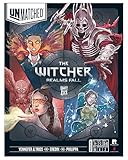
- HOW TO PLAY: Select a hero and battle opponents using unique decks and special abilities. Move across the battlefield, play attacks and defenses, and unleash powers from Witcher lore to outmaneuver rivals and reduce their health to zero.
- ICONIC WITCHER HEROES: Control Eredin or the duo of Triss and Yennefer, each with sculpted miniatures, health dials, and 30-card decks. Distinct mechanics inspired by their stories highlight their abilities in this competitive fighting board game.
- MIX & MATCH EXPANDABILITY: Combine The Witcher set with any other Unmatched game sets for crossover battles and matchups like Geralt vs. Medusa or Eredin vs. Sherlock Holmes. Every mix adds new tactics, deck interactions, and endless replayability.
- FOUR NEW BATTLEFIELDS: Engage in duels across four Witcher-themed arenas that add variety, map-specific challenges, and immersive settings for each fight, keeping matches fresh and strategically dynamic.
- ALL-IN-ONE SET: This Unmatched board game works as a complete game for 2 to 4 players ages nine and up, with everything included out of the box. Perfect as a standalone experience or a powerful addition to any Unmatched collection.
No, if your practical goal is to experience only one modern role-playing game. Wild Hunt is a valid entry point for a player who accepts that some history will be compressed or encountered through context rather than played directly. You can then decide whether to go back to the older games.
Use this decision rule:
- Choose the full sequence if continuity, character history and the evolution of the series matter most.
- Start with Wild Hunt if time, hardware or tolerance for older design makes three games unrealistic.
- Do not start with an expansion unless you already own and understand the base game; expansions are additions to Wild Hunt, not introductory chapters.
Where Thronebreaker: The Witcher Tales fits
What it is
Thronebreaker: The Witcher Tales was released in 2018 as an optional, self-contained single-player campaign in the Witcher setting. It is a narrative game, but it is not a required chapter in Geralt’s three-game arc.
When to play it
The least confusing placement is after the main trilogy and its expansions. At that point you have completed the core Geralt route and can approach Thronebreaker as another story in the setting rather than wondering whether it replaces one of the numbered games.
The Tool Desk
Outbyte Driver Updater FREEScan for outdated or missing drivers - takes under a minuteDriver Scan →Outbyte PC Repair FREERepair Windows errors before they cause bigger problemsFix Now →You can also play it earlier if you specifically want a separate Witcher narrative and do not mind leaving the main sequence. There is no need to interrupt the trilogy to fit it between The Witcher 2 and Wild Hunt.
Why it is optional
Its campaign is self-contained, so understanding it is not a prerequisite for the trilogy. Conversely, finishing the trilogy is not required to identify what Thronebreaker is: a separate single-player story in the same setting.
Is GWENT: The Witcher Card Game part of the story?
Its format is different
CD PROJEKT RED describes GWENT: The Witcher Card Game as a free-to-play strategic collectible card game in the Witcher universe. It is a competitive and collectible card game, not a numbered single-player role-playing chapter.
How to place it in your order
There is no required story position for GWENT. Play it whenever you want the card-game format, or skip it without creating a gap in the Geralt trilogy. Individual matches should not be treated as canonical plot progression in the way the main role-playing games are.
Recommended Free Tools
If your aim is narrative completion, finish the main sequence and expansions first. If your aim is strategic card play, GWENT can stand alone as an optional activity in the Witcher universe.
Rank #4

- COMPETE IN ICONIC WITCHER STORIES: Step into the shoes of legendary characters like Geralt, Yennefer, Ciri, Vesemir, or Dandelion, and retell epic tales from the Witcher universe.
- TABLEAU-BUILDING STRATEGY: Build your card tableau using unique character abilities and tactical decisions to influence the story’s direction and outcome.
- GROUP DECISIONS WITH INDIVIDUAL GLORY: The actions of all players shape the story, but only one can be remembered as the true hero at the end of the game.
- DEEP STRATEGIC GAMEPLAY FOR 1-5 PLAYERS: Designed for 1 to 5 players, the game offers competitive play with high replayability through various story paths.
- DELUXE EDITION WITH PREMIUM COMPONENTS: This edition features high-quality cards and artwork, perfect for Witcher fans and tabletop game enthusiasts.
Release order versus “story order”
For these games, release order is the dependable story-order recommendation because the available official descriptions establish release dates and product formats, not a scene-by-scene chronology for every spin-off. The evidence supports a firm sequence for the main trilogy and expansions, while the side games are best treated as optional rather than forced into a precise timeline.
| Question | Best answer |
|---|---|
| What is the story order for the main Geralt arc? | Play the three numbered games in release order, then Hearts of Stone, then Blood and Wine. |
| Can Thronebreaker be placed between the numbered games? | It can be played separately, but it is clearer as optional content after the main route. |
| Does GWENT need a place in the story timeline? | No. It is an optional competitive collectible card game, not a required story chapter. |
| Is there a complete scene-by-scene chronology for every spin-off? | The official material summarized here does not establish one, so do not present a precise spin-off timeline as settled fact. |
A practical route for different kinds of players
If you want every major game
- Complete The Witcher.
- Continue with The Witcher 2: Assassins of Kings.
- Play The Witcher 3: Wild Hunt.
- Add Hearts of Stone.
- Finish with Blood and Wine.
- Play Thronebreaker afterward if you want another self-contained narrative.
- Try GWENT separately if you want its competitive card-game format.
If you want one game
Choose The Witcher 3: Wild Hunt. It is the modern open-world conclusion and the most practical single purchase for a player who will not play the entire trilogy. To get the expansion route in one purchase, look for The Witcher 3: Wild Hunt Complete Edition, and verify the platform, region and listed contents before buying.
If you want the shortest narrative route
Play Wild Hunt first, then Hearts of Stone and Blood and Wine. This skips the first two games but retains the third game and its two expansions. It is a time-saving compromise, not the full continuity route.
Quick wins for a faster PC:
Repair Windows errors before they cause bigger problemsFix Now →Scan for outdated or missing drivers - takes under a minuteDriver Scan →Clear out junk files and repair common Windows errorsFree Scan →If you prefer separate stories
Play Thronebreaker on its own after sampling the setting, or start with GWENT if card strategy is your priority. Neither choice should be described as completing the numbered Geralt saga.
Independent reader supportYour contribution helps us test, update, and keep practical guides available for everyone.Current editions and what is available in 2026
The Witcher 3: Wild Hunt — Remastered
The Witcher 3: Wild Hunt — Remastered launched on September 29, 2026, for PC, PlayStation 5, Xbox Series X|S, Nintendo Switch 2 and Battle.net. CD PROJEKT RED describes it as a free upgrade for qualifying existing owners.
This release does not change the recommended narrative order. It is still the third main game, followed by Hearts of Stone and Blood and Wine. If you are choosing a version for a new playthrough, check the store page for the exact edition, platform and expansion contents.
Songs of the Past
CD PROJEKT RED has announced Songs of the Past, a paid third expansion for The Witcher 3, planned for 2027 on current-generation platforms. It introduces the new region of Letten.
Because it is announced rather than released, it should not be inserted into a “play now” checklist. Once it launches, its final placement may depend on the developer’s release details and any recommended level or progression guidance. Until then, the playable expansion order remains Hearts of Stone followed by Blood and Wine.
Buying and installation checks
The order is narrative, but a few purchasing mistakes can disrupt it.
- Check the platform. The Remastered edition’s listed platforms are PC, PlayStation 5, Xbox Series X|S, Nintendo Switch 2 and Battle.net. A package sold for one platform may not grant ownership on another.
- Read the contents list. “Complete Edition” should be verified against the listing to ensure it includes the base game, Hearts of Stone and Blood and Wine.
- Check your region. Edition names and upgrade eligibility can vary by storefront region.
- Do not buy an announced expansion as if it were available. Songs of the Past is planned for 2027, so it is not part of a currently playable purchase.
- Keep save files organized. If you play the games over months or years, label saves by game and expansion so you do not accidentally resume an older branch.
Common ordering mistakes and fixes
Starting with Blood and Wine
Problem: You begin with the second expansion because it appears as a separate menu item or bundle component.
Fix: Complete the base Wild Hunt experience first, then play Hearts of Stone, and reserve Blood and Wine for last.
Free tools Windows power users keep installed
One-click scans. No signup required.
Putting Thronebreaker between games two and three
Problem: You assume every Witcher-branded release is a numbered continuity chapter.
Fix: Keep the trilogy together. Treat Thronebreaker as a self-contained optional campaign after the main route unless you have a specific reason to take a side trip.
Treating GWENT matches as story chapters
Problem: You expect competitive card matches to advance the Geralt narrative.
Fix: Separate the formats in your plan. The single-player role-playing games carry the main arc; GWENT is optional card play in the Witcher universe.
Assuming the newest edition changes the sequence
Problem: You see the 2026 Remastered release and assume it is a new numbered sequel.
Fix: Treat it as a version of Wild Hunt for ordering purposes. It occupies the third-game position, with the two released expansions after it.
Final recommended checklist
- Use release order for the main trilogy.
- Play Hearts of Stone before Blood and Wine.
- Start with Wild Hunt only when you want a one-game or shorter route.
- Place Thronebreaker outside the trilogy as optional self-contained content.
- Do not include GWENT in the story order.
- Verify platform, region and expansion contents before buying a Complete Edition.
- Keep Songs of the Past out of a current play-now list until its planned 2027 release.
For the fullest first playthrough, follow the five-step sequence from the 2007 original through the two Wild Hunt expansions. For a modern single-game introduction, begin with Wild Hunt; for everything outside Geralt’s numbered arc, add Thronebreaker or GWENT only as optional side content.
Quick Recap
Product prices and availability are accurate as of the date/time indicated and are subject to change. Any price and availability information displayed on Amazon at the time of purchase will apply.

