
Crashes, No Sound, or Screen Glitches?
Random freezes, missing sound and display glitches usually trace back to one bad driver. Find and replace yours safely.Free scan · under a minutePC Slower Than It Used to Be?
A free scan shows the junk files, broken settings and background clutter dragging Windows down - then fixes them in one click.Free scan · Windows 10 & 11iTechGuides is reader-supported. When you buy through links on our site, we may earn an affiliate commission. As an Amazon Associate I earn from qualifying purchases. Learn more
For most newcomers, play the numbered Street Fighter families in release order: Street Fighter, Street Fighter II, Street Fighter Alpha, Street Fighter III, Street Fighter IV, Street Fighter V, then Street Fighter 6. That sequence follows the series as players first experienced it and makes the changes between generations easier to understand. If the fictional timeline matters more than historical context, use the story order later in this guide: Street Fighter, Alpha, II, IV, V, III, and 6.
You do not need to play every revision. Choose one representative release from each family, then add alternate editions only if you want to study a particular balance version, roster, or arcade era.
| # | Preview | Product | Price | |
|---|---|---|---|---|
| 1 |

|
Street Fighter 30th Anniversary Collection (Nintendo Switch) | $25.98 | Buy on Amazon |
| 2 |
|
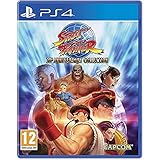
Street Fighter 30th Anniversary Collection (PS4) | $25.70 | Buy on Amazon |
| 3 |

|
Street Fighter 30th Anniversary Collection (PS4) | $29.90 | Buy on Amazon |
| 4 |

|
Street Fighter: 30th Anniversary Collection | $43.70 | Buy on Amazon |
Release order: the best first playthrough
Release order is the simplest route for a first visit to the series. It preserves the way Capcom introduced its characters, systems, and story chapters over time. The first Street Fighter appeared in arcades in 1987. Street Fighter II followed in 1991 and became the breakout hit that established the franchise for a mass audience. The latest numbered entry, Street Fighter 6, launched on June 2, 2023.
| Play position | Mainline family | Original arcade or launch year | Practical representative |
|---|---|---|---|
| 1 | Street Fighter | 1987 | The original game, or a modern collection that includes it |
| 2 | Street Fighter II | 1991 | Super Street Fighter II Turbo is a practical endpoint for the II branch |
| 3 | Street Fighter Alpha | 1995 | One Alpha release, or the Alpha material in a collection |
| 4 | Street Fighter III | 1997 | Street Fighter III: 3rd Strike is the commonly recognized endpoint |
| 5 | Street Fighter IV | 2008 | Street Fighter IV, with an expanded edition only if desired |
| 6 | Street Fighter V | 2016 | Street Fighter V |
| 7 | Street Fighter 6 | June 2, 2023 | Street Fighter 6 |
The years in the table identify the debut of each family, not every later port or revision. Arcade editions, console releases, and regional launches can have different dates.
#1 Best Overall
- Celebrate 30 years of the most iconic fighting game series
- Relive the titles that made gaming history
- New gameplay options including online play
- Hadoken your way down memory lane
- Learn more about fan-favorite characters
Why release order works
Each family represents a distinct stage in the series. Playing in this order lets you see the original foundation, the large-scale expansion of II, the prequel-oriented Alpha branch, the different direction of III, and the later return to numbered sequels with IV, V, and 6. It also prevents you from treating a later quality-of-life feature as something the earlier game was expected to have.
The route is forgiving. You can sample the first game briefly, spend more time with the version of II you select, and move on without completing every arcade ladder. The objective is to understand the family represented at each step, not to turn the series into a checklist of nearly identical revisions.
Story order: the core Street Fighter timeline
The main continuity places the games in a different order from their release dates. Use this sequence when the fictional chronology is your priority:
| Story position | Game or family | What the position means |
|---|---|---|
| 1 | Street Fighter | The opening chapter of the core sequence |
| 2 | Street Fighter Alpha | The prequel branch that follows the first game in this chronology |
| 3 | Street Fighter II | The next major chapter after Alpha |
| 4 | Street Fighter IV | The story resumes after II |
| 5 | Street Fighter V | Set between IV and III |
| 6 | Street Fighter III | The later-era chapter that follows V |
| 7 | Street Fighter 6 | The latest numbered entry in the sequence |
This is the core numbered-game continuity with the Alpha prequel branch. It is not a complete ordering of every licensed appearance, crossover, film, anime, comic, or alternate fighting-game line.
Where Street Fighter V fits
Street Fighter V is the point that causes most timeline confusion. It was released in 2016, after Street Fighter IV, but its story is set before Street Fighter III. Capcom describes it as taking place “between the events of Street Fighter IV and Street Fighter III.” In story order, therefore, V follows IV and precedes III, even though players bought it many years after III.
Rank #2
- Relive the titles that made gaming history – Includes the original Street Fighter released in 1987 which introduced two of gaming’s most famous heroes, Ryu and Ken. Additionally, the iconic Street Fighter II became the first ever one-on-one video game that gave players a choice of characters, including the debut of the series’ strongest female Chun-Li. Street Fighter III continued the core numbered series and was the first game to introduce the parry attack.
- New gameplay options including online play – Players can utilize save states as they progress through the game offline. In addition, players can duke it out online in four classic titles (Street Fighter II: Hyper Fighting, Super Street Fighter II: Turbo, Street Fighter Alpha 3 and Street Fighter III: Third Strike). In addition to Ranked and Casual Match options, up to four players can join a lobby where they can play against the CPU while waiting for their match.
- Hadoken your way down memory lane – Revisit historic moments from the series and explore an interactive timeline of events that helped create one of the world’s leading fighting game series. View stunning pieces of concept art and uncover little known facts behind each game release.
- Learn more about fan-favourite characters – Scroll through character bios and learn new details about series favorites whilst enjoying sprites and key animations to see how the classic fighters have evolved over time.
That placement is useful when you want the narrative to explain the transition into the era represented by III. It is not a reason to insert V earlier in a release-order playthrough. Keep the two routes separate: release order reflects publication history, while story order reflects the fictional chronology.
Choose your route before buying or installing anything
Route A: first-time player
- Start with the original Street Fighter, using a collection or rerelease if that is the most convenient way to access it.
- Move to one representative Street Fighter II version. Super Street Fighter II Turbo is a practical choice for the branch’s endpoint.
- Play one Street Fighter Alpha release.
- Use Street Fighter III: 3rd Strike as your representative for the III branch.
- Play Street Fighter IV, then Street Fighter V.
- Finish with Street Fighter 6, the current numbered entry.
This route gives you historical context without requiring every intermediate revision.
Route B: story-first player
- Play Street Fighter.
- Continue with Street Fighter Alpha.
- Play Street Fighter II.
- Continue to Street Fighter IV.
- Play Street Fighter V before starting Street Fighter III.
- Finish the older continuity with Street Fighter III, then move to Street Fighter 6.
Story order answers “what happens next?” more directly, but it makes the design and release history less obvious.
Route C: limited time
Use one title per family and treat each as a representative sample. The minimum useful set is the original game or a collection version, one II edition, one Alpha edition, 3rd Strike, IV, V, and 6. You can stop after any family and still have a coherent snapshot of that era; there is no requirement to finish every arcade mode before moving on.
How the different editions fit together
Names such as Champion Edition, Super, Turbo, Ultra, 2nd Impact, 3rd Strike, and Arcade Edition generally identify revisions or expansions within a family rather than wholly separate chronological chapters. They may adjust the roster, balance, presentation, or available modes, but a first playthrough does not require all of them.
Rank #3
- Celebrate 30 years of the most iconic fighting game series
- Relive the titles that made gaming history
- New gameplay options including online play
- Hadoken your way down memory lane
- Learn more about fan favorite characters.Remember the tunes
| Family | Revision guidance | Why you might choose it |
|---|---|---|
| Street Fighter | Use the original or a collection release that contains it. | It establishes the starting point of the series. |
| Street Fighter II | Choose one edition; Super Street Fighter II Turbo is a practical endpoint. | It gives you a mature version of the II branch without requiring every update. |
| Street Fighter Alpha | Choose one Alpha title or collection entry. | It represents the prequel family in either route. |
| Street Fighter III | 3rd Strike is the commonly recognized endpoint. | It provides a clear representative of the III branch. |
| Street Fighter IV | Use the base family or an expanded edition that is available to you. | It is the bridge between II and V in the story. |
| Street Fighter V | Use the available edition, remembering its story placement. | It covers the chapter between IV and III. |
| Street Fighter 6 | Use the current numbered release for the final stop. | It is the latest entry in the mainline sequence. |
What to expect from each family
Street Fighter (1987)
The 1987 arcade original is the starting reference for the series. It is valuable for context even if you decide not to spend many hours with it. A modern collection can be more convenient than locating original arcade hardware, and the exact controls or display options depend on the release you use.
Street Fighter II (1991)
II is the essential historical stop because its 1991 release became the franchise’s global breakthrough. The branch received multiple revisions, so select one rather than attempting to play every edition in publication order. Super Street Fighter II Turbo is a practical representative when you want a late, consolidated version of the family.
Street Fighter Alpha (1995)
Alpha is a prequel branch in the story sequence, but it arrived after II. That is why it moves earlier in a story-first route and later in a release-first route. One Alpha title is enough to understand its place; collecting every revision is optional.
Street Fighter III (1997)
The III family follows V in the core story even though it was released in 1997. Street Fighter III: 3rd Strike is widely treated as the endpoint of that branch and is the most practical single representative for a newcomer.
Street Fighter IV (2008)
IV is the fourth numbered family and the first numbered release after the III era. In the fictional timeline, it comes after II and before V. Use one version for your first pass; additional editions are only necessary if you specifically want their differences.
What’s actually slowing this PC down?
Pick the symptom - the matching free tool is one click away.
Rank #4
- 5055060967096
Street Fighter V (2016)
V is both a later release and an earlier story chapter. Keep that distinction visible when planning your route. Capcom reported 6.1 million units shipped for Street Fighter V in the February 2022 announcement discussing Street Fighter 6; that figure is a shipment report, not a measure of current players or sales in every region.
Street Fighter 6 (June 2, 2023)
Street Fighter 6 is the latest numbered entry and the natural endpoint for either route. Capcom announced its launch for June 2, 2023. Platform editions and later content can differ, so check the edition available for your system rather than assuming that every release includes identical material.
Collections, platforms, and edition checks
Capcom’s Street Fighter 30th Anniversary Collection is a relevant way to access classic material from the II, Alpha, and III families. The exact games included, platform support, regional packaging, and physical stock can vary. Confirm the product listing for your region before buying, especially when comparing a physical copy with a digital release.
Street Fighter 6 may be sold as a platform-specific physical edition. Verify the system, language or region, included bonuses, and whether the listing is a base game or an expanded package. Inventory and edition contents are volatile, so a current listing is more reliable than an old price or box description.
Recommended Free Tools
How to organize a playthrough without getting lost
- Write down your chosen route. Label it “release” or “story” before you begin; switching between them halfway through is the usual source of confusion.
- Pick one edition per family. Record the exact subtitle, such as Super Street Fighter II Turbo or 3rd Strike, so you know which revision you played.
- Use the first session to learn the controls. Do not judge an entire family after a few minutes of unfamiliar input timing. Give yourself a short practice period, then decide whether to continue.
- Move on when the family’s role is clear. You do not need to complete every route, unlock every item, or repeat every revision to understand the chronology.
- Return for comparisons later. Once you have reached 6, revisit alternate editions if you want to study how a roster, balance pass, or presentation changed within a branch.
What is outside this guide
This ordering covers the numbered mainline games and the Alpha prequel branch. Street Fighter EX, crossover games, films, anime, comics, and other adaptations may use separate continuities or reinterpret events. Treat them as optional side material rather than inserting them into the seven-step core sequence.
Likewise, a collection’s menu order is not automatically a story order. A publisher may arrange games by arcade release, platform, or product packaging. Use the release and story tables above when deciding where a title belongs.
A simple decision rule
Choose release order if you want to understand how the franchise evolved and if you are new to fighting games or to Street Fighter. Choose story order if you already know the series and care most about the fictional sequence, especially the position of V. If you are short on time, select one representative edition from each family and finish with 6; the revisions are optional depth, not mandatory chapters.
Quick Recap
Product prices and availability are accurate as of the date/time indicated and are subject to change. Any price and availability information displayed on Amazon at the time of purchase will apply.
Do these 3 things before closing this tab:
1Clear out junk files and repair common Windows errors2Scan for outdated or missing drivers - takes under a minute3Repair Windows errors before they cause bigger problems
