
The Tool Desk
Outbyte PC Repair FREEClear out junk files and repair common Windows errorsFree Scan →Outbyte Driver Updater FREEFix the driver behind crashes, sound loss and screen glitchesFind Drivers →iTechGuides is reader-supported. When you buy through links on our site, we may earn an affiliate commission. As an Amazon Associate I earn from qualifying purchases. Learn more
The most reliable Jellyfin library is predictable before Jellyfin scans it: keep movies and television in separate libraries, use consistent title-and-year folders, name episodes with season and episode numbers, add provider IDs when a match is uncertain, and exclude clutter with .ignore. Keep network mounts available during scans and maintenance, leave Jellyfin’s database on local storage, and grant only the filesystem permissions required for the features you use.
Start with separate Movies and Shows libraries
When a collection contains both films and television, create a dedicated Movies library and a dedicated Shows library instead of pointing one mixed library at everything. Jellyfin’s mixed-library guidance says some functions may not work correctly in a mixed library and recommends dedicated movie or show libraries for the best results.
| Arrangement | Best use | What to expect |
|---|---|---|
| Separate Movies and Shows libraries | Most collections | Recommended by Jellyfin for the best feature compatibility and predictable browsing. |
| One mixed library | A deliberate, small collection where a single view is more important than specialized behavior | Some functions may not work correctly as they would in separate movie or show libraries. |
Use the content type Jellyfin is designed to organize: movies, TV shows, music, or photos. In the administrator interface, open Dashboard, choose Libraries, select Add Media Library, choose the appropriate content type, and point it at the matching top-level folder. The exact wording can vary slightly by Jellyfin release, but the principle is the same: one library type per content tree.
Build a stable folder layout before scanning
Jellyfin reads media directly from filesystem paths. A clear hierarchy makes identification easier and gives you a place to apply exclusions without affecting unrelated content.
#1 Best Overall

- [ Massive 22TB Capacity ] Instantly expand your storage space for files, photos, videos, music, and more. Ideal for backups, media libraries, and OS system storage. (Estimated 20TB Capacity after formatted)
- [ High-Speed USB 3.2 Gen 2 Interface ] Enjoy ultra-fast data transfer speeds up to 10Gbps for efficient file management and quick backups.
- [ 7200 RPM Hard Drive Inside ] Designed for reliable 24/7 operation with robust performance for desktop or console storage needs
- [ Plug-and-Play Compatibility ] Fully compatible with both Windows and macOS systems. No software installation required.
- [ Durable & Silent Design ] Features a stylish design enclosure with long-term durability and a fanless cooling system for whisper-quiet operation.
Movies
Give each movie its own folder and include the release year in the folder name. Keep the playable file inside that folder with a matching or similarly descriptive name.
Movies/
  Example Film (2022)/
    Example Film (2022).mkv
The title and year are identification aids, not a guarantee that every unusual edition or multipart release will be interpreted correctly. If Jellyfin selects the wrong work, add an explicit provider identifier as described below rather than relying on increasingly complicated filenames.
TV shows
Put each series in its own folder, group episodes beneath season directories, and use the conventional SxxEyy pattern in episode filenames.
Do these 3 things before closing this tab:
1Repair Windows errors before they cause bigger problems2Fix the driver behind crashes, sound loss and screen glitches3Clear out junk files and repair common Windows errorsShows/
Example Series (2021)/
Season 01/
Example Series S01E01.mkv
Example Series S01E02.mkvThe official identifier examples use a series folder, a Season 01 directory, and filenames such as S01E01. This is a practical baseline for ordinary series. The available guidance does not establish a complete rule set for every special, edition, multipart, or other edge-case arrangement, so do not assume that an uncommon layout will be interpreted identically without checking the current Jellyfin naming documentation for that case.
Keep each library’s root narrow
Point a Movies library at the directory that contains movie folders and a Shows library at the directory that contains series folders. Avoid using a broad parent such as an entire drive if it also contains downloads, personal videos, temporary files, or backups. A narrow root reduces accidental matches and makes exclusions easier to reason about.
Name files so Jellyfin can identify them
Use readable titles, years where relevant, and season-and-episode numbers. Avoid making a filename carry every piece of metadata; the goal is to provide stable clues that remain understandable when you move or back up the files.
Rank #2
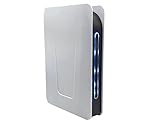
- [ Massive 4TB Storage Capacity ] Store thousands of photos, videos, games, music files, and important documents in one convenient external hard drive.
- [ Fast USB 3.0 Performance ] High-speed USB 3.0 interface provides reliable and efficient data transfer for backups and everyday storage use.
- [ Plug & Play Convenience ] Easy setup with no additional software required; compatible with Windows PCs, Mac computers, gaming consoles, and more.
- [ Reliable Backup & Storage Solution ] Ideal for expanding storage, system backups, gaming libraries, videos, photos, and everyday file organization.
- Use the release year in a movie folder, for example
Example Film (2022). - Use a series folder with season directories such as
Season 01. - Put
S01E01,S01E02, and similar markers in episode filenames. - Keep the title text consistent between the folder and the media file when practical.
- Do not depend on a folder name alone when two works have similar titles or a remake could be selected.
These conventions are the documented examples and a dependable starting point, not a claim that they cover every accepted Jellyfin filename pattern. For unusual releases, use a provider ID and verify the resulting match after a scan.
Resolve ambiguous matches with provider IDs
If Jellyfin identifies a file as the wrong movie or series, add a supported metadata-provider identifier to the media filename or its containing folder. Jellyfin accepts identifiers from TMDB, TVDB, and OMDb; OMDb identifiers are English-only according to the identifier guidance. More than one identifier may be specified.
Accepted identifier styles
The documented syntax allows an identifier in square brackets, parentheses, or braces. Examples include:
Example Film (2022) [tmdbid-680]
Example Film (2022) {tmdb-680}
Example Film (2022) [imdbid-tt12801262]
Use the provider’s actual ID for your title. The numbers above demonstrate formatting only and are not assertions about the identity of a real film. You can combine identifiers when that helps disambiguate a title, but do not add IDs copied from an unrelated result.
Where to find the IDs
- TMDB and IMDb IDs are visible in the title URL on the respective service.
- TVDB IDs are shown on the title’s page.
A complete example using illustrative formatting looks like this:
Free tools Windows power users keep installed
One-click scans. No signup required.
Movies/
  Example Film (2022) [tmdbid-12345]/
    Example Film (2022).mkv

Shows/
  Example Series (2021) [tvdbid-79168]/
    Season 01/
      Example Series S01E01.mkv
After adding or changing an ID, rescan the affected library and inspect the item’s title, year, cast, artwork, and episode list. If the wrong match remains, verify that the ID belongs to the intended work and that the library type is correct.
Rank #3

- Entry-level NAS Personal Storage:UGREEN NAS DH2300 is your first and best NAS made easy. It is designed for beginners who want a simple, private way to store videos, photos and personal files, which is intuitive for users moving from cloud storage or external drives and move away from scattered date across devices. This entry-level NAS 2-bay perfect for personal entertainment, photo storage, and easy data backup (doesn't support Docker or virtual machines).
- Set Your Devices Free, Expand Your Digital World: This unified storage hub supports massive capacity up to 64TB.*Storage drives not included. Stop Deleting, Start Storing. You can store 22 million 3MB images, or 2 million 30MB songs, or 43K 1.5GB movies or 67 million 1MB documents! UGREEN NAS is a better way to free up storage across all your devices such as phones, computers, tablets and also does automatic backups across devices regardless of the operating system—Window, iOS, Android or macOS.
- The Smarter Long-term Way to Store: Unlike cloud storage with recurring monthly fees, a UGREEN NAS enclosure requires only a one-time purchase for long-term use. For example, you only need to pay $459.98 for a NAS, while for cloud storage, you need to pay $719.88 per year, $2,159.64 for 3 years, $3,599.40 for 5 years. You will save $6,738.82 over 10 years with UGREEN NAS! *NAS cost based on DH2300 + 12TB HDD; cloud cost based on 12TB plan (e.g. $59.99/month).
- Blazing Speed, Minimal Power: Equipped with a high-performance processor, 1GbE port, and 4GB RAM on Board, this NAS handles multiple tasks with ease. File transfers reach up to 125MB/s—a 1GB file takes only 8 seconds. Don't let slow clouds hold you back; they often need over 100 seconds for the same task. The difference is clear.
- Let AI Better Organize Your Memories: UGREEN NAS uses AI to tag faces, locations, texts, and objects—so you can effortlessly find any photo by searching for who or what's in it in seconds. It also automatically finds and deletes similar or duplicate photo, backs up live photos and allows you to share them with your friends or family with just one tap. Everything stays effortlessly organized, powered by intelligent tagging and recognition.
Create and scan the libraries in a controlled order
- Prepare the folders. Create separate top-level directories such as
MoviesandShows, then arrange the media beneath them using the naming patterns above. - Make storage available. Mount any Samba or NFS share in the operating system before Jellyfin starts a scan. Confirm that the mount is readable by the Jellyfin service account.
- Add the Movies library. In Jellyfin, open Dashboard > Libraries > Add Media Library, choose the movie content type, and add the Movies path.
- Add the Shows library. Repeat the process with the show content type and the Shows path. Do not combine both roots merely to reduce the number of library tiles.
- Run an initial scan. Let Jellyfin finish indexing before making many additional changes. This gives you a clear baseline for troubleshooting.
- Review the results. Check a representative movie, a series with multiple episodes, and a title that uses a provider ID. Confirm that seasons, artwork, and metadata appear as expected.
- Correct exceptions. Rename the affected folder or add an ID, then refresh or rescan the library. Avoid repeatedly changing several variables at once.
For large collections, make changes in batches and scan after each batch. That makes it easier to identify which rename, identifier, or permission change fixed—or caused—a problem.
Keep unwanted files out with .ignore
Downloads, samples, subtitle experiments, artwork working files, and backup folders can create clutter or false matches. Jellyfin supports a .ignore file for excluding content from a directory.
Exclude an entire directory
Place an empty file named .ignore in the directory you want excluded. Jellyfin will exclude that directory and its descendants. This is useful for a complete subtree such as a staging or archive folder.
What’s actually slowing this PC down?
Pick the symptom - the matching free tool is one click away.
Movies/
  Unreleased/
    .ignore
    private-cut.mkv
Exclude selected files or subdirectories
In Jellyfin 10.11.x and later, a non-empty .ignore file can contain patterns. Use it when only certain files or child directories should be skipped. The behavior of pattern contents is version-dependent; older Jellyfin versions did not interpret the file contents in the same way.
Movies/
  .ignore
  *.tmp
  samples/
  artwork-work/
Use the patterns appropriate to the version you run, and keep the file in the directory whose descendants you want it to affect. After creating or editing .ignore, refresh or rescan the library. An existing item may remain visible until Jellyfin updates its index, so do not judge the exclusion before the scan completes.
When an ignore rule appears ineffective
- Confirm the filename is exactly
.ignore, including the leading dot. - Check whether you are running Jellyfin 10.11.x or later before relying on pattern contents.
- Verify that the rule is in the correct ancestor directory.
- Run a library refresh or rescan after changing the file.
- Check that another library is not also pointing at the same media path.
Represent unavailable titles with .disc placeholders
Jellyfin can catalog a title that is not currently playable by using a .disc placeholder with the normal media naming convention. The placeholder file may be empty, yet Jellyfin can attach metadata and artwork to it.
Rank #4
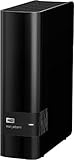
- 14TB storage capacity Provides ample space for storing documents, photos, music and more.
- USB 3.0 interface Offers an easy-to-use connection to devices. Backward compatible with USB 2.0 for simple connection to your computer.
- Data transfer rates up to 5 Gbps with USB 3.0 Enable a rapid response when updating files.
- Automatic backup options Allow you to use compatible software to back up your files to the server.
- Compatible with Mac and PC For flexible installation options.
Movies/
  Example Film (2022)/
    Example Film (2022).disc
If you want to identify a recognized medium, place the medium type immediately before .disc:
Example Film (2022).dvd.disc
Example Film (2022).bluray.disc
This approach is useful for preserving a catalog entry while a disc is unavailable or a replacement file is pending. It does not create playable video; it gives Jellyfin a named catalog item to which metadata and artwork can be attached.
Choose how much artwork and chapter data to generate
Chapter images
Chapter-image extraction is optional and configured per library. Jellyfin stores the extracted images in its metadata directory rather than inside the media folders. Extraction can be computationally intensive and can make scans slower, particularly in a large library.
Enable it only when timeline thumbnails are valuable to you. Avoid very small automatic chapter intervals unless you have a specific need: the web player may have to render a large number of timeline markers, which can make navigation less efficient.
Artwork and sidecar metadata
The available Jellyfin guidance establishes that placeholder items can use associated artwork and that Jellyfin can work with adjacent metadata such as .nfo files. It does not establish a universal advantage for every metadata-storage strategy. Decide deliberately whether your workflow should keep metadata in Jellyfin’s metadata directory, alongside media files, or both.
If Jellyfin is expected to save .nfo files or subtitles into the media folders, its account needs write access. If you only need Jellyfin to see and play existing files, read and execute access is generally sufficient on the documented Windows service setup.
Best Value

- Compact, stackable, external storage solution designed to compliment the footprint of the 2010 to current Mac mini
- USB 3.2 (5Gb/s) connectivity
- Fast transfer speeds up to 208MB/s
- Compact, aluminum design with MagLev cooling fan; Stacks perfectly with Mac mini
- 3 Year OWC Limited Warranty
Keep network storage mounted and the database local
Jellyfin reads media from filesystem paths; it does not replace the operating system’s job of mounting remote storage. Mount Samba or NFS shares in the operating system and give Jellyfin the resulting local mount path. Keep Jellyfin’s database on local storage rather than placing the database itself on a network share.
Availability matters during more than interactive playback. Jellyfin warns that scheduled maintenance tasks can remove items from the library if the media storage is unavailable when those tasks run. A temporary outage can therefore look like mass deletion even though the files may still exist on the share.
Before a scan or maintenance task
- Confirm the Samba or NFS mount is online.
- Browse the mount as the operating-system account used by the Jellyfin service.
- Check that expected top-level folders and a sample media file are visible.
- Run scans and cleanup tasks only after connectivity is restored.
- Investigate mount failures before asking Jellyfin to remove missing items.
If a share is not reliably available at boot, arrange for the operating system to mount it before the Jellyfin service and its scheduled tasks start. The exact mount configuration depends on your operating system and network, so the important Jellyfin-side rule is that the path must remain stable and accessible.
Quick wins for a faster PC:
Repair Windows errors before they cause bigger problemsFix Now →Fix the driver behind crashes, sound loss and screen glitchesFind Drivers →Grant the minimum filesystem permissions
Windows service installations
For the documented Windows service setup, grant the Jellyfin service account read and execute access to the media folders. Those permissions allow Jellyfin to discover files and play them without giving the service authority to alter your collection.
Add modify or write access only for features that need to change the media directories, such as deleting files through Jellyfin’s interface or saving subtitles and .nfo metadata beside the media. Separate read-only playback from write-capable automation where possible.
Diagnosing permission failures
- If a library is empty, verify that the service account can traverse every parent directory, not only the final media folder.
- If playback fails while titles and artwork appear, check read permission on the actual media files and their containing directories.
- If subtitle or
.nfosaving fails, check for the required write or modify permission. - If a network share works in your interactive desktop session but not in Jellyfin, test access as the service account; mapped drives belonging to your user are not necessarily visible to a service.
Use a repeatable maintenance workflow
A good organization method is one you can repeat after adding new media. Use this checklist for every batch:
- Copy the media into the correct Movies or Shows root.
- Create a movie folder with title and year, or a series folder with its season directory.
- Name episodes with the season-and-episode marker.
- Add a TMDB, TVDB, or OMDb identifier when the title is ambiguous.
- Keep samples, temporary files, and staging directories outside the library or exclude them with
.ignore. - Confirm the storage mount is available and the Jellyfin account can read the files.
- Scan the affected library.
- Open the new item and verify the match, season structure, artwork, and playback.
- Fix a bad match by changing the name or ID, then rescan rather than manually editing many unrelated fields.
Document the naming and ID conventions you use. Consistency is more valuable than an elaborate scheme that only one person understands.
troubleshoot common organization problems
| Symptom | Likely cause | Action |
|---|---|---|
| A movie appears as the wrong title | Title collision, remake, or ambiguous filename | Add the correct TMDB, TVDB, or OMDb ID to the folder or file, then rescan. |
| Episodes are not grouped into seasons | Missing or inconsistent SxxEyy markers, or an unsuitable folder layout |
Use a series folder, Season 01-style directory, and episode names such as S01E01; rescan. |
| Temporary files appear in the library | No exclusion rule or an incorrectly placed .ignore |
Move the clutter outside the library root or add the appropriate empty or pattern-based .ignore, then refresh. |
| Items disappear after maintenance | Samba or NFS storage was unavailable during a scheduled task | Restore the mount, verify the path, and ensure future tasks run only while storage is online. |
| Jellyfin sees files but cannot save subtitles or metadata | The service has read-only access | Grant write or modify access only if those write features are required. |
| Scans take too long | Large collection, chapter-image extraction, or too many generated timeline markers | Review chapter-image settings and avoid unnecessarily small chapter intervals. |
Decide what belongs in the filesystem and what belongs in Jellyfin
Use the filesystem for durable organization: library roots, title folders, season directories, filenames, provider IDs, and exclusions. Use Jellyfin’s own metadata and artwork handling for presentation choices that do not need to travel with the media. Use sidecar files when your workflow specifically requires metadata to sit beside the media, remembering that Jellyfin needs write access to create or update them.
There is no need to add a provider ID to every correctly identified item. Reserve IDs for ambiguous titles, remakes, language variants, or files that repeatedly match incorrectly. That keeps ordinary names readable while giving Jellyfin an unambiguous key where it matters.
Quick Recap
Final organization checklist
- Movies and Shows are separate Jellyfin libraries.
- Movie folders include a recognizable title and year.
- Series have season directories and
SxxEyyepisode names. - Ambiguous titles carry a valid TMDB, TVDB, or OMDb identifier.
- Clutter is outside library roots or covered by a correctly placed
.ignore. - Unavailable catalog items use a correctly named
.discplaceholder when appropriate. - Chapter-image extraction is enabled only when its scan and storage cost is worthwhile.
- Samba or NFS shares are mounted by the operating system before Jellyfin scans or maintenance.
- The Jellyfin database remains on local storage.
- The service account has read and execute access, with write access added only for deliberate write features.
Product prices and availability are accurate as of the date/time indicated and are subject to change. Any price and availability information displayed on Amazon at the time of purchase will apply.

