
Free tools Windows power users keep installed
One-click scans. No signup required.
iTechGuides is reader-supported. When you buy through links on our site, we may earn an affiliate commission. As an Amazon Associate I earn from qualifying purchases. Learn more
For Game Boy and Game Boy Color games installed through EmuDeck, configure controls inside RetroArch’s Quick Menu, then save the layout either to the individual ROM or to its content directory. EmuDeck’s default RetroArch shortcuts are Select + R1 to save a state, Select + L1 to load one, and Select + D-pad Left/Right to change state slots. You can replace awkward button chords with Steam Input actions, including a face button, rear button, trackpad gesture, or radial-menu command.
Standalone mGBA follows a different path: it uses EmuDeck’s mGBA hotkey profile rather than RetroArch’s Quick Menu and remap-file system. The instructions below separate those two emulator setups so a change made for one does not get mistaken for a setting in the other.
Before you map anything
EmuDeck normally launches Game Boy and Game Boy Color ROMs in RetroArch with the Gambatte core. Start one of the games you want to configure and keep the Deck in Game Mode while testing. The first decision is the scope of your change:
- One ROM: use a game remap file. Only that title receives the layout.
- A broader group of ROMs: use a content-directory remap file. Every compatible game in that directory can use the same layout.
- Settings beyond buttons: save a RetroArch game or content-directory override as well. Overrides are separate from remap files and cover other per-game or per-directory options.
Keep the Game Boy A and B assignments conceptually separate from emulator hotkeys. A and B should control the virtual handheld; save, load, slot selection, and menus should remain emulator commands. This separation makes it much easier to identify whether an unexpected action comes from the ROM mapping or from Steam Input.
#1 Best Overall

- TMR Joysticks - Offering higher sensitivity, greater precision, and enhanced durability.
- 8BitDo Exclusive Wireless Technology - “8Speed”, it delivers an exceptionally stable 2.4G connection with ultra-low latency under 1ms. Engineered for rock-solid reliability, it features strong anti-interference and a 10m range with virtually no lag.
- Trigger Mode Switch - Easily switch between linear Hall Effect triggers and non-linear tactile triggers for optimal control across different gaming scenarios.
- 1000Hz Polling Rate (for 2.4G and wired connection). Customizable 6-Axis Motion Control. Turbo function. Rumble vibration. Support 8BitDo Ultimate Software V2.
- 2 Pro back paddle buttons, extra R4/L4 bumpers, and tactile bumpers & D-pad for enhanced control and faster response. Includes a multifunctional charging dock and USB-C adapter for seamless connectivity.
Map controls for a Game Boy game in RetroArch
Open the RetroArch Controls menu
- Launch the Game Boy or Game Boy Color ROM from your EmuDeck library.
- Open RetroArch’s Quick Menu with L3 + R3. EmuDeck also documents Select + R3 as an alternative Quick Menu shortcut.
- Select Controls.
- Choose Port 1 Controls (the wording may appear as the Port 1 control section) and assign the Game Boy directions, A, B, Start, and Select to the Deck inputs that feel natural.
Port 1 is the virtual player-one controller used by a normal Game Boy title. You can put the Game Boy directions on the left stick or D-pad, and place A and B on whichever face buttons you can reach without confusing them with RetroArch hotkeys. Start and Select can stay on their physical Deck buttons unless you need those buttons for a custom Steam Input command.
Save the layout for only this ROM
- Remain in the Quick Menu after testing the controls.
- Open Controls → Manage Remap Files.
- Choose Save Game Remap File.
This file is tied to the currently running game. A different Game Boy ROM will not inherit it, which is useful when one title benefits from an unusual arrangement or when you are experimenting without changing the rest of your library.
Save the layout for a content directory
- Open Controls → Manage Remap Files.
- Select Save Content Directory Remap File.
A content-directory remap is the practical choice when a group of ROMs is stored together and you want the same Game Boy layout across that group. Because it applies more broadly than a game remap, check which directory the ROMs use before saving. If both a game remap and a directory remap exist, the more specific game setting is the one to review first when diagnosing an unexpected assignment.
Save other RetroArch settings with an override
Button assignments are handled by remap files. If you also changed settings such as emulator behavior or presentation options and want those changes to persist, use RetroArch’s Overrides menu and save either a game override or a content-directory override. Do not assume that saving a remap file also stores every other Quick Menu setting; the two persistence mechanisms serve different purposes.
Rank #2

- Compatible with Windows and Android.
- 1000Hz Polling Rate (for 2.4G and wired connection)
- Hall Effect joysticks and Hall triggers. Wear-resistant metal joystick rings.
- Extra R4/L4 bumpers. Custom button mapping without using software. Turbo function.
- Refined bumpers and D-pad. Light but tactile.
Use save states and switch slots
EmuDeck’s documented RetroArch hotkeys let you save progress at any point without using the Game Boy game’s built-in save system. The default combinations are:
| Action | Deck shortcut | What it does |
|---|---|---|
| Save State | Select + R1 | Writes a snapshot of the current emulation state to the active slot. |
| Load State | Select + L1 | Restores the snapshot stored in the active slot. |
| Next Save State Slot | Select + D-pad Right | Moves to the next numbered state slot. |
| Previous Save State Slot | Select + D-pad Left | Moves to the previous numbered state slot. |
| Quick Menu | L3 + R3 or Select + R3 | Opens RetroArch’s in-game menu. |
Use slots deliberately rather than repeatedly overwriting one file. For example, keep one slot before a difficult section and another after a successful attempt. Change the slot first, then press the save combination; otherwise you may overwrite the snapshot you intended to preserve. When loading, verify that you are on the same slot you saved. A load command restores the active slot, not necessarily the most recently used slot.
These are EmuDeck’s documented defaults for its RetroArch setup. If a profile has been customized, the visible behavior can differ, so check the active Steam Input layout and RetroArch controls before treating a shortcut as broken.
Replace awkward chords with Steam Input
Steam Input is a separate layer above RetroArch. It can turn a single Deck control into an emulator hotkey, but it does not replace the Game Boy A/B mapping in RetroArch. Keeping the layers separate prevents a face button intended for the game from accidentally becoming a save command.
Rank #3
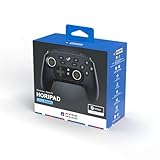
- Rechargeable wireless pro controller designed for Steam for Windows 11/10 & Steam Deck
- Dedicated buttons for quick access to Steam menus
- Capacitive Touch Thumbsticks, gyro sensor, programmable buttons, & more
- Also functions as an XInput controller for Windows 11/10 (wired mode only)
- Compatible with Steam and Steam Deck
Open the layout editor in Game Mode
- With the game selected or running, open its controller icon in Game Mode.
- Select the currently active controller layout.
- Choose an EmuDeck Steam Input profile. EmuDeck documents an EmuDeck – Steam Deck Radial Menus profile, including blank profiles that can be edited for per-game actions.
- Assign the desired control to the relevant emulator hotkey, then save the layout.
You can use a face button, rear button, trackpad input, or radial-menu action. A rear button is convenient for save or load because it leaves the Game Boy controls untouched. A radial menu is useful when you want several state slots or emulator commands available without consuming multiple physical buttons.
Design a reliable custom layout
- Choose a control that is unlikely to be pressed during normal play for destructive commands such as loading a state.
- Keep save and load on distinct inputs; using neighboring controls makes accidental loads more likely.
- Label radial-menu entries clearly, especially if more than one slot command is included.
- Test the layout in a disposable section of the game before relying on it for important progress.
If a Steam Input command does nothing, first confirm that the command is being sent to the emulator rather than to the game. Then reopen RetroArch’s Quick Menu and check the active controls. A Steam profile can be correct while the emulator’s own hotkey configuration has been changed, and the reverse is also possible.
Standalone mGBA: what changes
Standalone mGBA is not RetroArch running the Gambatte core, so RetroArch’s Quick Menu, remap-file locations, and Select-plus-button defaults should not be treated as mGBA instructions.
Windows Errors? Fix Them Before They Spread
Repair common Windows errors and clear accumulated junk for a smoother, more stable PC - no reinstall needed.Free scan · no reinstallCrashes, No Sound, or Screen Glitches?
Random freezes, missing sound and display glitches usually trace back to one bad driver. Find and replace yours safely.Free scan · under a minuteUse the mGBA hotkey profile
EmuDeck provides an EmuDeck – Controller Hotkeys Steam Input profile for mGBA. When mGBA ROM shortcuts are launched through Steam, EmuDeck says this profile is applied automatically. Its purpose is to expose mGBA’s emulator actions through the Deck controller, including the hotkeys needed for the standalone emulator.
Rank #4

- 6-in-1 USB-C Hub: Connect, charge, and play without limits thanks to a 100W PD-IN port for fast charging, a 4K HDMI output, a 1Gbps Ethernet port, two USB-A ports at 5Gbps each, and one USB-C port at 5Gbps.
- See Every Detail: The 4K@60Hz HDMI port brings your games to life with stunning resolution and crystal-clear imagery.(Note: The USB-C data port does not support screen mirroring.)
- Ultra-Speed Ethernet: Dominate online play with lightning-fast 1,000 Mbps Ethernet, where every millisecond counts.
- Unlimited Connections: Maximize your gameplay with versatile USB ports, offering 5Gbps speed for mice, keyboards, game controllers, and more.
- What You Get: Anker USB-C Hub (6-in-1, For Handheld Game Console), 8.66-inch (220 mm) built-in USB C cable, welcome guide, 18-month warranty, and our friendly customer service.
If mGBA hotkeys are missing
- Open the game’s controller layout in Game Mode.
- Review the selected Steam Input profile.
- Select the appropriate EmuDeck mGBA controller-hotkey profile if it is not already active.
- Save the layout and relaunch the ROM so the profile is initialized for the new session.
Because mGBA uses its own profile, do not troubleshoot it by looking for RetroArch’s Manage Remap Files menu. For a standalone mGBA game, start with the Steam Input profile and mGBA’s own controls; for a RetroArch game, start with the Quick Menu and the RetroArch remap scope.
RetroArch and standalone mGBA compared
| Question | RetroArch through EmuDeck | Standalone mGBA through EmuDeck |
|---|---|---|
| Where are Game Boy controls changed? | RetroArch Quick Menu → Controls → Port 1 Controls. | Through mGBA’s EmuDeck Steam Input hotkey profile and the standalone emulator’s controls. |
| How are settings made persistent? | Save Game Remap File for one ROM; Save Content Directory Remap File for a broader directory; use Overrides for other settings. | Use the mGBA Steam Input profile and its saved layout; RetroArch remap files do not apply. |
| How is the in-game menu opened? | L3 + R3, with Select + R3 also documented by EmuDeck. | No RetroArch Quick Menu; use the mGBA profile and standalone emulator controls. |
| Which save-state chords apply? | Select + R1 saves, Select + L1 loads, and Select + D-pad Left/Right changes slots in EmuDeck’s documented RetroArch defaults. | Use the mGBA Controller Hotkeys profile; RetroArch’s chords are not a reliable mGBA reference. |
| Can Steam Input provide custom buttons? | Yes. Map face buttons, rear buttons, trackpads, or radial-menu actions to emulator hotkeys. | Yes, through the mGBA-focused EmuDeck profile and any saved custom layout. |
Use an external Bluetooth controller
An external Bluetooth game controller is optional. The Deck’s built-in controls support the complete remapping and save-state workflow, while an external pad can provide a different button shape or make two-player use more comfortable.
Steam Input supports external controllers, but EmuDeck cautions that Steam Input can conflict with a controller’s native features. If an emulator needs direct access to the controller and inputs are being intercepted or duplicated, disable Steam Input for that game and restart it. Restarting matters because the emulator may retain the old input path until a new session begins.
The Tool Desk
Outbyte Driver Updater FREEFix the driver behind crashes, sound loss and screen glitchesFind Drivers →Outbyte PC Repair FREEClear out junk files and repair common Windows errorsFree Scan →Choose the right remap scope
Use a game remap when
- Only one ROM needs an unusual layout.
- You are testing a configuration and do not want to affect other games.
- The title uses a different control emphasis and benefits from a custom arrangement.
Use a content-directory remap when
- The ROMs in one directory should share the same Game Boy layout.
- You want a consistent setup across a library stored together.
- You are comfortable applying the change to every compatible game in that directory.
Use an override as well when
- You changed RetroArch options beyond controller assignments.
- A game or directory needs persistent emulator settings in addition to its button map.
Start with the narrowest scope that solves the problem. It is easier to widen a proven game layout to a directory than to discover later that a broad remap changed several titles unexpectedly.
Best Value

- Multi-Platform PC Gaming Controller: Working with Switch, PC, Android, and iOS devices via Bluetooth, wired, and wireless dongle connections.
- Hall Effect Joysticks: Delivering enhanced recentering performance for smoother control and superior anti-drift capability. Plus, with anti-friction rings.
- 2-Way Trigger Lock: With trigger stops, gamers can toggle between short and long pull positions. Additionally, gamers can activate hair trigger mode by pressing M+LT/RT (triggers must be in the long pull position).
- 1000Hz Polling Rate: This ensures that your inputs are registered almost instantaneously, minimizing lag and maximizing your performance during competitive play.
- Mechanical Circular D-pad: Designed for quick reactions and accuracy in every direction, this D-pad elevates your gaming experience with superior responsiveness.
Troubleshoot common mapping problems
The Quick Menu will not open
Try both documented combinations: L3 + R3 and Select + R3. Make sure the ROM is running in RetroArch rather than standalone mGBA. If neither works, open the game’s Steam Input layout and check whether one of those buttons has been reassigned.
Save State appears to do nothing
Confirm that you are in the RetroArch version of the game and that you are using Select + R1. Then load the same active slot with Select + L1. If you changed slots accidentally, use D-pad Left or Right with Select to return to the slot you intended.
A remap works in one game but not another
Check whether you saved it with Save Game Remap File or Save Content Directory Remap File. A game remap is intentionally limited to one ROM. A directory remap only affects ROMs in the directory where it was saved.
A Steam Input button triggers the wrong action
Inspect both layers: the Steam Input assignment and RetroArch’s Port 1 Controls. Remove duplicate assignments so a physical button is not simultaneously acting as Game Boy A/B and an emulator command. Test again after saving the layout.
An external controller behaves erratically
Steam Input may be intercepting native controller functions. Disable Steam Input for that game, restart the emulator, and test the controller directly. Re-enable Steam Input only if you need its remapping features and the controller works correctly through that layer.
A dependable setup sequence
- Launch the ROM and identify whether it is running in RetroArch or standalone mGBA.
- For RetroArch, open the Quick Menu and map Port 1 controls.
- Save a game remap for a one-ROM change or a content-directory remap for a shared layout.
- Save a RetroArch override separately if you changed non-control settings.
- Test the documented save, load, and slot shortcuts.
- If the chords are inconvenient, edit the game’s Steam Input profile and assign emulator hotkeys to a rear button, trackpad, or radial menu.
- For mGBA, select EmuDeck’s Controller Hotkeys profile instead of searching for RetroArch menus.
- If using an external controller, resolve Steam Input conflicts before changing the emulator mapping again.
This sequence keeps emulator configuration, persistence scope, and Steam Input customization distinct. That makes future changes predictable: a per-game remap changes one ROM, a directory remap changes a group, an override stores other RetroArch options, and a Steam Input profile changes how physical Deck or external-controller inputs reach the emulator.
Quick Recap
Product prices and availability are accurate as of the date/time indicated and are subject to change. Any price and availability information displayed on Amazon at the time of purchase will apply.
Do these 3 things before closing this tab:
1Clear out junk files and repair common Windows errors2Fix the driver behind crashes, sound loss and screen glitches3Repair Windows errors before they cause bigger problems
