
Free tools Windows power users keep installed
One-click scans. No signup required.
iTechGuides is reader-supported. When you buy through links on our site, we may earn an affiliate commission. As an Amazon Associate I earn from qualifying purchases. Learn more
A stronger brand story can help people and search systems understand who you serve, what you know, and why your perspective is worth hearing. It does not guarantee a mention in an AI-generated answer. Build the story around real expertise and useful evidence, make the relevant pages easy to discover, and track what changes after publication.
What AEO means for your brand story
Answer engine optimization (AEO) is a common term for work intended to improve visibility in answer-oriented and AI-powered search. Google describes AEO and generative engine optimization (GEO) as terms for efforts to improve visibility in AI search, but says that, from Google’s perspective, this is still SEO: Google Search Central’s guidance on AI features.


That framing matters: a brand story is not a special ranking ingredient. It is a clear, consistent account of the people a business helps, the problem it addresses, and the experience or evidence behind its advice. A useful story gives both readers and search systems better context for understanding the business and its content.
Build the story from evidence, not slogans
Start with what customers need to know, then substantiate the claims you make about your expertise. A broad statement such as “we make technology easier” says little by itself. A more informative account names the audience, the challenge, the work the business does, and the basis for its point of view.
#1 Best Overall
Answer four grounding questions
- Who do you serve? Define the audience clearly enough that a reader can tell whether your guidance fits their situation.
- What problem do you help solve? Describe a concrete need rather than relying on a category label or a vague promise.
- What do you know from experience? Draw on genuine expertise, original work, customer questions, and first-hand observations you can explain.
- What supports your claims? Use verifiable facts and examples. Distinguish demonstrated results from goals or aspirations.
Turn that foundation into useful content
Use the story to guide the questions your pages answer—not to repeat a company slogan on every page. Explain decisions, trade-offs, limitations, and relevant examples. Google’s guidance says distinctive, valuable content is likely to matter more to generative-search presence over the long run than other suggestions in its AI guide; it names unique viewpoints and first-hand reviews as examples of ways to add value. See Google’s AI features guidance.
Google’s people-first content guidance recommends making content for people rather than primarily to gain search rankings. It cautions against mass-producing thin summaries, publishing mainly to attract search visits, and writing to a supposed preferred word count. It identifies trust as the most important element of E-E-A-T, while clarifying that E-E-A-T itself is not a specific ranking factor.
Make your story and its supporting pages discoverable
A clear story helps only if the useful pages that express it can be found and understood. Organize the site so readers can move from an explanation of your expertise to the specific guidance, evidence, or service relevant to their question. Keep page titles, headings, and descriptions accurate to the content, and ensure important pages are accessible to search crawlers.
Recommended Free Tools
Structured data can support ordinary search features when it accurately describes a page and makes it eligible for a rich result. It is not an AI-visibility shortcut. Google says special AI files such as llms.txt and special schema are not required for its generative search features; its AI guidance and SEO Starter Guide describe the broader role of structured data in Search.
Skip tactics that manufacture authority
A brand story should make genuine expertise easier to recognize, not simulate it. Google’s AI guidance warns against inauthentic mentions, and its people-first guidance discourages summarizing other sources without adding value. Avoid keyword stuffing, mass-produced paraphrases, unsupported superlatives, and attempts to arrange artificial mentions. These tactics do not give readers a stronger reason to trust your advice.
No wording, schema markup, or publishing schedule can guarantee that a brand will appear in an AI-generated answer or achieve a particular ranking. Treat visibility as something to monitor, not a result you can promise in advance.
Rank #4

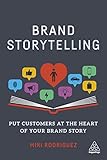
- the Value Story, to convince customers they need what you provide;
- the Founder Story, to persuade investors and customers your organization is worth the investment;
- the Purpose Story, to align and inspire your employees and internal customers; and
- the Customer Story, to allow those who use your product or service to share their authentic experiences with others.
Measure visibility and give changes time
Before revising pages, note the questions and pages you want to improve and record their current search performance. After publishing, compare the results rather than assuming a change in wording caused a particular mention or ranking.
What’s actually slowing this PC down?
Pick the symptom - the matching free tool is one click away.
- Establish a baseline. Record the pages and search performance relevant to your audience before making changes.
- Publish a focused improvement. Make the story more specific, strengthen evidence, or add material that answers a real reader question.
- Check Search Console. Where available, use Search Console’s Generative AI performance report to monitor how people discover content through Google’s generative AI features. Review ordinary search performance as well.
- Allow time before judging. Google’s SEO Starter Guide says changes may be reflected in a few hours or take several months; it recommends waiting a few weeks to assess beneficial effects. It does not promise that any change will produce a visible result.
Use the pattern you observe to decide what to improve next: whether readers get a clearer answer, whether the page offers evidence or insight unavailable in a commodity summary, and whether the relevant content is accessible. The comparison axes here are a practical synthesis of Google’s guidance, not a Google-published scoring framework.
Quick Recap
Best Value
Product prices and availability are accurate as of the date/time indicated and are subject to change. Any price and availability information displayed on Amazon at the time of purchase will apply.

