
Recommended Free Tools
iTechGuides is reader-supported. When you buy through links on our site, we may earn an affiliate commission. As an Amazon Associate I earn from qualifying purchases. Learn more
Learning data structures and algorithms (DSA) is easier to engage with when you work through the decisions instead of only memorizing definitions. Start with a small problem, predict what an algorithm will do, trace each step, then implement it and test edge cases. Visualizers can make changing data visible, but they are a learning aid—not a replacement for coding or understanding why an algorithm works.
Why can learning DSA feel boring?
When DSA is presented as terminology and code to memorize, it can feel detached from the problems those ideas solve. A more active approach gives each concept a job: answer a question, make a prediction, track what changes, and explain why the next step is valid.


Try this loop for each new idea:
- Ask a concrete question. What are you trying to find, organize, or compute?
- Predict. Before advancing an example, write down what you think will happen.
- Trace. Record the relevant values or range after each decision.
- Explain. State why the algorithm is allowed to take that step.
- Implement and test. Write the code yourself, then try ordinary and boundary cases.
This turns study into a sequence of decisions you can inspect. It does not guarantee that every learner will enjoy DSA, but it can make abstract ideas more concrete.
PC Slower Than It Used to Be?
A free scan shows the junk files, broken settings and background clutter dragging Windows down - then fixes them in one click.Free scan · Windows 10 & 11Crashes, No Sound, or Screen Glitches?
Random freezes, missing sound and display glitches usually trace back to one bad driver. Find and replace yours safely.Free scan · under a minuteHow do the three examples teach different DSA ideas?
Two Sum: compare ways to find a pair
In Two Sum, the task is to find two values whose sum equals a target. For example, with [2, 7, 11, 15] and target 9, the pair is 2 and 7.
#1 Best Overall
Begin with the straightforward strategy: check pairs until you find one that works. Then ask what information could help avoid repeatedly searching for a matching value. A hash table can store values already seen, making it possible to look up the complement needed for the current value. That approach trades extra memory for faster lookup; it is one useful approach, not the only possible solution.
As you trace, note the current value, the complement you need, and which values have already been stored. That makes the data structure’s role visible rather than treating “use a hash table” as a memorized trick.
Rank #2

- color: White
- INTRODUCTION TO ALGORITHMS, FOURTH EDITION
Binary search: shrink a valid search range
Binary search works on sorted input. Compare the target with the middle value; depending on that comparison, discard the half that cannot contain the target. Repeat on the remaining range.
Use a sorted list such as [3, 8, 12, 17, 21, 26, 31] and target 21. After every comparison, write down the range still under consideration and why the discarded values cannot be the answer. The key lesson is not merely “check the middle”: the sorted-order precondition is what makes eliminating half the candidates valid.
Rank #3
Comparing binary search with linear search is useful because it highlights how an algorithm’s assumptions affect its strategy. If the input is not sorted, binary search cannot safely discard half based on the middle comparison.
Bubble sort: observe comparisons and swaps
Bubble sort repeatedly compares adjacent values and swaps them when they are out of order. In one pass over [5, 1, 4, 2], the comparisons and swaps move the largest value toward the end: compare 5 and 1, then 5 and 4, then 5 and 2. At the end of that pass, 5 is in its final position for this list.
Before each comparison, predict whether a swap will happen. After a pass, ask what is now known about the array. This makes bubble sort a clear way to inspect how local operations change a larger structure. It is mainly a teaching example, not a default choice for sorting large practical workloads; include efficiency in your understanding, not just the visible mechanics.
What can a visualizer add—and what can’t it do?
An interactive animation can expose intermediate states that are easy to miss in a finished code listing: which values are compared, what gets stored, or how a search range changes. DSA Visualization describes its goal this way: “The goal is not more animation. It is a clearer connection between each decision, the data it changes, and the code that caused it.” That is the resource’s own description, not an independent finding about learning outcomes.
Best Value
- Binding: paperback
- Language: english
- It ensures you get the best usage for a longer period
A 2014 paper on algorithm visualization discusses it as an educational tool, but that background does not establish that a particular current visualizer improves learning or replaces analysis and implementation. Use the animation to inspect a step, then reproduce the reasoning without it.
Independent reader supportYour contribution helps us test, update, and keep practical guides available for everyone.How should you choose a DSA learning resource?
Pick a format that supports the way you need to practice, and check whether it teaches both the steps and the assumptions behind them.
- Interactive tracing: DSA Visualization offers free interactive lessons without account signup. Its site reports 46 visualizers in 2026 and separates material into Foundations, Sorting and Searching, and Interview Patterns. It gives estimated path times of about 30, 35, and 50 minutes respectively; these are the site’s estimates, not independently measured completion times. Its visualizer includes a Two Pointers pattern, while its paths also provide a way to explore foundational and sorting/searching ideas. Explore DSA Visualization.
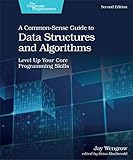
- Structured reading and exercises: A Common-Sense Guide to Data Structures and Algorithms, Second Edition by Jay Wengrow is listed in print by The Pragmatic Bookshelf. The publisher lists 506 pages, an August 2020 publication date, and examples in JavaScript, Python, and Ruby, with exercises in every chapter. Its contents include binary search, bubble sort, and hash tables. See the publisher’s book details.
These serve different purposes: an interactive tool lets you step through changing state, while a book offers a paced treatment and chapter exercises. Compare them against your programming language, current prerequisites, preferred pace, and whether you want solutions or worked examples.
Do these 3 things before closing this tab:
1Fix the driver behind crashes, sound loss and screen glitches2Repair Windows errors before they cause bigger problems3Scan for outdated or missing drivers - takes under a minuteHow do you turn a walkthrough into real practice?
- Choose a small input and write down the problem’s assumptions, such as whether values are sorted.
- Trace the algorithm on paper or in a visualizer, but predict each next step before revealing it.
- Explain why the step is valid—for example, why binary search can discard a half.
- Implement the algorithm in your chosen language without copying the animation.
- Test edge cases: an empty input where allowed, one item, a missing target, duplicate values, and values at the beginning or end.
- Compare alternatives by their assumptions, time growth, extra memory, and how easy their steps are to trace.
A visual walkthrough is most useful when it leads to independent explanation and code. If you can predict the next state, justify it, and handle cases the animation did not show, you are doing more than watching.
Quick Recap
Product prices and availability are accurate as of the date/time indicated and are subject to change. Any price and availability information displayed on Amazon at the time of purchase will apply.

