
iTechGuides is reader-supported. When you buy through links on our site, we may earn an affiliate commission. As an Amazon Associate I earn from qualifying purchases. Learn more
Design GKE workloads so a reclaimed Spot machine costs you only the work since the last durable checkpoint—not the whole training run or a correctness failure. A recreated Pod is a new process: Kubernetes can restore the workload, but it cannot recover progress that existed only in memory or on ephemeral node storage.
The interruption details depend on how you use Spot. Google Cloud documents a default 30-second graceful termination period for GKE Spot VMs; Autopilot Spot Pods have a maximum 15-second preemption grace period, granted on a best-effort basis. Neither is a guaranteed window in which an application can finish arbitrary work.


Know which GKE Spot interruption you are handling
In a Standard cluster, Spot VMs are Compute Engine instances in node pools. In Autopilot, you request Spot Pods and Autopilot manages the Spot-backed capacity. Both can be interrupted, but their documented shutdown windows and configuration models differ.
| GKE mode | What is reclaimed | Documented shutdown window | What the timing does—and does not—mean |
|---|---|---|---|
| Standard: Spot VM node pool | A Spot VM used as a GKE node | Google Cloud documents a default 30-second graceful termination period after a preemption notice. | This is platform termination behavior, not a guarantee that every application gets enough time to finish or checkpoint. Google Cloud: Run fault-tolerant workloads at lower costs with Spot VMs |
| Autopilot: Spot Pod | Spot-backed capacity running the Pod | A Pod can request up to 15 seconds of preemption grace, on a best-effort basis. | Do not plan on the maximum being available for every interruption or on it being enough to complete a job. Google Cloud: Run fault-tolerant workloads at lower costs in Spot Pods |
These figures are specific to the documented GKE behaviors; check the current documentation for the target cluster and release before relying on configuration details. Older GKE guidance for preemptible VMs describes a 30-second period divided, on a best-effort basis, between non-system and then critical system Pods. Google recommends newer Spot VMs or Spot Pods for corresponding use cases. Google Cloud: Use preemptible VMs to run fault-tolerant workloads
#1 Best Overall

- [Local AI Inference & 70B Model Ready] Equipped with the AMD Ryzen 7 PRO 8845HS processor, NEXUS is engineered for heavy local AI workloads. With a full-size GPU bay, it runs 70B LLMs natively without an internet connection. Ideal for AI developers and tech enthusiasts who need private environment for coding and model testing.
- [132TB Mass Storage with ZFS Integrity] Features a hybrid storage architecture (3×NVMe + 4×3.5" HDD) supporting up to 132TB. Utilizing the enterprise-grade ZFS file system and ECC memory, it prevents data corruption and bit rot—a must-have for professional photographers and video editors safeguarding 4K/8K RAW footage.
- [OpenClaw-Driven Automation Workflow] The built-in OpenClaw execution layer allows complex automated tasks to be processed locally. Even when offline, your backup schedules and AI file organization continue seamlessly. Say goodbye to monthly cloud subscriptions and high latency.
- [Dual 10GbE & USB4 Ultra-Connectivity] Experience server-class speeds with dual 10GbE ports and a 40Gbps USB4 interface. It enables multi-user real-time collaboration on large project files directly from the NAS, ensuring zero-lag editing for creative studios and production teams.
- [Open-Source ZimaOS for Total Privacy] Running on the fully open-source ZimaOS, NEXUS ensures your data stays physically on-premise with no backdoors. It acts as a "Digital Fortress" for privacy-conscious families and small businesses who demand absolute data sovereignty.
Shutdown time is not durability. Google warns that data on Spot nodes is deleted when the instance is preempted, including data on attached Local SSDs. A process that flushes a local file just before termination has not made that file durable across node reclamation. Google Cloud: Spot VMs
Make AI progress recoverable before an eviction happens
Treat Spot interruption as a normal lifecycle event, not an exceptional condition that graceful shutdown alone will solve. The following are workload-design practices, not guarantees provided by GKE.
Persist state outside the node
Store model checkpoints, job metadata, input manifests, and completed-work records in an external service or persistent storage configured with a recovery model that fits the workload. Keep only disposable cache and scratch data on node-local storage. A persistent volume can be useful, but confirm its own lifecycle and recovery behavior; the fact that data is outside a container does not by itself prove it will survive every failure or deletion path.
The Tool Desk
Outbyte PC Repair FREERepair Windows errors before they cause bigger problemsFix Now →Outbyte Driver Updater FREEFix the driver behind crashes, sound loss and screen glitchesFind Drivers →Checkpoint according to recomputation cost
For training, persist checkpoints often enough that a restart does not force an unacceptable amount of recomputation. For inference pipelines and batch processing, record completed units of work so a replacement process can resume rather than replay everything blindly. There is no universal checkpoint interval: balance the cost of lost work against checkpoint write cost and overhead, and validate the interval under realistic job behavior.
Make retries safe
A Deployment, Job, or other controller can recreate a managed Pod, but the replacement cannot infer what the old process completed. Use durable progress records and idempotent startup or task handling where possible. If work can be delivered more than once, make repeated execution safe or detect already-completed units before applying side effects.
Keep shutdown useful, but not essential
For Autopilot Spot Pods, Google documents that an evicted Pod receives SIGTERM and should shut down during its grace period. Handle termination promptly: stop accepting new work, finish or safely abandon in-flight work, flush required state, and exit. Google Cloud’s Spot Pods guidance
A training process can be interrupted before a checkpoint finishes, and a 15- or 30-second platform window may be shorter than the operation needs. Build for resumable computation and durable progress; treat graceful shutdown as an opportunity to save state, not the only recovery mechanism.
What’s actually slowing this PC down?
Pick the symptom - the matching free tool is one click away.
Choose Spot for work that can tolerate interruption
Google recommends Spot for fault-tolerant, stateless, or batch workloads. It also recommends combining Spot and standard node pools when workloads must keep proceeding even if Spot capacity is unavailable. Google Cloud’s GKE Spot VM guidance
Before placing an AI workload on Spot, answer these questions:
Rank #4
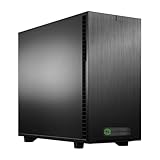
- Ryzen Threadripper 9960X 4.2GHz (Up To 5.4GHz Turbo) 24 Core
- 256GB DDR5 ECC Reg (4x64GB)
- GeForce RTX 5090 32GB GPU
- 10G + 2.5G Networking + WiFi 7
- Onboard AQtion AQC113C 10GbE LAN
- Interruption tolerance: Can the workload resume or be recreated without losing correctness?
- Recovery cost: How much computation or user work would be lost after the process ends?
- Capacity assurance: Must the work proceed when Spot capacity cannot be provisioned? If yes, retain a standard-capacity option.
- State handling: Is progress stored somewhere other than ephemeral node data?
- Shutdown behavior: Can the application respond to termination within the applicable best-effort window?
- Operating mode: Is this a Standard Spot node pool or an Autopilot Spot Pod? Their timing and configuration differ.
Use taints and tolerations to keep critical Pods off Spot pools when they should not share interruptible capacity. For the exact Spot taint pattern and scheduling configuration, follow the current GKE documentation for your cluster rather than copying settings without checking version and feature support. Google Cloud: GKE Spot VM scheduling guidance
Do not assume a StatefulSet is automatically safe on Spot. Google’s Spot concepts guidance says to test whether stateful workloads can gracefully terminate within 25 seconds to reduce the risk of persistent-volume corruption. That is a testing recommendation, not proof that every stateful application or storage setup is safe.
Do these 3 things before closing this tab:
1Scan for outdated or missing drivers - takes under a minute2Repair Windows errors before they cause bigger problems3Fix the driver behind crashes, sound loss and screen glitchesUse PDBs and readiness probes for the problems they address
A PodDisruptionBudget (PDB) describes the disruption a workload can tolerate during supported voluntary disruptions. GKE’s disruption-readiness guidance covers PDBs and readiness probes as tools that can help maintain availability during node upgrades and maintenance. Google Cloud: Ensure workloads are disruption-ready
Best Value

- 4K@120Hz HDMI-Compatible Dummy Plug allows your PC to activate the GPU and create a virtual display. It simulates high resolutions for remote control and computing tasks. Supports up to 4K@60Hz/120Hz, and is also compatible with 1440p@60Hz/120Hz, 1080p@60Hz/120Hz, and more. ⚠️ Notice: The graphics card must support HDMI 2.1 to achieve 4K@120Hz refresh rate.
- HEADLESS OPERATION FOR SERVERS & PCS – Run your computer without a physical monitor. Ideal for servers, hosting farms, SOHO setups, and remote headless PCs.
- KEEP GPU AT FULL PERFORMANCE – Prevents your GPU from dropping to low resolution or power-saving mode, keeping acceleration (CUDA/OpenCL/DirectX) fully enabled.
- SUPPORTS 4K@120HZ REMOTE DESKTOP – 3840X2160@120HZ,2560X1440@120HZ,1920X1080@120HZSimulates high resolution and refresh rate, ensuring sharp and smooth remote desktop experience for work and gaming.
- PLUG & PLAY, WIDE COMPATIBILITY – Compact adapter, no drivers required. Works instantly with Windows, Linux, macOS, and industrial PCs.
A PDB does not prevent an involuntary Spot or preemptible VM reclamation. Google’s preemptible VM guidance explicitly distinguishes that reclamation from disruptions protected by PDBs. Do not rely on a PDB to preserve a Spot-backed Pod when the underlying instance is reclaimed. Google Cloud: Preemptible VM behavior and PDBs
A readiness probe helps Kubernetes and traffic-routing systems determine whether a container should receive traffic. It does not checkpoint a process or preserve its state. Pair readiness and graceful termination with durable state and restart-safe work; do not treat either probe as an eviction shield.
Independent reader supportYour contribution helps us test, update, and keep practical guides available for everyone.Separate autoscaler decisions from infrastructure preemption
GKE cluster autoscaling can favor less expensive Spot pools when workload constraints and available resources allow. That scheduling or scaling choice is distinct from Compute Engine reclaiming a Spot VM because it needs the resources. A workload may therefore land on Spot because of autoscaler behavior and later be interrupted by infrastructure preemption; diagnosing one does not establish the cause of the other. Google Cloud: About GKE cluster autoscaling
Recommended Free Tools
If a job must make progress when Spot capacity is unavailable, provide standard capacity or another supported recovery path instead of assuming the autoscaler can always find a replacement Spot VM.
Diagnose a suspected preemption
Expected Spot or preemptible preemption can appear as a node briefly entering NotReady. GKE troubleshooting guidance says Cloud Audit Logs can show the compute.instances.preempted event for the underlying VM. A NotReady state lasting more than 10 minutes should be investigated for other causes rather than attributed to a routine Spot interruption. Google Cloud: Troubleshoot nodes with the NotReady status in GKE
- Check the affected node’s status and the timing of the Pod termination or rescheduling.
- Inspect Cloud Audit Logs for
compute.instances.preemptedon the underlying VM. - Correlate the event with application logs and checkpoint records to determine whether the process saved progress or repeated work.
- If the node remains
NotReadyfor more than 10 minutes, follow the broader GKE node troubleshooting path instead of treating it as an expected short preemption state.
Track recovery outcomes as well as infrastructure events: whether the job resumed, how much computation was repeated, whether side effects were duplicated, and whether replacement capacity was available. Those signals show whether the workload is actually interruption-resilient.
Quick Recap
Product prices and availability are accurate as of the date/time indicated and are subject to change. Any price and availability information displayed on Amazon at the time of purchase will apply.
Free tools Windows power users keep installed
One-click scans. No signup required.

