
Quick wins for a faster PC:
Repair Windows errors before they cause bigger problemsFix Now →Fix the driver behind crashes, sound loss and screen glitchesFind Drivers →Clear out junk files and repair common Windows errorsFree Scan →iTechGuides is reader-supported. When you buy through links on our site, we may earn an affiliate commission. As an Amazon Associate I earn from qualifying purchases. Learn more
You can make an effective Resident Evil 7 fan film without reproducing the game’s monsters, locations, or production scale. Build a short, tightly controlled story around one location, a small cast, a specific threat and a few carefully timed reveals. Spend effort on performance, framing, production sound and atmosphere before buying elaborate effects.
There is an important rights distinction: Capcom’s video policy is guidance for certain uses of Capcom game footage, not a license for a live-action derivative film. A noncommercial release, disclaimer or fan label does not by itself establish that your project is cleared. Treat the legal and music questions separately from the filmmaking plan, and obtain permission or applicable legal advice if publication depends on rights clearance.
Set the rights boundary before you write or shoot
Capcom’s Video Policy, last updated March 15, 2021, says it is a guideline and not express permission or authorization to create derivative works. It addresses game footage and related fan content; it does not automatically authorize a live-action short using Resident Evil 7 characters, names, story elements, logos, extracted assets or music. The policy also says fan content must not be presented as official Capcom content.
Free tools Windows power users keep installed
One-click scans. No signup required.
| Question | Practical answer for a fan-film crew |
|---|---|
| Does the policy clear a live-action film? | No. The policy’s scope and disclaimer do not amount to a derivative-work license. |
| Does calling the film noncommercial solve the issue? | No. Noncommercial intent may matter to a platform or rights holder, but it is not a blanket legal clearance. |
| Can the film look official? | No. Do not market it as official Capcom content or imply endorsement. |
| Can you use the game’s soundtrack? | Do not assume so. Capcom notes that some music may be licensed from third parties and can trigger platform flags or removal. The policy also prohibits posting game music separately from game footage. |
| What about ads, partner programs or donations? | The policy describes limited allowances for specified video-platform partner programs, advertising and some voluntary contributions when covered video remains publicly available for free. Those allowances do not turn the policy into permission for a live-action derivative film. |
Keep a written asset log. Mark every logo, character name, costume reference, prop image, sound effect, music cue and clip as original, licensed, public-domain or requiring permission. If your release plan relies on using Capcom material, contact the rights holder or seek jurisdiction-specific legal advice before spending on production. Do not promise cast, crew or viewers that a disclaimer makes the film safe to publish.
#1 Best Overall

- WORKS WITH ANY DEVICE YOU OWN: iPhone, Android, DSLR, mirrorless, camcorder, GoPro, or laptop. Cables for cameras included — newer USB‑C/Lightning phones may need a 3.5mm adapter. Your go‑to external microphone for phone and camera.
- BUILT TO LAST, READY TO TRAVEL: Solid aluminum body won't break in your bag. The built‑in shock mount absorbs bumps and handling noise so your audio stays clean, no extra gear required.
- DIRECTIONAL SOUND, NOT BACKGROUND NOISE: This directional shotgun microphone focuses on what's in front of it and rejects distractions from the sides. Ideal for vlogging, podcasts, interviews, and recording on the go.
- SOUND LIKE A PRO ON SOCIAL: Whether you're vlogging, live‑streaming, or capturing interviews and music, this compact camera microphone makes your voice clear and your content stand out on YouTube, TikTok, and Instagram.
- EVERYTHING YOU NEED IN THE BOX: Fuzzy windscreen for outdoor recording, carrying case, camera cable, original and Rycote shock mounts, and smartphone cable — all included. Unbox it, plug it in, hit record.
Choose a premise your crew can control
A small-budget script succeeds when its dramatic problem fits the resources you can actually command. Start with a one-sentence objective, such as finding a missing person before an unseen pursuer reaches the room, surviving a locked-house search, or deciding whether an apparently helpful stranger is telling the truth. The objective should create pressure even when the threat remains off screen.
Limit the moving parts
- Use a small cast whose characters have conflicting information or motives.
- Choose one primary location, with only a few adjoining spaces that can be dressed and lit consistently.
- Give the story a clear beginning disturbance, escalation, reveal and consequence.
- Favor discoveries, choices and reversals over crowds, vehicle work, large fights or repeated creature appearances.
- Write practical actions that can be rehearsed: opening a blocked door, searching a drawer, hiding evidence, treating an injury or deciding whether to trust a voice.
Write the ending before you add set pieces. If the final reveal requires a digital creature, a destroyed building or a dozen extras, redesign it around information, performance and sound. A hand reaching into frame, a light switching off at the wrong moment or a character recognizing a familiar voice can provide a decisive turn without expensive effects.
Use Resident Evil 7’s human-scale horror as a design guide
In Capcom’s 2016 developer interview, Jun Takeuchi described the theme of Resident Evil 7 as “fear that sticks with you.” He also said the team wanted to preserve the series’ ability to shock and surprise while making the experience feel fresh. The interview emphasizes people, psychological fear and the darkness in human behavior rather than relying on zombies alone. For a fan crew, that is a useful creative direction: make the audience wonder what a person will do, what information is being withheld and whether an apparently safe space is trustworthy.
The same interview describes an atmosphere that feels humid and stifling and discusses careful attention to characters, costume, makeup, environmental detail and sound. Treat those points as design cues, not as a requirement to copy game assets. Pick a few repeatable details—a damp wall, a stained work surface, a failing light, a distinctive family photograph or a mechanical hum—and keep them consistent. A coherent small world is more convincing than a collection of expensive references.
Build suspense from uncertainty
- Let a character hear or notice something before the audience receives a clear explanation.
- Reveal consequences before causes: an overturned chair, a fresh mark or a missing object can precede the person who caused it.
- Give the threat rules. It may respond to noise, know the floor plan or exploit a character’s guilt. Rules make limited appearances feel deliberate.
- Use pauses and incomplete answers. Silence after a question can be more disturbing than a shouted threat.
Do not promise a shot-for-shot recreation. Translate the game’s mood into choices your crew can execute safely and repeatedly.
Preproduction: turn the idea into a shootable plan
Adobe’s beginner filmmaking guide separates preproduction, production and post-production and recommends planning, shot lists or storyboards and coordination for small teams. Apply that discipline before anyone arrives with a camera.
Rank #2

- UNIVERSAL COMPATIBILITY: This external microphone is perfect for iPhone, Android devices, cameras, camcorders, audio recorders, tablets, and laptops. Whether you're using it as an iPhone microphone, DSLR microphone, or camera mic, it's versatile enough to meet all your recording needs.
- SOLID CONSTRUCTION: Built with durable aluminum, this microphone features a battery-free design and a sturdy integrated shock mount to minimize handling noise. Perfect for on-the-go content creators looking for reliability in their gear.
- HIGH-FIDELITY AUDIO: Capture broadcast-quality audio with exceptional clarity, offering up to 24-bit resolution in digital mode. Ideal camera microphone for vloggers, YouTubers, and podcasters who demand professional sound quality.
- INCLUDES: X1-MINI Microphone, Rycote Shockmount, Foam Windscreen, Furry Windscreen, 3.5mm TRS Cable for Cameras, 3.5mm TRRS Cable for Smartphones, Digital USB-C Output Cable for Computers and Smartphones, and a Hard-sided Carrying Case
- CAMERA OR BOOM MIC - Mount it on your camera's cold shoe for run-and-gun vlogging, or put it on a boom pole to get it closer to the talent for interviews and filmmaking; the supercardioid pattern keeps room noise out either way
- Break down the script. List every performer, prop, costume change, practical effect, sound cue, location requirement and continuity item beside each scene.
- Scout and test the location. Record a phone walkthrough, note power outlets and ambient noise, measure the usable spaces and identify where the camera, microphone and lights can stand without appearing in shot.
- Make a shot list or storyboard. Record the purpose of every shot, its framing, movement, subject, sound and transition. Mark the shots that are essential if time runs short.
- Schedule by location. Group scenes that use the same room, even if they occur at different points in the story. Schedule time for lighting changes, makeup, props and sound checks rather than assuming setups are instantaneous.
- Rehearse the blocking. Walk actors through entrances, eyelines, pauses and safe distances. Rehearse the threatening action without props or contact, then add each element after the timing works.
- Prepare a continuity packet. Photograph the dressed room, prop positions, costume details and makeup. Keep a scene log with takes, problems and the best performance so editing does not depend on memory.
On a very small crew, people may double roles across directing, producing, camera, sound and lighting. Assign one person final responsibility for production sound and another for continuity, even if those people also perform other jobs. Clear ownership prevents a missing room tone recording or a moved prop from becoming an expensive reshoot.
Equipment: buy for the problem, not the label
You do not need a particular camera brand or model. Choose equipment that your crew can operate, power and monitor reliably. Adobe identifies camera, lighting and audio as basic production categories, but no specific products were tested for this guide. Borrowing or renting is sensible when you are unsure whether a purchase fits your camera, recorder or shooting distance.
| Need | Minimum workable approach | Decision checks |
|---|---|---|
| Camera | A camera or phone that can hold exposure and focus consistently and record enough storage for multiple takes. | Check battery life, low-light behavior, audio inputs, mounting and whether someone can monitor the image. |
| Dialogue capture | An external microphone and a way to record clean, isolated dialogue; a shotgun microphone for filmmaking is one possible setup. | Confirm connector compatibility, recorder or camera input, mounting, cable length and the distance at which the microphone will be used. |
| Headphones | Closed-back monitoring headphones for the person recording sound. | Listen for hum, clothing rustle, clipping, traffic and refrigerator or HVAC noise during every setup. |
| Lighting | Controllable fixtures plus diffusion or flags, supplemented by motivated practical sources in the room. | Check power, heat, mounting safety, color consistency and whether fixtures can be hidden from the frame. |
| Support | A stable tripod or other support for locked shots, with handheld support only when the movement has a story purpose. | Verify that the camera can be repositioned quickly without losing continuity. |
| Art, costume and makeup | Character-specific clothing, a few repeatable props and makeup that reads at the planned distance. | Favor items that reveal history or behavior rather than decorative clutter. |
| Data and post-production | Fast, backed-up storage and editing software your operator already knows. | Plan two copies of camera and audio files before cards are formatted; test the export settings on the intended platform. |
Audio deserves a deliberate choice. A visually impressive take with unintelligible dialogue is usually unusable, while a restrained image can survive if the audience hears the performance and the environment. If you cannot monitor a microphone placement confidently, borrow or rent a setup and perform a short dialogue test in the actual location before committing to the shoot.
Make one location feel dangerous
Control the geography
Draw a simple floor plan and decide where the audience believes the exits, hiding places and danger zones are. Maintain screen direction so the viewer can understand when a character crosses from safety toward risk. You can make a modest room feel larger by revealing adjacent spaces gradually, but do not violate the geography merely to create a surprise; confusion should belong to the character’s fear, not to an accidental continuity error.
Use motivated light
Start with sources that plausibly exist in the scene—a window, lamp, hallway fixture, appliance or flashlight—then shape them with controllable fixtures, diffusion and negative fill. Check exposure and shadows from the actual camera position. Record a reference still whenever the light changes so a later pickup can match. The available guidance establishes lighting as a production category, not a universally proven DIY recipe, so test your method in the location rather than assuming a particular technique will work everywhere.
Dress for story
Choose a small number of props that can be handled, hidden or discovered on camera. A repaired appliance, an overfilled medicine cabinet or a carefully maintained family object can communicate a character’s history faster than a wall of generic horror decoration. Photograph every arrangement and keep duplicates of consumable items when a scene requires resets.
Rank #3
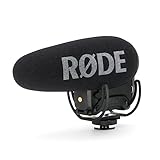
- Still with the best-in-class Rycote Lyre suspension system onboard, the VideoMic Pro improves on the existing VideoMic Pro capsule/line tube and windshield, plus boasts a host of new features.
- Automatic Power Function (with plug-in power availability) is perfect for the run-and-gun shooter, automatically turning the microphone off when unplugged from the camera.
- Built-in Battery Door makes replacing the battery a breeze - plus it won't get lost.
- Power options the VideoMic Pro can be powered by the all-new and included RØDE LB-1 Lithium-Ion Rechargeable Battery, 2 x AA Batteries or continuously via Micro USB.
- Digital Switching - will ensure the user has ultimate capture of the audio signal at the source, reducing post production and editing times.
Direct performances and frame the threat
Ask actors to pursue the immediate objective, not to “act scared” continuously. Fear changes as a character calculates, lies, listens, remembers and decides. Give performers a playable instruction—keep someone from opening the door, conceal an injury, make the visitor leave—then let the audience read the danger in behavior.
Start restrained
Use locked or gently controlled frames for investigation and conversation. Hold a reaction a little longer than feels comfortable, but make sure the actor is doing something specific during the pause. Save rapid movement, extreme angles or abrupt reframing for a change in the character’s situation so those choices retain impact.
Reveal in layers
- Show the character entering or examining a space.
- Let the audience notice a detail that the character misses or misunderstands.
- Change the sound or the character’s behavior before showing the cause.
- Reveal only the portion of the threat needed for the next decision.
- Cut away at the moment a complete explanation would reduce uncertainty.
This approach reduces the number of creature shots you must create and gives the editor options. Capture clean plates of the location, reaction shots, inserts of hands or objects and several lengths of room tone. Those elements can support a suspense cut even when a planned effect is unavailable.
What’s actually slowing this PC down?
Pick the symptom - the matching free tool is one click away.
Production sound and music are part of the horror
Record intelligible dialogue
Place the microphone as close as the frame allows without casting a shadow or appearing in shot. Monitor every take, record a few seconds of room tone after the set is quiet and note interruptions immediately. Keep phones, refrigerators, fans and traffic consistent between angles or turn them off when safe. Record wild lines—dialogue delivered after the action—when movement makes the original take noisy.
Design silence and texture
Build a library of footsteps, doors, fabric movement, switches, distant impacts and location-specific mechanical sounds. Use perspective: a sound heard through a wall should not have the same clarity as a sound beside the camera. Silence is not the absence of work; it requires a clean room tone bed and controlled transitions so the audience notices the change.
Use only cleared music and effects
Do not rip the game’s soundtrack or assume that a track associated with Resident Evil 7 is available because your film is a fan project. Capcom warns that some music may be owned by third parties and may cause platform flags or removal. The policy also prohibits distributing game music separately from game footage. Use music you compose, commission or license, and keep written records of the permission terms. Apply the same standard to stock effects, artwork, fonts and photographs. No platform can be guaranteed to leave a disputed use online.
Rank #4

- 【48kHz/32-Bit Float Recording, Wired/Wireless Dual Modes】The Comica VM40 shotgun microphone incorporates Comica’s patented integrated wireless RF module, enabling smooth operation in both wired and wireless modes. With 48kHz/32-bit float recording, the VM40 camcorder microphone, offers an expanded dynamic range, making post-production easier for creators, provides a versatile and professional solution for your recording needs.
- 【32GB File Storage, 40 Hours of Internal Recording】The VM40 shotgun boom microphone has a built-in 32GB storage capacity, allowing you to record audio for up to 40 hours. Users can back up audio during shooting and recording or use the microphone as a recorder, ensuring the integrity of audio files and providing a reliable and secure solution for all your recording needs.
- 【Comica Audio App, One-Stop Convenient Control】The Comica VM40 video camera microphone supports one-stop control of additional functions via the official Comica Audio App, allowing for remote monitoring of the microphone status, changing settings, and managing multiple devices by scene, ensuring effortless control and enhanced convenience for all your recording needs.
- 【Safety Mode & Real-time Monitoring】Comica VM40 camera microphone provides safety mode. In safety mode, the sound is divided into two tracks, with an additional audio track recorded at 6dB lower than the main audio, which can be used as backup audio. In addition, the real-time monitoring function can provide instant feedback on the recording effect for better adjustment.
- 【Supports One-Key Denoise/Low-Cut/High-Frequency Boost】The VM40 camera external microphone, featuring CalMix noise reduction technology, effectively minimizes background noise for enhanced audio quality. The low-cut filter removes frequencies below 100Hz to reduce low-end noise, while the high-frequency boost brightens and clarifies higher frequencies for a crisper, more detailed sound.
Post-production: make the material feel intentional
Organize before editing
Copy camera and audio files to two separate storage locations, preserve the original folder structure and rename clips with scene and take information. Sync external audio, then mark clean dialogue, strong reactions, continuity problems and essential inserts. This preparation is slower than immediately assembling a montage, but it prevents accidental loss and makes a small crew’s limited takes usable.
Do these 3 things before closing this tab:
1Clear out junk files and repair common Windows errors2Scan for outdated or missing drivers - takes under a minute3Repair Windows errors before they cause bigger problemsCut for pressure
Begin with the clearest version of the story. Remove repeated searches, redundant explanations and reaction shots that do not change the audience’s understanding. Let a cut arrive because a character makes a choice, hears something or loses information. If a visual effect is weak, shorten its exposure, cut to a reaction or let sound carry the event rather than displaying an unfinished image.
Shape image and sound together
Match exposure and color between angles before stylizing the image. Preserve enough shadow detail for the viewer to understand the geography; crushed blacks can hide both suspense and continuity mistakes. Clean dialogue conservatively, balance effects so they support rather than bury speech, and check the mix on headphones and ordinary speakers. Add titles and disclaimers only after the story is stable, then watch the complete export for flash frames, missing audio, clipped highlights, subtitle errors and rights-sensitive material.
Protect the budget with explicit trade-offs
| Priority | Economical choice | What not to sacrifice |
|---|---|---|
| Story | Shorten the script and reduce locations before reducing rehearsal time. | A clear objective, escalation and ending. |
| Performance | Schedule fewer setups and give actors time to repeat the blocking. | Playable motivation and safe, respectful working conditions. |
| Sound | Borrow or rent a suitable microphone and recorder rather than buying an incompatible kit. | Monitoring, clean dialogue and room tone. |
| Lighting | Use existing practical sources and a small number of controllable fixtures. | Exposure consistency and safe rigging. |
| Effects | Suggest off-screen events with performance, inserts and designed sound. | Physical safety, continuity and a believable cause-and-effect relationship. |
| Post-production | Use familiar editing software and keep the number of deliverables small. | Backups, a complete audio pass and quality control of the final export. |
Do not allocate money by copying a commercial production. Decide which moment the audience must remember, then put the available time and resources there. A single convincing reveal is more valuable than several unfinished effects.
Troubleshoot the problems that most often undermine a small horror film
The dialogue is noisy or hollow
- Check whether the microphone was too far from the actor or aimed at a reflective wall.
- Use the cleanest take, wild lines or a carefully matched pickup rather than aggressive noise reduction.
- Re-record room tone after removing the source of the noise so edits do not jump.
The location looks flat or inconsistent
- Return to the motivated source and decide what the audience should look at first.
- Lock exposure and white balance where possible, then match angles to a reference still.
- Hide modern distractions only when they conflict with the story; excessive dressing can make continuity harder.
The threat is unintentionally visible too soon
- Review wide shots for reflections, shadows, crew members and equipment edges.
- Reframe, dim or remove the revealing element, or use it deliberately as a clue.
- Capture clean plates and inserts so the editor can delay the reveal without inventing coverage.
The edit feels slow
- Identify what new information each shot gives the audience.
- Trim pauses that do not contain a decision, reaction or change in threat.
- Keep a longer hold only when the actor’s behavior or sound design is actively increasing uncertainty.
A platform flags the upload
- Review music, sound effects, logos, artwork, clips and any extracted game assets against your asset log.
- Replace disputed material with original or properly licensed alternatives.
- Do not assume that a claim, takedown or automated match proves the underlying legal question either way; seek permission or legal advice when publication is important.
Release checklist
- Confirm that the title, thumbnail, description and credits do not imply official Capcom production or endorsement.
- Verify permission for every external music cue, sound effect, image, font and performance.
- Remove or clear game footage, extracted models, textures, logos and soundtrack elements unless you have specific authorization.
- Keep the film publicly accessible if you rely on any policy language describing free video availability, and remember that such language still does not license a live-action derivative work.
- Export a master file, a platform copy and a captioned version; watch each from start to finish after upload.
- Save contracts, licenses, location permissions, appearance releases and the final asset log with the project files.
- Describe the film accurately as an unofficial fan work and avoid claims that a rights holder approved it.
The strongest small-budget approach is controlled rather than miniature: a bounded story, a location whose geography you understand, actors with specific objectives, restrained images and sound that makes the unseen feel present. Those choices can evoke the psychological pressure associated with Resident Evil 7 while keeping the production achievable and the release plan honest about what has—and has not—been cleared.
The Tool Desk
Outbyte Driver Updater FREEScan for outdated or missing drivers - takes under a minuteDriver Scan →Outbyte PC Repair FREEClear out junk files and repair common Windows errorsFree Scan →Quick Recap
Product prices and availability are accurate as of the date/time indicated and are subject to change. Any price and availability information displayed on Amazon at the time of purchase will apply.

