
Do these 3 things before closing this tab:
1Scan for outdated or missing drivers - takes under a minute2Clear out junk files and repair common Windows errors3Fix the driver behind crashes, sound loss and screen glitchesiTechGuides is reader-supported. When you buy through links on our site, we may earn an affiliate commission. As an Amazon Associate I earn from qualifying purchases. Learn more
The reliable way to reduce emissions from a compact diesel engine is to follow the exact equipment-maker service schedule, record every service, repair faults promptly, and operate any fitted diesel particulate filter (DPF) or selective catalytic reduction (SCR) system exactly as its manual requires. Avoid unnecessary idling. Because service intervals, oil grades, filters, fuel requirements and regeneration procedures vary by engine, emissions tier and equipment, do not apply a generic chart to an unidentified engine.
Start with the engine’s exact identity
Before buying a filter, choosing oil or planning a service interval, collect the information that determines compatibility:
- Engine manufacturer and model.
- Engine serial number.
- Equipment make, model and serial number.
- Emissions label or emissions tier.
- After-treatment equipment, such as a DPF, diesel oxidation catalyst, exhaust gas recirculation (EGR) system or SCR system.
- Current hour-meter reading and recent service history.
The same-looking compact engines can have different controls, filters, software, oil requirements and regeneration procedures. The available EPA guidance is general and does not establish a universal interval for an unspecified compact diesel. Use the current operator and engine manuals, not a generic online schedule, for parts, specifications and timing.
Use the manufacturer schedule as the controlling plan
EPA states that “Proper engine maintenance can optimize fuel economy and extend engine life while reducing harmful emissions.” The practical implication is to treat scheduled maintenance as an emissions-control task, not merely a reliability task.
#1 Best Overall
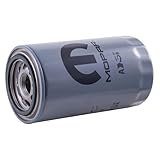
- DODGE RAM OEM OIL FILTER: This Mopar oil change filter delivers reliable filtration by removing dirt, metal particles, and debris to support clean oil circulation, extend engine life, and maintain smooth operation for your truck.
- FOR 2500 & 3500 TRUCK MODELS: Engineered to OEM design specifications for Dodge Ram 2500 & 3500 trucks (2001–2024), this motor oil filter integrates seamlessly with your vehicle's lubrication system for maintenance you can trust.
- KEEPS ENGINES RUNNING THEIR BEST: Whether you're performing routine maintenance or preparing for long journeys, this oil filter supports extended service intervals and offers the quality and compatibility you need to keep your engine running efficiently.
- TIME-SAVING INSTALLATION: This genuine Mopar oil filter is designed for easy installation so you can knock out your car maintenance and get back to doing what you love.
- 85+ YEARS OF EXPERTISE: As the Genuine Original Equipment Manufacturer (OEM) of parts for Chrysler, Jeep, Dodge, Ram, and FIAT brands, Mopar knows your car inside and out. Our factory-original equipment adheres to strict testing, so you get the best..
Build a service calendar
- Copy each inspection, replacement and adjustment from the current equipment and engine manuals.
- Translate hour-based tasks into calendar reminders if the machine runs infrequently. Keep the manual’s time limit even when the hour limit has not been reached.
- Note severe-duty conditions identified by the maker, such as high dust, frequent short runs, heavy loads or long periods at low temperature. These conditions can change the required service plan.
- Record the hour-meter reading, date, work performed, parts used, fluids added and the person or shop that performed the work.
- Record unusual fuel or lubrication-oil consumption, warning messages, smoke, power loss and regeneration events.
Do not substitute a universal oil grade, fuel specification, filter number or additive recommendation when the engine identity is unknown. A part that fits physically can still be wrong for the engine’s emissions system.
Keep records that reveal emissions problems
A dated log turns an intermittent fault into a pattern. At minimum, include:
- Operating hours and typical duty cycle.
- Oil and filter changes, including the specified product and quantity from the manual.
- Fuel-filter and air-filter service.
- Coolant checks and cooling-system work.
- DPF regeneration requests, completed regenerations, interrupted regenerations and ash-cleaning events.
- DEF additions and SCR or emissions warnings, when fitted.
- Changes in fuel consumption, oil consumption, exhaust appearance, starting, idle quality or available power.
These records help a qualified technician distinguish a normal regeneration pattern from a developing engine, sensor, injector, intake, exhaust or after-treatment fault. They also provide evidence that the manufacturer’s maintenance plan is being followed.
Perform routine checks without inventing intervals
Use the inspection frequency and limits in the manual. A routine check commonly involves the systems below, but the exact checks, capacities and replacement points are engine-specific.
Air intake and filtration
Inspect the air-intake path for loose clamps, damaged hoses, blocked screens and dust entry. Service or replace the air filter only as the maker directs; do not clean a disposable element by an unapproved method. Unmetered air or restricted intake flow can affect combustion and may contribute to smoke or poor performance.
Fuel system
Use only the fuel grade and cleanliness standard specified for the engine and region. Drain water separators and replace fuel filters according to the manual. If water, contamination or repeated filter blockage appears, stop treating it as ordinary maintenance and have the fuel system and tank investigated.
Rank #2

- Runs Any Oil You Do: Works with synthetic, conventional, and blended oils, and the high-flow media keeps oil moving freely on cold mornings when a restrictive filter would make the engine work harder.
- Fits Your 6.7 Powerstroke: Confirmed for 2011 to 2026 Ford F-250, F-350, F-450, and F-550, and the F-650 and F-750 from 2017 to 2026. Match your model year for the correct oil filter.
- Proven Tough: Rigorously tested for filtration efficiency, capacity, and burst strength, with a heavy-duty metal housing built to handle the oil pressure of a hard-working 6.7 over a full service interval.
- Simple Oil-Change Swap: It spins on during a routine oil change with just a filter wrench. Change it every 5,000 to 7,000 miles, or 10,000 to 15,000 at the maximum, and follow your service schedule first.
- Direct OEM Fit: Spec'd to meet or exceed the factory filter, so it drops in with no changes and keeps your new-vehicle warranty intact. The full cross-reference is in the product details.
Lubrication system
Check oil level and condition using the manual’s procedure and temperature requirements. Use the maker’s oil specification, because modern emissions systems can depend on lubricant chemistry and ash limits. A rising oil level, unexplained oil loss or rapid deterioration requires diagnosis rather than simply topping up.
Cooling system
Keep radiators, charge-air coolers and cooling passages clear of dust and debris using the equipment maker’s cleaning method. Check coolant level, leaks and hoses at the specified intervals. Overheating can damage the engine and emissions-control hardware; never remove a warning from service by continuing to operate without finding its cause.
Repair faults promptly
EPA advises prompt repair of malfunctioning or damaged engine components because continued operation can cause additional damage to the engine, equipment and emissions-control system. Treat these symptoms as diagnostic signals, not normal characteristics of a small diesel:
- New or worsening black, white or blue smoke.
- Repeated hard starting, unstable idle or misfire.
- Loss of power, increased fuel use or an unusual change in oil use.
- Persistent warning lamps, derate messages or stored diagnostic codes.
- Leaks, damaged wiring, loose exhaust joints or failed sensors.
- Regeneration requests that occur much more often than the machine’s established pattern.
Write down the exact warning text or diagnostic code, the hour-meter reading, load and recent work. Do not erase codes repeatedly or disconnect an emissions device to make a warning disappear. If the manual calls for technician diagnosis, use a qualified diesel technician or equipment dealer with tools for that engine.
Maintain a diesel particulate filter (DPF) correctly
A DPF traps particulate matter (soot) in the exhaust. During regeneration, accumulated soot is burned; noncombustible ash remains and eventually requires cleaning. EPA’s DPF guidance says regeneration frequency is determined by the engine’s duty cycle, particulate emission rate, filter technology and other factors. Therefore, no single hour interval or regeneration frequency applies to every compact diesel.
What’s actually slowing this PC down?
Pick the symptom - the matching free tool is one click away.
Know the difference between soot and ash
- Soot: combustible particulate matter that the DPF removes during an approved regeneration.
- Ash: noncombustible residue that remains in the filter and must be removed by an approved cleaning process.
Cleaning a filter does not correct the engine condition that created excessive soot. EPA says excessive particulate matter or inadequate regeneration can shorten cleaning intervals, so repeated cleaning is a diagnostic clue.
Rank #3

- Item Package Dimension: 4.28L x 3.26W x 3.10H inches
- Item Package Weight - 0.14 Pounds
- Item Package Quantity - 1
- Product Type - OIL FILTER
Respond to regeneration warnings
- Read the warning and operating conditions in the equipment manual before taking action.
- Confirm whether the system is requesting an automatic, operator-assisted or service regeneration.
- Move the machine to the safe location and operating condition specified by the maker, away from people, dry vegetation and combustible materials.
- Allow the approved process to finish unless the manual gives a specific safe cancellation procedure.
- Record the event, duration and hour-meter reading.
- If the warning returns unusually soon, power falls, a fault lamp appears or the machine enters a derate, stop improvising and obtain diagnostics.
Passive regeneration occurs when exhaust temperature is naturally high enough. Active regeneration may add heat or fuel and may require operator action. Never interrupt, force or imitate a regeneration procedure without the exact manual instructions.
Handle ash cleaning as a system-specific service
Follow the DPF manufacturer’s cleaning method, inspection limits and disposal requirements. An EPA bulletin from May 2010 describes typical ash cleaning for retrofit DPFs as often occurring every 6 to 12 months, but that historical range is not a schedule for every modern compact engine. The correct interval depends on the installed filter, engine, oil consumption, duty cycle and manufacturer instructions.
Use approved equipment and containment for ash. Do not blow ash into the work area or return a filter to service without confirming that it meets the maker’s flow, inspection and installation requirements.
PC Slower Than It Used to Be?
A free scan shows the junk files, broken settings and background clutter dragging Windows down - then fixes them in one click.Free scan · Windows 10 & 11Outdated Drivers Are Slowing You Down
One free scan finds every outdated or missing driver and matches the right update for your exact hardware.Free scan · exact hardware matchMaintain SCR and DEF equipment only when fitted
Some compact diesels use selective catalytic reduction (SCR). SCR injects diesel exhaust fluid (DEF) into the exhaust to help reduce nitrogen oxides (NOx). It is not present on every engine, so first confirm the emissions configuration.
Use the specified DEF
Use only the DEF specification and storage practices stated in the manual. Keep DEF separate from diesel fuel and engine oil, prevent dirt from entering the tank, and follow the maker’s instructions for storage temperature and shelf life. Do not dilute it, substitute another fluid or add emissions “cleaners” unless the manufacturer explicitly approves the product.
Act on SCR warnings
EPA notes that low DEF or SCR sensor and system faults can produce warnings or engine derates. Check the fluid level and the exact operator instructions first. If the level is adequate but the warning remains, or if a derate begins, obtain the required diagnostic service. Never bypass, unplug or remove SCR components to avoid a warning; doing so can increase emissions and create further damage or compliance problems.
Rank #4

- HIGH FLOW RATES: Designed to provide exceptional flow rates and a consistent flow of oil to your engine
- VERSATILE COMPATIBILITY: Designed to operate with all synthetic, conventional, and blended motor oils
- PROTECT YOUR ENGINE: Pleated synthetic-blend filtration media removes most harmful contaminants
- EXTENSIVELY TESTED: Laboratory tested to ensure excellent capacity and burst strength
- EASY TO REMOVE: Fast and easy Wrench-Off removal
Change operating habits that increase emissions
Limit unnecessary idling
EPA identifies limiting idling as a way to reduce emissions and fuel consumption. Shut the engine down when the task allows and the manual does not require idling for a specified cool-down or operating procedure. Do not replace a required warm-up, cool-down or regeneration step with an arbitrary shutdown.
Match the duty cycle to the emissions system
Repeated short, light-duty operation may not provide the exhaust conditions needed for passive regeneration on a DPF-equipped engine. Follow the maker’s instructions for completing an operator-assisted regeneration rather than trying to create heat by overloading, racing or modifying the machine. If the equipment’s normal work cannot support the required cycle, ask the manufacturer or a qualified technician whether a different approved operating plan is needed.
Keep the machine’s cooling and exhaust paths clear
Dust, chaff and debris around cooling packs or hot exhaust components can reduce cooling performance and increase fire risk. Inspect and clean them using the procedure and frequency specified for the equipment.
Use a fault-first decision process
| Observed condition | Immediate action | Next decision |
|---|---|---|
| Normal service due by the manufacturer’s schedule | Perform the listed inspection or replacement with specified parts and fluids. | Log the work and next due point. |
| Smoke, unusual consumption or reduced performance | Record conditions and inspect only the items the manual identifies for operator checks. | Arrange prompt diagnosis; do not treat the symptom as routine. |
| DPF regeneration request | Follow the exact operator regeneration procedure in a safe location. | Record the event; investigate if requests become unusually frequent. |
| DPF warning with derate, fault code or failed regeneration | Stop improvising and follow the manual’s shutdown or service instruction. | Use qualified diagnostic service before returning to normal work. |
| SCR or DEF warning | Check the specified DEF level and instructions. | If the warning persists or a derate occurs, obtain SCR diagnostics. |
| Damaged hose, wiring, exhaust joint or sensor | Remove the defect from service according to the manual’s safety guidance. | Repair with compatible parts and verify the emissions system afterward. |
When choosing the next step, compare the exact engine and emissions configuration, the manual’s instructions, any diagnostic code, the duty cycle and regeneration history, the service log, fuel and oil consumption, and access to a qualified technician. A generic additive, universal filter or aftermarket retrofit cannot be selected responsibly without those facts.
Independent reader supportYour contribution helps us test, update, and keep practical guides available for everyone.Understand what emissions technology can—and cannot—tell you
EPA’s May 2010 DPF bulletin gives a general description of DPF capability as a reduction of more than 85 percent in particulate-matter emissions. That is a technology description, not a guarantee for every engine and not a result attributable to routine maintenance alone.
Recommended Free Tools
An EPA legacy-diesel report from April 2006 describes historical, application-dependent figures including EGR NOx reductions of up to 50 percent and SCR NOx reductions of up to 80 percent. Those figures concern particular technologies and operating conditions; they are not expected results for an unidentified compact engine and should not be used to promise a maintenance-related reduction.
Best Value

- Helps keep abrasive particles away from bearings and other engine hydraulic components
- Some ACDelco GM Original Equipment parts may have formerly appeared as GM Genuine Parts (OE) or ACDelco Professional
- ACDelco GM Original Equipment parts are designed, engineered and tested to rigorous standards, and are backed by General Motors
- GM Engineers design and validate OE parts specifically for your Chevrolet, Buick, GMC, or Cadillac vehicle
- GM regularly updates production and service part designs to integrate new materials and technologies
For a current machine, the useful question is whether the installed engine and after-treatment system are operating as designed. Maintenance preserves that performance; it does not turn one emissions technology into another.
A practical maintenance record template
Keep one page or digital entry for each service event with these fields:
- Date and hour-meter reading.
- Engine and equipment identification.
- Work completed and inspection findings.
- Part numbers and fluid specifications from the manufacturer.
- Fuel and oil consumption since the previous entry.
- Warning messages, diagnostic codes and regeneration details.
- Technician name, company and recommendations.
- Next service due by hours and by calendar date, whichever the manual requires first.
Attach invoices, diagnostic printouts and DPF cleaning certificates where applicable. A complete record reduces duplicated work and gives the technician the operating history needed to find recurring causes.
Free tools Windows power users keep installed
One-click scans. No signup required.
When professional service is the safer choice
Use qualified service personnel when the manual requires electronic diagnostics, injector or turbocharger work, emissions-system testing, DPF removal or cleaning, SCR diagnosis, software updates, high-pressure fuel-system work or a decision about continued operation after a derate. These systems can involve high temperatures, pressurized fuel, stored electrical energy and ash or chemical exposure. Follow the equipment’s lockout, cool-down and personal-protection requirements before any inspection.
Professional service is especially important when a DPF needs repeated cleaning, a regeneration will not complete, an SCR warning persists after the specified DEF check, or a fault returns immediately after repair. Replacing the visible component without finding the underlying cause can leave emissions high and damage the replacement.
Quick Recap
What not to do
- Do not publish or follow a universal service interval for an unidentified compact diesel.
- Do not choose oil, fuel, filters or DEF by appearance or generic “diesel” labeling alone.
- Do not cancel every DPF regeneration request or force one outside the manual’s procedure.
- Do not repeatedly clean a DPF while ignoring excessive soot, poor regeneration or engine faults.
- Do not bypass, unplug or remove DPF, SCR, EGR or sensor hardware.
- Do not assume a historical EPA technology figure predicts the result on a current engine.
- Do not use an additive as a substitute for diagnosis; EPA notes that fuel additives can contribute noncombustible ash in filters.
Maintenance sequence at a glance
- Identify the engine, equipment, serial number, emissions label and after-treatment system.
- Obtain the current manuals and copy their hour- and calendar-based tasks.
- Inspect and service oil, fuel, air, cooling and exhaust systems to those instructions.
- Record every service, consumption change, warning and regeneration.
- Repair smoke, performance changes, leaks, warning lamps and damaged components promptly.
- Complete DPF regeneration and ash cleaning only by the specified procedure.
- For SCR equipment, use the specified DEF and respond to warnings before a derate.
- Limit unnecessary idling while preserving required warm-up, cool-down and regeneration steps.
- Escalate recurring warnings or cleaning needs to a qualified diesel technician.
Product prices and availability are accurate as of the date/time indicated and are subject to change. Any price and availability information displayed on Amazon at the time of purchase will apply.

