
Quick wins for a faster PC:
Repair Windows errors before they cause bigger problemsFix Now →Scan for outdated or missing drivers - takes under a minuteDriver Scan →iTechGuides is reader-supported. When you buy through links on our site, we may earn an affiliate commission. As an Amazon Associate I earn from qualifying purchases. Learn more
The right lubricant and schedule depend on your exact printer model and the part being serviced. A product that is correct for one lead screw may be wrong for a linear rail—even on the same printer. Check the model-specific maintenance instructions, clean as directed, apply only the specified amount, and wipe away excess. Do not spray a general-purpose lubricant onto a noisy mechanism as a shortcut.
Why lubrication mistakes can cause trouble
Lubrication is a component-specific maintenance task, not a one-product fix for every moving part. Using the wrong lubricant, combining incompatible products, or leaving excess or contaminated grease can interfere with smooth motion. Some components may not need lubrication at all.
Noise, rough travel, or a stalled axis can have multiple causes. Treat these symptoms as reasons to inspect the mechanism and consult the printer maker’s troubleshooting guidance—not as proof that it needs more lubricant. For example, Formlabs says black residue from a degrading anti-backlash nut can contaminate lead-screw grease and contribute to stalling or noise on the Form 4L.
Check the printer and component before choosing a lubricant
Identify the printer’s exact model and generation, then identify the part: a linear rail, smooth rod, lead screw, or bearing. Read the manufacturer’s instructions for that combination before buying or applying anything. Do not assume that oil, grease, or dry PTFE lubricant is suitable for every component.
#1 Best Overall
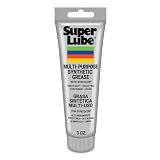
- Versatile Use: Super Lube Multi-Purpose Synthetic Grease with Syncolon is perfect as a tool grease, automotive grease, gear grease, and bearing grease for workshop or home use
- High Temperature Grease: This synthetic multipurpose lubricant resists water, salt water, dirt, and corrosion, making it ideal harsh environments
- Safe for Food & Sensitive Applications: As an NSF H1 registered food-grade lubricant, Super Lube is perfect for food processing equipment and is Kosher certified
- Maintains Stability Under Pressure: With a non-melting grease formula, Super Lube stays put without running, dripping, separating, or forming gummy deposits
- Premium Synthetic Lubricants: Super Lube manufactures specialized, effective, and regulatory-compliant lubrication solutions for industrial and mechanical settings
Manufacturer instructions show why the distinction matters. The Original Prusa XL uses a dedicated linear-rail lubrication set and separately specifies Prusa Lubricant for its Z-axis lead screws; Prusa explicitly says not to use that lubricant on the rails. Phrozen’s recommendations vary by printer model, and its named PTFE options apply only to certain T8 lead screws. Fusion3’s EDGE guide, dated May 28, 2022, names Krytox GPL 225 for its linear rails and warns that other products or methods may damage the machine or affect warranty coverage. Because that guide is older, confirm the current instructions before relying on it.
Searches for “3D printer lubricant” can help locate maintenance supplies, but the phrase does not establish compatibility. Match any product or kit to the specific printer and component named in its instructions.
Rank #2

- Effectively Reduce Noise: Specially designed for 3D printers, Creality 3D printer lubricant grease efficiently reduces the friction noise generated by components such as rails and screws, creates a quiet and comfortable printing environment, and enhances the home or studio experience
- Ensures Printing Accuracy: The high lubrication formula effectively reduces the friction between 3D printed parts, improves the smoothness of motion, and ensures printing accuracy; Extend the lifespan of printer accessories to ensure long-term stable operation
- Long Lasting Lubrication: The 3D grease is in the form of a paste, not easy to dry or flow; It can tightly adhere to the mechanical surface, maintain lubrication effect for a long time, and reduce frequent application
- Non-toxic: This 3D printer lubricant grease meets certified environmental standards, colorless, odorless, Non-toxic, rust and corrosion resistant; Non irritating volatilization during use, safe for both home and work
- Lubricant Grease Application: Widely compatible with all 3D printers, and suitable for various 3D printer accessories, such as: Z-axis lead screws, linear rods, guide rails, gears, bearings, pulley systems, stepper motor shafts, etc
Common lubrication mistakes to avoid
Using one lubricant everywhere
A printer can require different products for its rails and lead screws. Follow the instructions for each part rather than spreading one lubricant across the motion system. Prusa’s XL guidance also says its Nextruder’s primary gear and attached bearings do not need lubricant; adding it to a part that does not call for it is not better maintenance.
The Tool Desk
Outbyte Driver Updater FREEScan for outdated or missing drivers - takes under a minuteDriver Scan →Outbyte PC Repair FREEClear out junk files and repair common Windows errorsFree Scan →Borrowing another model’s schedule
Maintenance intervals vary by machine, component, and operating conditions. Do not turn one printer’s schedule or a component maker’s general guidance into a universal rule. Use the interval in the instructions for your own machine, and consult its support guidance if the schedule is unclear.
Rank #3
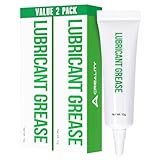
- Noise Reduction and Anti-Wear: This lubrication grease is designed to reduce noise and minimize friction-related wear, effectively protecting your machine from dust and rust. By using this grease, you can extend the lifespan of your 3D printer and maintain its smooth operation
- Enhanced Lubrication and Precision: Engineered to lubricate critical components, this grease reduces resistance and improves the fluidity and precision of movement. It ensures that your printer operates with higher accuracy, leading to better print quality and overall performance
- Non-Toxic and Non-Corrosive: Made from neutral, non-toxic, and non-corrosive materials, this lubrication grease is safe to use on all your 3D printer’s parts. It provides effective protection without causing any damage, ensuring long-term safety and reliability for your equipment
- High Viscosity and Long-Lasting: With a high viscosity that prevents dripping, this grease is easy to apply and stays in place, providing long-lasting lubrication. Its durable formulation ensures that your printer components remain protected and operate smoothly over extended periods
- Versatile Application: This lubrication grease is suitable for a wide range of 3D printer parts, including linear rods, guide rails, Z-axis lead screws, bearings, pulley systems, gears, and stepper motor shafts. It’s a versatile solution that enhances the performance of various mechanical components in your printer
Mixing products or adding more over old lubricant
THK’s LM Guide precautions state, “Do not mix different lubricants.” THK notes that even greases with the same thickener can interact adversely because their additives differ. If a printer’s procedure directs you to clean first, remove old lubricant using only the specified method before applying a new product.
Overapplying and leaving residue
More lubricant is not automatically more protection. Excess can spread beyond the intended area or collect contaminants. Phrozen tells users to wipe excess from the screw and rail after application; THK similarly says to wipe scattered excess grease as needed. Apply only the amount directed for your machine.
Rank #4

- Versatile Temperature Stable Oil: Super Lube Silicone Oil delivers reliable performance as a low-temp and high-temp lubricant for automotive and machinery applications
- Long-Lasting Resistant Oil: This oxidation resistant oil resists hydrolysis and provides long-lasting protection for bearings and moving parts
- High Performance Wetting Oil: The medium viscosity, 5000 cSt silicone oil spreads easily, offering a clear, clean coating for rubber, plastic, and metal surfaces
- NSF Registered & Food Grade Safe: Registered food-grade lubricant meets NSF H1 standards, making it ideal for use in sensitive automotive, industrial, and food processing environments
- Premium Synthetic Lubricants: Super Lube manufactures specialized, effective, and regulatory-compliant lubrication solutions for industrial and mechanical settings
Spraying a general-purpose product onto a rail to stop noise
Snapmaker warns that standard WD-40 may wash away factory grease on its rails and accelerate wear inside precision rails. That warning is specific to the context Snapmaker describes; it does not establish that every product carrying the WD-40 name has the same formulation or that every printer has the same requirements. Use the product specified by your printer’s manufacturer instead.
Do these 3 things before closing this tab:
1Fix the driver behind crashes, sound loss and screen glitches2Clear out junk files and repair common Windows errors3Scan for outdated or missing drivers - takes under a minuteHow manufacturer guidance differs
These examples illustrate why a single product or interval cannot be assumed to suit every machine. They are instructions for the named equipment, not a maintenance schedule for other printers.
| Machine or guidance | Part and specified lubricant | Application and cleaning | Interval or qualification |
|---|---|---|---|
| Original Prusa XL | Linear rails: dedicated linear rail lubrication set. Z-axis lead screws: Prusa Lubricant. Prusa says not to use its lead-screw lubricant on the rails. | Clean rails with a clean tissue or cloth; do not use degreaser or chemicals. For lead screws, use the specified thread greaser. | Rails: every 3–6 months. Lead screws: after about 500 print hours. |
| Phrozen resin printers | Recommendations vary by model. WD-40 Specialist Dry Lube with PTFE or Super Lube Synthetic Oil with PTFE are listed for some T8 lead screws; other listed models call for named greases. | Clean the Z-axis lead screw and rail separately, apply and distribute lubricant as directed, move the axis to spread it, then wipe excess. Phrozen warns against mixing WD-40 3-in-1 Lube with WD-40 Dry Lube with PTFE. | Use the recommendation for the specific model and component. |
| Formlabs Form 4L | Lead screw: a small amount of Rheolube 362HB lithium grease or similar lithium grease intended for ball bearings. | Disconnect power, remove contaminated old grease, clean the screw threads, and apply new grease. Check afterward that motion is smooth and quiet; Formlabs cautions about moving-part hazards. | Follow the Form 4L service procedure when maintenance is needed. |
| Fusion3 EDGE | Linear rails: Krytox GPL 225, as specified in the guide. | The guide warns that other lubricants or methods may damage the product or affect warranty coverage. | The cited guide is dated May 28, 2022; confirm current instructions. |
| THK LM Guides | General linear-motion component guidance, not a 3D-printer-specific recommendation. | Where there is no lubrication port, apply grease directly to the raceway and stroke the block to distribute it. Wipe scattered excess. | Approximately 100 km or 3–6 months is a starting point only; set the interval and amount for the actual machine and conditions. |
A safer process for maintenance
- Identify the exact machine and part. Confirm the model and generation, then determine whether the part is a rail, smooth rod, lead screw, or bearing.
- Read the matching maintenance procedure. Confirm the specified lubricant, amount, applicator, cleaning method, and interval. Do not substitute another model’s instructions.
- Make the machine safe to service. Power down and follow the printer maker’s procedure before touching moving parts. Formlabs explicitly requires disconnecting power for its Form 4L service procedure.
- Clean only as directed. Remove old or contaminated grease if the procedure calls for it, using the approved method. Prusa, for example, says to clean XL rails with a clean tissue or cloth, not degreaser or chemicals.
- Apply a controlled amount to the specified part. Use the named product and applicator, and keep lubricant off components the instructions say do not need it.
- Distribute and wipe as instructed. Move the axis if directed so lubricant spreads, then remove excess where the procedure calls for wiping.
- Check movement before returning to normal use. If the mechanism remains rough or noisy, shows contamination, or stalls, stop adding lubricant and consult the manufacturer’s troubleshooting guidance or support.
How often should you lubricate a lead screw?
Use the interval published for your printer and component. For the Original Prusa XL, Prusa recommends lubricating its Z-axis lead screws after about 500 print hours. That is an XL-specific instruction, not a general interval for all lead screws. THK’s approximately 100 km or 3–6 months is general LM Guide component guidance; THK says the final interval and amount should be determined by the machine and conditions.
Quick Recap
Product prices and availability are accurate as of the date/time indicated and are subject to change. Any price and availability information displayed on Amazon at the time of purchase will apply.

