
What’s actually slowing this PC down?
Pick the symptom - the matching free tool is one click away.
iTechGuides is reader-supported. When you buy through links on our site, we may earn an affiliate commission. As an Amazon Associate I earn from qualifying purchases. Learn more
To install a native Harmony mod, stop your Rust server, place the mod’s .dll in a HarmonyMods folder beside RustDedicated.exe, start the server, and run harmony.load <Mod Name> in the server console. You do not need uMod/Oxide or Carbon for a native Harmony DLL.
Compatibility is the important qualification. Facepunch describes its Rust.HarmonyMods project as “Serverside harmony mods for Rust, aimed at staging servers currently,” so check the mod’s supported Rust branch and test it on a staging server before using it on a busy production instance.
What you need before installing
A Harmony mod is normally distributed as a server-side .NET assembly, with a .dll file that patches or extends the running Rust server. It is not a client mod and it does not belong in your game installation. Native Harmony mods use Rust’s built-in Harmony loading path.
Free tools Windows power users keep installed
One-click scans. No signup required.
Confirm that the release is a native Harmony mod
Read the author’s release page and installation notes first. The package should identify the expected Rust branch or game version and tell you the mod name used by the Harmony console command. A DLL intended for Carbon, uMod/Oxide, or another loader may not work in the native folder.
#1 Best Overall

- System: Core i9 Unlocked OC CPU | Premium Chipset | 64GB Ram (Twice the high end average of 32GB in other systems) | 5TB Storage Total: 1TB M.2 NVMe up to 7000MB/s speeds SSD + 4TB 7200RPM HDD (Ultra Fast Storage), Extra M.2 NVME and HDD Port for additional Storage | Windows 11 PRO preinstalled for Advanced security and device control.
- Graphics: NVIDIA GeForce RTX 5070 OC 12GB | Factory overclocked for higher and more consistent frame rates | Real-time ray tracing for realistic lighting and reflections | DLSS 4.0 support for smoother performance at higher resolutions | Improved efficiency and lower power draw | Stronger support for multi-monitor setups with 1x HDMI and 3x DisplayPort | Better stability for long gaming sessions and GPU-accelerated tasks | VR and AI Deeplearning Ready
- Cooling & Design: 360mm Liquid Cooling | Intelligently controlled Fan Speeds for whisper quiet performance | ARGB Lighting (Software Control for thousands of options) | Dragon Front Panel | Total of 11 Fans (3 on GPU, 1 on Power supply, 8 on Overall temperature control)
- Connectivity: 1 x USB-C 3.2 | 8 x USB 3 |1 x LAN / Ethernet up to 2.5GB/s | WiFi up to 2.4GB/s | Bluetooth Enabled | Game and VR Ready | 850W 80+ GOLD Power Supply With x6 Extra SATA Connectors
- Build Quality & Support: Premium components chosen for long-term reliability | Thorough quality testing before shipment | 3-year parts warranty and 5-year labor warranty | Access to specialists with over 20 years of experience for hardware, software, and performance support | Quiet and dependable operation for everyday and extended use || As of August 17, 2026, all firmware and software components are fully updated before shipment. Fast, free 10 minute firmware update assistance is now available through our support team (Note: Firmware only needs to be updated once every 2-3 years)
Do not assume that a mod built for one Rust update will work after another update. Harmony patches are tied to the game’s assemblies and method signatures; a Rust update can make an otherwise valid DLL incompatible.
Have the required access
- File-manager, SFTP, or equivalent write access to the Rust server’s root directory.
- Permission to stop and start the server.
- Access to the live server console so you can run Harmony commands and read startup errors.
- A copy of the server files and identity information made before changing anything.
Managed hosts may use different panel labels or hide the executable from the file browser. The underlying requirement remains the same: you must be able to write to the directory containing RustDedicated.exe and use the server console.
If you are still choosing a host, Godlike.Host’s Rust server hosting comes with a Pterodactyl-based game panel, SFTP/FTP access and up to three free backups a day with restore, which fits the back-up-first routine in this guide. Confirm that you can reach the server root and console before you rely on any host for native Harmony DLLs.
Do these 3 things before closing this tab:
1Clear out junk files and repair common Windows errors2Fix the driver behind crashes, sound loss and screen glitches3Repair Windows errors before they cause bigger problemsRank #2

- System: Intel Core i5-13400F 2.5GHz 10 Cores | Intel B760 Chipset | 16GB DDR5 | 1TB PCIe 4.0 NVMe SSD | Windows 11 Home
- Graphics: NVIDIA GeForce RTX 5060 8GB Graphics | 1x HDMI | 2x DisplayPort
- Connectivity: 1 x USB-C 3.2 | 2 x USB-A 3.2 | 6 x USB-A 2.0 | 1 x LAN | WiFi 6 | Bluetooth 5.3 | 7.1 Channel Audio
- Tempered Side Case Panel | Custom RGB Lighting | Keyboard and Mouse
- 1 Year Parts & Labor Warranty, Free Lifetime Tech Support
Install a native Harmony DLL step by step
- Download the correct release. Obtain the DLL from the mod author’s release page, not from a client-mod directory or an unrelated plugin package. Record the release version, supported Rust branch, required configuration files, and the exact mod name used in commands.
- Back up the server. Save the server files and identity before making changes. Keep the backup outside the live server directory so a failed update cannot overwrite it.
- Stop the server completely. Use the host panel or service manager and wait until the process has exited. Never replace or delete a Harmony DLL while Rust is running.
- Open the server root. Find the folder that contains
RustDedicated.exe. This is the directory used by the server process, not the Rust client’s installation folder. - Create or open
HarmonyMods. In the same directory asRustDedicated.exe, create a folder named exactlyHarmonyModsif it does not already exist. - Upload the DLL. Put the mod’s
.dlldirectly insideHarmonyMods. Keep the filename supplied by the author unless that release’s documentation explicitly instructs you to rename it. Do not place it inoxide/plugins, a Carbon plugin directory, or a client folder. - Start the server. Restart Rust and wait until the console is available and the server has completed its normal startup sequence.
- Load the mod. In the server console, enter
harmony.load <Mod Name>, replacing the placeholder with the name expected by that release. The command’s name is not necessarily identical to the DLL filename. - Verify the result. Read the server log for a successful load message and any exception or dependency error. Then follow the mod author’s configuration instructions. Uploading a file alone is not proof that the patch loaded.
What a successful installation looks like
The DLL remains in the server-root HarmonyMods directory, the server reaches a usable console, and the Harmony load command returns without an error. The startup or command log should identify the mod or show its patches being applied. If the mod has a configuration file, use the location and format specified by its author rather than inventing a path.
Loading, unloading, and restarting a mod
Load an installed mod
With the server running, use:
harmony.load <Mod Name>
Use the exact mod identifier documented by the release. If the command reports that the mod cannot be found, changing capitalization or guessing from the DLL filename is unlikely to help; inspect the release notes and console output for the expected name.
Unload a loaded mod
The documented unload command is:
harmony.unload <Mod Name>
Whether a particular patch can be cleanly detached depends on the mod. Follow its removal instructions and watch the console for errors. If you are removing the file as well, unload it when the author’s procedure calls for that, then stop the server before deleting or replacing the DLL. The file operation must occur while the process is offline.
Rank #3
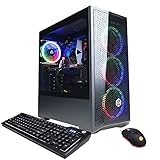
- System: Intel Core i5-10400F 2.9GHz 6-Core | Intel B460 Chipset | 8GB DDR4 | 500GB PCI-E NVMe SSD | Genuine Windows 10 Home 64-bit
- NVIDIA GeForce GTX 1660 Super 6GB Video Card | 1x HDMI | 1x DisplayPort
- Connectivity: 6x USB 3.1 | 2x USB 2.0 | 1x RJ-45 Network Ethernet 10/100/1000 | 802.11AC Wi-Fi | Audio: 7.1 Channel | Keyboard and Mouse
- Special feature: Tempered Glass Side Case Panel | RGB Case Lighting | RGB 7 Colors Gaming Mouse
- 1 year parts & labor | Free lifetime tech support
Do loaded mods survive a restart?
A host guide documents that loaded mods persist across restarts. Treat that as a state-management behavior, not as proof that a mod remains compatible after a Rust update. After every restart, read the log and confirm the mod is active before assuming the persisted state is healthy.
Remove a mod safely
- Use the mod’s documented unload procedure if it supports runtime unloading.
- Stop the server and wait for the Rust process to exit.
- Delete or move the DLL from
HarmonyModswhile the server is offline. Keeping a dated copy outside the live directory makes rollback easier. - Start the server and inspect the console for any remaining load attempt or dependency error.
- If the author specifically requires
harmony.unload <Mod Name>after restart, run that command only when the mod’s instructions say it is appropriate and confirm the result in the log.
Exactly where the DLL belongs
| Location or action | Correct? | Why |
|---|---|---|
server root/HarmonyMods/ModName.dll |
Yes | The native loader looks for Harmony mods in HarmonyMods beside RustDedicated.exe. |
Next to RustDedicated.exe without the HarmonyMods folder |
No | The DLL is not in the native Harmony directory. |
| Rust client installation | No | Harmony mods in this workflow are server-side. |
oxide/plugins |
No | That directory is for uMod/Oxide plugins, not native Harmony DLLs. |
| A Carbon plugin directory | No | Carbon has its own framework and plugin management path. |
A subfolder inside HarmonyMods |
Usually no | The documented workflow uploads the DLL directly into HarmonyMods; use a subfolder only if the mod author explicitly requires one. |
Do you need uMod/Oxide or Carbon?
No. A native Harmony DLL uses Rust’s built-in Harmony path and the HarmonyMods folder plus harmony.load and harmony.unload commands. Installing another framework does not make a native DLL safer or automatically compatible.
Choose a framework based on what the mod actually is and what operational features you need.
Rank #4

- 【PC Gaming System】This gaming PC is loaded with Intel Core I5 up to 3.6GHz and AMD Radeon RX 560 4GB graphics card, allowing you to experience top-notch gaming performance. This system features 16GB of high-speed memory and 512GB SSD Solid State Drive for lightning-fast load times.
- 【Superior Gaminig Experience】This high-performance gaming computer desktop is capable of running a wide range of popular PC games for pc gamer, including Fortnite, Call of Duty Warzone, Escape from Tarkov, GTA V, World of Warcraft, LOL, Valorant, Apex Legends, Roblox, Overwatch, CSGO, Battlefield V, Minecraft, Elden Ring, Rocket League, The Division 2, and Hogwarts Legacy with 60+ FPS
- 【Multifunctional Use】This tower computers gaming pc desktop is designed to meet the needs of different people on the computer, powerful performance not only in the game to show quality graphics, the face of the office, design, audio and video can also be comfortable, multi-tasking, fast switching smooth operation
- 【Tower Gaming PC Desktop】The gaming computer desktop is designed for versatile connectivity, featuring 2x USB 3.0 ports, 6x USB 2.0 ports, 1x RJ-45, 1x Serial, and built-in Wi-Fi. The AMD Radeon RX 560 4GB GDDR5 Graphics Card supports multiple display options including 1x HDMI, 1x DisplayPort, and 1x DVI, ensuring compatibility with a wide range of monitors
- 【Perfect Combination】Our all-in-one gaming package includes 5x RGB fans, 1x gaming keyboard, 1x gaming mouse, 1x mouse pad, and 1x graphics card holder. This comprehensive set provides you with a complete and stylish gaming setup, making it easy to elevate your gaming experience. Enjoy vibrant lighting, ensuring that you’re fully equipped to tackle any challenge!
| Option | What you install | Compatibility question | Configuration and reload | Ecosystem |
|---|---|---|---|---|
| Native Harmony | A server-side Harmony .dll in HarmonyMods |
Does the DLL support your current Rust branch and server build? | Use the mod’s own configuration instructions and harmony.load/harmony.unload; capabilities vary by release. |
Focused on native Harmony mods; support is specific to each author. |
| uMod/Oxide | The uMod/Oxide server framework and its plugins | Is the plugin written for the installed uMod/Oxide version and Rust branch? | Managed through the framework’s plugin system rather than Harmony commands. | Large plugin-oriented ecosystem with its own installation and administration model. |
| Carbon | The Carbon Rust framework | Does the Carbon release support your Rust build and the plugin or patch? | Carbon documents hot reload with carbon.reload and supports its own configuration workflow. |
Carbon is built around Harmony and can run Oxide-compatible plugins, but it remains a separate framework. |
Native Harmony is the right choice when
- The author supplied a native Harmony DLL and explicitly names the
HarmonyModsdirectory. - You want to avoid installing a general-purpose plugin framework.
- You can test the patch against the exact Rust branch running on your server.
uMod/Oxide is the right choice when
- The software is distributed as an Oxide plugin rather than a native Harmony DLL.
- You need the uMod/Oxide plugin administration model and its established plugin ecosystem.
- The author’s instructions explicitly require uMod/Oxide.
The official uMod Rust guide documents framework installation with umod install rust -P. That command belongs to the uMod/Oxide workflow; it is not a prerequisite for a native Harmony DLL.
Carbon is the right choice when
- The mod or plugin author requires Carbon.
- You need Carbon’s framework features or its documented reload workflow.
- You have confirmed that the specific plugin, Rust branch, and Carbon release are compatible.
Carbon uses Harmony internally, but that does not mean every native Harmony DLL can be dropped into Carbon’s directories or loaded with Carbon commands. Follow the package’s own instructions.
Quick wins for a faster PC:
Repair Windows errors before they cause bigger problemsFix Now →Scan for outdated or missing drivers - takes under a minuteDriver Scan →Clear out junk files and repair common Windows errorsFree Scan →Troubleshooting a failed Harmony installation
The server says the mod cannot be found
- Verify that the file is a
.dll, not a compressed archive or a DLL hidden behind a second extension such as.dll.zip. - Confirm that it is directly in the server-root
HarmonyModsfolder. - Make sure that folder is beside the active
RustDedicated.exe, not beside a backup executable or client installation. - Check that you used the mod’s documented name in
harmony.load, rather than assuming the filename is the identifier. - Confirm that the server was restarted after the file was uploaded if the release requires startup discovery.
The load command fails
Read the complete console error before changing files. A failed command can indicate a wrong mod name, a missing dependency, an unsupported Rust branch, or an assembly-load problem. Re-uploading the same DLL without checking the release notes will not resolve a version mismatch.
Best Value

- System: Intel Core Ultra 5 250KF Plus 4.2GHz 18 Cores | Intel B860 Chipset | 16GB DDR5 | 1TB PCIe 4.0 NVMe SSD | Windows 11 Home
- Graphics: NVIDIA GeForce RTX 5060 Ti 8GB Graphics | 1x HDMI | 2x DisplayPort
- Connectivity: 1 x USB-C 3.2 | 2 x USB-A 3.2 | 4 x USB-A 2.0 | 1 x LAN | WiFi 6 | Bluetooth 5.3 | 7.1 Channel Audio
- Liquid Cool CPU | Tempered Side Case Panel | Custom RGB Lighting | Keyboard and Mouse
- 1 Year Parts & Labor Warranty, Free Lifetime Tech Support
The server crashes after a Rust update
Stop the server before replacing or deleting the DLL. Carbon.RSM warns that changing a Harmony DLL while the server is running can produce Invalid IL exceptions and eventual crashes. Once the process is offline, restore the previous known-good release or remove the incompatible DLL, then start the server and verify a clean log.
The mod worked before an update but is now incompatible
Check the mod’s release notes and the Rust branch named by the author. Harmony patches depend on the game code they modify, so an update can invalidate them without any change to your server configuration. Facepunch’s own Rust.HarmonyMods project is described as staging-oriented, which is a reason to test updates away from production rather than treating every release as production-ready.
The host panel does not show a folder named HarmonyMods
Create it manually in the directory containing RustDedicated.exe, provided your host grants write access there. Some panels expose an instance directory, Linux service directory, or “server files” view instead of calling it the server root. If you cannot identify the active executable or access the console, ask the host for the server-root path and file permissions before uploading anything.
The file appears correct but nothing loads
- Check ownership and permissions so the Rust service account can read the DLL.
- Ensure the DLL was not uploaded into a similarly named inactive server instance.
- Look for required companion files or configuration specified by the author.
- Review the startup log and the response to
harmony.load; do not infer success from the absence of a visible error in the hosting panel.
A safe update and rollback routine
Use a repeatable sequence whenever Rust or the mod changes:
- Record the currently running Rust branch, mod release, DLL filename, and configuration.
- Back up the server files and identity.
- Stop the server and wait for the process to exit.
- Move the old DLL to a dated backup location rather than overwriting it immediately.
- Upload the new release to
HarmonyMods. - Start the server and monitor the console through the normal startup sequence.
- Run
harmony.load <Mod Name>if the mod is not automatically active. - Test the mod’s documented behavior on a staging server or controlled test session.
- If the server throws exceptions or the mod behaves incorrectly, stop it, restore the previous DLL while offline, restart, and confirm the rollback in the log.
Keeping the old DLL outside the active folder gives you a rollback path without risking a live file replacement. It also makes it easier to identify which release introduced a failure.
Pre-launch checklist
- The DLL release names the Rust branch or build it supports.
- You have confirmed that it is a native Harmony mod, not an Oxide plugin or Carbon package.
- The server and identity are backed up.
- The server is stopped before creating the folder or changing files.
HarmonyModsis beside the activeRustDedicated.exe.- The DLL is directly inside that folder and retains the author’s filename.
- You know the exact identifier required by
harmony.load. - You can read the server console and logs.
- You have tested the release on a staging instance when possible.
- You will never replace or delete the DLL while Rust is running.
Bottom line
Native Harmony installation is a small file-and-console workflow: stop the server, place the DLL in HarmonyMods beside RustDedicated.exe, start the server, run harmony.load <Mod Name>, and verify the log. Use harmony.unload <Mod Name> when the mod’s removal procedure calls for it, and make every file change while the server is offline. uMod/Oxide and Carbon are separate frameworks, not prerequisites; the decisive compatibility checks are the mod’s release instructions and the Rust branch running on your server.
Quick Recap
Product prices and availability are accurate as of the date/time indicated and are subject to change. Any price and availability information displayed on Amazon at the time of purchase will apply.

