
The Tool Desk
Outbyte PC Repair FREERepair Windows errors before they cause bigger problemsFix Now →Outbyte Driver Updater FREEScan for outdated or missing drivers - takes under a minuteDriver Scan →iTechGuides is reader-supported. When you buy through links on our site, we may earn an affiliate commission. As an Amazon Associate I earn from qualifying purchases. Learn more
Stop using a power cord if you find exposed wire, insulation that appears penetrated, a damaged plug, or unusual heat. Inspect the entire cord from plug to device entry, including blades, connectors, and strain-relief points. A detachable extension cord can be replaced only with a compatible cord; a cord attached to an appliance requires the manufacturer’s service instructions or qualified repair.
What to check before using a cord
Unplug the cord before examining it. If it is hot, sparking, smoking, or visibly exposing a conductor, do not handle the damaged area or plug it back in. If you can disconnect it safely without touching damaged parts, do so; otherwise keep people away and seek appropriate help. Do not continue operating equipment on a cord while deciding whether the damage is serious.
Inspect the cord in good light and follow it from one end to the other. Damage may be on the plug, along the jacket, at a connector, or where the cord enters an appliance. A quick look at the middle section alone can miss a loose connection or a split at a stress point.
Windows Errors? Fix Them Before They Spread
Repair common Windows errors and clear accumulated junk for a smoother, more stable PC - no reinstall needed.Free scan · no reinstallOutdated Drivers Are Slowing You Down
One free scan finds every outdated or missing driver and matches the right update for your exact hardware.Free scan · exact hardware matchUse this inspection sequence
- Start at the plug. Look for a cracked, loose, melted, or discolored plug body; bent, missing, or deformed blades; and signs of overheating. Do not use a plug that does not fit securely in the outlet.
- Check the cord where it leaves the plug. Look closely at the strain relief—the part intended to reduce bending at the connection. Splits, looseness, exposed wire, or severe bending here are reasons to stop using the cord.
- Follow the full length. Check every side for cuts, cracks, fraying, abrasion, crushing, pinches, flattened sections, or places where the jacket has pulled apart. Move the cord enough to see areas hidden against a wall or surface, without flexing a visibly damaged spot.
- Inspect connectors and the device entry. On a detachable cord, check both cord-end connectors. On an appliance cord, inspect the point where it enters the equipment for cracking, looseness, or strain. Do not open the appliance to inspect internal wiring.
- Consider what happened during use. A cord that became unusually warm, was caught in a door, pulled hard, crushed under furniture, or exposed to water or sharp edges deserves particular caution, even if the damage is not obvious.
OSHA’s flexible-cord guidance identifies hazards such as abrasion, sharp edges, pinching, fasteners, and strain at connections. ESFI also advises consumers to inspect extension cords before use and not to use one that is hot or damaged. The sources are useful for spotting risks, but a visual inspection cannot certify a cord as safe when its integrity is uncertain.
#1 Best Overall

- FOR 2-PRONG DEVICES: Works with most TVs, monitors, printers, and other devices that require a 2-pin power connector
- PACKAGE INCLUDE: 1 x High Quality 5ft AC 2 Prong Power Cord
- COMPATIBILITY: compatible with PS2, PS3, PS4, PS5, Xbox One S, Xbox One X, Xbox Series S, Xbox Series X, Apple TV, many printer, consumer electronics, and power brick models
- FEATURES: High Quality 2 Prong 5ft AC Power Cord, universal power cable is perfect for bedroom, living room office and home use.
Give special attention to locations where the cord is held in place or repeatedly bends. A door or window can press the jacket against an edge; a staple or other fastener can pierce or crush it; furniture can flatten a section; and dragging a cord across rough or sharp surfaces can wear it down. Repeated pulling, tight bending, or twisting near the plug and device entry can stress the connection over time. These are reasons to inspect the entire route, not just the areas that are easy to see.
Look for evidence of movement or strain as well as visible breaks. A cord that is pulled tight between the outlet and equipment, or that hangs from its plug, can put stress on the plug, connector, or device entry. A loose connector or an intermittent connection is not something to correct by finding a position where it happens to work. Stop using it and identify the appropriate replacement or service route.
Recognize damage that means stop use
Do not use a cord with an exposed conductor, a cut or crack that reaches into the cord, fraying, a damaged plug or connector, missing or deformed prongs, loose parts, or evidence of heat damage. Crushing or pinching can harm internal conductors even when the outside jacket does not show a clear break. If a cord has been severely stressed or you cannot tell whether its insulation remains intact, leave it out of service.
- Exposed wire or penetrated insulation: The cord’s protective layers may no longer isolate live parts. Do not cover the spot and resume use.
- Damaged blades, plug body, or connector: A compromised connection can create shock, arcing, or fire hazards. Replace a detachable cord with a compatible one; for an appliance-attached cord, use model-specific service guidance.
- Unusual heat, melting, or discoloration: Stop using the cord and the connected equipment until the cause is addressed. Heat may indicate an unsuitable load, poor connection, or damage.
- Loose or intermittent connection: Do not wiggle the cord into a working position. A connection that cuts in and out can indicate damage at the plug, connector, or device entry.
- Crushing, pinching, or severe abrasion: Treat these as potential internal damage, even if conductors are not visible.
The U.S. Consumer Product Safety Commission’s Home Electrical Safety Checklist and Extension Cord Safety guidance warn that damaged cords and exposed live wires can cause shock or fire. Its consumer advice is to replace damaged cords or the equipment when needed, not to keep using a questionable cord.
Do not regard a lack of visible copper as proof that a cord is safe. The jacket may be damaged without showing a conductor, and crushing or pinching may affect internal parts that cannot be inspected from outside. If a cord has been caught in a door, sharply crushed, or otherwise subjected to substantial force, stop using it if you are uncertain about its condition. Do not test it by plugging it in to see whether it still works.
Rank #2

- LENGHT: Use this versatile 5ft (1.5m) power cable to reach your gear & deliver safe reliable power Perfect for Monitors computers and other gadgets
- STURDY AND FLEXIBLE: Features a fully molded design that provides maximum durability and long life.
- PLUG: Replaces lost or worn-out power cords Universal design works with your PC monitor TV printer or other devices with a 3 pin power connection
- DURABILITY: Heavy-duty 18 AWG gauge cord is fully molded for maximum durability
A scuff is not the same as a puncture—but do not guess
A superficial mark on the outer surface may look different from a cut that penetrates the jacket, yet appearance alone may not show whether the underlying insulation or conductors are affected. Do not peel, probe, or cut the jacket to investigate. If the jacket is penetrated, wire is visible, or you cannot confidently distinguish cosmetic wear from structural damage, stop using the cord and replace it or have the equipment assessed through the appropriate service route.
Electrical tape is not a universal repair. CPSC consumer guidance cautions against inadequate repairs such as taping damaged insulation. Covering a damaged area does not restore the cord’s original construction or establish that it can safely carry its intended load.
OSHA interpretations from 1997 and 1998 discuss limited workplace cases involving superficial jacket damage versus damage that penetrates the jacket. Those cases are tied to the workplace electrical rules and their specific circumstances; they are not a household method for deciding to tape a cord and return it to service. For a consumer, the practical choice is to stop use when the cord’s integrity is in doubt and use an appropriate replacement or service process.
Choose a replacement for a detachable extension cord
A detachable extension cord is a separate cord with plugs or connectors intended to connect compatible equipment. Do not assume that a cord is suitable just because its connector can be forced into place or a product listing calls it a “replacement power cord.” Confirm the equipment instructions and the cord’s markings before buying or connecting one.
| What to match | What to verify | Why it matters |
|---|---|---|
| Device and connector | The cord-end connector and plug configuration must match the equipment and outlet as designed. Check the device manual or manufacturer’s specified part. | A similar-looking connector may not fit correctly or may not be intended for that device. |
| Electrical rating and load | Check the cord’s voltage and current or wattage rating against the equipment requirements. Use a cord with capacity that meets or exceeds the device’s needs, as ESFI advises. | An undersized cord can overheat under load. |
| Grounding | Preserve the grounding configuration required by the equipment. Do not remove a grounding pin or use an adapter to defeat grounding. | Grounding is part of the equipment’s protection design. |
| Location and intended use | Choose a cord marked for indoor or outdoor use as appropriate to where it will be used. | A cord intended only for indoor use is not the right choice outdoors. |
| Product safety listing | Where applicable, look for a listing or certification from a recognized testing laboratory and follow the equipment instructions. | A listing is one compatibility and safety check, not a substitute for matching the rating and use. |
Think of compatibility as a set of checks, not a single matching feature. The connector may look right while the electrical rating, grounding arrangement, or indoor/outdoor marking is wrong. Likewise, a cord with an adequate load rating may still be the wrong type for the device. Compare the device or model requirements, connector and plug configuration, grounding, rating and load capacity, intended setting, and recognized laboratory listing where applicable. A generic search for a “replacement power cord” is only a starting point; it does not establish that a particular cord fits your equipment.
Rank #3
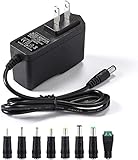
- [Power Specs]: Input 100V-240V 50/60Hz; Output: 12V 2A. Output adaptor Self-Adapting Barrel jack size: 5.5mm x 2.1mm (applicable 2.5mm) positive (+) center.
- [Intelligent Identification Output]: The adapter can automatically identify the current amperage required by the electronic device. For example; 50ma 100ma 150ma 200ma ~ 800ma 900ma 1000mA 1500mA 2000mA, etc. The highest output is 2A.
- [Combination Selection]: 8 Interchangeable DC Plug connectors. You can choose from a variety of combinations to better use the adapter. You can DIY adapter projects and use for more 12V home electronics.NOTE: This only works with 12V devices that are in good working order. For older equipment that is more than five years old, we recommend that it be inspected before use.
- [Extensive Compatibility]: Suitable for CCTV Cameras, LED Strip light, led tape light, keyboard, BT speakers, GPS, webcam, router, and more 12V electronics.
- [Lifetime Friendly Customer Support]: If you are unsatisfied with the product, please don't hesitate to contact us! We are committed to providing you with excellent customer service.
Read the markings on the cord and the equipment rather than relying only on a product photo or seller description. If a marking is missing, unclear, or inconsistent with the device instructions, do not guess. Ask the equipment manufacturer or a qualified service professional to identify a suitable replacement. A certification or listing does not override a mismatch in connector, grounding, load, or setting; it is one part of the check.
Recommended Free Tools
Do not use a cord that is too short if doing so would pull on the plug or device entry, or one that is so long that it creates a trip or entanglement hazard. Avoid connecting extension cords to one another unless the equipment’s instructions specifically allow the arrangement. An extension cord is for temporary use, not a substitute for permanent building wiring; ESFI advises keeping its capacity at or above the equipment’s power needs.
Check the equipment instructions before purchase
- Find the appliance or equipment model number and consult its manual or manufacturer support information.
- Record the specified cord type, connector, electrical rating, and grounding arrangement. If the manufacturer specifies a replacement part, use that specification rather than choosing by appearance.
- Compare those requirements with the markings on the proposed cord, including indoor/outdoor suitability and any load limits.
- Do not connect the cord if a required rating or compatibility detail is missing or unclear. Ask the manufacturer or a qualified service professional to identify the correct option.
- After fitting a confirmed compatible detachable cord, inspect that it seats securely and route it so it will not be pinched, crushed, or pulled during use.
Before you connect a replacement, check that the cord and the equipment are in suitable condition and that the connector seats as designed. It should not need to be forced, held at an angle, or supported by pulling the cord. If it does not seat securely, or if the plug or connector configuration differs from what the device specifies, do not improvise with an adapter or modify the cord. Go back to the device instructions or ask the manufacturer to confirm the correct part.
If the cord is attached to an appliance
A cord that enters an appliance and cannot be unplugged from the device is not interchangeable with a detachable extension cord. Replacing it can involve opening the equipment and making electrical connections; the correct part and procedure depend on the appliance’s model and construction. Do not cut off a damaged section, splice in another cord, or follow generic wiring instructions based only on wire color or a similar-looking replacement.
Consult the manufacturer’s service instructions or contact qualified repair service if the attached cord is damaged, loose, or heat-affected. If the manufacturer does not provide a consumer replacement procedure, or you are uncertain about the model-specific requirements, leave the repair to a qualified professional. If the equipment is not worth or cannot be safely repaired, stop using it and arrange appropriate replacement or disposal.
Rank #4
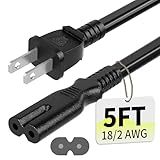
- Specifications: 5 feet tv power cord, non polarized 2 prong figure 8 power Cord (C7 to NEMA 1-15P ), 7A, 18AWG, 125V, NISPT-2, ETL listed
- Compatible: This ac power cable is fit for Sony PS5 / PS4 Slim / PS4/PS3 Slim/ PS3 Super Slim/Microsoft Xbox One S/Xbox One X/ Xbox Series X/Xbox Series S and other electronic devices such as TVs, printers, speakers, monitors, etc
- ETL Listed / Safety: This PS5 power cord is constructed with 100% pure copper and a flexible PVC jacket, providing high conductivity and minimal power loss
- Compatibility Note: To ensure compatibility, please verify that the connector matches your device's power port as illustrated in the product images
- Power Your Devices with the Perfect Reach: Select from multiple lengths to find your ideal match; this cord ensures safe, stable power for your game console, sound bar, speaker system and more
For this case, the key comparison is not between a damaged cord and any cord that appears to fit; it is between the appliance’s model-specific service requirements and the work needed to restore it safely. The manufacturer may specify a particular replacement part or service procedure. If those instructions are unavailable to you, unclear, or beyond your capabilities, qualified repair is the safer route. The same caution applies if damage appears at the point where the cord enters the appliance: do not open the housing simply to see what is wrong.
Why workplace electrical rules are not a home repair guide
OSHA’s electrical rules apply to covered workplaces and work equipment; they are not a consumer tutorial for repairing household cords. Under 29 CFR 1910.334(a)(2)(ii), covered workplace equipment with a defect or damage that might expose an employee to injury must be removed from service until the repairs and tests needed to make it safe have been completed. That is a workplace requirement, not a household inspection schedule or permission for an unqualified person to repair a cord.
In a September 9, 1997 interpretation, corrected April 20, 2009, OSHA’s John B. Miles, Jr., Director of the Directorate of Compliance Programs, wrote: “Repair or replacement of the flexible cord is required when the outer jacket is penetrated or the conductors or their insulation, inside are damaged.” This addresses the workplace rules and scenario discussed in that interpretation. It should not be read as complete instructions for repairing a household appliance cord. OSHA’s older interpretations distinguish limited cases of superficial jacket damage from damage that penetrates the jacket; for consumers, CPSC’s warning against inadequate tape repairs and the uncertainty of visual inspection support the safer course of stopping use when cord integrity is in doubt.
OSHA’s flexible-cord material also describes hazards created by use conditions such as abrasion, sharp edges, pinching, fasteners, and strain. In covered workplace settings, inspection and removal-from-service duties depend on the applicable rule and work context. Those requirements should not be translated into a universal consumer repair procedure or a claim that a cord is safe merely because it passed a quick visual check. For household use, follow the equipment maker’s instructions and choose replacement or qualified service when a cord is damaged or uncertain.
Prevent damage after replacing or inspecting a cord
- Route cords away from doorways, window edges, sharp corners, hot surfaces, and places where they can be walked on or driven over.
- Do not run cords under rugs, carpets, or furniture where wear and heat can go unnoticed.
- Keep cords clear of staples, nails, and other fasteners that could pierce or crush the jacket.
- Pull on the plug body—not the cord—when disconnecting equipment. Avoid yanking, twisting, or tightly bending a cord at its plug or appliance entry.
- Uncoil extension cords before using them when the manufacturer’s instructions require it, and keep their load within the marked rating.
- Use only a cord rated for the location, and keep outdoor cords and connections protected as directed by their labels and instructions.
- Inspect an extension cord before each use and put it away so it will not be crushed, sharply bent, or abraded in storage.
- Use extension cords temporarily rather than as permanent wiring; if a location needs power regularly, have an appropriate permanent solution installed.
Good routing helps prevent the same damage from returning. Keep the cord path visible where practical and avoid placing it where a door, window, furniture leg, or foot traffic will press on it. Store an extension cord without sharp bends or crushing, and follow its labeling and the equipment instructions for use. If a space routinely needs an extension cord, treat that as a sign to consider an appropriate permanent power solution rather than leaving a temporary cord in place.
Best Value

- IN THE BOX: Universal 10-foot replacement power cord
- COMPATIBILITY: 18 AWG (American wire gauge); NEMA 5-15P to IEC320C13
- VERSATILE: Works with most PCs, monitors, printers, and more
- EASY TO USE: 3-pin power connector
- SAFETY RATED: UL listed for safety
Safe decision in one minute
- Damaged or hot? Stop use and disconnect safely if possible.
- Detachable extension cord? Replace it only after confirming connector, rating, grounding, load capacity, and indoor/outdoor suitability.
- Attached appliance cord? Follow model-specific manufacturer service instructions or use qualified repair.
- Not sure whether the jacket is breached or the cord is compatible? Do not tape it, guess, or put it back into use; get appropriate service or replacement.
Frequently Asked Questions
Can I keep using a cord if the damage looks like a small scuff?
A superficial mark may not be the same as a cut through the jacket, but appearance alone may not reveal whether underlying insulation or conductors are affected. Do not peel or probe the jacket. If it is penetrated or you are unsure, stop using the cord and replace it or have the equipment assessed through the appropriate service route.
Can I repair a damaged power cord with electrical tape?
No. CPSC consumer guidance cautions against inadequate repairs such as taping damaged insulation. Tape does not restore the cord’s original construction or prove that it can safely carry its intended load. Stop using a questionable cord and use a compatible replacement or qualified service.
Can I replace an appliance’s attached cord with a generic power cord?
Not safely based on appearance alone. An attached cord’s replacement part and procedure depend on the appliance model and construction. Follow the manufacturer’s service instructions or use a qualified repair professional; do not cut, splice, or rely on generic wiring directions.
What’s actually slowing this PC down?
Pick the symptom - the matching free tool is one click away.
What should I match when buying a detachable replacement cord?
Check the equipment instructions and match the connector and plug configuration, electrical rating and load capacity, grounding arrangement, indoor or outdoor suitability, and recognized testing-laboratory listing where applicable. If a key marking or requirement is unclear, ask the manufacturer or a qualified service professional before connecting it.
What should I do if a power cord feels hot?
Stop using the cord and connected equipment. Disconnect it only if you can do so safely without touching damaged parts. Do not keep using it while trying to determine the cause; unusual heat can indicate damage, a poor connection, or an unsuitable load.
Are OSHA cord rules instructions for repairing cords at home?
No. OSHA’s electrical rules and interpretations address covered workplace settings and work equipment. They describe workplace inspection, removal-from-service, repair, or testing duties in those contexts; they are not consumer repair instructions or permission for an unqualified person to repair a household cord.
The Bottom Line
Inspect the plug, full cord, connectors, strain reliefs, and device entry. Stop using a cord that is damaged, hot, or uncertain. Replace a detachable cord only after checking compatibility, rating, grounding, load, and setting; for an appliance-attached cord, follow model-specific service instructions or use qualified repair.
Quick wins for a faster PC:
Clear out junk files and repair common Windows errorsFree Scan →Fix the driver behind crashes, sound loss and screen glitchesFind Drivers →Quick Recap
Product prices and availability are accurate as of the date/time indicated and are subject to change. Any price and availability information displayed on Amazon at the time of purchase will apply.

