
Do these 3 things before closing this tab:
1Repair Windows errors before they cause bigger problems2Scan for outdated or missing drivers - takes under a minute3Clear out junk files and repair common Windows errorsiTechGuides is reader-supported. When you buy through links on our site, we may earn an affiliate commission. As an Amazon Associate I earn from qualifying purchases. Learn more
Identify the bramble before you remove it, then match the control method to the patch. Blackberry is a group of Rubus species, not one uniform weed: some wild species are native and valuable to wildlife, while others are invasive or troublesome in a particular region. For a small patch, cut the canes so you can dig out the root crowns and as much root as possible. For a large infestation, plan repeated mowing, cutting, grazing or a carefully label-compliant herbicide program, followed by years of inspection. A single cut almost never eliminates an established plant because crowns, rhizomes, rooted cane tips and seeds remain capable of producing new growth.
What counts as blackberry?
“Blackberry” or “bramble” describes shrubs and trailing vines in the genus Rubus. Wild plants commonly have prickly canes and compound, toothed leaves, but those features vary among species. Before removing a plant, confirm its identity and check whether it is native, protected or considered invasive where you live. Regional identification guides are more dependable than assuming every wild bramble is the same species.
Wild blackberries can provide food and cover for birds and mammals. A native species may still become unwelcome in a path, vegetable bed or other confined setting, but its conservation value should be part of the decision.
Quick wins for a faster PC:
Repair Windows errors before they cause bigger problemsFix Now →Scan for outdated or missing drivers - takes under a minuteDriver Scan →Clear out junk files and repair common Windows errorsFree Scan →How to identify blackberry in the garden
Examine the canes and prickles
Look at the growth habit first. Blackberry canes may arch, trail or form a dense thicket. They are generally prickly, although not every Rubus plant has prickles. Cutleaf blackberry has ridged, arching canes with stiff, curved prickles. In Pacific Northwest descriptions, Himalayan blackberry has similar arching growth, while the main stem of “evergreen” blackberry is hairy and rounded with slender, straight prickles. Those distinctions are regional clues rather than a universal key.
#1 Best Overall

- IDEAL BRANCH TRIMMER: 28" Steel blade garden bypass lopper that glides through up to 1.5" thick branches for easy cuts; Works well for trimming tree branches to maintain your yard and garden, and to encourage overall plant health and appearance
- MAXIMUM POWER AND PRECISION: Low-friction blade coating makes smooth cuts, reduces gumming, and enhances rust resistance; Non-slip grip handle allows for more control of clippers
- LONG-LASTING AND RELIABLE: Steel blades stay sharp through heavy use and provide excellent durability for lasting value; Fiskars pruning shears and tools are built to last and backed by a lifetime warranty
- QUALITY GARDEN TOOLS: Designed to help you cultivate a better garden, Fiskars garden and yard tools are equipped with smart technologies and award-winning, ergonomic features that make it easier and more enjoyable to transform your outdoor space
- INCLUDES: (1) Fiskars Manual Bypass Lopper measuring 28” long; Makes clean cuts on branches up to 1-1/2" in diameter
Count and study the leaflets
Compound leaves are a useful separator:
- Himalayan blackberry generally has five distinct, toothed, mostly oval leaflets.
- Cutleaf blackberry usually has five leaflets on the main stem, with deep incisions and toothed edges.
- California blackberry generally has three leaflets.
- Thimbleberry has a single, simple leaf and lacks prickly stems, so it does not look like the common prickly blackberries described above.
Leaf shape can change with age and position on a cane. Use several leaves and the whole plant, not one unusually shaped leaflet.
Use flowers and fruit as confirmation
Blackberry flowers are usually white to pinkish and have five petals. The fruit is an aggregate of small drupelets. A ripe blackberry stays attached to the part of the flower that carried the fruit; a raspberry separates from that structure and leaves a cap-like receptacle behind. Fruit is seasonal, so do not wait for it if the plant must be dealt with earlier.
Why cutting once does not work
Individual canes are typically short-lived, but the plant is perennial below ground. A first-year cane grows leaves and stems without fruiting. In its second year it flowers and produces fruit, then dies. The crown and lateral rhizomes survive and send up replacement shoots.
Arching cane tips can touch soil, root and create daughter plants away from the original crown. Birds and mammals can move seeds to new sites. Consequently, cutting a visible stem removes the canopy but leaves several routes for recovery.
Rank #2

- IDEAL TREE BRANCH CUTTER: 32" Steel blade bypass lopper that glides through up to 2" thick branches for easy cuts; Tree Pruner that works well for trimming tree branches to maintain your yard and garden
- MAXIMUM POWER AND PRECISION: Garden loppers with PowerGear2 technology that multiplies leverage to maximize branch-cutting power over traditional designs; modified gears and cam mechanism power through the middle of branches, the toughest part to cut
- LONG-LASTING AND RELIABLE: Tree lopper with fully hardened bypass-style steel blade includes a low-friction coating for smooth cutting, less gumming and improved rust resistance; Fiskars pruners, tree trimmers, and gardening tools are made to last
- COMFORTABLE AND CONVENIENT: Bush trimmer with rounded ergonomic handles with SoftGrip enhances comfort and control
- QUALITY GARDEN TOOLS: Designed to help you cultivate a better garden, Fiskars garden and yard tools are equipped with award-winning, ergonomic features
Root systems can be extensive. California wild-blackberry information describes most roots at approximately 1½ feet (50 cm), with some reaching about 6½ feet (2 m). Those measurements are regional observations, not a guaranteed depth for every species or garden. Expect to find roots beyond the crown and avoid treating the quoted depths as a digging limit.
Oregon State University Extension attributes this warning to Himalayan blackberry: “A single plant can grow into a six-square-yard thicket in less than two years.” That is a page-specific statement, not a growth rate that applies to every species, climate or garden. It illustrates why small shoots should be dealt with before they root and spread.
Choose a control method by patch and risk
| Situation | Most practical starting point | What it can and cannot do | Main cautions |
|---|---|---|---|
| One or a few plants with accessible crowns | Cut canes, then dig crowns and roots | Can remove the perennial base when roots are removed thoroughly | Root fragments can resprout; thorns require protective clothing |
| Broad patch where machinery or labor is available | Repeated mowing or cutting; grazing may be possible | Reduces leaves and weakens stored root reserves over time | One pass only reduces the canopy and may stimulate regrowth; nearby vegetation can be damaged |
| Large or inaccessible infestation | Locally approved herbicide approach, sometimes combined with cutting | Can reach plants that are impractical to dig or mow | Product, rate, timing, permits and site restrictions are label- and location-dependent |
| Cleared ground after removal | Competitive replanting plus inspection | Shade and crowding reduce opportunities for new shoots | Seedlings and overlooked roots still require prompt removal |
Choose by asking four questions: Can you expose and remove the crown? How large is the patch? Are desirable plants, drains, streams or wetlands nearby? Can you return to the site repeatedly for more than one season? No single method is established as best for every garden.
Outdated Drivers Are Slowing You Down
One free scan finds every outdated or missing driver and matches the right update for your exact hardware.Free scan · exact hardware matchWindows Errors? Fix Them Before They Spread
Repair common Windows errors and clear accumulated junk for a smoother, more stable PC - no reinstall needed.Free scan · no reinstallHow to remove a small patch without chemicals
Equipment and personal protection
- Bypass loppers or sturdy hand pruners for cutting canes.
- A garden spade and, where soil permits, a digging fork for loosening the crown and following roots.
- Thorn-resistant gloves, long sleeves, long trousers, sturdy shoes and eye protection.
- A tarp, log pile or other elevated surface for drying removed material.
Loppers make access easier; they do not remove the perennial root system by themselves. Protective equipment reduces injury risk but does not make an unsafe pesticide application acceptable.
Rank #3

- IDEAL BRANCH TRIMMER: Fiskars 28-Inch Power-Lever Bypass Garden Lopper glides through branches up to 1.75" thick for easy cuts; Works well for trimming tree branches to maintain your yard and garden and encourage overall plant health and appearance
- MAXIMUM POWER AND PRECISION: Power-Lever technology features a compound lever that gives you more cutting power than traditional designs; Low-friction blade coating for smoother cuts with less gumming and rust resistance
- LONG-LASTING AND RELIABLE: Steel blades stay sharp through heavy use and provide excellent durability for lasting value; Fiskars pruning shears and tools are built to last
- COMFORTABLE GARDEN TOOLS: Ergonomic, rounded handles with SoftGrip touchpoints for enhanced comfort and control, while non-slip grip handles allow for more control of clippers
- QUALITY GARDEN TOOLS: Designed to help you cultivate a better garden, Fiskars garden and yard tools are equipped with smart technologies and award-winning, ergonomic features that make it easier and more enjoyable to transform your outdoor space
Cut for access
- Choose a time when the soil is workable rather than waterlogged or baked hard.
- Cut the canes close enough to the ground to see where stems emerge. Set each section aside on a tarp or other surface that keeps it off soil.
- Trace the stems to the central crown. Do not drag viable tips across bare ground, where they can root.
Dig the crown and follow the roots
- Drive a spade around the crown, then loosen the soil with a fork when possible.
- Lift the crown and pull out roots gradually instead of snapping them under tension.
- Search the surrounding soil for lateral roots and new shoots. Remove as much of the connected root system as practical.
- Do not chop roots into small pieces. Oregon State University Extension warns that each fragment can resprout.
- Recheck the site later in the growing season and remove any new shoots while they are small.
Digging is labor-intensive, but it addresses the part of the plant that produces replacement canes. If a root breaks, find and remove the remaining section rather than assuming the visible crown was the whole plant.
How to suppress a large infestation
Repeat mowing or cutting
Mowing, chopping or cutting removes leaves that manufacture food for the roots. Repeated work can weaken a stand, whereas a single operation mainly exposes soil and reduces the canopy temporarily. UC IPM describes this approach as short-term canopy reduction; better suppression requires repetition. King County describes repeated spring and fall removal over several years.
Plan routes and equipment so cut stems do not contact soil. Protect trees, shrubs and ground-nesting wildlife that should remain. Inspect the edges of the patch, where cane tips may have rooted beyond the main canopy.
Recommended Free Tools
Consider grazing only where appropriate
Goat grazing can be part of a repeated suppression program, but it is not a one-time eradication service. Animals, fencing, access, water, plant toxicity considerations and protection of desirable vegetation must be addressed locally. Follow grazing with inspections and treatment of shoots that animals miss.
Rank #4
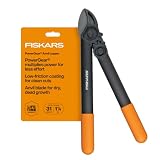
- IDEAL BRANCH TRIMMER: Fiskars 15-Inch Anvil PowerGear Super Pruner glides through branches up to 1.25" thick for easy cuts on dry, dead growth; trim tree branches to maintain your yard and garden and maintain overall plant health and appearance
- MAXIMUM POWER AND PRECISION: PowerGear technology multiplies leverage to maximize branch-cutting power over traditional designs; Low-friction blade coating for smoother cuts with less gumming and improved rust resistance
- LONG-LASTING AND RELIABLE: Rugged DuraFrame construction provides superior strength and reduced weight; Steel blades stay sharp through heavy use and provide excellent durability for lasting value; Fiskars pruning shears and tools are built to last
- QUALITY GARDEN TOOLS: Designed to help you cultivate a better garden, Fiskars garden and yard tools are equipped with smart technologies and award-winning, ergonomic features that make it easier and more enjoyable to transform your outdoor space
- INCLUDES: (1) Fiskars 15" PowerGear Anvil Super Pruner/Garden Lopper; Lifetime warranty
Restore the site as you suppress it
After the canopy is reduced, establish vigorous, competitive plants suited to the soil and light. Ground cover and shade reduce bare opportunities for blackberry seedlings and emerging shoots. Replanting does not replace monitoring: roots and seed can outlast the original thicket.
When herbicide is an option
Herbicide may be considered when a patch is too large to dig or repeatedly mow, but the decision is governed by the current product label, local pesticide law and site conditions. Product names, concentrations, permitted sites and application rates differ by jurisdiction and can change. Local extension or weed-control authorities can help identify currently legal options.
Foliar treatment
Labels may allow foliar treatment while plants are actively growing. Apply only to the labeled plant, site and growth stage, and prevent drift onto desirable vegetation. Read the entire current label, including protective-equipment, weather, re-entry and disposal requirements.
What’s actually slowing this PC down?
Pick the symptom - the matching free tool is one click away.
Cut-stump treatment
Some labels allow treatment of a freshly cut stump. The application must be made immediately after cutting because a drying cut surface can absorb less product. Oregon State University Extension notes that cutting before a foliar spray is usually counterproductive unless plants are too large to reach: fewer leaves means less surface for uptake. Follow the specific regional recommendation rather than combining general advice from different labels.
Best Value

- EFFORTLESS CUTS ON THICK BRANCHES: Long 30” handles provide increased leverage for cutting thick branches, up to 2" diameter, during tree pruning and yard maintenance; helping gardeners make controlled cuts with less strain during demanding trimming tasks
- SMOOTH LOW-FRICTION PERFORMANCE: Precision-ground stainless steel blade features a low-friction coating that glides through branches smoothly and provides rust protection; helps prevent sticking and sap buildup for cleaner cuts and easier maintenance
- COMFORTABLE NON-SLIP GRIP: Ergonomic handles with textured Softgrip touchpoints provide a secure hold, reduce hand stress, and improve control during extended gardening and pruning sessions
- HEAVY-DUTY STEEL CONSTRUCTION: Fully hardened steel blade stays sharp longer through heavy use, and all-steel construction provides superior strength and durability; ensuring your loppers always perform like new for lasting value
- IDEAL BRANCH TRIMMER: Designed for cutting thick tree limbs with minimal effort; perfect for landscape maintenance, tree pruning, yard work, and heavy-duty outdoor trimming tasks in the garden; includes lifetime warranty
Water, wetlands and permits
Do not spray where product could enter a waterway or wetland unless the product is approved for that aquatic setting and all required permits and licenses are in place. Keep children, pets and bystanders away according to the label. Never transfer a California example, rate or product instruction to another region without confirming the current label and authorization.
Expect follow-up
One application may not completely control blackberry. Where the label permits, expanded new leaves may require treatment, and the area should be watched closely for at least a year. Retreat only when the label and local rules allow it. Large infestations can require several years of work.
Independent reader supportYour contribution helps us test, update, and keep practical guides available for everyone.Can heavy black plastic smother blackberry?
Covering a patch with heavy black plastic is not a dependable stand-alone solution. Oregon State University Extension reports no good research establishing that technique; it might kill foliage while leaving the roots alive. A cover can also conceal shoots and make it harder to see whether roots have recovered. If you use any cover as part of a broader site plan, secure it against exposure, inspect the perimeter and do not assume that dead top growth proves the crowns are dead. Digging accessible crowns or using a locally approved repeated-control program is more defensible than relying on plastic alone.
The Tool Desk
Outbyte PC Repair FREEClear out junk files and repair common Windows errorsFree Scan →Outbyte Driver Updater FREEScan for outdated or missing drivers - takes under a minuteDriver Scan →Dispose of canes, roots and fruit safely
Keep viable roots and shoot tips off soil while they dry. Place material on a tarp, logs, a raised brush pile or another surface that prevents contact with the ground. King County lists yard-waste bins and transfer stations as possible routes, subject to local rules. Oregon State University Extension says removed canes may be taken off site to break down.
Check your municipality before using a green-waste service, especially when fruit or seed is present. Do not put rooted pieces into home compost unless local guidance specifically confirms that the process reaches conditions capable of destroying them. Clean soil from tools before moving to another bed.
Monitor, replant and prevent a new thicket
- Inspect the cleared area during the growing season for shoots from missed roots.
- Walk the perimeter for cane tips that rooted outside the original patch.
- Remove seedlings before they become woody or produce fruit.
- Repeat the inspection at least annually after the first year; large infestations may need several years of follow-through.
- Maintain competitive ground cover and correct bare-soil or irrigation conditions that favor reinvasion.
Oregon State University Extension horticulturist Brooke Edmunds summarizes the commitment: “You can’t treat a patch of blackberry and then walk away. Eradicating a large infestation can take several years. Don’t take a break and let the blackberries regain their strength. Check the area each year and remove new seedlings before they spread.”
Quick Recap
Common mistakes and their fixes
| Mistake | Why it fails | Better response |
|---|---|---|
| Cutting once and leaving the site | Crowns, rhizomes, rooted tips and seed remain | Schedule repeated inspections and remove regrowth |
| Chopping roots into the soil | Fragments can produce new plants | Loosen and lift roots intact as far as practical |
| Dragging canes across bare ground | Tips can root when they contact soil | Carry or place material directly on an elevated drying surface |
| Mowing without a follow-up plan | Canopy reduction is temporary and may stimulate shoots | Repeat at appropriate intervals and restore ground cover |
| Spraying a generic mix near water | Labels and aquatic restrictions vary; drift or runoff can harm the site | Check the current label, local rules and permits before any application |
| Assuming all brambles are invasive | Native Rubus can provide wildlife habitat | Identify the species and check local conservation status first |
A practical decision sequence
- Identify it. Record cane habit, prickles, leaflet number and shape, flowers and fruit; consult a local identification resource if uncertain.
- Map the patch. Find crowns, rooted cane tips and the outer edge, not just the visible green canopy.
- Choose the least risky workable method. Dig small accessible patches; use repeated suppression for broad stands; consider herbicide only under current local label guidance.
- Protect the site. Keep cut material off soil, protect desirable plants and avoid waterways unless an aquatic-labeled use and required authorization apply.
- Return to the area. Remove shoots and seedlings promptly, then maintain competitive planting until the site stays clear.
Product prices and availability are accurate as of the date/time indicated and are subject to change. Any price and availability information displayed on Amazon at the time of purchase will apply.

