
Recommended Free Tools
iTechGuides is reader-supported. When you buy through links on our site, we may earn an affiliate commission. As an Amazon Associate I earn from qualifying purchases. Learn more
Start with the aircraft’s broad shape: estimate its size, count its visible engines, note where they sit, and look at the wings and tail. Then combine those clues with any visible markings, sound, and flight context. A flight-tracking map can help match the sighting to a nearby flight, but treat it as a cross-check, not proof: trackers combine received aircraft data with schedules, flight plans, and database records, and may not display every aircraft or every detail.
Use visual clues first, then check a flight tracker
When someone asks, “What kind of plane is that?”, the most reliable answer comes from several clues considered together. A silhouette may suggest a broad aircraft category; a tracker may add a likely flight or aircraft identity. Neither method by itself guarantees an exact model.
Begin observing as soon as you notice the aircraft. First note its general appearance and direction, then inspect the details you can see without losing sight of it. If you use a tracker, compare its time and position with your observation rather than selecting whichever aircraft happens to be closest on the screen.
Free tools Windows power users keep installed
One-click scans. No signup required.
It helps to separate three questions that can otherwise get blurred together: What broad kind of aircraft did I see? What identity or flight does a tracking service associate with the position? And how certain is the match between the two? You may be able to answer the first question from the silhouette, the second from a tracker, and still have only a tentative answer to the third.
#1 Best Overall

- Powerful Zoom & Smooth Focus System - With variable 20x to 60x magnification and a dynamic lens focusing mechanism, it allows easy and precise zooming for detailed long-range viewing—ideal for archery, birdwatching, wildlife observation, hiking, camping, scenery viewing, and even stargazing.
- Premium Optics for Brighter, Sharper Images - An 80mm fully multi-coated green film objective lens delivers a field of view of 82.9–48ft/1000 yards. The high-quality BAK4 Porro prism enhances light transmission, resulting in brighter, clearer, and crisper visuals.
- Durable, Waterproof & Fog-Proof Construction - Nitrogen-filled and sealed for complete waterproof and fog-proof protection, the scope is built to endure tough weather conditions. Its durable rubber-armored body ensures a non-slip grip, shock resistance, and long-lasting protection. A stretchable eyepiece shield offers added lens protection.
- Smartphone Adapter for Easy Photo & Video Capture - Capture what you see through the scope using the included smartphone adapter—bringing nature closer through your screen. The adapter fits phones 2.13"–3.54" (54–90 mm) wide and up to 14mm thick.
- Complete Accessories for Stable, Convenient Use - A full-metal tabletop tripod and mount provide steady viewing from any angle. Included accessories—carrying case, shortage bag, lens and eyepiece covers, and cleaning cloth—make it easy to transport, protect, and maintain your gear.
A practical sequence for identifying an aircraft
- Choose a broad category. Decide whether it appears to be a large airliner, a smaller propeller aircraft, a helicopter, or another broad class. Estimate size cautiously: distance and viewing angle can make a large aircraft appear small. Treat apparent size as a first impression, not a measurement.
- Read the silhouette. Count the visible engines and note whether they are on the wings or near the tail. Look at wing shape and placement, any visible winglets, and the tail or empennage arrangement. Compare the clues as a group; an engine count or one wing feature alone may not establish an exact type. An illustrated spotting guide can help beginners learn the broad distinctions. Air New Zealand announced a plane-spotting guide with aircraft illustrations and recognition clues on 13 July 2026.
- Add markings and sound. Note the livery, dominant colors, and any registration or other marking that is actually readable. Engine or propeller sound can add context, but distance and conditions affect what you can see and hear. Do not infer a precise model from a faint marking, a sound, or another weak clue.
- Record the time and direction. Note when you saw the aircraft and where it was moving in relation to your location. These details make a later tracker check more useful than a broad search for aircraft in the area.
- Compare with a live tracker. Open a flight-tracking app or website and look for an aircraft whose displayed position and movement fit your sighting at that time. Flightradar24 says its app can show flights passing overhead when the user points a phone at the sky; app features can change. Its service combines aircraft signals with flight-plan and schedule information and aircraft data from its database. See Flightradar24’s description of its service and how it works.
- Check whether the match makes sense. Compare the track’s timing and direction with what you observed. Consider whether the displayed position and apparent altitude seem consistent with the sighting, while recognizing that your visual estimate is imprecise. If the clues agree, report a likely type or flight. If they conflict, or no aircraft appears, keep the identification tentative.
Make a quick observation record
A short note can preserve the details that matter before memory becomes less precise. Write down the time of the sighting, your location or general area, the direction the aircraft appeared to travel, and the broad category you observed. Add visible details such as the number and position of engines, wing and tail shape, colors, and any legible marking. It is fine to leave an item blank if you could not see it clearly.
Keep observations separate from conclusions. For example, record “two visible engines under the wings” as an observation and “possibly an airliner” as an interpretation. If a tracker later suggests a flight, add that as a separate clue. This makes it easier to notice when the display does not fit what you actually saw, rather than unconsciously changing the original description to match a candidate.
Do not try to inspect every feature during a brief pass. A useful order is to take in the overall form, then engines and their placement, then wings and tail, and finally markings if the aircraft remains visible. A partial but accurate description is more helpful than a detailed guess based on a fleeting view.
Visual recognition and electronic tracking compared
The two approaches answer related but different questions. Visual observation tells you what the aircraft looked like from where you stood. A tracker may associate a received signal with an identifier and supplement it with other records. Combining them is more useful than treating either one as a complete identification system.
| Method | What it can add | Access and equipment | Important limit |
|---|---|---|---|
| Visual recognition | Broad category and visible features such as engines, wing and tail arrangement, livery, and readable markings. | Works when the aircraft is visible; no network or special equipment is required. | Distance and viewing conditions can make the aircraft hard to inspect or its exact type difficult to determine. |
| Electronic tracking | May show position and an aircraft or flight identifier, with aircraft or route details supplemented by other data. | Requires access to a tracking app or website and the provider’s available data. | Depends on received signals, coverage, provider data, and display policies; it may omit an aircraft or some details. |
The comparison follows the FAA’s explanation of ADS-B and Flightradar24’s descriptions of its data sources and service. A live map is not the same thing as visual confirmation of an aircraft model.
Visual observation is immediate and does not depend on a network connection, but its detail is limited by what you can see from your position. A tracker may provide a useful identifier or a moving position to compare with the sighting, but only when the service has relevant data to display. Neither method automatically settles every case: an unclear silhouette can remain unclear even when a flight appears on a map, and a good visual impression may not be enough to identify a particular flight.
Use the methods as independent checks. First make a visual description, then see whether the tracker offers a plausible match. If the tracker suggests a flight inconsistent with the observed direction or time, do not force the match. If no tracker result appears, do not discard a sighting that you observed directly.
Rank #2
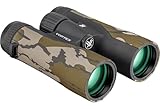
- 10x magnification & 42mm objective lenses, these Crossfire HD binos are optimized with select glass elements to deliver exceptional resolution, cut chromatic aberration and provide outstanding color fidelity, edge-to-edge sharpness and light transmission.
- Fully multi-coated lenses increase light transmission with multiple anti-reflective coatings on all air-to-glass surfaces. Roof prism design is valued for greater durability and a more compact size.
- Adjustable eyecups twist up and down for comfortable viewing with or without eyeglasses. Center focus wheel adjusts the focus of both binocular barrels at the same time. Diopter (located on right eyepiece) adjusts for differences in a user's eyes.
- Rubber armor provides a secure, non-slip grip, and durable external protection. Binoculars are tripod adaptable allowing use on a tripod or car window mount.
- Nitrogen purging and o-ring seals provide water and fogproof performance in all environments. Rugged construction withstands recoil and impact.
What an aircraft tracker is showing
ADS-B is an aircraft surveillance capability that provides position and identification information, according to the Federal Aviation Administration. A tracker’s displayed identity can be based on information transmitted by the aircraft, while other details may be associated from external records. The display is therefore not necessarily a direct transmission of every aircraft or route detail shown.
The FAA’s Aeronautical Information Manual describes Flight Identification (FLT ID) as an item transmitted by ADS-B Out. It may be an aircraft registration or an airline flight number, and air traffic systems use it to correlate an aircraft with a filed flight plan. A registration or flight number is an identifier; it is not, by itself, visual proof of the aircraft’s model.
This distinction matters when a map presents a tidy label beside an aircraft symbol. Some of what you see may originate in transmitted aircraft information; aircraft type or route details may be linked from database, schedule, or flight-plan information. A tracker can therefore be informative without every displayed field being a direct reading from the aircraft. The identifier also answers a different question from the silhouette: it can name a registration or flight, while your visual clues help assess what kind of aircraft was overhead.
Why a flight may not appear
A missing aircraft on a public map does not mean that no aircraft passed overhead. A display depends on the aircraft transmitting a signal the service can receive, local reception coverage, and the provider’s data and display policies. The FAA also notes an anonymous-mode option for some general-aviation aircraft under stated circumstances, which can reduce the identification available to a public display. If a map has no match, rely on your observed clues and leave the result open rather than forcing an identification.
Quick wins for a faster PC:
Fix the driver behind crashes, sound loss and screen glitchesFind Drivers →Clear out junk files and repair common Windows errorsFree Scan →Scan for outdated or missing drivers - takes under a minuteDriver Scan →Likewise, a map’s lack of detail does not necessarily mean that the aircraft had no identity in other contexts. A public display is shaped by the signal received and by the service’s available records and policies. Coverage and the information associated with a signal can vary, so a tracker is best understood as one source of evidence rather than a complete inventory of everything in the sky.
When you do see a candidate, check more than its proximity to your location on the map. Compare when it passed, the direction in which it was moving, and whether its track broadly fits the sighting. A candidate that appears nearby at a different time or moving in an incompatible direction is not a strong match just because it is the closest symbol.
When binoculars or a spotting guide help
You can start with your eyes and a tracker; binoculars are optional. They can help inspect an aircraft that is visible, but their narrower field of view can make a moving aircraft easier to lose and reduces peripheral vision. FAA airport traffic control tower and radar approach control facility guidance cautions: “Be careful not to use the binoculars exclusively, because they narrow your line of sight and do not have the greater peripheral vision that your naked eye has.” Keep scanning with unaided vision rather than looking through binoculars continuously. The guidance is available in the FAA operational document.
Rank #3

- 80x100 High Powered Monocular: 80x100 high powered magnification monocular provides 80x magnification with 100mm objective diameter wide lens. Designed for handheld use, it provides large field of view, a ultra-clear vision, capture distant scenery
In practice, binoculars are an aid for a detail you can already keep track of, not a substitute for broad scanning. If you lose the aircraft while looking through them, lower them and reacquire it with your unaided vision. Do not assume you need special equipment to begin spotting: the basic process—observing a broad silhouette, noting visible clues, and checking a tracker if useful—can be done without binoculars.
What’s actually slowing this PC down?
Pick the symptom - the matching free tool is one click away.
A plane-spotting or aircraft-identification guide can be useful for learning common silhouettes and the names of visible features. Air New Zealand’s 13 July 2026 announcement describes its guide as illustrated and intended to help people recognize aircraft. That announcement establishes the guide’s existence and purpose; it does not establish its purchase or affiliate availability.
A guide is most useful as a learning aid for comparing broad shapes and understanding what to look for, not as a way to turn one fleeting clue into certainty. Build familiarity with the visible features—engine placement, wing arrangement, and tail shape—and keep applying more than one clue to each identification.
How to describe your identification honestly
State the result at the level the evidence supports. If you can distinguish only a broad class, say “a likely airliner” or “a small propeller aircraft,” not an exact model. If the visual shape suggests a type and a tracker shows a plausible flight at the same time and in the same direction, say it is a likely match. If a visible registration or flight identifier is unclear, do not treat a partial reading as certain.
- Strongest practical match: the visible silhouette and the track’s time and direction agree.
- Partial match: a broad visual category fits, but the tracker is unavailable or does not establish a specific type.
- Unresolved: visual clues are weak, the map has no plausible match, or the clues conflict. Record what you observed without naming a specific aircraft.
This wording distinguishes what you directly observed from what a tracker suggests. It also leaves room for the limitations of distance, reception, and database-enriched display information.
Do these 3 things before closing this tab:
1Clear out junk files and repair common Windows errors2Scan for outdated or missing drivers - takes under a minute3Repair Windows errors before they cause bigger problemsConfidence should follow the evidence, not the amount of detail on a screen. A displayed flight number may look precise, but it does not independently confirm the model you thought you saw. Conversely, a broad visual category can be a sound conclusion even when no tracker result is available. “Likely” and “unconfirmed” are useful descriptions when the clues point in a direction but do not close every gap.
Common identification mistakes to avoid
- Guessing from apparent size alone. Distance and viewing angle can make a large aircraft look small. Use size as a broad clue and compare it with silhouette features.
- Relying on one feature. An engine count, wing shape, sound, or color by itself may not identify an exact model. Combine clues and be conservative when one is unclear.
- Assuming every aircraft is on the map. Reception coverage, transmitted signals, data sources, and display policies affect what appears. A missing symbol is not proof that no aircraft flew overhead.
- Treating a tracker label as visual confirmation. An ADS-B Flight Identification may be a registration or airline flight number, while other displayed information may come from associated records. Check whether the candidate’s timing and direction fit what you saw.
- Using binoculars continuously. They narrow the field of view and reduce peripheral vision. FAA guidance advises against using them exclusively; keep scanning with unaided vision.
- Turning a partial observation into an exact claim. If you cannot read a marking clearly or distinguish the tail and wings, describe the likely broad category rather than naming a specific model.
Frequently asked questions
How can I identify a plane flying over my house?
Start by noting its broad category, visible engine count and position, wing and tail arrangement, colors, and direction. Record the time, then compare the observation with aircraft shown in a flight-tracking app or website. A plausible match should fit both the timing and direction; keep the result tentative if the clues disagree or the map has no candidate.
Rank #4

- 【True 4K Video with STARVIS 2 Sensor】Capture every detail in true 4K with a military-grade STARVIS 2 sensor. 52MP images deliver bright, crisp visuals for long-distance viewing, night surveillance, or outdoor adventures
- 【3940FT Viewing Range】 VisioGear NTX1 night vision binoculars offer a remarkable 3940-feet range. With 8X zoom, 42mm lens, and 13° field of view, these precision optics deliver unmatched clarity for distant targets
- 【AI Color+ & Infrared Night Vision】 Experience true-to-life full-color night vision with AI Color+ in any low-light setting. 4 levels of 850nm infrared reveal details for wildlife spotting, or camping
- 【Long-Lasting Battery & IP67 Waterproof】 Built for outdoor adventures, NTX1 night vision goggles features a 5000mAh battery lasting up to 18 hours without IR or 10 hours with IR. IP67 waterproofing ensures reliable performance in any conditions
- 【All-in-One Features】 Stream, record, and share your night adventures via built-in WiFi and app connectivity. NTX1 also includes tactical and tech features: built-in speaker with audio recording, tactical flashlight, tripod mount, temperature sensor, and backlit buttons
Can I identify an aircraft by looking at a flight tracker?
A tracker can help associate a position with an aircraft or flight identifier and may show additional aircraft or route details. Those details can combine transmitted aircraft signals with schedules, flight plans, and database records. Treat the display as a cross-check rather than proof of the aircraft model you saw.
Why can’t I see every aircraft on a flight-tracking map?
Public displays depend on whether an aircraft transmits a signal the service can receive, local coverage, and the provider’s data and display policies. The FAA also notes anonymous mode for some general-aviation aircraft under stated circumstances, which can reduce available identification. A missing result does not prove that no aircraft passed overhead.
Does an ADS-B flight ID tell me the aircraft type?
Not by itself. The FAA’s Aeronautical Information Manual says Flight Identification may be an aircraft registration or an airline flight number and is used by air traffic systems to correlate the aircraft with a filed flight plan. The identifier is distinct from visual confirmation of the model; a tracker may associate type details from other records.
Do I need binoculars to identify an aircraft?
No. You can begin with unaided vision and, if helpful, a flight tracker. Binoculars may help inspect a visible aircraft, but their narrower field of view makes a moving target easier to lose and reduces peripheral vision. FAA operational guidance says not to use them exclusively.
What should I do if the visual clues and tracker disagree?
Do not force an identification. Recheck the sighting time and direction against the candidate track, and distinguish what you directly observed from what the tracker displays. If no plausible match remains, report only the broad category or leave the aircraft unidentified.
Is the nearest aircraft on the map the one I saw?
Not necessarily. Proximity alone is not enough to establish a match. Compare the candidate’s displayed position and movement with the sighting’s time and direction, and treat apparent altitude as an imprecise visual check rather than a precise measurement.
Windows Errors? Fix Them Before They Spread
Repair common Windows errors and clear accumulated junk for a smoother, more stable PC - no reinstall needed.Free scan · no reinstallOutdated Drivers Are Slowing You Down
One free scan finds every outdated or missing driver and matches the right update for your exact hardware.Free scan · exact hardware matchBottom line
Begin with the broad silhouette, then combine engine placement, wings, tail, markings, sound, and context. Use a tracker to check whether a flight’s timing and direction fit what you observed, while remembering that it may combine direct aircraft signals with other records and may not show every aircraft. When evidence is incomplete, a careful broad description is more reliable than an exact guess.
Best Value
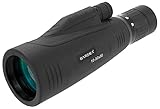
- BARSKA 10-30x50mm Precision Monocular combines portability and ergonomic design into a versatile lightweight optical system. It is well suited for a wide range of activities such as bird watching, sporting events, concerts, hunting, and much more.
- This monocular comes with BK-7 prism and fully coated optics, bringing you bright and crystal clear views.
- A shock absorbing rubber armoring gives the user a solid grip while the center focus knob allows the user to easily focus the monocular with one hand.
- A built-in tripod socket and long 15mm eye relief make this optic a convenient alternative to lugging around a spotting scope for close to mid-range observations.
- Includes Soft Carrying Case, Hand Strap, Lens Covers, User Manual, and Lens Cloth
Frequently Asked Questions
How can I identify a plane flying over my house?
Note its broad category, engine count and position, wing and tail arrangement, colors, and direction. Record the time and compare the sighting with a flight-tracking app or website. A plausible match should fit the timing and direction; keep it tentative if clues disagree or no candidate appears.
Can I identify an aircraft by looking at a flight tracker?
A tracker can associate a position with an aircraft or flight identifier and may show additional details. Its display may combine transmitted aircraft signals with schedules, flight plans, and database records, so use it as a cross-check rather than proof of the model you saw.
Why can’t I see every aircraft on a flight-tracking map?
Public displays depend on signal transmission and reception, local coverage, and provider data and policies. The FAA also notes anonymous mode for some general-aviation aircraft under stated circumstances, which can reduce available identification. A missing result does not prove that no aircraft passed overhead.
Does an ADS-B flight ID tell me the aircraft type?
Not by itself. FAA guidance says Flight Identification may be an aircraft registration or an airline flight number and is used to correlate the aircraft with a filed flight plan. It is distinct from visual confirmation of the model; a tracker may associate aircraft type from other records.
Do I need binoculars to identify an aircraft?
No. Unaided vision and an optional tracker are enough to begin. Binoculars may help inspect a visible aircraft, but their narrower field of view makes a moving target easier to lose and reduces peripheral vision. FAA guidance advises against using them exclusively.
What should I do if the visual clues and tracker disagree?
Do not force an identification. Recheck the time and direction against the candidate track, and separate what you observed from what the tracker displays. If no plausible match remains, report only the broad category or leave it unidentified.
Is the nearest aircraft on the map the one I saw?
Not necessarily. Proximity alone does not establish a match. Compare the candidate’s position and movement with the sighting’s time and direction; treat apparent altitude as an imprecise visual check.
The Tool Desk
Outbyte Driver Updater FREEScan for outdated or missing drivers - takes under a minuteDriver Scan →Outbyte PC Repair FREEClear out junk files and repair common Windows errorsFree Scan →The Bottom Line
Start with the aircraft’s silhouette and combine visible features rather than guessing from one clue. Then use a tracker to check whether a flight’s timing and direction fit. Trackers can add useful identifiers, but received signals, coverage, provider policies, and database-enriched details shape what appears. If the match is uncertain, say so.
Quick Recap
Product prices and availability are accurate as of the date/time indicated and are subject to change. Any price and availability information displayed on Amazon at the time of purchase will apply.

