
iTechGuides is reader-supported. When you buy through links on our site, we may earn an affiliate commission. As an Amazon Associate I earn from qualifying purchases. Learn more
When insect food is scarce, the most durable help is to make your yard support more insects and give birds natural food and shelter. Plant species suited to your region, keep some vegetation and seedheads through the year, and add safe places for insects to live. Purchased food can supplement that habitat work, but it does not replace wild prey. Feeding advice also depends on where you live: the seasonal seed-and-peanut schedule described below is current UK guidance, not a universal calendar.
Start by improving the natural food supply
Insect-eating birds need more than a feeder stocked with mealworms. A garden that supports insects can provide prey across the growing season, while trees, shrubs, grasses and flowers can also offer birds seeds, fruits and buds at other times of year. That combination makes habitat planting a longer-term response than adding purchased food alone.
Choose plants native to your region and suited to your soil, light and available space. A locally appropriate mix is more useful than a generic list of supposedly bird-friendly plants: the species that support insects in one region may not suit another. Include plants with different seasonal roles, rather than aiming for a single burst of flowers. The U.S. Fish & Wildlife Service recommends native plants for year-round food and shelter and planting for different seasons.
Why native plants can matter to birds
Native plants can support the insects that birds eat, including caterpillars, while also supplying direct foods such as seeds and berries. Cornell Lab of Ornithology’s account of research by Doug Tallamy and colleagues reports that, in a 2009 study in southeastern Pennsylvania, yards dominated by native plants hosted four times as many caterpillars as yards dominated by non-native vegetation. The same study found regional conservation-concern bird species eight times more often on properties with many native plants. These figures describe one region and study context; they are not a forecast for every garden.
#1 Best Overall

- Mealworms are more favorable to insect-eater like bluebirds, robin, titmice, and chickadees.Seed-eater like american goldfinch,finches & sparrows,mourning dove will visit mealworms occasionally,so does oriole and seed&insect-eater like cardinal and blue jay.Hummingbirds don't eat mealworms.
- Non-GMO & Additive-free: Our mealworms are feeding with carrots and wheat bran, premium quality, dust free. Microwave dried, veterinary certified, they are safe and healthy.
- Improve Immunity System: Our mealworms are high protein with other essential nutritions for animals. All preserved in mealworms and definitely make our chickens, wild birds a better healthy life, and help the baby chickens or birds throughout the winter with no worries.
- Easy Storage and Usage: Resealable bag preserve the nice smell, keep the quality safe and easy storage for daily usage.
- Spring & Summer Tip:You can rehydrate dried mealworms in warm water if birds ignore them dry. Soak mealworms in warm water for 10–15 minutes before feeding. Promptly discard any uneaten wet mealworms at the end of the day and clean the feeder regularly to ensure a sanitary environment.
Other findings described by Cornell Lab point in the same direction but also have specific limits. A 2017 study of Carolina Chickadees found more fledglings in yards with mostly native plants, while many nests in primarily ornamental, non-native yards failed for lack of food. In a 2023 study in Southern California, winter bird richness and abundance rose sharply in yards that were around 80% native plants. Those results concern the locations, species and conditions studied; they do not establish a universal percentage target for a different yard.
Choose plants for your place, not a generic list
Before buying or planting, check which species are native in your area and whether they fit the site’s conditions. A local native-plant organization, conservation authority or regional extension service can help identify appropriate choices. Consider the full mix of trees, shrubs, grasses and flowers rather than treating a flower bed as the only useful habitat. If you already have established native plants, protecting them may be more valuable than replacing them with a new planting scheme.
Think about what the planting offers over time: insect food during the growing season, shelter, and seeds or fruits later on. The aim is not to make every plant serve every purpose, but to build a landscape that has resources across more than one season. Do not assume that one species or one planting ratio is right for every climate or wildlife community.
Plan for a sequence of resources
Map the year on paper before choosing plants. Note when existing trees, shrubs, grasses and flowers produce leaves, flowers, fruits, seeds or buds, then look for gaps. A planting that supports insects in spring but offers no cover or food later is less useful than a mixed landscape with overlapping seasons. Include evergreen or dense cover where it is appropriate for your region, and retain plants that hold seedheads into winter rather than cutting everything back at once.
Do not remove a mature native tree or shrub simply because it is not flowering at the moment. Its foliage, bark, cavities and leaf litter can support insects and provide shelter. Add new plants around established ones when possible, and check mature size before planting so that later pruning does not eliminate the habitat you intended to create.
Add habitat structure as well as plants
A yard can support insects and birds through its structure, not just its plant list. If safe and practical, leave a patch of longer grass or wildflowers, allow some leaf litter, and retain a log or dead-wood feature. These less-tidied areas can provide cover and places for insects to live; insects using wood and cavities can in turn become prey. The U.S. Fish & Wildlife Service recommends creating a “wild zone” rather than mowing every area, and The Wildlife Trusts suggest long grass, a pond or a log pile, as well as leaving seedheads over winter.
Make a small wild zone manageable
You do not have to stop maintaining the whole garden. Choose a defined corner, edge or strip that can remain longer, and keep paths and frequently used areas as tidy as needed. Leave some seedheads standing through winter if they are safe and do not obstruct access. A log or dead-wood feature should be placed where it will not create a hazard, and any water feature should be maintained rather than left stagnant.
Do these 3 things before closing this tab:
1Fix the driver behind crashes, sound loss and screen glitches2Repair Windows errors before they cause bigger problems3Scan for outdated or missing drivers - takes under a minuteRank #2

- High quality dried mealworms for birds, bluebirds
- Non GMO chicken food and more than 51% Insect Protein chicken feed
- Convenient for storage, easy to stored. We have specially designed packaging for dried mealworms. After you use it, the bag is immediately sealed and placed in a dry place
- Our dried mealworms are fed in safe way, such as carrots, bran, various vegetables, etc. They are free from additives, non-toxic and certified by professional veterinarians. We use microwave drying technology to turn them into dried mealworms
- Providing high-quality treats for birds, ducks, geese, turtles, lizards and other reptiles
These measures are practical options, not a requirement to make every yard look unmanaged. If space is limited, even a small area of longer vegetation or a retained log can add a different kind of habitat. Select changes that fit your site and that you can maintain safely.
Reduce unnecessary disturbance
When you mow or clear vegetation, keep the wild zone intact and work in sections where possible rather than removing all cover simultaneously. Leave some fallen leaves under shrubs and around logs if they do not block drains or create a safety problem. Retain sound dead wood where it cannot fall or obstruct access. These choices preserve places for insects to shelter and birds to forage, while still allowing you to manage paths, play areas and other high-use parts of the yard.
A pond is optional, not a requirement. If you add one, plan for regular cleaning and safe access, and do not treat it as a substitute for plants, leaf litter or other terrestrial habitat. The useful principle is variety: several small habitat features can be more practical than one elaborate feature you cannot maintain.
Offer clean water if you can maintain it
Water is a useful garden resource, but a dirty or stagnant source is not a helpful substitute. If you provide a birdbath or other drinking water, refresh it daily and clean the bath weekly, following Royal Horticultural Society guidance. The U.S. Fish & Wildlife Service also advises cleaning birdbaths often. If you cannot keep the water clean, do not leave a neglected source in place.
The Tool Desk
Outbyte Driver Updater FREEScan for outdated or missing drivers - takes under a minuteDriver Scan →Outbyte PC Repair FREERepair Windows errors before they cause bigger problemsFix Now →Put the bath where you can reach it easily for daily emptying and cleaning. During routine checks, remove debris and inspect the surrounding area for accumulated droppings or spilled food. Water provision only helps when it remains usable and hygienic; a neglected container creates maintenance and disease concerns without delivering a dependable benefit.
Use supplementary food as an optional, careful intervention
Feeders can add calories or suitable supplementary foods, but they do not recreate the diversity of wild insect prey or address the underlying habitat. Mealworms are an option for people who choose to feed: the RHS describes them as high-protein food particularly enjoyed by robins and other insect-eating garden birds. Treat them as a supplement, not a substitute for plants and habitat that support natural prey.
Before putting out food, decide whether you can commit to regular cleaning, dry storage and small, frequent refills. A feeder is not a set-and-forget installation. If maintenance is unrealistic, spend the same effort on native plants, retained vegetation, a log feature or clean water instead.
Rank #3

- High Protein Chicken Treat – A favorite snack for backyard chickens, poultry and wild birds with naturally occurring protein
- Loved by Chickens & Birds – Great for chickens, ducks, bluebirds, robins and other outdoor birds as a tasty daily treat
- Whole Dried Mealworms – Carefully dried whole pieces help maintain natural texture and flavor that birds enjoy
- Simple Ingredient Choice – Made with dried mealworms with no artificial additives or preservatives
- 2LB Resealable Bag – Convenient size for backyard feeding with easy storage to help maintain freshness
UK seasonal guidance introduced in April 2026
For UK garden birds, the British Trust for Ornithology (BTO) introduced seasonal advice in April 2026: offer seeds and peanuts from November through April, then pause them from May through October. The BTO says mealworms and fat or suet can be offered year-round, with hygiene precautions. This schedule is specific to the BTO’s current UK guidance; it should not be applied automatically in other countries, where local wildlife and disease advice may differ.
What’s actually slowing this PC down?
Pick the symptom - the matching free tool is one click away.
The BTO’s reason for changing the timing is evidence of elevated post-breeding finch trichomonosis risk at garden feeding sites. Repeated use of fixed feeding locations can concentrate birds and create more opportunities for disease transmission. The BTO also says evidence about possible competition effects on vulnerable Marsh and Willow Tits is less conclusive; it describes limiting feeding near remaining populations of those species as a possible precautionary approach.
The RHS reported in 2026 that UK Greenfinch numbers had fallen by over 65% since the mid-1990s, in an account associating the decline with trichomonosis. That figure is specific to the UK and to the period stated by the RHS; it is not evidence that every garden feeding site has the same risk. The BTO’s schedule is a way to reduce avoidable feeding-related risk while still allowing other food options under its advice.
How to apply the UK calendar
In a UK garden, mark the end of April as the point to stop putting out seeds and peanuts, then resume them in November. You can continue mealworms and fat or suet through the year under BTO guidance, but the same hygiene rules apply in every month. Keep checking for updated advice because seasonal recommendations can change as evidence and disease conditions change.
If you live outside the UK, do not import this calendar by default. Look for advice from your national bird-conservation organization, wildlife agency or public-health authority. The habitat principles in this article are broadly useful, but feeding seasons, disease pressures and locally vulnerable species can differ.
Recommended Free Tools
Feeding approaches at a glance
| Action | What it contributes | Season or location qualification | Maintenance or trade-off |
|---|---|---|---|
| Native planting and habitat structure | Supports insects, shelter and natural foods such as seeds or fruits | Plant choices should fit the region and site | Longer-term habitat work; choose features that can be kept safe and suitable |
| Seeds and peanuts | Supplementary food | BTO UK advice: November–April; pause May–October | Use small amounts and maintain feeder hygiene |
| Mealworms and fat or suet | Supplementary food; RHS describes mealworms as high-protein and popular with robins and other insect-eating garden birds | BTO UK advice allows these year-round | Keep food dry, offer modest quantities and clean equipment |
| Clean water | A maintained water source for birds | No seasonal calendar is stated in the cited guidance | Refresh daily and clean a birdbath weekly |
Keep feeders clean, dry and modestly stocked
If you feed, hygiene matters because a fixed feeding point can bring birds into repeated contact. RSPB and RHS advice supports offering small amounts that birds consume promptly, keeping food dry and cleaning feeders weekly. The BTO’s seasonal advice also stresses food and water hygiene. Refill in small quantities rather than allowing uneaten food to sit for long periods.
Set up and maintain a feeding point
- Choose a feeder rather than a flat feeding surface. RSPB guidance prefers hanging feeders over flat surfaces because crowding and contamination can increase disease risk.
- Offer a modest quantity. Put out an amount that birds are likely to eat promptly, then refill as needed instead of leaving a large supply exposed.
- Keep food dry. Do not leave damp or spoiled food in the feeder. Check the food and feeder during routine refills.
- Clean feeders weekly. Make weekly cleaning part of the routine, rather than waiting until visible debris builds up.
- Manage the area below the feeder. RHS recommends moving feeders when possible to avoid debris accumulating beneath them.
- Refresh water daily. If you provide water, change it each day and clean a birdbath weekly.
Do not put plastic nets around fat balls: the RHS warns that birds can become caught in them. Choose a way to offer fat or suet that does not create that entanglement risk. If you cannot keep a feeding point and its surroundings clean, pause feeding and put effort into habitat improvements instead.
Rank #4
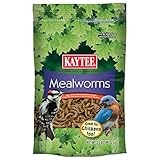
- Kaytee Mealworms are an excellent, high-protein food source for many wild birds. They are a high-energy treat that will attract many species of birds that are difficult to attract with traditional seed blends.
- Attract Bluebirds, Wrens, Robins, Chickadees, Woodpeckers and Cardinals
- Can be fed alone in a feeder or mixed with a favorited seed
- An important source of food for baby birds
- Oven dried for best quality
Know when to pause
Pause feeding if food repeatedly remains uneaten, becomes damp, or accumulates beneath the feeder faster than you can clean it. Also pause if you cannot complete weekly feeder cleaning or daily water changes. A temporary break is preferable to maintaining a contaminated congregation point. Resume only when you can return to modest quantities and a reliable cleaning routine.
If you notice sick or dead birds around a feeding station, remove food and water, clean equipment and check current local wildlife-health advice before restarting. The cited guidance emphasizes hygiene and reducing repeated contact; it does not provide a diagnosis for every illness, so seek advice from the appropriate wildlife authority when disease is suspected.
PC Slower Than It Used to Be?
A free scan shows the junk files, broken settings and background clutter dragging Windows down - then fixes them in one click.Free scan · Windows 10 & 11Crashes, No Sound, or Screen Glitches?
Random freezes, missing sound and display glitches usually trace back to one bad driver. Find and replace yours safely.Free scan · under a minuteChoose the right first step for your yard
There is no single intervention that suits every property. The useful distinction is whether an action supports natural insect prey and habitat or only adds a supplemental food source, and whether its upkeep is realistic for you.
- If you want a durable change: prioritize locally native trees, shrubs, grasses or flowers and retain safe habitat features such as a patch of longer vegetation or a log.
- If you have little space: use the space you have for a suitable native planting or a small less-mown area; avoid assuming that a large garden is necessary for any habitat contribution.
- If you are considering a feeder: check current guidance for your country first. In the UK, follow the BTO’s seasonal distinction between seeds and peanuts and year-round mealworms and fat or suet.
- If you cannot maintain food or water hygiene: do not rely on a feeder or birdbath. A neglected source can undermine the purpose of helping.
- If Marsh or Willow Tits occur locally: the BTO identifies limiting feeding near remaining populations as a possible precaution because the evidence about competition effects is less conclusive.
A simple order of operations
- Assess the site. Note sun, shade, soil, existing native plants, mowing patterns and places where a log or longer vegetation could be retained safely.
- Protect what already works. Keep mature native plants, leaf litter and safe dead wood where they do not create hazards.
- Fill seasonal gaps. Add regionally appropriate trees, shrubs, grasses or flowers that extend insect, seed, fruit or shelter resources.
- Create one manageable wild area. Start with an edge, corner or strip rather than changing the whole yard.
- Add water only with a maintenance plan. Commit to daily refreshing and weekly cleaning before installing a bath.
- Consider supplementary food last. Check local guidance and begin with small amounts that you can keep dry and clean.
Common mistakes to avoid
- Relying on purchased food alone. Mealworms and suet add supplementary calories but do not provide the range of prey, shelter and breeding resources created by habitat.
- Using a universal plant list. Plants should be native or otherwise appropriate to your region and site; a recommendation from another climate may fail or support fewer local insects.
- Cutting everything back at once. Removing long grass, leaf litter and seedheads simultaneously eliminates structure that can support insects and birds.
- Overfilling feeders. Large quantities stay exposed longer, become damp or spoiled, and increase the amount of debris below the feeding point.
- Feeding from flat surfaces. Hanging feeders are preferred in the cited RSPB guidance because crowding and contamination can be greater on flat surfaces.
- Using plastic fat-ball nets. Birds can become caught in them, according to the RHS.
- Leaving water unattended. A stagnant or dirty bath is not a safe replacement for a maintained water source.
- Assuming study figures apply everywhere. The fourfold caterpillar result, eightfold bird-frequency result, Carolina Chickadee findings and Southern California result each belong to named places, species and study conditions.
What this guidance can and cannot tell you
Seasonal or local scarcity of insects can have different explanations. The cited guidance supports practical ways to improve habitat and feed responsibly; it does not diagnose why insect food is limited in a particular garden or establish that insect populations are declining everywhere. A quiet feeder or a garden with fewer visible insects alone does not identify the cause.
Likewise, regional study findings should guide decisions without being treated as guaranteed outcomes. The Pennsylvania caterpillar and bird figures, the Carolina Chickadee nesting findings, and the Southern California winter-bird results concern particular places and studies. They support the case for native habitat, but local plant selection and conditions still matter.
Think of the recommendations as a risk-aware plan rather than a promise of a particular number of birds. Improve the food web, retain cover, provide clean water if you can maintain it, and use purchased food only when local guidance and your maintenance capacity support it. Observe which plants attract insects and which habitat features birds use, then adjust gradually instead of making broad changes based on a single quiet week.
Frequently Asked Questions
What can I feed birds when insects are scarce?
Mealworms are an optional high-protein food enjoyed by robins and other insect-eating garden birds. Fat or suet may also be offered where local guidance permits. These foods supplement natural prey; they do not replace native plants, wild habitat or the diversity of insects found in a healthy food web.
Best Value

- 【High-Nutrition】Packed with 51% protein,24% fat, KAYPET Non-GMO dried mealworms support optimal egg production, feather growth, and immune health for poultry, birds, reptiles, and small pets.
- 【Premium Processing】Double microwave-dried (not freeze-dried) for a crispy texture, with no additives, fecal residues, or artificial preservatives—moisture content is strictly controlled at ≤4.2% for freshness.
- 【Versatile Feeding】Suitable for all life stages of chickens, ducks, wild birds, hamsters, fish, and more; can be fed directly, mixed with regular feed, or scattered in feeders for natural foraging behavior.
- 【Improves Feathers and Plumage】 Regular consumption of mealworms can enhance feather quality, making your chickens look vibrant and healthy.
- 【Convenient Storage】Comes in a resealable zipper bag that locks in freshness—no refrigeration needed, just store in a cool, dry place.
Should I stop feeding birds in summer?
In the UK, the BTO’s April 2026 guidance says to offer seeds and peanuts from November through April and pause them from May through October. It allows mealworms and fat or suet year-round with hygiene precautions. Outside the UK, check local advice rather than copying this calendar.
How often should bird feeders be cleaned?
Clean feeders weekly, keep food dry and offer only modest quantities that birds can consume promptly. Move feeders when possible to prevent debris accumulating beneath them, and pause feeding if you cannot maintain the equipment and surrounding area.
Is a birdbath helpful when insects are scarce?
It can provide a useful water source if you refresh it daily and clean the bath weekly. A dirty or stagnant container is not helpful, so provide water only when you can maintain it consistently.
Quick wins for a faster PC:
Scan for outdated or missing drivers - takes under a minuteDriver Scan →Repair Windows errors before they cause bigger problemsFix Now →Do I need a large garden to help insect-eating birds?
No. A small native planting, a retained log, a strip of longer vegetation or a patch of seedheads can add habitat. Choose features that fit your site and can be maintained safely; several modest features may be more realistic than one large project.
Why are native plants recommended?
Native plants can support local insects as well as provide seeds, fruits, buds and shelter. In a 2009 southeastern Pennsylvania study reported by Cornell Lab, mostly native yards hosted four times as many caterpillars as yards dominated by non-native vegetation, and regional conservation-concern birds occurred eight times more often on native-plant–laden properties. Those figures are regional findings, not guarantees for every garden.
Can I leave a feeder out if birds look healthy?
Only if you can keep it hygienic and follow local guidance. Fixed feeding points can concentrate birds and increase opportunities for disease transmission. In the UK, the BTO’s seasonal schedule is intended to reduce avoidable risk, and small quantities, dry food, weekly cleaning and a hanging feeder are recommended precautions.
Are plastic nets around fat balls safe?
No. The RHS warns that birds can become caught in plastic nets. Use a method of offering fat or suet that avoids this entanglement risk.
Should I mow a wild patch before winter?
If it is safe, leave some longer vegetation and seedheads through winter. Long grass, leaf litter, logs and seedheads provide structure for insects and cover or food for birds. You can keep paths and high-use areas tidy while retaining a defined wild zone.
What if I see sick birds near my feeder?
Remove food and water, clean the equipment and consult current local wildlife-health advice before restarting. The BTO links repeated use of fixed feeding sites with increased opportunities for disease transmission, so a temporary pause and improved hygiene are prudent.
The Bottom Line
When insects are scarce, build the food web before reaching for a feeder: use regionally native plants, retain some long vegetation, leaf litter, logs and winter seedheads, and provide clean water only if you can maintain it. Purchased mealworms, suet or seasonally permitted seed can be useful supplements, but keep portions small, food dry, feeders clean and local disease guidance in charge. In the UK, that currently means seeds and peanuts from November to April, with mealworms and fat or suet permitted year-round.
Quick Recap
Product prices and availability are accurate as of the date/time indicated and are subject to change. Any price and availability information displayed on Amazon at the time of purchase will apply.
Free tools Windows power users keep installed
One-click scans. No signup required.

