
iTechGuides is reader-supported. When you buy through links on our site, we may earn an affiliate commission. As an Amazon Associate I earn from qualifying purchases. Learn more
Start by learning one battle rhythm: let auto-attacks land, use the Arts they charge, then use Specials as they become available. Drivers are the fighters; Blades provide their weapons and abilities. Once that loop is familiar, practice switching Blades and explore the regions built across Alrest’s Titans. You do not need a rare Blade or hours of grinding to begin.
What you’re stepping into
Xenoblade Chronicles 2 is a role-playing game set in Alrest, a world where civilizations live on the backs of Titans. Rex and Pyra set out in search of Elysium. The story, combat, and exploration unfold across distinct environments and communities, so the game is not simply a sequence of battles.
![Xenoblade Chronicles 2 - Nintendo Switch [Digital Code]](https://m.media-amazon.com/images/I/51qjFyeyUOL._SL160_.jpg)
This guide is for a first playthrough or a return after a long break. It stays with the early fundamentals rather than assuming knowledge of later story events, particular rare Blades, or endgame strategies. When a system is introduced, take its tutorial and use the in-game controls tutorial to confirm the inputs shown for your edition and settings.
That mix of narrative and discovery is intentional. In an interview published by Nintendo, Executive Director Tetsuya Takahashi of MONOLITHSOFT described the game as bringing together exploration and battling with a story-driven narrative. You can approach your first hours in the same spirit: follow the story, learn combat through encounters, and allow the world to open up at a steady pace rather than treating every new system as homework.
#1 Best Overall

- Lead Rex, Pyra, and the world to refuge in an adventure that has been enhanced for the Nintendo Switch 2 system
- Experience a journey across Titans in 4K resolution in TV mode, and full HD in handheld mode, at 60 frames per second
- Discover a new rare Blade, MOMO, with two modes to swap between and a quest for you to take on
- Directly control the Blades you send on mercenary missions in the Merc Assault action battle mode
- Unlock new outfit designs for Pyra and Mythra that appear both while adventuring and in cutscenes
Learn the battle loop before optimizing
Combat builds through stages. Your character’s auto-attacks land when an enemy is in range; those hits help charge Arts. Using Arts advances the charge of Blade powers, including Specials. This means a move may not be ready at the beginning of a fight: you build toward it through the actions that come before.
| Stage | What happens | What to focus on |
|---|---|---|
| Get in range | Your character needs to be close enough to attack the target. | Choose a target and make sure your character is positioned to fight it. |
| Auto-attacks | Attacks land as the character fights in range; standing still enables auto-attacks, according to the combat reference. | Give the basic attack rhythm a moment to work instead of expecting every ability to be available immediately. |
| Arts | Auto-attacks help build Arts, which have their own cooldown or charge progression. | Use an Art when it is ready and observe how the available actions change. |
| Blade powers and Specials | Using Arts builds Blade powers; Specials become available through their own charge progression. | Use a Special when its charge level is available. The combat reference describes Specials as building through Arts. |
The exact controls and displayed prompts can depend on the edition and settings. A secondary combat reference describes the general mechanics, but use the controls tutorial in your own game for button inputs rather than relying on a remembered control scheme.
It helps to think of the fight as a sequence of opportunities, not a checklist you must execute instantly. At the start of an encounter, first see whether your character is in range and whether auto-attacks are landing. As Arts become available, use them and watch how the next layer of actions progresses. Specials then become part of that build-up. Waiting briefly for the basic attack rhythm is not wasted time: it is the foundation that makes later actions available.
Arts and Specials have separate readiness progressions, so an action that is unavailable is not necessarily a sign that you have done something wrong. Continue the basic loop and keep an eye on the displayed state of each action. The 2021 GameFAQs combat reference describes the same broad relationship—auto-attacks charge Arts, and Arts build Specials—while Nintendo’s overview describes the staged combat system. Treat that as a way to understand the rhythm, not as a substitute for the prompts and explanations shown in your copy of the game.
Drivers and Blades: who does what?
A Driver is the character who fights. A Blade supplies a weapon and abilities. A Driver can bond with multiple Blades, but has one active Blade in battle; switching to another changes the weapon and the Arts available to that Driver. Think of a Blade switch as changing your current combat toolkit, not as adding another fighter to the field.
For your first fights, use the Blades available to you through the story. Notice which weapon and Arts each one brings, then try switching once you understand the basic auto-attack-to-Arts rhythm. You do not need to chase a specific rare Blade to make progress: a first-timer walkthrough’s strategies are designed not to depend on rare Blades or hours of unnecessary grinding.
The simplest way to learn what a Blade does is to compare the actions you can see. Note the active Blade, the weapon it supplies, and the Arts available to the Driver; after a switch, notice which of those details have changed. This practical comparison is more useful at the beginning than trying to memorize every Blade-related system at once. The Blade is not a separate combatant in this explanation of the basic loop: the Driver is the character fighting, while the active Blade determines the weapon and set of available Arts and abilities.
Do these 3 things before closing this tab:
1Scan for outdated or missing drivers - takes under a minute2Clear out junk files and repair common Windows errors3Fix the driver behind crashes, sound loss and screen glitchesRank #2
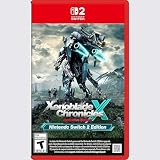
- Rebuild humanity on the mysterious planet Mira in this action RPG that’s been enhanced for the Nintendo Switch 2 system
Multiple bonded Blades give a Driver options, but there is no need to make every option part of your opening strategy. First learn one active Blade well enough to recognize its ordinary rhythm. Then switch and see how the toolkit differs. If a fight becomes confusing, return your attention to the same fundamentals—range, landed auto-attacks, available Arts, then Specials—instead of assuming that you need a particular rare Blade to solve it.
Targeting makes early fights easier to read
Pick a target deliberately and keep your attention on it. The beginner walkthrough documents basic target selection and luring controls, while the combat guide describes a command that directs the party to focus attacks on the same target. Use the in-game tutorial to see the relevant controls, then try focusing the party on one enemy. That makes it easier to tell whether your Arts and the group’s actions are contributing to the same fight.
If attacks appear not to be connecting or the fight feels chaotic, check the basics before changing your strategy: is the intended enemy selected, is your character in range, and are you giving auto-attacks time to land? These are the foundations of the staged combat loop.
Targeting is also a useful way to make cause and effect visible. When the party is working on one selected enemy, it is easier to observe whether the target is in reach, whether the basic attacks are landing, and whether the Arts you use are helping advance your actions. If several things seem to be happening at once, simplify the situation: verify the target, let the basic attacks proceed, and then use whichever Art is ready. The goal is not to perform a complicated rotation; it is to understand what makes the next action available.
What’s actually slowing this PC down?
Pick the symptom - the matching free tool is one click away.
The walkthrough also lists luring controls, which are distinct from simply deciding which enemy the party should focus on. If you want to test target selection or luring, consult the controls tutorial and try the action in a low-pressure moment. Do not rely on button directions from a guide written for a different edition or control setup. The in-game tutorial is the safest reference for the prompts your version actually displays.
A practical first-session routine
- Take tutorials as they appear. Pay attention to tutorials about battles, equipment and character growth, and field or town exploration and items. Nintendo’s tutorial index groups learning in these categories; it is a Japanese-language index, not a complete English manual.
- Choose a target. Use the targeting controls explained in your game’s tutorial. If available, use the party command described in the combat guide to direct attacks toward the same enemy.
- Get into range and let auto-attacks land. Watch for the actions they make available rather than repeatedly trying to use an uncharged move.
- Use Arts as they become ready. Arts are part of the progression toward Blade powers and Specials, and they have their own cooldown or charge progression.
- Use an available Special. Specials have charge levels; they are not necessarily ready at the start of an encounter.
- Experiment with one Blade switch. Compare the weapon and Arts now available with the previous Blade, and learn the difference through play before worrying about optimization.
- Explore between fights. Move through the regions and towns of Alrest, and notice that the game treats field and town exploration and items as part of its core learning structure.
For a returning player, this sequence is a useful reset too. Rather than trying to recall every system or advanced tactic, play a simple encounter and rebuild the chain in order. Can you identify the target? Is the character in range? Are auto-attacks landing? Which Arts are ready? What has advanced toward a Special? Once those questions feel natural again, Blade switching and the surrounding systems are easier to absorb.
Tutorials are not only for controls. Nintendo’s tutorial index groups battle, equipment and character growth, and field/town exploration and items as separate learning areas. When a new system appears, take the explanation at that point rather than trying to study everything in advance. You can return to the game’s tutorials when a term or prompt stops making sense. The index itself is Japanese and should not be mistaken for a full English-language manual, so your own game’s tutorial remains the practical reference.
Rank #3
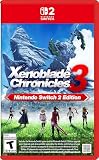
- Live to fight. Fight to live. Now with enhancements for the Nintendo Switch 2 system.
Explore Alrest without turning it into a checklist
The world’s structure is part of the premise: civilizations occupy Titans, and Nintendo describes a range of environments and cultures. Exploration is therefore a meaningful part of moving through the game, not just an intermission between fights. Take time to look around towns and fields, collect items as you encounter them, and follow the story’s direction.
Outdated Drivers Are Slowing You Down
One free scan finds every outdated or missing driver and matches the right update for your exact hardware.Free scan · exact hardware matchPC Slower Than It Used to Be?
A free scan shows the junk files, broken settings and background clutter dragging Windows down - then fixes them in one click.Free scan · Windows 10 & 11The available guidance supports that broad approach, but it does not establish exact routes, a hidden-item map, or that a particular field skill is mandatory at a particular location. If you encounter an obstacle or a new exploration system, use the tutorial presented in-game rather than assuming a specific requirement from a general starter guide.
There is no need to turn your first trip across a Titan into a completion checklist. The introductory guidance supports getting familiar with varied places, towns, fields, and items; it does not establish a route that every new player should take. Let story direction give you a broad sense of where to go, and pause to look around when you want to. If a route is blocked or a field interaction is unfamiliar, note what the game tells you and use the relevant tutorial when it appears rather than inferring a universal rule from one obstacle.
That approach keeps exploration connected to the rest of the game. A short pause between encounters can let you notice a new environment, get oriented in a settlement, or inspect items you come across. Nintendo’s own description emphasizes the variety of Alrest’s settings and civilizations, while its tutorial index treats field and town exploration as something to learn alongside battle. The world is part of the game’s structure, even when there is no need to seek out a specific hidden route.
Check which version or purchase you have
The original Nintendo Switch release date listed by Nintendo is 1 December 2017. Nintendo also lists a Nintendo Switch 2 Edition, which became playable on 30 July 2026 according to Nintendo Support’s version 3.0.0 notes. Its listing describes smoother frame rates, TV-mode 4K resolution when connected to a compatible TV, and additional features. The original Switch version’s 3.0.0 update notes state that there were no changes for that version.
| What you’re considering | What to check |
|---|---|
| Main game on Nintendo Switch | Confirm the listing is for Xenoblade Chronicles 2, rather than a separate story or add-on. |
| Nintendo Switch 2 Edition | Nintendo lists smoother frame rates, TV-mode 4K with a compatible TV, and additional features. Check the current Nintendo listing and support information for edition-specific details. |
| Torna: The Golden Country | Nintendo lists it as an Expansion Pass story or as a standalone retail version. The standalone version does not include the main game. |
| Expansion Pass or downloadable content | Do not assume it is included with the base game. Check the specific product listing for what is included. |
For a purchase decision, verify the platform, whether the product is the main game or Torna, whether an Expansion Pass or other downloadable content is included, and—if 4K matters to you—whether you have a compatible TV. Prices and stock change, and no current price is established here.
The distinction matters most if you are buying the game for the first time or trying to work out what is already in your library. Start with the product name and platform on the listing: the main game, Torna: The Golden Country, and Expansion Pass content are not interchangeable labels. Nintendo describes Torna as an Expansion Pass story and also lists a standalone retail version; that standalone version does not include the main game. Read the inclusion details rather than inferring them from artwork, a bundle name, or a platform icon.
Rank #4

- Nintendo Switch 2 Edition features Includes: Nintendo Switch game: Xenoblade Chronicles X: Definitive Edition Supports enhanced resolutions up to 4K* in TV mode Improved performance at up to 60 fps Explore beyond limits. Fight for humanity. Fight for survival while exploring the vast expanses of an alien world in this epic sci-fi RPG!
- The year is 2054. Earth has been destroyed by an intergalactic war between two alien races, and humanity is on the brink of annihilation. A small number of survivors, aboard the USS White Whale, crash land on the vast and untamed planet Mira – and now it falls to you, as a member of BLADE, to help bring humanity back from the edge of extinction. Enhanced on Nintendo Switch 2 With smoother frame rates and up to 4K resolution in TV mode*, the sprawling alien landscapes of planet Mira have never looked better. *Enhanced graphics require a TV that supports 4K resolution.
- Xenoblade Chronicles X: Definitive Edition – Nintendo Switch 2 Edition is playable only on Nintendo Switch 2. If the physical or virtual game card is inserted into a Nintendo Switch console, you can play the Nintendo Switch version of the game, without any of the additional features exclusive to the Nintendo Switch 2 Edition. If you already own Xenoblade Chronicles X: Definitive Edition for Nintendo Switch, you can purchase the upgrade pack to play the Nintendo Switch 2 Edition.
Then consider what features matter to you. Nintendo’s Switch 2 Edition listing describes smoother frame rates, TV-mode 4K when used with a compatible TV, and additional features. If you do not have a compatible 4K television, that specific resolution feature may not matter to your setup; the edition listing still describes smoother frame rates and other features. Check Nintendo’s current store and support pages for current availability and edition-specific details, because prices and stock can change and are not established here.
Nintendo Support’s version 3.0.0 notes record Switch 2 Edition compatibility and state that the edition became playable on 30 July 2026. The notes for the original Switch version say that version 3.0.0 made no changes. This is useful context when checking which version you own, but it is not a reason to assume that the original game has the Switch 2 Edition’s listed features. Look up the support information for the edition you intend to play.
The Tool Desk
Outbyte Driver Updater FREEScan for outdated or missing drivers - takes under a minuteDriver Scan →Outbyte PC Repair FREERepair Windows errors before they cause bigger problemsFix Now →What not to worry about at the start
- Finding a particular rare Blade: the beginner walkthrough’s approach does not depend on rare Blades.
- Mastering every system at once: get comfortable with range, auto-attacks, Arts, and Specials first; then test how Blade switching changes your available actions.
- Grinding for hours before progressing: the first-timer guide specifically aims to help players progress without unnecessary grinding.
- Memorizing controls from a different version: confirm button prompts in your own edition’s controls tutorial.
- Assuming every exploration obstacle has the same solution: the general guidance here does not establish location-specific routes or field-skill requirements.
It is also fine if a fight does not immediately feel smooth. The early objective is to notice the sequence and learn what each action depends on, not to produce an optimized result. If you are unsure why something is unavailable, give the preceding stage time to progress and check the displayed state of the Art or Special. If you are unsure what changed after switching Blades, compare the weapon and Arts in front of you rather than trying to recall an abstract rule.
The GameFAQs first-timer walkthrough explicitly frames its advice around helping players progress without hours of unnecessary grinding and avoiding strategies that depend on rare Blades. That is a reassuring baseline for newcomers: use the story’s available tools, learn the combat loop, and advance as you become comfortable. This guide does not establish a required level, a specific Blade to obtain, or an exact amount of time to spend preparing before moving on.
Keep the first goal simple
In your opening stretch, aim to recognize the sequence—target, range, auto-attacks, Arts, then Specials—and understand that switching Blades changes your weapon and Arts. Let the story introduce systems at its own pace, and use exploration to get familiar with Alrest’s Titans and settlements. Advanced optimization can wait until the basic combat rhythm feels clear.
When the game introduces another tutorial, treat it as the next small lesson, not proof that you should already know the whole system. Keep your attention on what is immediately visible: the selected target, whether your character is close enough, which actions are ready, and what the active Blade contributes. That is enough to make early encounters legible and to start appreciating how combat, story, and travel fit together.
Free tools Windows power users keep installed
One-click scans. No signup required.
Frequently Asked Questions
How does combat work in Xenoblade Chronicles 2?
Your character auto-attacks when in range, and landed attacks help charge Arts. Using Arts advances Blade powers and Specials, which have their own charge progression. Start by targeting an enemy, getting into range, letting auto-attacks land, and using actions as they become ready.
What should I learn about Blades first?
A Driver is the fighter; a Blade provides the weapon and abilities. A Driver may bond with multiple Blades but has one active Blade in battle. Switching changes that Driver’s weapon and available Arts, so begin by comparing the actions offered by the Blades you already have.
Do I need a rare Blade or lots of grinding to get started?
No particular rare Blade is required by the beginner approach described here. A first-timer walkthrough is designed to help players progress without hours of unnecessary grinding or strategies that depend on rare Blades.
What should I do if attacks or Arts do not seem to work?
Check whether the intended enemy is selected, whether your character is in range, and whether auto-attacks are landing. Arts and Specials build through preceding actions, so give their charge progression time and check the in-game controls tutorial for the exact prompts in your edition.
Recommended Free Tools
Is Torna: The Golden Country the same as the main game?
No. Nintendo lists Torna as an Expansion Pass story and as a standalone retail version; the standalone version does not include the main game. Check the product listing to see whether you are buying the main game, Torna, or content that includes an Expansion Pass.
What should I check when choosing an edition?
Confirm the platform, whether the listing is for the main game or Torna, whether an Expansion Pass or DLC is included, and whether you have a compatible TV if TV-mode 4K matters to you. Nintendo lists a Switch 2 Edition with smoother frame rates, TV-mode 4K support with a compatible TV, and additional features.
The Bottom Line
Start with the basics: target one enemy, get in range, let auto-attacks charge Arts, and use Specials when their charge becomes available. Drivers fight with the weapons and abilities supplied by their active Blades, so experiment with the Blades you already have rather than chasing a rare one. Take tutorials as systems appear, explore Alrest at your own pace, and check your platform and purchase listing if you are unsure which edition or add-on you own.
Quick Recap
Product prices and availability are accurate as of the date/time indicated and are subject to change. Any price and availability information displayed on Amazon at the time of purchase will apply.
Quick wins for a faster PC:
Repair Windows errors before they cause bigger problemsFix Now →Fix the driver behind crashes, sound loss and screen glitchesFind Drivers →
