
iTechGuides is reader-supported. When you buy through links on our site, we may earn an affiliate commission. As an Amazon Associate I earn from qualifying purchases. Learn more
To get better results from AI, state the task, provide the context it needs, describe the intended audience and output, then review the response and give specific feedback. Clear communication is more useful than searching for magic words—and no prompt guarantees a correct answer.
What makes an AI request useful?
A useful request tells the AI what to do and what the result should help accomplish. “Make this better” leaves the goal open to interpretation. “Shorten this email and make the next step explicit” gives the model a concrete job.


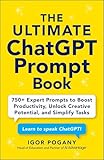


OpenAI defines prompt engineering as designing and optimizing inputs to guide a language model’s responses. Its prompting guidance recommends clear, specific instructions with enough context. Think of prompting as ordinary communication: explain the assignment, provide the relevant material, and clarify what a successful answer looks like.
Free tools Windows power users keep installed
One-click scans. No signup required.
What should you include in a prompt?
1. Name the task and outcome
Use a direct verb such as summarize, draft, compare, explain, or rewrite. Then say what the response should accomplish. For example, ask for a summary that helps a new team member understand a decision, rather than simply asking to “summarize this.”
#1 Best Overall
2. Supply relevant context and materials
Include the facts, source text, audience, purpose, and constraints that affect the answer. If you want the AI to rely only on supplied materials, say so explicitly. Context is not a substitute for checking the result, but it gives the model a clearer basis for responding.
For instance, “Use only the meeting notes below” is more precise than providing notes without explaining how they should be used. For guidance on working with source material, see OpenAI’s prompt engineering guide.
3. Specify the answer’s shape
State the format and any constraints that matter: an email, FAQ, one-page update, or slide copy; a target length; a tone; or a reading level. Be selective. A constraint is useful when it changes what a good answer looks like.
The Tool Desk
Outbyte PC Repair FREEClear out junk files and repair common Windows errorsFree Scan →Outbyte Driver Updater FREEFix the driver behind crashes, sound loss and screen glitchesFind Drivers →4. Break complex work into focused stages
For a larger assignment, separate distinct jobs instead of packing them into one vague request. You might first ask the AI to organize source notes, then draft from that outline, then revise for a particular audience. Examples can also help when you want the output to follow a specific pattern or style.
Provider guidance is not identical for every model. Anthropic’s Claude prompting guide includes model-specific as well as general techniques, so treat advice as guidance for its stated context rather than a rule that must work everywhere.
How can you turn a vague request into a clear prompt?
Start with the outcome, add the information the AI needs, and specify the form of the answer. For example:
Draft a concise email to the project sponsor using the notes below. Include completed work, the main risk, and the decision needed this week. Keep it under 200 words and use a neutral tone. End with the requested next step.
Recommended Free Tools
Special offer. See more information about Outbyte and uninstall instructions. Please review EULA and Privacy policy.
This request names the audience and format, gives the source material, identifies the required content, and sets a length and tone. If a key detail is missing, you can ask the AI to clarify before it drafts rather than letting it guess.
Best Value
How should you revise an AI response?
Read the first result and identify what needs to change. Then give targeted feedback that preserves what works and names the adjustment. “Keep the risk section, shorten the opening, and name the owner for the next step” is more actionable than “Try again.”
- Check the response against the task. Did it address the intended audience and include the required information?
- Identify the specific gap. For example, the opening is too long, an example is missing, or the recommendation is unclear.
- Ask for that change. State what to keep and what to revise.
- Verify important factual claims. Check numbers, policies, and other consequential details against reliable sources rather than treating a fluent answer as proof.
OpenAI notes that generating responses is non-deterministic and that prompting techniques can behave differently across model types and snapshots. Its developer guidance therefore supports testing and refining prompts in context, not assuming one formulation will always produce the same result.
What should you expect from a well-written prompt?
A clearer prompt can reduce ambiguity, but wording alone cannot guarantee accuracy or make every model respond in the same way. You remain responsible for reviewing the answer, especially when it will inform a decision or be shared as fact. Use provider-specific instructions when available, and refine the exchange based on what the model actually returns.
What’s actually slowing this PC down?
Pick the symptom - the matching free tool is one click away.
Quick Recap
Product prices and availability are accurate as of the date/time indicated and are subject to change. Any price and availability information displayed on Amazon at the time of purchase will apply.

