
iTechGuides is reader-supported. When you buy through links on our site, we may earn an affiliate commission. As an Amazon Associate I earn from qualifying purchases. Learn more
There is no single format that works for every floppy-drive emulator. You must prepare two different things: the USB stick’s storage format and the floppy-disk image that the emulator presents to the host machine. FlashFloppy requires a FAT32 USB drive, while HxC firmware can use ordinary image files, a folder-mounted DOS image, or specially prepared USB partitions. Your firmware, version, target machine and emulation mode determine the correct procedure.
Back up the USB stick before changing its format or partition layout. HxC’s built-in USB formatting function erases the drive.
Understand the two layers of formatting
A USB stick can be formatted with a filesystem such as FAT32. That filesystem lets the emulator read files or recognize a partition layout. Separately, a floppy image is a file or virtual partition containing the tracks, sectors, geometry and encoding expected by the computer, synthesizer, CNC controller or other host. An IMG, IMA or HFE filename does not describe the USB stick’s filesystem.
The Tool Desk
Outbyte Driver Updater FREEFix the driver behind crashes, sound loss and screen glitchesFind Drivers →Outbyte PC Repair FREERepair Windows errors before they cause bigger problemsFix Now →For example, a FAT32 stick may contain an HFE image, but FAT32 does not turn the image into HFE. Conversely, changing a file extension from one type to another does not convert the data. The image must already be valid for the target machine and supported by the emulator firmware.
#1 Best Overall

- 【32G FAT32 format with sufficient capacity】32G USB2.0 flash driver with 29.2-30GB of storage space,The Thumb Drives can be extensively used for Digital Data Storing, Transferring and Sharing. Save Data in Form of Music, Photos, Movies, Designs, Manuals, Programs, Handouts; MP3, MP4, RMVB, EXCEL, WORD, PDF and all other possible formats. a perfect memory choice
- 【Easy to Use, Plug and Play】 No need to install any software, just plug the USB flash drive into your computer USB port or other device with USB port to get it work
- 【Full Compatiblility】Strong compatibility, compatible with your video capture card, cassette player,computer, etc. support windows 7 / 8 / 10 / Vista / XP / 2000 / ME / NT Linux and Mac OS, compatible with USB2.0 and below
- 【Simple and Portable Design】New Sleek and easy-to-carry design with a string attachment slot available.The top cap design can protect the usb interface and greatly reduce the oxidation,Made of plastic ABC with clean and neat appearance, portable and lightweight, sleek and slim make them a great choice for your friends. Ends with hang rope design for key chains or lanyards, You can take your digital world anywhere without worrying about losing the pen drive
- 【Led Indicator】The red light flash when have data transfer. You can easily know whether the drive is working. When you connect your capture card or cassette player to record, the indicator light will be on to better remind the work status
This distinction explains many apparently contradictory instructions. “Format the USB as FAT32” describes the removable storage layer. “Use an HFE image” describes the virtual floppy layer. HxC partition emulation is different again: the USB partition table and partition sizes become part of what the host interprets as floppy media. Always identify which layer an instruction addresses.
Choose the correct emulator mode first
Identify the installed firmware and the way you intend to use the USB storage before formatting it. These are the documented paths covered by the major firmware workflows in this guide.
| Firmware or mode | Minimum version or requirement | What the USB contains | Important format or layout rule | Typical selector requirement |
|---|---|---|---|---|
| FlashFloppy image-file mode | FlashFloppy installed | Disk-image files selected by the emulator | FAT32; exFAT and NTFS are unsupported | Use the emulator’s selector and any applicable configuration files |
| HxC image-file mode | HxC firmware for Gotek | Supported floppy-image files | Image support depends on the target machine; HFE and IMG are among the documented formats | Display/buttons, or indexed filenames on some display-less installations |
| HxC folder emulation | Firmware v3.2.1.1a or later | A blank DOS image and a source directory ending in .mnt |
Place the blank image at /mount/emptyfat.img |
Select the mount-source folder |
| HxC USB partition emulation | Firmware v3.5.1.1a or later | Emulator-ready floppy-sized USB partitions | Use the documented GPT, MBR, no-partition or compatible Gotek layout, not an arbitrary format | Firmware detects the prepared partition structure |
The table is a decision guide, not a universal compatibility chart. A layout that works in one mode can be invalid in another. In particular, do not assume that a FAT32 volume suitable for FlashFloppy is also suitable for HxC partition emulation.
Free tools Windows power users keep installed
One-click scans. No signup required.
Prepare a FlashFloppy USB drive
What FlashFloppy expects
FlashFloppy’s setup documentation requires a USB drive formatted as FAT32. It explicitly excludes exFAT and NTFS. The stick is used as storage for disk-image files; the emulator’s selector then mounts one of those images for the host machine. This requirement applies to the normal image-file workflow described here, not automatically to unrelated firmware modes.
Safe preparation sequence
- Copy every file you need from the USB stick to another drive. Formatting removes the existing filesystem contents.
- Confirm that the Gotek or other emulator is running FlashFloppy rather than HxC firmware. The menus and storage rules are firmware-specific.
- Format the USB stick with FAT32 using your operating system’s disk-formatting utility. Do not select exFAT or NTFS for this workflow.
- Copy a disk image that is documented as compatible with the target machine. Preserve the image’s contents; do not rename an arbitrary file to pretend it is another format.
- Insert the stick into the emulator and use its selector to choose and mount the image.
Use an ordinary FAT32-capable USB flash drive, but do not treat any particular capacity, brand or model as universally supported. The exact layout and firmware documentation take priority over a generic product description.
Configuration files that can change the result
FlashFloppy supports configuration files including FF.CFG and IMG.CFG. They can be needed when the image layout, raw image geometry or other setup details require explicit configuration. The location of those files matters: if an FF/ subfolder exists, configuration files in the USB root are not searched. A correctly formatted stick can therefore appear to fail when the firmware is simply looking in a different location.
When troubleshooting, check both the filename and the directory location. Moving a configuration file to the root may not help if an FF/ directory is present; conversely, adding an FF/ directory without placing the expected files there can change firmware behavior. Keep only the configuration structure required by your setup so that an old test file does not override the intended settings.
PC Slower Than It Used to Be?
A free scan shows the junk files, broken settings and background clutter dragging Windows down - then fixes them in one click.Free scan · Windows 10 & 11Outdated Drivers Are Slowing You Down
One free scan finds every outdated or missing driver and matches the right update for your exact hardware.Free scan · exact hardware matchWhen FAT32 is not enough
FAT32 only makes the USB storage readable. It does not validate the floppy image. The image still has to contain the track format, sector arrangement and encoding expected by the target controller. If the selector sees the file but the host cannot boot or read it, investigate image compatibility and configuration rather than repeatedly reformatting the stick.
Rank #2

- STRICT QUALITY CONTROL: Our FAT32 USB 3.0 flash drives 32GB are made of original and stable A+chip, and have been double-tested by our H5 quality-checking device before shipping, with a lifetime of up to 100,000 cycles
- USB 3.0 ULTRA TRANSFER SPEED: The read transfer speeds up to 90-105MB/s, and write speeds up to 30-40MB/s. 10X faster over a USB 2.0 flash drive. The extra USB C adapter also has a USB 3.0 port
- METAL DESIGN & ADDITIONAL ACCESSORIES: Highly textured metal material is utilized for faster heat dissipation, featuring a twill design with an anti-slip feature. The USB C adapter is tiny and easy to carry. Best choice for commercial, school, wedding, exhibition, photography
- WIDE COMPATIBILITY: Backward-compatible with USB 3.0/2.0/1.1 (Default format: fat32). Support Windows, Mac OS, and Linux systems, suitable for any device with a USB port, including PCs, Macs, laptops, TVs, cars, and cassette players. To avoid errors, please format the USB drive on your device before using it
- WHAT WILL YOU GET: 1PCS 32GB FAT32 USB 3.0 drive, 1PCS USB C 3.0 adapter,1PCS key chain.
Use HxC image-file mode
Copying ordinary image files
In HxC image-file mode, you copy supported floppy images to the USB stick and select them through the HxC interface. The supported format depends on the target system. HxC documentation identifies HFE as its native, universal HxC format and lists IMG for PC-compatible machines, while the complete format table covers additional machine-specific cases.
- Back up the stick before making any filesystem or partition change.
- Verify that the emulator is running HxC firmware and that you are using image-file mode, not folder or partition emulation.
- Check the HxC format table for the exact target machine and choose an image type listed for that machine.
- Copy the image without altering its contents. An extension change is not a conversion.
- Select the image using the emulator’s display, buttons or other selector method.
Indexed operation and filenames
Some HxC indexed-mode installations without a display require names in the DSKAxxxx pattern. If your hardware has no screen and the firmware expects indexed slots, follow that naming rule exactly. A file can be perfectly valid yet remain inaccessible when its name does not match the selector’s indexing convention.
Do not add the indexed prefix merely because a filename is not appearing. First establish that your installation actually uses indexed mode and that the expected numbering scheme matches the firmware. A display-equipped setup may use a different browsing method.
Why target-machine support matters
Floppy formats are not interchangeable. A PC-compatible IMG may not represent the geometry or encoding used by a proprietary workstation, synthesizer or controller. HFE is often the safest HxC-native choice when the target and firmware support it, but the documented target-specific table remains authoritative. A successful file copy proves only that the USB filesystem accepts the file; it does not prove that the host can interpret the virtual disk.
Set up HxC folder emulation
Required firmware and files
HxC folder emulation is available from firmware v3.2.1.1a. It mounts a copy of a FAT/DOS floppy image and exposes files from a selected USB directory inside that virtual disk. This is different from simply copying an IMG or HFE file and selecting it.
Preparation requires two items:
- A blank, preformatted DOS IMG at
/mount/emptyfat.img. - A source directory whose name ends in
.mnt, such asmyvirtualdisk.mnt.
The blank image may be 720 KB, 1.44 MB or another FAT-compatible blank size supported by the firmware. Those are virtual floppy-image sizes, not recommendations for the physical USB stick. The source image must be blank and preformatted; placing an arbitrary data file at that path does not create a valid mount base.
Preparation steps
- Back up the USB contents. Do not use a formatting operation until the backup is verified.
- Confirm that the firmware is v3.2.1.1a or newer and that folder emulation is supported by your configuration.
- Create or obtain a blank, preformatted DOS image with a size and FAT structure accepted by the firmware.
- Create the
mountdirectory at the USB root and place the blank image at/mount/emptyfat.img. - Create a directory containing the files you want to expose, and append
.mntto its name. - Insert the stick, select the mount-source directory through the HxC interface and allow the firmware to create the mounted copy.
The firmware leaves the blank source image untouched while it creates a mounted copy. Keep that source image in place; it is part of the folder-emulation setup. If the directory is not recognized, check the spelling, the final .mnt suffix and whether the blank image is at the exact lowercase path expected by the firmware.
Do these 3 things before closing this tab:
1Fix the driver behind crashes, sound loss and screen glitches2Clear out junk files and repair common Windows errors3Scan for outdated or missing drivers - takes under a minuteSet up HxC USB partition emulation
What partition mode does
HxC partition emulation presents floppy-sized USB partitions directly to the host. The host sees emulator-ready floppy volumes rather than a directory of ordinary image files. Because the partition table itself is part of the emulation design, formatting the stick as a normal FAT32 volume is not a substitute unless the HxC instructions for your exact setup explicitly require it.
Rank #3

- 【16GB Flash Drive】USB flash drives with 16GB capacity, meet your needs of daily use on work, school, home and travelling for photos, music, videos, files storage and transfer. IMEASON thumb drives can be used to store different files, easy to data backup.
- 【Metal Swivel Cap Design】USB thumb drive is metal swivel cover provides extra protection for the usb thumbdrive connector, no usb drive cap to lose; keychain design makes it easier to carry without worrying lose it.
- 【Wide Compatibility】USB drive supports Windows 7/8/10/11 / Vista / XP / Unix / 2000 / ME / NT Linux and Mac OS, also Supports USB 2.0 and 1.1 ports. USB Stick support TV, desktop, notebook computer, car, audio and other device. The USB Memory Stick is your great data storage and transfer companion with traveling and working.
- 【Easy to use】usb memory stick is plug and play without any software installation. Just simply plug the Flashdrive into the port of your USB-compatible devices such as computer, laptop to start data storage or transmission.
- 【What You Get】16 GB USB Flash Drive Thumb Drive, The default format of the usb storage flash drive is FAT32.
Supported layouts
- GPT: up to 128 floppy partitions.
- MBR: up to four floppy partitions; HxC recommends this layout for older operating systems.
- No partition: one floppy image without a partition table.
- Original Gotek Batch Manage Tool compatibility: a supported legacy layout for compatible setups.
HxC firmware is documented to recognize a prepared layout automatically. Some setups use supplied Image_Less_Mode images and an image writer rather than a generic disk formatter. Those supplied assets are part of the mode’s preparation process; replacing them with a freshly formatted, ordinary volume can remove the metadata the firmware expects.
Formatting and version limits
HxC’s built-in USB formatting mode is documented for firmware v3.8.0.0 and later. It erases all data on the USB drive, so copy the contents elsewhere before using it. Earlier firmware may require the supplied layout files and writer instead of the built-in formatter.
- Confirm that your firmware is at least v3.5.1.1a for partition emulation, and check whether the built-in formatter is available for your version.
- Choose GPT, MBR, no-partition or the compatible legacy layout based on the host computer’s limitations. For older operating systems, the documented MBR option is generally the appropriate choice.
- Use the HxC-provided images and writer when the instructions for your setup call for them.
- Write the layout to the USB stick only after verifying your backup.
- Insert the prepared stick and let the firmware detect the partition structure.
Do not mix instructions from different HxC releases casually. A feature introduced in one minimum version may not exist in an older build, and a newer built-in formatting command can have destructive behavior that a manual image-writing workflow does not. Record the installed version before choosing a procedure.
What’s actually slowing this PC down?
Pick the symptom - the matching free tool is one click away.
Choose a floppy-image format correctly
HFE
HFE is HxC’s encoded floppy-image format and its native format. It is not a filesystem for the USB stick. Support still depends on the firmware and target machine, so treat “universal” as the HxC documentation’s description of its native format, not a guarantee that every host can read every HFE image.
IMG and IMA
IMG and IMA commonly represent raw floppy images. FlashFloppy documents raw IMG/IMA handling through IMG.CFG, while HxC lists IMG support for PC-compatible machines and other target-specific cases. Raw images must have the correct geometry and encoding; a generic file with an IMG extension is not sufficient.
Custom formats
HxC software and firmware allow custom floppy formats to be defined. This matters when a target uses an unusual track layout or sector arrangement not covered by a standard image type. Define or select the format according to the target machine’s documentation rather than guessing from the file extension.
When converting or exporting an image, preserve the geometry required by the host. A file that opens in a desktop utility may still be unusable on the original machine if the export changed sector size, track count, encoding or other controller-level details. The emulator cannot repair an image whose data does not match the target’s format.
USB-stick selection and physical preparation
The documented workflows require USB storage, but they do not establish a universally compatible brand, model or capacity. Choose a normal flash drive that your firmware documentation supports and format or write it using the procedure for the selected mode. Avoid treating a product label such as “large capacity” or “fast USB” as a compatibility guarantee.
Rank #4
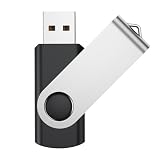
- Universal Drives: USB storage memory can be used in computers, TV, speaker, computer, notebook, car audio, and other USB devices. Support Windows 7/8/10, Windows Vista, Windows 2000, Mac OS X, Linux, etc
- Great for All Ages and Purposes: This USB flash drive is suitable for storing digital data for school, business, or daily usage. Apply to data storage of music, photos, movies, and other files. Apply to data storage of music, photos, movies, and other files
- Fashion and Convenience: Thumb drive with 360° swivel protect USB connector. Portable and lightweight. Easily to attach in your key chain, backpack, lanyard. Safety and easy carrying
- LED Indicator Design: The bottom of the usb drive has one red LED light; Let you know the flash drive is working
- All of jump drives have been rigorously tested and formatted before leaving the factory; The default format of the usb stick is exFAT
Before writing anything, verify that you have selected the removable drive and not an internal disk. Partition writers and built-in formatters can overwrite the selected device immediately. Keep the backup disconnected or otherwise protected while testing, and copy only the files needed for the emulator after the layout has been created.
Validate the setup before blaming the emulator
- Check that the firmware version shown by the device matches the workflow you selected.
- Inspect the USB root and confirm the expected folders, image files and exact capitalization.
- Confirm that the image opens in a compatible utility or has been produced for the same target machine, without assuming that an extension proves validity.
- Use the emulator selector to mount one known-good test image before adding a large collection of files.
- Let the host machine perform a simple directory read or boot test, then test writing only if the host and image workflow are designed for it.
- If the host fails while the selector sees the file, return to geometry, encoding, configuration and target compatibility instead of changing the USB filesystem repeatedly.
Troubleshoot a USB stick the emulator cannot use
- Confirm the firmware and version. FlashFloppy, HxC image mode, HxC folder emulation and HxC partition emulation have different requirements.
- Confirm the operating mode. Determine whether the device expects image files, indexed slots, a
.mntfolder, or direct floppy partitions. - Check the USB filesystem or partition layout. FlashFloppy image mode requires FAT32. HxC partition mode requires its documented layout rather than an assumed FAT32 volume.
- Check image compatibility. Use the firmware’s format table for the exact target machine. A visible filename does not prove that the image’s geometry is usable.
- Check configuration locations. On FlashFloppy, an
FF/directory changes where root-level configuration files are searched. - Check selector naming. HxC indexed installations without a display may require
DSKAxxxx-style names. - Check folder-emulation paths. The blank source must be exactly
/mount/emptyfat.img, and the source directory must end in.mnt. - Check partition-tool requirements. HxC partition mode may require an image writer or supplied
Image_Less_Modefiles; a normal format command may create the wrong structure. - Stop before reformatting again. If the stick contains needed files, make another backup before any destructive operation, especially HxC’s built-in formatter.
A practical decision checklist
- Firmware identified: FlashFloppy or HxC.
- Firmware version recorded when using HxC folder or partition modes.
- Target machine identified, including whether it is a PC-compatible system or a machine with a proprietary floppy format.
- Mode selected: image file, indexed image, folder mount or direct partition.
- USB contents backed up.
- Filesystem or partition layout chosen from that mode’s documentation.
- Image type verified for the target rather than inferred from its extension.
- Required configuration files, paths and filename conventions checked.
- Destructive formatting completed only after the backup was verified.
Frequently asked questions
Can I use exFAT or NTFS with FlashFloppy?
No. FlashFloppy documentation requires FAT32 for its USB image-file workflow and explicitly says exFAT and NTFS are unsupported.
Does formatting a USB stick as FAT32 create a floppy image?
No. FAT32 is the USB filesystem. You still need a valid IMG, IMA, HFE or other supported virtual floppy image for the target machine.
Quick wins for a faster PC:
Fix the driver behind crashes, sound loss and screen glitchesFind Drivers →Repair Windows errors before they cause bigger problemsFix Now →Scan for outdated or missing drivers - takes under a minuteDriver Scan →Can I rename an IMG file to HFE?
No. Renaming changes only the filename. HFE is an encoded image format, so conversion must create HFE-formatted data with suitable geometry and encoding.
Which HxC firmware supports folder emulation?
HxC folder emulation is available from firmware v3.2.1.1a or later. It requires /mount/emptyfat.img and a source directory ending in .mnt.
How large should the blank HxC DOS image be?
The documented examples include 720 KB and 1.44 MB, as well as other FAT-compatible blank sizes accepted by the firmware. These are virtual floppy-image sizes, not USB-stick capacity recommendations.
When should I use HxC partition emulation instead of image files?
Use partition emulation when the host and HxC instructions call for floppy-sized USB partitions presented directly to the host. Select GPT for up to 128 partitions, MBR for up to four and better compatibility with older operating systems, or the documented no-partition layout for one floppy image.
Why does HxC not show my image on a display-less setup?
Some indexed HxC installations require filenames using the DSKAxxxx pattern. Verify that indexed mode is active and follow the exact naming convention expected by that firmware.
Best Value

- [Package Offer]: 2 Pack USB 2.0 Flash Drive 32GB Available in 2 different colors - Black and Blue. The different colors can help you to store different content.
- [Plug and Play]: No need to install any software, Just plug in and use it. The metal clip rotates 360° round the ABS plastic body which. The capless design can avoid lossing of cap, and providing efficient protection to the USB port.
- [Compatibilty and Interface]: Supports Windows 7 / 8 / 10 / Vista / XP / 2000 / ME / NT Linux and Mac OS. Compatible with USB 2.0 and below. High speed USB 2.0, LED Indicator - Transfer status at a glance.
- [Suitable for All Uses and Data]: Suitable for storing digital data for school, business or daily usage. Apply to data storage of music, photos, movies, software, and other files.
- [Warranty Policy]: 12-month warranty, our products are of good quality and we promise that any problem about the product within one year since you buy, it will be guaranteed for free.
Why are my FlashFloppy settings being ignored?
If an FF/ subfolder exists, FlashFloppy does not search the USB root for configuration files. Place the files where the firmware expects them, or remove an unintended folder after preserving your configuration.
Will HxC formatting preserve my USB files?
No. HxC warns that its built-in USB formatting operation erases the drive. Back up the contents before using it and verify that the selected device is the intended removable drive.
Bottom line
For FlashFloppy image-file mode, format the USB stick as FAT32 and keep exFAT and NTFS out of the workflow. For HxC, first decide whether you are copying image files, mounting a .mnt folder through a blank DOS image, or presenting floppy-sized USB partitions. HFE, IMG and other image formats describe the virtual floppy, not the USB filesystem, and their suitability is determined by the target machine and firmware. When the emulator does not work, verify mode, version, layout, image compatibility and naming before formatting the stick again.
Frequently Asked Questions
Can I use exFAT or NTFS with FlashFloppy?
No. FlashFloppy requires FAT32 for its USB image-file workflow; exFAT and NTFS are unsupported.
Does FAT32 create a floppy image?
No. FAT32 formats the USB storage. You still need a valid, target-compatible IMG, IMA, HFE or other supported floppy image.
Can I rename an IMG file to HFE?
No. A filename change does not convert the data. The image must be converted or exported into the required format.
What does HxC folder emulation require?
Firmware v3.2.1.1a or later, a blank DOS image at /mount/emptyfat.img, and a source directory ending in .mnt.
Recommended Free Tools
How many partitions can HxC partition mode use?
The documented GPT layout supports up to 128 floppy partitions; MBR supports up to four, while no-partition mode provides one floppy image.
Will HxC’s formatter preserve files?
No. The built-in HxC formatter erases the USB drive, so back up the contents first.
The Bottom Line
Format the USB layer and prepare the virtual floppy layer separately. FlashFloppy image mode requires FAT32; HxC may require image files, a folder-mount structure or a dedicated partition layout. Match the image to the target machine, check firmware versions and naming rules, and back up before any destructive formatting.
Quick Recap
Product prices and availability are accurate as of the date/time indicated and are subject to change. Any price and availability information displayed on Amazon at the time of purchase will apply.

