
iTechGuides is reader-supported. When you buy through links on our site, we may earn an affiliate commission. As an Amazon Associate I earn from qualifying purchases. Learn more
Stop the swings when they cause lower-back pain. Do not finish the set, add weight, or try to numb the symptom so you can continue. A form correction may help some people, but pain alone cannot identify its cause. Let symptoms settle, keep moving in ways that do not worsen them, and get individualized advice if you are unsure whether swings are appropriate.
If you have weakness or numbness in both legs, numbness around the genitals or anus, bladder or bowel changes, chest pain, or back pain after a serious accident, seek emergency care. The National Health Service (NHS) also advises urgent help for sudden severe or rapidly worsening pain or when you feel generally unwell.
What to do the moment a swing hurts
- Stop the set. Put the kettlebell down safely and do not test another repetition to see whether the pain disappears. Cleveland Clinic quotes Dr. Hewett: “Exercise should challenge you, not hurt you.” A painful repetition is information to act on, not a challenge to overcome.
- Separate the exercise from ordinary movement. You may be able to walk or perform gentle, comfortable activity while swings remain inappropriate. NHS advice encourages continuing daily activities and gentle exercise as able, but says to stop exercises that worsen pain.
- Note what happened without trying to diagnose it. Record whether the pain began during the backswing, at the top, on the way down, or afterward; whether it is worsening; and whether you have symptoms such as weakness, tingling, numbness, or changes in bladder or bowel control. These observations help a clinician or qualified coach, but they do not establish the cause.
- Choose a safer next step. If the pain is severe, rapidly worsening, persistent, interfering with daily activities, or worrying you, contact a healthcare professional. If you are uncertain whether kettlebells are suitable, Cleveland Clinic recommends asking a healthcare provider rather than guessing.
Do not use pain medicine, a belt, a different grip, or a heavier bell as a way to keep training through symptoms. The immediate goal is to remove the movement that hurts and determine an appropriate plan.
Windows Errors? Fix Them Before They Spread
Repair common Windows errors and clear accumulated junk for a smoother, more stable PC - no reinstall needed.Free scan · no reinstallCrashes, No Sound, or Screen Glitches?
Random freezes, missing sound and display glitches usually trace back to one bad driver. Find and replace yours safely.Free scan · under a minuteMake the area safe before you move on
Set the bell on the floor rather than dropping it where someone could trip. Avoid immediately bending repeatedly to pick it up, stretching aggressively, or testing a different swing variation. If you need to leave the training area, walk only if walking is comfortable. A short note in your training log can include the bell used, approximate point in the session, the movement phase that hurt, and what happened over the next few hours. This is useful context for a professional without turning a symptom log into a self-diagnosis.
#1 Best Overall

- Kettlebell supports a wide range of resistance training exercises
- Includes a 25 pound kettlebell made of solid cast iron for built-to-last strength
- Textured wide handle helps ensure a comfortable, secure grip; hold with one hand or two
- Product dimensions: 7.8 x 4.6 x 9 inches (LxWxH)
- WARNING:Powder-coated finish may chip or crack if kettlebell is dropped on hard surfaces, struck against other weights, or contacts sharp objects. Inspect handle before each use — discontinue use if coating damage exposes bare metal edges. Use on rubber/padded surfaces and store separately to prevent contact damage
Why a kettlebell swing can irritate your back without proving a diagnosis
A two-handed kettlebell swing is a hip-hinge movement. The hips move backward, the torso inclines as a consequence of that hip movement, and the bell is propelled by hip extension. The arms guide the bell; they are not meant to perform a front raise. ACE’s January 2025 technique description also uses slightly bent knees, relatively vertical shins, and a long, straight spine.
Those are movement checks, not a diagnosis. The available guidance does not establish that one technical fault explains every case of swing-related back pain. Pain can also reflect factors outside the exercise itself, so changing one cue is not a guaranteed cure. If a pain-free hinge still feels wrong or symptoms return with a light load, stop and seek individualized assessment.
Understand the phases of the movement
At setup, the bell is in front of you and the stance is stable. During the backswing, the hips travel behind you and the torso inclines because of that hip motion. The knees remain slightly bent rather than driving far forward as in a deep squat. At the drive, the hips extend to send the bell forward. At the top, you stand tall without repeatedly arching the lower back. On the return, the bell comes back between the thighs as the hips move behind you again.
This sequence explains what to observe, not what caused your pain. A person can follow the outline and still need medical assessment. Conversely, one visible deviation does not prove it is the source of symptoms.
Form checks before you consider a return
Only perform these checks if the movement is comfortable. They are general instruction, not a rehabilitation prescription. Stop at the first reproduction of pain rather than trying to “work through” the check.
1. Rehearse the hip hinge without a bell
Stand with your feet in the stance you normally use. Push your hips backward while keeping your torso and pelvis controlled. Your knees should bend slightly rather than traveling far forward, and your shins should remain relatively vertical for the hinge-style swing described by ACE. Return to standing by extending the hips, not by leaning back from the lower spine.
Use a wall or another stable reference if a qualified professional has shown you how. If an unloaded hinge reproduces the pain, stop there; adding a kettlebell is not a useful test. A comfortable unloaded hinge is only a prerequisite for discussing a return, not evidence that the problem is solved.
The Tool Desk
Outbyte Driver Updater FREEScan for outdated or missing drivers - takes under a minuteDriver Scan →Outbyte PC Repair FREERepair Windows errors before they cause bigger problemsFix Now →2. Keep a long, straight spine
During the backswing, maintain a long, straight line through the spine rather than collapsing into a rounded position. At the top, stand tall without forcing the ribs upward or repeatedly arching the lower back. Think of the trunk as controlled while the hips create the movement. This cue describes the intended pattern; it does not prove why your back hurts.
Do not chase a rigid, exaggerated posture. The useful check is whether you can control the torso while the hips move. A coach can view the movement from the side and help you distinguish a hip hinge from repeated lumbar bending or arching.
Rank #2

- Kettlebell supports a wide range of resistance-training exercises
- Made of solid high-quality cast iron for reliable built-to-last strength
- Painted surface for increased durability and corrosion protection
- Textured wide handle helps ensure a comfortable, secure grip; hold with one hand or two
- Weighs 50 pounds, weight tolerance is +/-5%
3. Let the hips, not the arms, drive the bell
The bell should float forward from forceful hip extension. Your arms connect you to the handle and guide its path. If you are lifting the bell with the shoulders or pulling it upward, pause and have a qualified coach check the pattern. Do not compensate by snapping the lower back into extension.
At the top, the bell does not need to be muscled higher to make the repetition count. If the arms are doing most of the work, reduce the challenge or return to unloaded practice rather than adding weight to create momentum.
Quick wins for a faster PC:
Repair Windows errors before they cause bigger problemsFix Now →Scan for outdated or missing drivers - takes under a minuteDriver Scan →Clear out junk files and repair common Windows errorsFree Scan →4. Check the descent as carefully as the ascent
Allow the bell to travel back between the thighs as the hips move behind you. Avoid squatting deeply, reaching the bell away from the body, or letting the torso lose control. The next repetition should begin only if you can reproduce the hinge comfortably.
Many people watch only the forward swing. The return phase is equally important because it sets up the next hinge. A bell that drifts far from the body or a torso that suddenly collapses changes the demand on the movement. If you cannot control the descent, stop the set.
5. Use one cue at a time
Trying to fix “chest up,” knee position, bell path, breathing, and hip timing simultaneously can make you tense and less coordinated. Select one simple observation, such as “hips back” or “arms guide,” and ask a coach to check the rest. Several cues may be useful in a lesson, but none should be treated as a guaranteed answer to pain.
Load, practice, and a cautious return
Cleveland Clinic recommends learning and testing form before adding weight, beginning lighter, and increasing gradually. That advice is general safety guidance, not a schedule for recovering back pain. The available guidance does not establish a universal kettlebell weight, repetition scheme, rest interval, or return date.
Use the following sequence as a decision framework rather than a prescription:
| What you can do comfortably | Practical next step | What it tells you |
|---|---|---|
| Daily activity and gentle movement, but not the swing | Keep those tolerable activities and leave swings out for now. | Being able to walk does not make a painful lift appropriate. |
| Unloaded hip hinge with a long, controlled spine | Ask a clinician or qualified coach whether a very light return is appropriate. | A comfortable hinge is a prerequisite for reviewing the swing, not proof that the problem is solved. |
| Light practice with no pain and no worsening afterward | Increase difficulty only gradually and only while the movement remains comfortable and controlled. | Load tolerance must be earned; there is no established progression rate. |
| Pain during the hinge, swing, or afterward | Stop the exercise and arrange individualized guidance. | The movement is not currently tolerable, whatever the suspected technical issue. |
| Neurologic symptoms or other emergency warning signs | Use emergency services or urgent medical care as described below. | This requires medical assessment, not a form experiment. |
When you do return, start with a bell lighter than the one associated with symptoms and change only one variable at a time. A lighter load is a way to reduce demand while you assess tolerance; it is not treatment. If symptoms appear, stop rather than trying to “push through” a planned number of repetitions.
How to progress without inventing a timetable
There is no source-established number of pain-free days, repetitions, or sessions that guarantees readiness. Instead, look for consistency: the hinge is comfortable, the spine and bell path remain controlled, and there is no concerning increase during or after the practice. If any of those conditions changes, return to the last comfortable step or pause and ask for advice.
Rank #3
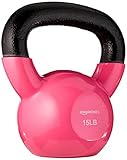
- 15 pound kettlebell weight for exercise and strength training
- Solid cast iron with Pink vinyl coating that protects floors, reduces noise, and prevents corrosion
- Flat base for stay-in-place storage; weight clearly printed on both sides
- Textured, wide, curved handle offers a comfortable, secure grip; hold with one hand or two
- Available in multiple color-coded weight sizes to mix and match for specific workout needs and to expand on over time (additional weights sold separately)
Do not increase load, speed, range, and session volume at the same time. Changing one variable makes it easier to notice what your back tolerates, but it still does not diagnose the cause of pain. A professional can decide whether a different exercise is more suitable while symptoms settle.
Recommended Free Tools
What “light” means in this context
“Light” is relative to the bell that provoked symptoms and to your current control. It is not a specific kilogram value supplied by the guidance. The correct choice is one that allows the described hinge without pain and without compensating with the arms or lower back. If no load is comfortable, do not use a lighter bell as an excuse to continue; stay with tolerable activity and seek assessment when appropriate.
How to tell tolerable activity from a painful lift
Back-pain advice often says to stay active, which can be misread as “keep swinging.” The distinction matters. NHS guidance supports continuing normal daily activities and gentle exercise as able, while also advising people to stop exercises that make pain worse. Walking, changing position, or another comfortable activity may therefore be reasonable even while kettlebell swings are paused.
Do not use the ability to complete a low-impact activity as evidence that a ballistic hinge is safe. A swing combines a hinge, rapid hip extension, and an external load. Its suitability has to be judged by your symptoms, control, and professional advice.
Activity can be adjusted without turning the day into complete rest. Use comfortable movements, avoid the specific lift that provokes pain, and change position if remaining still makes you feel worse. If ordinary tasks such as getting dressed, walking, or sitting become difficult, tell a healthcare professional; that impact on daily life is relevant even if the swing itself is no longer being attempted.
Free tools Windows power users keep installed
One-click scans. No signup required.
When to ask a clinician or qualified coach
Ask a healthcare professional about the pain
Arrange medical advice when symptoms do not improve after a few weeks, affect daily activities, or cause concern; these are NHS reasons to contact a GP. You should also ask before returning if you are unsure whether kettlebells are appropriate for your condition. A clinician can assess symptoms that a technique checklist cannot.
Bring your symptom notes, the bell weight, the movement phase that hurt, and any changes since stopping. Mention weakness, tingling, numbness, or bladder and bowel changes directly rather than assuming they are unrelated. Do not wait for a coaching session to address warning signs.
Use a qualified coach for movement instruction
A coach can observe the hip hinge, spinal control, bell path, and timing of hip extension. Coaching is useful for technique, but it does not replace medical assessment of persistent or concerning pain. Give the coach a clear account of when the pain occurs and stop any drill that reproduces it.
Ask the coach to watch a light or unloaded rehearsal rather than immediately putting you under fatigue. A useful coaching session should make the movement clearer, not pressure you to complete a set. If a coach dismisses pain or tells you to push through it, seek a different professional.
What’s actually slowing this PC down?
Pick the symptom - the matching free tool is one click away.
Rank #4

- VERSATILE STRENGTH TRAINING: Supports a wide range of resistance exercises for full-body workouts.
- SHIPMENT CONTAINS: Single 15-pound cast iron kettlebell designed for building strength and endurance
- DURABLE CONSTRUCTION: Made of solid cast iron for reliable, built-to-last strength through intense training sessions
- COMFORTABLE GRIP: Textured wide handle ensures a secure, comfortable grip whether holding with one hand or two hands
- COMPACT DIMENSIONS: Measures 7 x 4 x 7.5 inches (LxWxH) for easy storage in home gyms or workout spaces
Seek urgent or emergency care for warning signs
Emergency warning signs from NHS guidance include:
- Weakness, tingling, or numbness in both legs.
- Loss of feeling around the genitals or anus.
- Difficulty urinating, loss of bladder control, loss of bowel control, or other bladder or bowel changes.
- Chest pain.
- Back pain after a serious accident.
The NHS also advises urgent GP or NHS 111 help for sudden severe pain, pain that is getting worse quickly, or pain accompanied by feeling hot, cold, shivery, or generally unwell. Those routes are specific to the UK; elsewhere, use your local emergency number and medical services.
Common responses that can make the situation worse
Finishing the set to “see if it loosens up”
Pain during the lift is a reason to stop that lift. Completing the planned repetitions adds exposure without answering what is wrong.
Switching to a heavier bell after a form mistake
More load increases the demand on a pattern that may already be uncontrolled. Cleveland Clinic’s advice is the opposite: establish form first, start lighter, and progress gradually.
Turning the swing into a squat or arm raise
A swing is not primarily a deep squat and not an arm-strength exercise. Excessive knee travel, a bell pulled upward by the shoulders, or a repeated back bend changes the movement. Have a coach review the pattern rather than trying to correct several faults while fatigued.
Assuming a single cue explains the pain
“Chest up,” “squeeze the glutes,” or “keep the bell close” may be useful instructions in a particular coaching context, but none identifies the cause of an individual’s back pain. If symptoms persist despite a comfortable, controlled hinge, stop self-coaching and obtain an assessment.
Using another swing variation as a workaround
Changing from two hands to one hand, increasing the range, or speeding up the cadence does not remove the need to assess pain. A different variation still involves a loaded hinge and may reproduce symptoms. Do not use novelty to bypass the stop rule.
Testing the movement while tired
Fatigue can make it harder to maintain the hinge and control the descent. If you are evaluating a return, practice only when you can pay attention to the movement and stop immediately if symptoms appear. A successful tired set is not required by any of the guidance, and an unsuccessful one is not a reason to push harder.
Buying equipment as a treatment
A lightweight kettlebell can be useful later for technique practice if a professional has said a return is appropriate. Equipment cannot treat current pain, and buying a bell is not a substitute for stopping the provoking exercise or seeking care.
Do these 3 things before closing this tab:
1Repair Windows errors before they cause bigger problems2Scan for outdated or missing drivers - takes under a minute3Clear out junk files and repair common Windows errorsWhat current guidance does—and does not—say
The 2021 clinical practice guideline from the Academy of Orthopaedic Physical Therapy of the American Physical Therapy Association recommends exercise-training interventions for acute and chronic low-back pain. It does not establish kettlebell swings as a universal treatment, and it reports no clear superiority of one exercise-training intervention over another for low-back pain.
Best Value

- Kettlebell supports a wide range of resistance training exercises
- Includes a 45 pound kettlebell made of solid cast iron for built-to-last strength
- Textured wide handle helps ensure a comfortable, secure grip; hold with one hand or two
- Product dimensions: 8.6 x 5.8 x 10.6 inches (LxWxH)
- WARNING:Powder-coated finish may chip or crack if kettlebell is dropped on hard surfaces, struck against other weights, or contacts sharp objects. Inspect handle before each use — discontinue use if coating damage exposes bare metal edges. Use on rubber/padded surfaces and store separately to prevent contact damage
ACE’s January 2025 article explains the mechanics of a two-handed swing. Cleveland Clinic’s June 18, 2026 beginner guidance covers form practice, gradual loading, stopping when an exercise hurts, and asking a provider when uncertain. NHS back-pain guidance, last reviewed March 5, 2026, supplies self-care and escalation advice, including the emergency signs above. None of these sources provides a swing-specific injury rate, identifies the cause of your pain, or sets a universal return timeline.
That limitation matters when interpreting confident online claims. A video may demonstrate a useful hinge, but it cannot examine your symptoms. A forum anecdote may describe one person’s experience, but it is not evidence that the same cue, belt, stretch, or bell size will work for you. Use general technique information as a starting point for safe observation, not as a diagnosis or promise.
A practical checklist for your next decision
- Have I stopped the swing that hurts instead of completing the set?
- Can I perform an unloaded hip hinge without pain and with a long, controlled spine?
- Are my knees slightly bent and my shins relatively vertical rather than turning the movement into a deep squat?
- Does hip extension propel the bell while my arms guide it?
- Can I control the backswing and descent without the bell drifting far away?
- Have I avoided adding load until the pattern is comfortable and controlled?
- Am I keeping daily movement that feels tolerable while excluding the painful lift?
- Do I need a clinician because symptoms persist, affect daily life, or concern me?
- Do I have any emergency warning signs that require immediate care?
If any answer points to pain, uncertainty, or a warning sign, the safest “fix” is not another form experiment. Pause the swing and use appropriate medical or coaching support.
Frequently Asked Questions
Should I finish my kettlebell set if my lower back starts hurting?
No. Stop the set and put the bell down safely. Cleveland Clinic’s guidance is that exercise should challenge you, not hurt you. Do not test extra repetitions to see whether the pain disappears.
Can a hip-hinge correction fix my back pain?
A hinge review may identify a movement issue, but it cannot diagnose the cause or guarantee a cure. Practice only if comfortable, and seek individualized assessment if pain persists or returns.
Is walking okay while kettlebell swings hurt?
NHS guidance encourages normal daily activity and gentle exercise as able, while advising you to stop exercises that worsen pain. Walking is reasonable only if it is comfortable; it does not prove that swings are safe.
What kettlebell weight should I use when returning?
No universal weight is established. If a healthcare professional says a return is appropriate, begin lighter than the bell associated with symptoms and increase gradually only while the hinge remains comfortable and controlled.
Quick wins for a faster PC:
Fix the driver behind crashes, sound loss and screen glitchesFind Drivers →Clear out junk files and repair common Windows errorsFree Scan →How long should I wait before swinging again?
The available guidance does not set a universal return date. Readiness depends on comfortable movement, symptom response, and professional advice rather than a fixed number of days.
Should I use a belt, pain medicine, or a different grip to keep training?
Do not use those strategies to mask symptoms and continue a painful lift. Stop the provoking exercise and determine whether medical or coaching input is needed.
When does back pain after swings require emergency care?
Seek emergency care for weakness, tingling, or numbness in both legs; loss of feeling around the genitals or anus; bladder or bowel changes; chest pain; or pain after a serious accident. The NHS also advises urgent help for sudden severe or rapidly worsening pain or feeling generally unwell.
Can a coach replace a medical evaluation?
No. A qualified coach can assess the hinge, spinal control, bell path, and hip timing. Persistent, concerning, or neurologic symptoms require healthcare assessment.
Crashes, No Sound, or Screen Glitches?
Random freezes, missing sound and display glitches usually trace back to one bad driver. Find and replace yours safely.Free scan · under a minutePC Slower Than It Used to Be?
A free scan shows the junk files, broken settings and background clutter dragging Windows down - then fixes them in one click.Free scan · Windows 10 & 11The Bottom Line
The safest fix is to stop the swing that hurts, keep only comfortable activity, and review the hinge before any cautious return. Start lighter only when appropriate, progress gradually, and do not treat a cue or piece of equipment as a diagnosis. Persistent symptoms or NHS warning signs need medical help; a coach can supplement, not replace, that assessment.
Quick Recap
Product prices and availability are accurate as of the date/time indicated and are subject to change. Any price and availability information displayed on Amazon at the time of purchase will apply.

