
iTechGuides is reader-supported. When you buy through links on our site, we may earn an affiliate commission. As an Amazon Associate I earn from qualifying purchases. Learn more
There is no universal PS5-emulator setting that fixes low frame rates, stutter, or crashes. Start by identifying the emulator and exact build, then check that project’s game status, host requirements, release notes, and diagnostic instructions. PS5 emulation is experimental: a title can reach a menu or a short scene while remaining unplayable, unstable, or affected by incomplete rendering. A bad result may therefore be a game or emulator limitation rather than a misconfigured PC.
The sequence below separates software defects from host-hardware limits and gives you a reproducible way to test changes without destroying useful evidence.
1. Identify the emulator, game, and exact failure
PS5 emulators do not share one compatibility standard, configuration panel, or hardware baseline. Record the emulator name and build before changing anything. Also write down the game title, title or patch version if known, operating system, CPU, GPU, graphics driver, graphics API, and the exact scene or action that fails.
Windows Errors? Fix Them Before They Spread
Repair common Windows errors and clear accumulated junk for a smoother, more stable PC - no reinstall needed.Free scan · no reinstallOutdated Drivers Are Slowing You Down
One free scan finds every outdated or missing driver and matches the right update for your exact hardware.Free scan · exact hardware matchClassify the symptom precisely. The correct next check depends on whether you have a performance problem, a pacing problem, or a startup failure.
#1 Best Overall
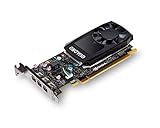
- The NVIDIA Quadro P400 is based on NVIDIA Pascal architecture and delivers up to 2x more visualization performance than the NVIDIA maxwell-based Quadro K420
- Three DisplayPort outputs provide more display connectivity than the previous generation
- With more memory bandwidth than the previous generation, customers can work with larger datasets
- Tuned and tested drivers with support for the latest releases of OpenGL, DirectX, vulkan, and NVIDIA CUDA ensure compatibility with the latest versions of Professional applications
- Creation and playback of HDR video with H264 & hevc encode and decode engines
| Symptom | What to record | Most useful first check |
|---|---|---|
| Low average FPS | FPS, resolution request, preset, scene, and whether the rate is consistent | Check the game’s compatibility state and the emulator’s published requirements |
| Stutter or uneven frame pacing | When the hitch occurs, whether it repeats in the same location, and whether audio or rendering also pauses | Repeat the same scene after one reversible change; do not alter several settings at once |
| Crash while launching | Whether the emulator opens, whether a game window appears, and the last visible message | Read the current release notes and verify OS, CPU instruction-set, graphics API, and driver requirements |
| Crash at a repeatable point | Save or level, exact action, title version, and whether a fresh launch reproduces it | Check title-specific reports and attach a complete log when the project requests one |
| Emulator fails before opening | Build, operating system, driver, and any operating-system error | Compare the host with the exact emulator’s minimum requirements |
Test whether the problem affects one game or several. One-title failure usually points toward compatibility, an incomplete feature, or a title-specific regression. A failure across every title makes a host requirement, driver, installation, or emulator-wide regression more plausible, although it is not proof of any one cause.
2. Capture a baseline before changing settings
A baseline prevents guesswork and lets you tell whether a change helped. Use a fresh emulator launch and reproduce the same scene or sequence each time. If the emulator has an on-screen performance display, record the average FPS and the visible dips; otherwise note the time needed to reach the failure and describe the pacing subjectively.
Baseline checklist
- Emulator name, branch, and complete build or version number.
- Game title, edition, and title or patch version.
- Windows or other host operating-system version.
- CPU model and whether the emulator’s required instruction sets are available.
- GPU model, graphics driver version, and graphics API in use.
- Requested output resolution, preset, and any project-documented options already enabled.
- The exact scene, menu, save, or input sequence that reproduces the issue.
- Whether a clean launch reproduces it and whether another title shows the same behavior.
Change one variable at a time, then repeat the same test. A change that appears to improve a random scene is not evidence of a fix. Keep a short log with the old value, new value, observed result, and whether the application crashed or rendered incorrectly.
The Tool Desk
Outbyte PC Repair FREERepair Windows errors before they cause bigger problemsFix Now →Outbyte Driver Updater FREEFix the driver behind crashes, sound loss and screen glitchesFind Drivers →3. Check the build and title status before tuning
Read the current compatibility report and release notes for the exact emulator and game. Compatibility labels are project-maintained and can change between builds. A game reaching its menu does not establish that gameplay, audio, saving, or long sessions work.
Look for a release note that matches your symptom
Updating is most useful when a release specifically addresses your failure. For example, PS5PCEM 0.3.4 fixed a packaged-installation launcher regression that could prevent games from starting. Its release notes recommend updating both the launcher and the runner. If you use that project and see the corresponding startup behavior, update both components rather than changing unrelated graphics options.
Rank #2

- Chipset: NVIDIA GeForce GT 1030
- Video Memory: 4GB DDR4
- Boost Clock: 1430 MHz
- Memory Interface: 64-bit
- Output: DisplayPort x 1 (v1.4a) / HDMI 2.0b x 1
Do not assume the newest build is automatically better for every title. A build can fix one game while introducing a regression elsewhere. Keep the previous working build available when the project permits it, and record which build produced each result.
Use title-specific evidence
KytyPS5 directs users to community compatibility reports and asks bug reporters to include the tested version and complete log. Follow that project’s current reporting format. If a report lists a game as menu-only, intermittently booting, or affected by missing rendering features, lowering resolution cannot turn that state into a stable release.
What’s actually slowing this PC down?
Pick the symptom - the matching free tool is one click away.
4. Verify hardware against the correct project
There is no single specification sheet for all PS5 emulators. Apply requirements only to the project that you are running.
PS5PCEM 0.3.4 requirements
| Component | Published requirement | Why it matters |
|---|---|---|
| Operating system | Windows 10 version 2004 or newer | An older Windows release is outside the stated baseline and can cause launch or runtime problems. |
| CPU | x86-64-v3, including AVX2, BMI2, and FMA | The emulator expects these instruction-set extensions; a fast CPU without them is still incompatible with this requirement. |
| Graphics driver and API | A current Vulkan 1.2-capable graphics driver | The driver and API path must support the project’s renderer; generic DirectX capability is not a substitute for this published Vulkan requirement. |
These specifications apply to PS5PCEM 0.3.4, not to every PS5 emulator. Its README also states that games, firmware, keys, system libraries, and console software are not included. You must provide any legally obtained components required by the project and follow its distribution rules.
Other projects publish different baselines
RPCS5 separately publishes CPU, graphics, and memory requirements, including Vulkan-compatible graphics hardware, and warns that optimal performance is not guaranteed on lower-end systems. Treat those statements as RPCS5’s own project guidance, not as universal thresholds for another emulator.
Rank #3

- Powered by NVIDIA GeForce GT 610, 40nm chipset process with 523MHz core frequency, integrated with 2048MB DDR3 memory and 64-bit bus width
- Compatible with windows 11 system, no need to download driver manually
- HDMI / VGA 2 ports output available. HDMI Max Resolution-2560x1600, VGA Max Resolution-2048x1536
- Support DirectX 11, OpenCL, CUDA, DirectCompute 5.0
- Original half height bracket matches with the low profile brackets make the Glorto GeForce GT 610 graphics card fit well with all PC tower, small form factor and HTPC(except micro form factor)
If your host misses a documented requirement, fix that gap before experimenting with performance settings. If the host meets the requirement but only one title fails, the evidence points more strongly toward title compatibility or an emulator defect than toward an immediate hardware purchase.
Free tools Windows power users keep installed
One-click scans. No signup required.
5. Troubleshoot low FPS without inventing a universal preset
The available project guidance does not establish one settings combination that raises FPS across PS5 emulators. Start with the least disruptive checks and keep every test tied to the same scene.
- Confirm the title’s verified state. A game marked experimental, menu-only, or incomplete may be unable to sustain playable speed regardless of your preset.
- Confirm the build. Read release notes for performance, renderer, or title-specific fixes. If the notes do not address your symptom, do not assume an update will help; test it and record the result.
- Check the renderer path. Verify that the emulator is using the graphics API required by its project documentation and that the driver is current enough for that API. If the project does not document a setting, do not claim that a particular backend or driver toggle is a guaranteed fix.
- Reduce only documented workload controls. If the emulator exposes a resolution or preset control in its own guide, change one control and repeat the baseline scene. Record visual artifacts, missing effects, or new crashes as regressions, not as acceptable performance.
- Separate CPU and GPU evidence. A lower resolution can reduce rendering work but cannot repair missing emulator instructions, an unsupported title feature, or a CPU bottleneck. Observe whether the frame rate changes materially and whether one processor core or the GPU is saturated using your normal system monitor.
- Stop when the result is clearly emulator-limited. If the same scene remains slow after the host meets requirements and the project reports incomplete rendering or compatibility, file a useful issue instead of cycling through random tweaks.
What not to treat as a guaranteed fix
- A frame-rate cap, shader-cache deletion, administrator launch, or blanket driver reinstall is not established here as a universal PS5-emulator remedy.
- Changing several graphics options together destroys the comparison with your baseline.
- A higher reported FPS in a menu or short scene does not demonstrate playable gameplay.
6. Diagnose stutter and uneven frame pacing
Stutter is different from a low but steady frame rate. A title can report a reasonable average while delivering irregular frame times, or it can hitch only when entering a new area. First establish whether the hitch repeats at the same location.
Repeatable hitch
Reload the same save or restart the same sequence and perform the same inputs. If the hitch occurs at the identical camera position or action, capture that location and timing in your notes. Check the title’s compatibility history and known rendering or streaming limitations before changing host settings.
Intermittent hitch
Run the same test for a consistent duration and note whether the issue becomes more frequent during a long session. Because long-session stability is not established for many experimental titles, distinguish a single transient pause from a repeatable degradation. Close unrelated workloads only if you can reproduce the test consistently afterward; do not present that housekeeping as an emulator fix.
Rank #4

- Powered by NVIDIA GeForce GT 740, 28nm chipset process with 993MHz core frequency, integrated with 4096MB DDR3 memory and 128-bit bus width
- More stable performance, compatible with Win11, can automatically install new driver
- HDMI / VGA / DVI 3 ports output available. HDMI Max Resolution-2560x1600, VGA Max Resolution-2048x1536, DVI Max Resolution-2560x1600
- Support DirectX 12, OpenCL, CUDA, DirectCompute, DirectML, Vulkan, PhysX, OpenGL 4.6
- Original half height bracket matches with the low profile brackets make the Glorto GeForce GT 740 graphics card fit well with all PC tower, small form factor and HTPC(except micro form factor)
Do not confuse incomplete rendering with pacing
Missing effects, corrupted geometry, or audio dropouts can accompany a performance problem but indicate different emulator subsystems. Record them separately. A smooth but visually incomplete scene is not a successful fix for stutter, and a faster scene with broken rendering may be unusable.
7. Handle crashes methodically
Crash before the game starts
- Write down whether the launcher, runner, or game process closes.
- Compare the host with the project’s operating-system, CPU, and graphics requirements.
- Check release notes for launcher or packaged-installation regressions. PS5PCEM 0.3.4’s launcher fix is an example of a software regression that settings cannot solve.
- Verify that launcher and runner components are on the compatible versions recommended by the project.
- Reproduce once after the update and save the complete log.
Crash at a repeatable point
Record the title version, save or level, exact action, and whether the crash survives a fresh launch. Search the project’s title-specific compatibility information for that state. If the project requests reports, attach the complete log and tested build rather than a screenshot of the crash alone.
Crash after extended play
Note elapsed time, scene, temperature or throttling observations from your normal monitoring tools, and whether the crash occurs in more than one title. Do not infer that a new graphics card will solve a software or long-session stability defect. A reproducible report that distinguishes immediate from long-session failure is more actionable than a general statement that the emulator crashes.
Independent reader supportYour contribution helps us test, update, and keep practical guides available for everyone.8. Decide whether a GPU upgrade is justified
Consider a graphics-card purchase only after the exact emulator documents a graphics requirement that your system does not meet, or your measurements show a confirmed graphics bottleneck in a title that is otherwise compatible. A Vulkan-compatible graphics card may be relevant when the current device lacks the required Vulkan capability. It is not a general cure for incompatible games, emulator bugs, crashes, or CPU-limited performance.
The PS5PCEM project’s own status measurements illustrate the limitation. In Little Nightmares Enhanced Edition, it reported 4.46 FPS by the suitcase and 3.73 FPS after moving right, each measured over 30 seconds on an RTX 3070 Ti with a 1080p output request and Speed preset. Rendering was still incomplete and long-session stability was unverified. Those are project measurements for one title, scene, build, host, and test method—not a general expectation for PS5 emulators and not evidence that buying the same GPU guarantees improvement.
Best Value

- The Radeon RX 580 GPU is a graphics card by AMD. Built on the 14 nm process, and based on the Polaris 20 graphics processor, in its Polaris 20 XL variant, the GPU supports DirectX 12. This ensures that all modern games will run on AMD Radeon RX 580 2048SP.
- Multi Screen Productivity: 6 HDMI ports enhance your workspace with support for up to total six 4K UHD video displays. Perfect for multitasking, gaming, stock trading, digital signage, and immersive visual setups. Compatible with Windows 11/10/8/7.
- Integrated with 8GB GDDR5 256-bit memory interface, Big Video Memory Ready For Multi Monitor Output.
- Support DirectX 12, Vulkan, Shader Model 5.0, OpenGL 4.6/4.5, 4K Video Decode & Encode.
- Metal backplate installed reducing the risk of graphics card deformation and provide good cooling performance.
Before spending money, verify all of the following:
- The emulator you use explicitly supports the graphics API and feature level of the proposed card.
- Your CPU meets the project’s instruction-set baseline and is not the limiting component.
- The exact game has a compatibility state that suggests playable progress is possible.
- The project’s release notes do not identify a known software defect responsible for your symptom.
- You can return the component if the title remains limited by emulation rather than host rendering.
9. File a report that developers can use
A complete report is often the fastest path when the host meets requirements and the problem persists. Follow the project’s current issue template and privacy guidance.
Include the reproducible facts
- Emulator name and exact build.
- Game title, edition, title version, and compatibility status if listed.
- Operating system, CPU, GPU, graphics API, and driver version.
- Output resolution and documented preset or options.
- Exact steps from a fresh launch, including save, level, and input sequence.
- Observed FPS or timing, the first frame at which the issue appears, and whether it repeats.
- Whether another title reproduces the problem.
- The complete emulator log, attached as requested by the project.
Do not omit inconvenient results. State whether an update changed the behavior, whether rendering is incomplete, and whether the application survives a short or long session. Developers can act on a precise reproduction; they cannot reliably diagnose a report that only says low FPS or crashes.
Recommended Free Tools
10. A practical decision path
- Identify. Name the emulator, build, title, host, and exact symptom.
- Reproduce. Capture one baseline scene or launch sequence from a fresh start.
- Compare. Read the exact project’s current requirements, compatibility report, and release notes.
- Qualify the host. Confirm OS, CPU instruction sets, GPU, Vulkan or other required API, and driver.
- Update selectively. Apply a release only when it is compatible with your title and addresses the failure, updating paired launcher and runner components when the project requires it.
- Change one reversible option. Retest the identical scene and record both performance and rendering quality.
- Escalate. If the symptom remains, decide whether it is a documented compatibility limit or a reportable regression, then submit the version and complete log.
- Buy hardware only with evidence. Upgrade when a published requirement or measured bottleneck confirms that the current component is the limiting factor.
What a successful fix actually means
Judge success against the original failure, not against an arbitrary FPS number. A valid fix reproduces the same scene without the crash or hitch, preserves correct rendering and audio, and remains stable for the session length you care about. A menu that opens after an update, a brief FPS spike, or a title that runs only with missing effects is a changed symptom, not proof of full playability.
Because PS5 emulators and their compatibility databases are actively changing, keep the build number with every result. The same PC can produce a different outcome after an emulator update, a game patch, or a renderer change. Treat each result as conditional on that version, title, scene, and host rather than as a permanent rule for PS5 emulation.
Quick Recap
Product prices and availability are accurate as of the date/time indicated and are subject to change. Any price and availability information displayed on Amazon at the time of purchase will apply.

