
Recommended Free Tools
iTechGuides is reader-supported. When you buy through links on our site, we may earn an affiliate commission. As an Amazon Associate I earn from qualifying purchases. Learn more
Check the latest notice from the authority responsible for the specific beach, then follow any signs, fencing, or access restrictions at the site. Search the authority’s official website for the beach name plus “asbestos,” “closure,” or “foreshore.” If the notice is unclear or out of date, contact the authority that issued it. Do not assume a beach is open because an older database has no closure entry.
Check the authority responsible for the exact beach
Start with the local authority or agency that manages the beach or issues its public-health and environmental notices. Depending on the location, that may be a municipality, council, public-health team, environmental-health department, or a state, Tribal, or territorial beach program. A beach name may refer to more than one stretch of shore or access point, so identify the precise place you intend to visit.

On the authority’s official website, search the beach name together with terms such as “asbestos,” “closed,” “restricted,” and “foreshore.” Look for a current notice, not just a general beach page or an old news item. If you cannot tell which authority is responsible, a local-government website or the beach’s posted notice may identify the agency to contact.
Quick wins for a faster PC:
Scan for outdated or missing drivers - takes under a minuteDriver Scan →Clear out junk files and repair common Windows errorsFree Scan →Do not rely on a search-result snippet as the final answer. It may show an older page or omit a notice’s date, map, and conditions. Open the official page itself and check whether it gives a latest update, says when the information applies, and provides a way to contact the issuing authority. If you find no asbestos notice, that absence alone does not confirm that the beach is safe or open; ask the responsible authority for the current status.
#1 Best Overall
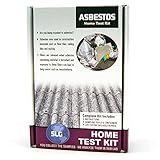
- SLGi Home Test Kits includes sampling tools, a prepaid return shipping label, instructions, and analysis.
- We perform Asbestos PLM analysis by EPA Method 600/R-93 for (1) sample.
- Your results will be ready within (5) business days of your kit arriving at our lab.
- Your sample takes 1–5 business days to reach our lab.
For a useful question, identify the beach and the access point you plan to use, then ask whether an asbestos-related closure or restriction is currently in effect there. If the notice is unclear, ask which parts of the shore, water, or access routes are covered and whether the restriction has changed since the notice was posted. The authority responsible for the site is the source to clarify its own current status.
Read the notice for its date, boundary, and meaning
A notice is useful only if it applies to the place and date of your planned visit. Check when it was last updated, whether it includes a map, and exactly what it restricts. A notice may apply to the whole beach, one section of shore, the water, particular access routes, or a foreshore area. Do not treat a restriction on one area as a statement about every beach nearby.
Match the map or description to the exact entrance or destination you have in mind. A notice for a named beach might describe a smaller restricted section, while a broad label such as “beach closed” may still need a map or further explanation to show the boundary. If you cannot tell whether your route crosses the restricted area, do not guess: contact the issuer and ask which route or access point is affected.
What’s actually slowing this PC down?
Pick the symptom - the matching free tool is one click away.
Look for the date and wording together. A date may refer to when the page was last updated, when sampling occurred, or when a notice was first issued; do not assume those are the same thing. Check whether the authority describes the restriction as continuing, under review, or changed. If the notice has no clear current status or update date, ask the authority whether it remains in effect rather than treating silence as an all-clear.
Also distinguish a recommendation from an official closure. In U.S. beach guidance, an advisory generally recommends avoiding swimming but does not officially close public access; a closure typically means a beach or area is officially closed. The scope and legal effect depend on local decisions. The U.S. Environmental Protection Agency’s 2014 National Beach Guidance and Required Performance Criteria for Grants says: “Whether to close a beach is a local decision; EPA does not set beach closure requirements or conditions.” That describes the U.S. framework, not a rule for every country.
Asbestos notices may be issued outside the ordinary beach-monitoring process, which often focuses on water quality. Search the responsible authority’s hazard or contamination notices as well as its swimming-water information, and follow the asbestos notice’s own boundaries and instructions. A water-quality advisory is not an asbestos clearance, and an entry about routine water monitoring does not establish whether a separate shore or foreshore restriction is in force.
Use this status-check sequence
- Pin down the location. Record the beach name and the particular entrance, access point, or section of shore you plan to use. Check which municipality or agency is responsible for it. If a beach spans more than one area, do not assume one authority’s notice covers the whole coastline.
- Find an official notice. Search the responsible authority’s website for the beach name and “asbestos,” “closed,” “restricted,” or “foreshore.” Look under beach, environmental-health, public-health, contamination, or hazard information. Prefer a current authority notice to a search-result snippet, news story, or third-party listing.
- Check the details. Read the notice date, map, stated boundaries, and any description of which areas or activities are restricted. Confirm that the notice covers your intended route and destination. Note whether it is about the beach, foreshore, water, or an access route, rather than treating those terms as interchangeable.
- Resolve uncertainty with the issuer. If the status, date, or boundary is unclear—or two sources conflict—contact the agency named on the notice. Ask whether the restriction is still in effect and which access points or sections it covers. In the United States, the EPA directs people seeking current beach status to the responsible state, Tribal, or territorial beach program; local authorities make the opening or closure decision.
- Check conditions at the site. Obey current signs, fencing, and barriers. If a sign conflicts with an older website entry, stay out of the restricted area and ask the authority for clarification. Do not cross a barrier to inspect a beach or use a different path to reach a restricted shore.
- Report suspected material safely. Use the responsible authority’s reporting channel. Do not collect, move, or disturb suspected asbestos. Plymouth City Council, for example, provides a website route for reporting suspected material at Mount Batten and tells visitors to stay away from restricted areas.
This sequence is useful whether you find a closure notice immediately or only conflicting or incomplete information. The decision you need is site-specific: whether the area you plan to enter is currently open, closed, or restricted. The authority’s latest notice and direct clarification are more relevant to that decision than an undated listing or general information about a neighboring beach.
The Tool Desk
Outbyte PC Repair FREEClear out junk files and repair common Windows errorsFree Scan →Outbyte Driver Updater FREEFix the driver behind crashes, sound loss and screen glitchesFind Drivers →For U.S. beaches, use EPA tools as a starting point—not a live closure check
For coastal and Great Lakes beaches in the United States, the EPA’s state, territorial, Tribal, and EPA beach program contacts page can direct you to jurisdictional monitoring websites and contacts. The EPA page for finding information about a particular U.S. beach explains how the National List of Beaches and BEACON can help locate beach records and review reported monitoring or notification history.
Use the National List to help establish whether a coastal or Great Lakes beach appears in a monitoring and public-notification program and to find the relevant jurisdictional program. BEACON can help with reported monitoring and notification history. Those functions can be useful background when you are locating the agency to ask, or trying to understand what records have been reported about a beach. They do not make either tool the authority on whether a particular beach is open today.
These resources are not a substitute for a current local notice. Jurisdictions submit information on different schedules; EPA says reported information may arrive days to months after collection. It also says BEACON does not provide current closure information. A database record with no closure entry could reflect reporting timing or the scope of what the database records; it does not override a newer site-specific closure. For a present-day asbestos restriction, verify the status with the authority responsible for the site.
The EPA’s beach contacts page is also a practical next step if you do not know which U.S. program to consult. Use it to identify a state, Tribal, or territorial program and then check that program’s information or contact the responsible agency. If the question is whether a specific foreshore or access point is affected by asbestos, make that exact question clear; a general record of beach-water monitoring may not address it.
Windows Errors? Fix Them Before They Spread
Repair common Windows errors and clear accumulated junk for a smoother, more stable PC - no reinstall needed.Free scan · no reinstallOutdated Drivers Are Slowing You Down
One free scan finds every outdated or missing driver and matches the right update for your exact hardware.Free scan · exact hardware matchHow to compare conflicting notices
When sources disagree, compare their authority, freshness, coverage, and status wording rather than treating them as equally current. A database entry may reflect historical monitoring, while a local hazard notice may describe a newer restriction at a specific part of the beach. The key is not just which source has more information, but whether it controls the site, applies to the location you intend to visit, and states current access conditions.
Rank #3

- Easy and Safe Testing: Utilize our asbestos testing kit to safely collect 2 samples for analysis. Simple to use with clear instructions, ideal for both home and office environments.
- Accurate and Dependable Results: Trust in our reliable asbestos air test kit, offering precise results analyzed by EPA-approved lab methods. Receive professional reports within 1 week.
- Sample Analysis: Our asbestos home test kit allows the collection of two samples, enhancing the thoroughness of your asbestos PLM analysis and ensuring comprehensive coverage.
- Required In-Depth Lab Analysis: Our Asbestos test kit gives you the flexibility to seek professional lab analysis. With an optional $20 lab fee per sample, receive a comprehensive evaluation from our AIHA-accredited lab, enhancing the accuracy of your home's Asbestos detection.
- Ideal for Various Applications: Whether checking for asbestos in popcorn ceilings or other household materials, our kit is suitable for a range of testing needs, delivering peace of mind.
| What to compare | What to check |
|---|---|
| Who issued it | Does the source control the beach or issue the relevant notice, or is it a general database or secondary report? |
| Date and time | When was the information last updated? Is it a current status notice or a record from earlier monitoring? |
| Location and boundary | Does its map or description match the access point and shore section you plan to visit? |
| Type of notice | Is it a recommendation, a formal closure, or a restriction on a particular area or route? |
If an official local notice says an area is closed or restricted, do not use an older or broader database entry to override it. If a secondary report repeats an older status, check the issuing authority’s page for a newer update. If two current-looking authority notices still conflict, avoid the area in question until the responsible authority clarifies the status.
A useful comparison is therefore practical rather than abstract: who issued each item, how recently it was updated, whether each describes the same place, and whether it gives a recommendation or an access restriction. If you contact the issuer, refer to the two notices and ask which one states the current boundary and status. Keep following any posted restriction while you wait for clarification.
Example: Mount Batten beach in Plymouth
Plymouth City Council’s Mount Batten beach page displays a latest position dated 8 October 2026. The council says recent sand sampling found asbestos fibres in most samples taken across the beach and that it closed the beach while carrying out wider sampling and air-disturbance testing. It reports that hazardous levels of fibres were found in sand and says inhaled fibres can pose long-term health risks.
The council also says air-quality tests after the closure showed no evidence of airborne asbestos, while its investigation into the source and the criteria for safe reopening continued. That result describes the council’s tests at Mount Batten after the closure; it does not establish conditions at another beach or prove that the site’s status has changed since the notice. Do not use this particular air-test result as a general assurance about other locations or a later date.
The notice instructs visitors to stay away from closed areas, not to land on affected beach or foreshore from the water, and to report suspected asbestos through the council’s website. It also says some sandy northern foreshore areas were restricted and signed. The council’s wording is direct: “For your own safety, please stay away from the closed areas of foreshore and beach.” Check the council’s latest notice and follow the on-site signs before visiting; do not infer that the Mount Batten status applies to other beaches.
This example also shows why readers should check both the stated status and the physical boundary. The council’s notice concerns the Mount Batten site, mentions particular northern foreshore areas, and gives instructions about approaching from the water. Someone checking another beach—or a different part of the coast—needs that location’s own current notice, not a conclusion drawn from Plymouth’s investigation.
Rank #4
- SLGi Home Test Kits includes sampling tools, a return shipping label, instructions, and analysis.
- We perform Asbestos PLM analysis by EPA Method 600/R-93 for (1) sample.
- Your results will be ready within (3) bus. days of your kit arriving at our lab.
- Your sample takes 1–5 bus. days to reach our lab.
If you cannot confirm the current status
- Do not enter an area marked closed or restricted, even if a website entry appears older or says nothing about asbestos.
- Contact the authority named on the notice or the local beach, environmental-health, or public-health team and ask about the date and exact boundary of the restriction.
- Do not handle, collect, or disturb suspected material. Report it through the responsible authority’s channel.
- Wait for clear confirmation from the responsible authority before relying on a general database, an old notice, or an unverified third-party post.
If you cannot reach the authority before your planned visit, the uncertainty remains unresolved. Do not treat an unanswered call, an unavailable webpage, or the absence of a database entry as confirmation that a restricted area has reopened. Follow signs and barriers at the site and wait for an authoritative status update.
There is no need to buy a home asbestos test kit, respirator, cleanup product, or other item to find out whether a beach is closed. The status question is answered by the responsible authority, and collecting or disturbing material to test it is not an appropriate way to check access conditions. Use the official reporting route if you suspect material is present.
Frequently Asked Questions
How do I find out if a beach is closed because of asbestos?
Search the official website of the authority responsible for that exact beach using the beach name and terms such as “asbestos,” “closed,” “restricted,” or “foreshore.” Check the notice date and map, then contact the issuer if the current status or boundary is unclear. Follow posted barriers and signs.
Where can I find current beach closure information?
The current status should come from the authority responsible for the specific beach or from the agency that issued its notice. In the United States, EPA’s beach program contacts page can help identify state, Tribal, or territorial program information and contacts, but EPA says BEACON is not a current closure source.
Is an old database with no asbestos closure entry proof that a beach is open?
No. EPA says beach information reported to it may arrive days to months after collection, and BEACON does not provide current closure information. Check the responsible local authority’s latest notice and ask it directly if needed.
Do these 3 things before closing this tab:
1Fix the driver behind crashes, sound loss and screen glitches2Repair Windows errors before they cause bigger problems3Scan for outdated or missing drivers - takes under a minuteWhat if a sign says the beach is closed but the website says it is open?
Stay out of the signed or fenced area and contact the authority responsible for the notice to clarify the current status. Do not let an older website entry override a restriction posted at the site.
Best Value
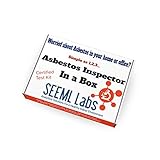
- DIY Asbestos Sample Test Kit
- Free Consultation and Lab Fees Included. No additional lab fees required
- Fast Turnaround: Results within 2–3 business days after samples are received.
- NVLAP 201031-0 Accredited Laboratory
- Professional and Detailed Report Included in Price
Does a swimming-water advisory mean the beach is closed for asbestos?
Not necessarily. In U.S. guidance, an advisory generally recommends avoiding swimming but does not officially close public access; a closure typically closes a beach or area. An asbestos restriction may be issued separately, so check the relevant local hazard notice and its exact boundaries.
Can I use EPA BEACON to check whether an asbestos beach closure is in effect today?
No. BEACON can help review reported monitoring and notification history, but EPA says it does not provide current closure information. Confirm a present-day asbestos restriction with the authority responsible for the beach.
What should I do if I see material that might be asbestos on a beach?
Do not touch, collect, move, or disturb it. Follow any signs or barriers and report the suspected material through the responsible authority’s reporting channel. If you are at Mount Batten, Plymouth City Council’s notice directs visitors to report suspected asbestos through its website.
Free tools Windows power users keep installed
One-click scans. No signup required.
Does the Mount Batten notice apply to other beaches?
No. Plymouth City Council’s Mount Batten page describes that specific site and displays a latest position dated 8 October 2026. Check the notice from the authority responsible for any other beach, and do not generalize Mount Batten’s sampling or air-test findings to another location.
The Bottom Line
To find out whether a beach is closed because of asbestos, check the latest notice from the authority responsible for that exact beach, verify its date and boundary, and follow all signs and barriers. EPA tools can help locate U.S. beach records and contacts, but they are not a live closure check. If anything is unclear, stay out of the restricted area and ask the issuing authority.
Quick Recap
Product prices and availability are accurate as of the date/time indicated and are subject to change. Any price and availability information displayed on Amazon at the time of purchase will apply.

