
iTechGuides is reader-supported. When you buy through links on our site, we may earn an affiliate commission. As an Amazon Associate I earn from qualifying purchases. Learn more
After sanitizing a baby bottle, place every part on a clean, unused dish towel or paper towel and let it air-dry completely in a protected area. Do not rub or pat the parts dry with a towel. When everything is dry, wash your hands, reassemble the bottle, and store it in a clean, protected place such as a cabinet reserved for clean dishes. This is the sequence recommended by the US Centers for Disease Control and Prevention (CDC).
A drying rack is optional, not a hygiene upgrade. CDC says towel or paper-towel air-drying is probably more hygienic because racks can trap moisture and are harder to clean. UK readers should note that NHS guidance differs: it advises leaving bottles and teats in the sterilizer or pan until needed whenever possible.
The safe US CDC sequence
The CDC uses the term sanitizing for the final germ-reduction step; this article uses “sterilized” in the everyday sense used in the title. Whatever method you use, finish cleaning before sanitizing and follow the bottle, nipple, and appliance manufacturer’s instructions.
The Tool Desk
Outbyte Driver Updater FREEFix the driver behind crashes, sound loss and screen glitchesFind Drivers →Outbyte PC Repair FREEClear out junk files and repair common Windows errorsFree Scan →- Clean before sanitizing. Take the bottle apart, including the nipple, collar, cap, valve, and any other removable pieces. Wash the parts with hot water and dish soap using a clean brush reserved for infant-feeding items. Rinse away soap and food residue before the sanitizing step. The CDC’s detailed US procedure is at How to Clean, Sanitize, and Store Infant Feeding Items.
- Prepare a clean drying area. Put a fresh, unused dish towel or a paper towel on a surface protected from dirt, dust, splashes, and household traffic. Keep the inside of the bottle, nipple openings, and other contact surfaces from touching a dirty counter.
- Air-dry; do not wipe. Arrange the pieces so air can reach all sides and openings. Leave them undisturbed until they are completely dry. Do not rub, shake, or pat them dry with a dish towel: contact with the towel can transfer germs back to sanitized parts.
- Keep damp parts out of storage. Moisture left inside a bottle, nipple, valve, or cap can support germ and mold growth. If any piece is still wet, leave the entire set on the drying surface rather than assembling it.
- Wash your hands, then reassemble. Once every component is dry, wash your hands thoroughly. Put the bottle together with clean hands, avoiding contact with surfaces that will touch milk or formula.
- Store in a clean, protected place. Place the assembled bottle, or the dry parts if your manufacturer requires separate storage, in a clean cabinet or other enclosed area protected from dust. CDC gives a closed kitchen cabinet used only for clean dishes as an example.
These steps apply to parts sanitized by boiling, steam, or another method that the manufacturer says is suitable. A steam appliance may have its own cooling, draining, and drying instructions; follow those directions before moving parts to the towel.
#1 Best Overall
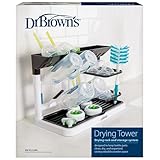
- VERTICAL DRYING TOWER. Compact countertop drying rack saves space while holding items upright to quickly dry baby bottles and parts
- DRAIN, DRY AND STORE. Dry and store baby bottles, pacifiers, sippy cups and other baby accessories all in one place.
- REMOVABLE DRIP TRAY. The removable bottom tray catches water while drying and is easy to empty and clean.
- LARGE CAPACITY. With 6 pegs and 3 trays for drying and storing, the universal design fits most bottles, pacifiers, teethers, and other accessories.
- TOP COMPARTMENT. Features an additional drying and storage top compartment for collars, lids, and nipples.
Why complete air-drying matters
Sanitizing reduces microbes on a clean item, but handling and storage can reintroduce them. Air-drying removes the residual water that allows organisms to multiply and prevents a damp interior from being sealed inside a bottle. That is why “looks mostly dry” is not a useful stopping point: check the bottle threads, nipple hole, valve, cap grooves, and any anti-colic components.
Use a new or freshly laundered drying towel for each drying session. A towel that has wiped hands, counters, dishes, or raw-food spills is not a clean drying surface. Paper towels are single-use; discard them after the parts are dry. Keep pets, children, food preparation, and strong drafts away from the drying area so dust does not settle on the pieces.
Give large bottles and narrow accessories enough room that air can circulate. Do not stack nipples inside one another or place caps over bottle openings while they are wet. Turn pieces so trapped droplets can escape, but do not handle them repeatedly to check progress. If the room is humid, drying can take longer; the safe endpoint is dryness, not a preset number of minutes.
Dish towel, paper towel, or drying rack?
CDC’s consumer FAQ asks, “Why should I air-dry infant feeding items on a clean towel instead of using a drying rack?” Its answer is qualified: “Air-drying infant feeding items on a clean dish towel or paper towel is probably more hygienic than using a drying rack.” The agency does not publish a contamination-rate study or rank particular rack designs. Choose using the factors below rather than assuming a product is safer because it is marketed for bottles.
| Option | Hygiene guidance | Drying and maintenance | Best fit |
|---|---|---|---|
| Clean, unused dish towel | CDC’s preferred practical option; do not wipe parts with it. | Replace or launder after use; spread pieces so air reaches every surface. | Most households that can provide a clean towel for each session. |
| Paper towel | CDC-approved drying surface when clean and unused. | Single-use and easy to discard; use enough surface area to keep parts off the counter. | Travel, emergencies, or homes where a freshly laundered towel is unavailable. |
| Drying rack | Optional. CDC warns that racks may trap moisture and can be difficult to clean. | Must be washed, sanitized, and dried thoroughly on the schedule for your baby’s risk group. | Caregivers who need organized airflow and can maintain the rack consistently. |
The practical tradeoff is maintenance, not a guaranteed performance difference. A towel is easy to replace, while a rack has crevices, rods, and a base that may retain droplets. A rack can still be reasonable if it is dedicated to infant-feeding items, easy to take apart, and cleaned as carefully as the bottles. There is no CDC-backed product ranking or evidence that a particular brand or design is automatically safer.
If you choose a rack
Use a rack dedicated to infant-feeding items rather than one shared with everyday dishes. Disassemble it as far as the design allows, remove trapped water and residue, wash it, sanitize it, and let it dry fully before the next session. Do not put wet bottle parts into a rack that is itself damp, slimy, dusty, or visibly dirty. A rack does not remove the need to inspect bottle openings or to wait for complete dryness.
For an older, healthy infant, CDC advises washing and sanitizing the rack every few days. For an infant younger than 2 months, born prematurely, or with a weakened immune system, clean and sanitize it at least daily. These intervals are procedural recommendations, not measurements of a particular contamination rate. If the rack cannot be cleaned thoroughly or repeatedly holds standing water, switch to a clean towel or paper towel.
What’s actually slowing this PC down?
Pick the symptom - the matching free tool is one click away.
Rank #2

- All-in-One Baby Bottle Dryer Rack: This baby bottle organizer features 15 angled pegs to hold 4-5 sets of bottles of all sizes and baby essentials (nipples, pacifiers, valves, lids, vent tubes, weighted straws, and breast pump parts). The vertical design promotes airflow for quick drying and space-saving storage
- BPA-Free & Safe for Baby: The pegs, pacifier tray, and water collection tray are made from food-grade PP plastic material — sterilizer safe and dishwasher safe (grey parts only). The white backplate and base are hand-wash only with mild soap. This bottle holder has been tested and certified by multiple accredited labs for baby safety
- Detachable for Easy Cleaning: The top pacifier tray, bottom drain tray, and 15 pegs are removable for cleaning. The top tray holds up to 5 pacifiers with a drip-through design for fast draining and has side holes for gravity balls. The bottom drip tray collects water droplets and stores caps and brushes
- Easy Installation, Ample Drying Space: The bottle station organizer assembles in 4 easy steps - no tools required, instructions included. Once assembled, the overall dimensions are 11" (28 cm) × 6.2" (15.8 cm) × 13" (33 cm), saving valuable counter space
- Utilize Vertical Space: Store bottles upright to maximize space and keep all baby feeding stuffs organized and within reach. The included drying mat can be used separately to dry tools like cup brushes, keeping your kitchen countertop neat and dry. An ideal baby shower gift and a great addition to any baby registry for mom
US and UK guidance are not interchangeable
Geography matters because public-health agencies describe different post-sanitizing routines. The US CDC instructs caregivers to air-dry parts completely, reassemble with washed hands, and store them in a clean, protected place.
NHS UK says, “It’s best to leave bottles and teats in the steriliser or pan until you need them.” If equipment must be removed, NHS advises putting teats and lids on straight away, washing and drying hands before handling (or using sterile tongs), and assembling on a clean, disinfected surface or on the sterilizer’s upturned lid. Read the full NHS guidance on sterilising baby bottles if you are in the UK, and follow your local health authority and the product instructions rather than combining the two systems.
The boiling instructions also differ. CDC’s US guidance lists 5 minutes for suitable parts. NHS describes at least 10 minutes with equipment kept below the water surface and warns that boiling can damage teats faster. Neither timing should be substituted for the other simply because the bottle looks the same. Your location, the item’s material, and the manufacturer’s directions determine which method applies.
How often to sanitize and clean drying equipment
CDC recommends cleaning feeding items after every feeding. For older, healthy babies, daily sanitizing may not be necessary when items are carefully cleaned after each use. CDC recommends daily sanitizing, or more often when needed for extra germ removal, for babies younger than 2 months, babies born prematurely, or babies with weakened immune systems.
Outdated Drivers Are Slowing You Down
One free scan finds every outdated or missing driver and matches the right update for your exact hardware.Free scan · exact hardware matchPC Slower Than It Used to Be?
A free scan shows the junk files, broken settings and background clutter dragging Windows down - then fixes them in one click.Free scan · Windows 10 & 11| Situation | CDC cleaning and sanitizing context | Drying-equipment care |
|---|---|---|
| Older, healthy infant | Clean bottles after every feeding; daily sanitizing may not be necessary if cleaning is thorough. | Wash and sanitize a rack, basin, or brush every few days, then let it dry completely. |
| Infant under 2 months | Sanitize daily or more often for additional germ removal. | Wash and sanitize the rack, basin, and brush at least daily; allow complete drying. |
| Infant born prematurely or with a weakened immune system | Use the same more-stringent daily-or-more-often sanitizing approach and ask the child’s clinician if individualized advice is needed. | Wash and sanitize the rack, basin, and brush at least daily; allow complete drying. |
CDC also advises rinsing a wash basin and bottle brush after use and allowing them to air-dry. For the higher-risk groups in the table, wash them after every use. These are US recommendations; local guidance may set different intervals.
“After every feeding” means cleaning promptly rather than allowing milk residue to dry in threads, valves, or nipple openings. Keep the brush and basin separate from equipment used for raw meat or household cleaning. A clean brush is an aid to removing residue; it does not replace sanitizing, drying, or handwashing.
Sanitizing methods and their drying implications
Boiling
CDC’s 2025 US guidance lists boiling parts for 5 minutes as one sanitizing method when the items are suitable for boiling. Remove them with clean tongs or another clean method, place them on the prepared towel or paper towel, and let them cool and air-dry completely. Check the manufacturer’s instructions first because heat can deform some plastics, valves, or nipples.
Rank #3

- All-in-One Baby Bottle Dryer Rack: This baby bottle organizer features 15 angled pegs to hold 4-5 sets of bottles of all sizes and baby essentials (nipples, pacifiers, valves, lids, vent tubes, weighted straws, and breast pump parts). The vertical design promotes airflow for quick drying and space-saving storage
- BPA-Free & Safe for Baby: The pegs, pacifier tray, and water collection tray are made from food-grade PP plastic material — sterilizer safe and dishwasher safe (grey parts only). The white backplate and base are hand-wash only with mild soap. This bottle holder has been tested and certified by multiple accredited labs for baby safety
- Detachable for Easy Cleaning: The top pacifier tray, bottom drain tray, and 15 pegs are removable for cleaning. The top tray holds up to 5 pacifiers with a drip-through design for fast draining and has side holes for gravity balls. The bottom drip tray collects water droplets and stores caps and brushes
- Easy Installation, Ample Drying Space: The bottle station organizer assembles in 4 easy steps - no tools required, instructions included. Once assembled, the overall dimensions are 11" (28 cm) × 6.2" (15.8 cm) × 13" (33 cm), saving valuable counter space
- Utilize Vertical Space: Store bottles upright to maximize space and keep all baby feeding stuffs organized and within reach. An ideal baby shower gift and a great addition to any baby registry for mom
NHS UK describes a different boiling instruction: keep equipment below the water’s surface for at least 10 minutes. NHS cautions that boiling can damage teats more quickly. Do not treat the US and UK times as interchangeable; use the guidance for your jurisdiction and product.
Do these 3 things before closing this tab:
1Fix the driver behind crashes, sound loss and screen glitches2Repair Windows errors before they cause bigger problems3Scan for outdated or missing drivers - takes under a minuteSteam
Use an electric or microwave steam sterilizer only as its manufacturer directs. The instructions may specify how much water to add, how parts face, how long the cycle runs, and when the lid can be opened safely. After the cycle, avoid touching sterile surfaces. If the appliance is designed to keep parts enclosed, follow that storage instruction; otherwise transfer cooled parts with clean hands or utensils to the clean drying surface.
Unscented bleach solution
When boiling, steam, or a dishwasher is unavailable, CDC describes a solution of 2 teaspoons of unscented household bleach per 1 gallon (16 cups) of water. Fully submerge cleaned parts for at least 2 minutes, following the CDC method and the item manufacturer’s compatibility instructions. CDC says not to rinse after this sanitizing step, because rinsing could put germs back on the parts; instead, remove them with clean hands or tongs and let them air-dry thoroughly. Never mix bleach with other cleaners, and use only unscented bleach suitable for the stated method.
Whichever method you use, sanitizing is not a substitute for washing. Milk film can shield microbes, and a chemical or heat step cannot reliably correct for parts that were not cleaned first. If a method is unavailable, incompatible with the material, or unclear in the product manual, choose an approved alternative or ask the manufacturer or a healthcare professional.
Common contamination risks and what to do
The bottle is still wet when you need it
Do not assemble and store it damp, and do not speed-dry it with a used cloth, hair dryer, or by wiping the inside. Put the parts on a clean, dry surface and allow more time. If the drying area became dirty or was splashed, redo the sanitizing step according to the applicable instructions.
The rack has standing water, residue, or a smell
Take it out of service. Wash and sanitize it on the frequency required for your infant’s risk group, rinse only when the product directions call for it, and let it dry completely. If the design cannot be fully cleaned or repeatedly retains moisture, use a clean towel or paper towel instead.
A part fell on the floor or a dirty counter
Treat it as contaminated. Do not merely wipe it and return it to storage. Rewash and resanitize the part using a method approved for that material, then start the air-drying process again.
Rank #4

- All-in-One Baby Bottle Dryer Rack: This baby bottle organizer features 10 angled pegs to hold 2-3 sets of bottles of all sizes and baby essentials (nipples, pacifiers, valves, lids, vent tubes, weighted straws, and breast pump parts). The vertical design promotes airflow for quick drying and space-saving storage
- BPA-Free & Safe for Baby: The pegs, pacifier tray, and water collection tray are made from food-grade PP plastic material — sterilizer safe and dishwasher safe (grey parts only). The white backplate and base are hand-wash only with mild soap. This bottle holder has been tested and certified by multiple accredited labs for baby safety
- Detachable for Easy Cleaning: The top pacifier tray, bottom drain tray, and 10 pegs are removable for cleaning. The top tray holds up to 5 pacifiers with a drip-through design for fast draining and has side holes for gravity balls. The bottom drip tray collects water droplets and stores caps and brushes
- Easy Installation, Ample Drying Space: The bottle station organizer assembles in 4 easy steps - no tools required, instructions included. Once assembled, the overall dimensions are 10.9" (27.8 cm) × 6.2" (15.8 cm) × 10.2" (26 cm), saving valuable counter space
- Utilize Vertical Space: Store bottles upright to maximize space and keep all baby feeding stuffs organized and within reach. An ideal baby shower gift and a great addition to any baby registry for mom
You touched parts before washing your hands
If your fingers touched a milk-contact surface while the part was wet or freshly sanitized, wash your hands and repeat the cleaning and sanitizing process for that part. Once parts are dry, handwashing is still required before assembly.
You cannot tell whether a towel is clean
Use a new paper towel or a freshly laundered dish towel. The drying surface is part of the hygiene process, not a cosmetic choice.
Recommended Free Tools
You are traveling or dealing with an emergency
Prioritize clean water, hand hygiene, complete drying, and protected storage. CDC’s emergency infant-feeding guidance likewise emphasizes allowing items to dry completely and storing them only when dry. If local water or sanitation is unsafe, contact your public-health department or the baby’s clinician for situation-specific instructions.
The bottle was stored assembled but will not be used immediately
Follow the bottle manufacturer’s storage advice. If the manual calls for separate parts, do not improvise an airtight assembly. In all cases, keep clean components in a protected area and prevent contact with used dishes, food splashes, pets, and dust.
Independent reader supportYour contribution helps us test, update, and keep practical guides available for everyone.A practical end-of-cycle checklist
- Every removable component was washed before sanitizing.
- The towel or paper towel was clean and unused, and the area was protected from dust and splashes.
- No part was rubbed or patted dry.
- Bottle threads, nipple openings, valves, caps, and interiors are completely dry.
- Hands were washed immediately before assembly.
- The assembled bottle or dry parts are in a clean, enclosed or otherwise protected storage location.
- The wash basin, brush, and any rack are clean, sanitized on the correct schedule, and fully dry.
- The procedure matches the guidance for your country and the baby’s age and health risk.
CDC’s detailed US instructions are dated March 19, 2025. For UK families, use the NHS sterilizing page and the instructions supplied with the sterilizer and bottles. When local guidance and a product manual differ, ask the manufacturer or a healthcare professional which instruction applies to that specific item.
Frequently Asked Questions
Can I dry sterilized bottles with a dish towel?
Use the towel as a clean, unused surface and let the parts air-dry. Do not rub or pat the bottle, nipple, cap, or valve with it, because that can transfer germs.
Quick wins for a faster PC:
Clear out junk files and repair common Windows errorsFree Scan →Scan for outdated or missing drivers - takes under a minuteDriver Scan →Repair Windows errors before they cause bigger problemsFix Now →Is a baby bottle drying rack necessary?
No. CDC says air-drying on a clean dish towel or paper towel is probably more hygienic. A rack is optional only if it is dedicated to feeding items, regularly washed and sanitized, and dried completely.
Best Value
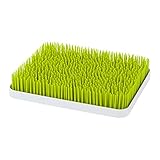
- Better Than Ever: Boon's Lawn countertop drying rack now features more airflow and an antimicrobial tray to resist mold and mildew growth*…because nobody wants that
- Easy to Clean: This Boon drying rack has a two-piece design that drains excess water with a removable and a water tray that gets clean with warm soapy water
- Bye Bye Water: This Boon drying rack easily holds all of your baby essentials upright for drying while excess water drains away below in the new antimicrobial tray
- Easy to Clean: The two-piece design allows you to split the Lawn into two pieces easily, making it simple to give your baby supplies a quick wash in warm soapy water
- Stylish Design: The Boon Lawn baby bottle organizer and drying rack is made without BPA or PVC and looks great in any kitchen with its low-profile, stylish design
How long should sterilized bottles air-dry?
There is no universal number of minutes. Leave every component undisturbed until the inside, threads, openings, grooves, and valves are completely dry. Do not store a part that still has visible or trapped moisture.
Should I assemble bottles while they are still warm from steam or boiling?
Wait until the parts are completely dry, then wash your hands and assemble them. Follow the appliance manual if it specifies enclosed storage or a particular cooling procedure.
How often should I sanitize a bottle?
CDC recommends cleaning after every feeding. Daily sanitizing may not be necessary for an older, healthy baby when cleaning is thorough, but daily or more frequent sanitizing is recommended for babies under 2 months, born prematurely, or with weakened immune systems.
Free tools Windows power users keep installed
One-click scans. No signup required.
How often should I clean the drying rack and bottle brush?
For an older, healthy infant, CDC advises washing and sanitizing them every few days. For babies under 2 months, born prematurely, or immunocompromised, do this at least daily; CDC also advises rinsing and air-drying after use.
Can I store clean, dry bottles on an open counter?
CDC’s example is a closed cabinet used only for clean dishes. Choose a clean, protected location that prevents dust, splashes, pets, and used dishes from contacting the dry parts.
What is the UK advice after sterilizing bottles?
NHS UK says it is best to leave bottles and teats in the sterilizer or pan until needed. If removed, put teats and lids on promptly, wash and dry hands or use sterile tongs, and assemble on a clean, disinfected surface or the sterilizer’s upturned lid.
The Bottom Line
Clean before sanitizing, then let every bottle part air-dry completely on a clean unused towel or paper towel in a protected area. Never wipe parts dry. Wash your hands before assembly and store the dry set in a clean protected place. A rack is optional and requires regular cleaning; follow CDC, NHS, and manufacturer instructions for your location and your baby’s risk level.
Quick Recap
Product prices and availability are accurate as of the date/time indicated and are subject to change. Any price and availability information displayed on Amazon at the time of purchase will apply.

