
The Tool Desk
Outbyte Driver Updater FREEFix the driver behind crashes, sound loss and screen glitchesFind Drivers →Outbyte PC Repair FREERepair Windows errors before they cause bigger problemsFix Now →iTechGuides is reader-supported. When you buy through links on our site, we may earn an affiliate commission. As an Amazon Associate I earn from qualifying purchases. Learn more
Deploy vision AI only after you have defined the production decision it must support, gathered representative images from real operating conditions, and agreed how the system will be validated and maintained. The right camera or model depends on the inspection task; neither a high-resolution camera nor a strong benchmark score proves that a system will work on your line.
What can vision AI do in manufacturing?
Computer vision can support product inspection and defect detection, such as identifying a problem on a workpiece. NIST material also describes AI uses in areas including safety monitoring and inventory. Those examples show the range of possible applications, not evidence that one vision system can handle them all. Start with a specific item, condition, or event to inspect and the action that should follow. NIST MEP’s 2025 manufacturing AI infographic uses “Inspection and Defect Detection” among its manufacturing AI topics.
What do the manufacturing AI adoption figures mean?
NIST MEP’s 2025 infographic reports the figures below. Its search result does not expose the underlying survey methodology or full source details, so treat them as figures reported by that infographic—not universal adoption rates, forecasts, or vision-AI-only statistics.
| Figure | What the infographic reports |
|---|---|
| 24% | AI deployment areas in manufacturing reported as quality operations. |
| 49% | AI roles across factory floors reported for quality improvement. |
| 46% | Manufacturers reported as using AI tools such as chatbots in operations. |
| More than 80% | Manufacturers reported as expecting to increase AI use in the next two years. |
These categories have different denominators and describe manufacturing AI broadly. They do not establish the effectiveness or prevalence of vision inspection on a particular line. Source: NIST MEP, 2025 infographic.
#1 Best Overall

- 1) Camera transfer speed is fast.
- 2) Provide SDK, easy to use and convenient.
- 3) Support external trigger and flash.
- 4) SDK supports Windows and Linux systems.
- 5) SDK supports VC/C++, VB6, VB.NET, Delphi, C#, JAVA, Python, OpenCV.
How should you plan a plant-floor deployment?
Work through the production problem before choosing a model or camera. NIST’s Augmented Intelligence for Manufacturing Systems (AIMS) project describes identifying a production issue with industrial stakeholders as an early step, and includes prototype deployment with industrial and academic partners to assess real-world performance. NIST AIMS.
-
Define the production decision
Specify what is inspected, where and when inspection occurs, and what happens when the system flags a possible issue. Decide how the current process handles the same case. Record a baseline so a pilot can be compared with the existing method rather than an assumed improvement.
Set acceptable trade-offs between missed defects and false alarms. A miss may allow a bad part through; a false alarm may trigger unnecessary review, rejection, or downtime. Which matters more depends on the defect and the consequences of each outcome.
Do these 3 things before closing this tab:
1Fix the driver behind crashes, sound loss and screen glitches2Clear out junk files and repair common Windows errors3Scan for outdated or missing drivers - takes under a minuteSpecial offer. See more information about Outbyte and uninstall instructions. Please review EULA and Privacy policy. -
Characterize the scene and collect representative data
Capture examples on the production line, under the lighting, motion, surface conditions, camera distances, and shift patterns in which the system will operate. Include normal variation, known defects, product variants, and process settings. Have quality experts label examples, and check that rare but costly defects are represented. Data that omits a relevant product or operating condition cannot demonstrate performance for it.
Rank #2
 SVPRO 48MP USB Camera with 5-50mm Zoom Lens, Ultra High Definition 8000x6000 Pro Industrial Camera Machine Vision Webcam for Computer,Raspberry Pi
- Ultra High Definition 8000x6000 Lightburn Camera for Laser Engraver, USB2.0 Machine Vision Industrial Camera for Computer,Raspberry Pi
- Super Image reality, real color reproduction, ultra crystal shooting image. The camera works like human eye, get sharp image and accurate color reproduction in every detail
- 5-50mm Zoom Lens, Pro industrial grade 12mp ultra hd optical zoom lens, manual focus, iris and zoom. Pefect for close-ups and quality inspection
- USB Plug & Play, UVC compliant usb camera, just connect the camera to PC, laptop, Android device or Raspberry Pi with the included USB cable without extra drivers to be installed.
- Wide Applications: Well used for industrial camera, Medical device, Quality Inspection, Scientific research and development, image processing, computer and machine vision.
NIST identifies industrial data complexity and data management as deployment challenges in its 2026 Roadmap on Artificial Intelligence and Machine Learning for Smart Manufacturing.
-
Set sensing and compute requirements for the task
Derive requirements from the smallest defect or condition to detect and the line’s operating constraints. Scope field of view, working distance, image resolution, contrast, product and surface variation, motion, exposure, frame rate, illumination, environmental protection, connectivity, compute location, and latency.
Compare candidate setups against these requirements and their validation results for the target task. NIST’s manufacturing testbed description names a Cognex In-Sight 7000 camera as producing production-quality inspection data for workpieces. That is an example used in that testbed—not an endorsement or a universal camera recommendation. NIST’s testbed overview.
What’s actually slowing this PC down?
Pick the symptom - the matching free tool is one click away.
Special offer. See more information about Outbyte and uninstall instructions. Please review EULA and Privacy policy. -
Map integration and failure behavior
Trace how an image and its result move among the camera, edge computer or controller, plant network, quality systems, and line controls. Identify required interfaces and decide what the line should do if an image is missed, the network is unavailable, confidence is low, or the system restarts.
Rank #3
High Speed USB3.0 Machine Vision Industrial Camera 0.3MP Monochrome 790fps- 1) Camera transfer speed is fast.
- 2) Provide SDK, easy to use and convenient.
- 3) Support external trigger and flash.
- 4) SDK supports Windows and Linux systems.
- 5) SDK supports VC/C++, VB6, VB.NET, Delphi, C#, JAVA, Python, OpenCV.
Keep advisory output distinct from automatic reject or machine-control actions until their production and safety consequences have been assessed. Manufacturing systems may combine heterogeneous sensing and control equipment; NIST identifies integration across these systems as a challenge for industrial AI. NIST’s 2026 roadmap.
-
Pilot against documented acceptance criteria
Test across representative production runs, variants, and shifts. Agree on a holdout set that is separate from development examples, document how ground truth will be established, and state the conditions under which results apply.
Choose task-specific measures rather than relying on a single accuracy score. Depending on the use case, track defect-level recall, false reject rate, inspection coverage, latency, downtime, and operator review burden. Set acceptance thresholds before evaluating the pilot, and report the evaluation conditions with the results.
Special offer. See more information about Outbyte and uninstall instructions. Please review EULA and Privacy policy. -
Assign ownership for ongoing operation
Name who monitors performance, investigates misses and false alarms, reviews data drift, approves model updates, and preserves traceability. Keep a fallback inspection path and define the conditions that require production to revert to the previous process. NIST’s Industrial Artificial Intelligence Management and Metrology project emphasizes evaluating AI in the context of system impact and users; it also identifies the lack of standard evaluation and management methods as a barrier. NIST IAIMM.
Rank #4
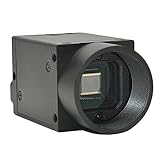 HTENG VISHI GigE Ethernet 1.3MP 1/2" Color Industrial Camera Machine Vision Global Shutter C-Mouth Camera Sensor 1280X1024 91FPS
- Support VC/C++, C++builder, VB6, VB.NET, Delphi, C#, QT, JAVA, Python And Other Programming Languages.
- Support Python, OpenCV, LabView, Halcon Vision Software.
- Provide Camera SDK Development Interface.
- Supports Windows And Linux Operating Systems.
- Supports 100 Meters Transmission And Simultaneous Use Of Multiple Cameras.
What risks should the deployment plan address?
- Unrepresentative or unreliable data: Check whether images cover production variation and whether labels can be trusted. Decide how data and its relevant context will be managed. NIST lists data complexity and data management among industrial deployment challenges. NIST’s 2026 roadmap.
- Changing operating conditions: Plan responses to changed lighting, a new product variant, an obscured camera, or an uncertain result. Define what prompts human review, inspection fallback, or a production hold instead of assuming the model will remain reliable.
- Security and control of changes: Identify what data is collected, where it is stored, who can access it, and which systems can change model behavior. Set an update approval and rollback process. NIST MEP’s infographic lists privacy and cybersecurity among common AI barriers in manufacturing. NIST MEP.
- Workforce readiness: Assign people to review exceptions and maintain the system, and account for training and skills needs. NIST MEP’s infographic also identifies workforce readiness and skills gaps as barriers. NIST MEP.
- Wireless dependencies: If the architecture relies on wireless links, define the operational objectives and assess the factory environment before selecting, designing, deploying, and monitoring the system. NIST’s industrial wireless guide presents this as a lifecycle process. NIST Guide to Industrial Wireless Systems Deployments.
Why does industrial AI need more than a good model score?
On a production line, an output matters in context: it may affect inspection, product disposition, or a control action, while depending on sensors, networks, data, and human review. A model score by itself does not establish reliable operation in that full workflow.
“However, the deployment of AI and ML in industrial settings still faces critical challenges, including the complexity of industrial big data, effective data management, integration with heterogeneous sensing and control systems, and the demand for trustworthy, explainable, and reliable operation in high-stakes industrial environments.”
— Gregory Vogl, Aaron Cornelius, and Xiaodong Jia, authors of NIST’s 2026 roadmap. Roadmap abstract, published July 3, 2026.
Recommended Free Tools
Special offer. See more information about Outbyte and uninstall instructions. Please review EULA and Privacy policy.Quick Recap
Bestseller No. 2
Product prices and availability are accurate as of the date/time indicated and are subject to change. Any price and availability information displayed on Amazon at the time of purchase will apply.

