
Crashes, No Sound, or Screen Glitches?
Random freezes, missing sound and display glitches usually trace back to one bad driver. Find and replace yours safely.Free scan · under a minutePC Slower Than It Used to Be?
A free scan shows the junk files, broken settings and background clutter dragging Windows down - then fixes them in one click.Free scan · Windows 10 & 11iTechGuides is reader-supported. When you buy through links on our site, we may earn an affiliate commission. As an Amazon Associate I earn from qualifying purchases. Learn more
On an OPPO phone running ColorOS 16, most personalization controls are in Settings > Home screen, Lock screen & style. From there you can change wallpapers, edit Flux Themes and the lock-screen clock, set fonts and text treatments, resize Home Screen icons or folders, and—on supported phones—enable a full-screen Always-On Display (AOD).
The exact cards, styles and even menu wording can differ by model, region, carrier and software build. Use the paths below as the current ColorOS 16 map, then confirm which options your own phone actually shows.
Start in ColorOS 16’s combined personalization menu
ColorOS 16 groups Home Screen, Lock Screen and style controls in one place. Open Settings, then tap Home screen, Lock screen & style. OPPO’s support documentation uses that label for wallpaper, clock, theme and AOD controls. If your language uses slightly different capitalization or punctuation, look for the menu containing both Home screen and Lock screen.
Recommended Free Tools
The quickest way to identify what your build supports is to open this page and scan the available cards before changing anything. A missing card is usually a compatibility, rollout or regional difference—not a hidden gesture you have overlooked.
#1 Best Overall

- 6.82 inches, LTPO AMOLED, 1B colors, 1440 x 3168 pixels
- 512GB Storage, 12GB RAM
- Android 16, Qualcomm SM8850-AC Snapdragon 8 Elite Gen 5 (3 nm), Octa-core (2x4.6 GHz Oryon V3 Phoenix L + 6x3.62 GHz Oryon V3 Phoenix M)
- Rear: 200 MP, f/1.5, 23mm (wide), 1/1.12", PDAF, OIS, 200 MP, f/2.2, 70mm (periscope telephoto), 1/1.28", PDAF (15cm - ∞), OIS, 3x optical zoom, 50 MP, f/3.5, 230mm (periscope telephoto), 1/2.75", PDAF, OIS, 10x optical zoom, 50 MP, f/2.0, 14mm, 123˚ (ultrawide), 1/1.95", PDAF, Front: 50 MP, f/2.4, 21mm (wide), 1/2.75", PDAF
- 163.2 x 77.0 x 8.7 mm or 9.1 mm
Change your wallpaper
Wallpaper is the foundation for the Home Screen and lock-screen appearance. ColorOS 16 can use a still image and, on supported devices and software, a Motion Photo or video. OPPO describes AI Dynamic Depth for motion-photo wallpapers, which can add a depth effect as the image moves. Availability and the controls presented during setup depend on the phone and region.
Set a Home Screen or lock-screen wallpaper
- Open Settings.
- Tap Home screen, Lock screen & style.
- Tap Wallpapers.
- Choose an available image or supported wallpaper type, preview it, and apply it to the Home Screen, Lock Screen, or both when ColorOS presents those choices.
These are the documented steps in OPPO’s support guide: OPPO India’s full-screen AOD instructions. The wallpaper picker can show different categories on different models, so do not expect every phone to offer video or Motion Photo choices.
Choose between still, Motion Photo and video backgrounds
| Wallpaper type | What it does | When to choose it | What may vary |
|---|---|---|---|
| Still image | Displays a fixed picture on the selected screen. | Best for a predictable, low-distraction look. | Crop, perspective and placement controls can differ by build. |
| Motion Photo | Uses a compatible moving photo; OPPO’s ColorOS 16 materials describe AI Dynamic Depth for this style. | Useful when you want subtle movement without a continuously playing video. | Motion Photo support and depth treatment are hardware- and software-dependent. |
| Video | Uses a supported video as wallpaper. | Choose it for a more animated lock or Home Screen. | Length, file type, battery behavior and whether it can be assigned to both screens are not universal. |
Because moving wallpapers consume more processing and display time than a still image, check battery behavior after applying one. If the option is absent, use a still image rather than trying to force an unsupported file.
What’s actually slowing this PC down?
Pick the symptom - the matching free tool is one click away.
Change the lock-screen clock with Flux Themes
ColorOS 16’s documented route for clock styling runs through All Flux Themes, rather than a standalone clock picker. OPPO’s Nepal support instructions use this sequence: open the Flux Themes editor and tap the clock.
Step-by-step clock editing
- Open Settings and tap Home screen, Lock screen & style.
- Tap All Flux Themes.
- Select the In use card. This opens the theme currently applied to your phone.
- In the editing interface, tap the lock-screen clock.
- Choose an available clock style and adjust the options shown for that style.
- Save or apply the edit, then lock the phone to check the result.
Clock choices belong to the active theme. If you switch themes later, the clock can change with it. A style shown in OPPO’s screenshots is not a promise that the same style is installed on every model; the editor only lists options delivered for your device, market and build.
Rank #2
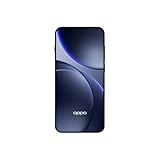
- 6.59 inches, AMOLED, 1B colors, 1256 x 2760 pixels
- 512GB Storage, 12GB RAM
- Android 16, Mediatek Dimensity 9500 (3 nm), Octa-core (1x4.21 GHz C1-Ultra & 3x3.5 GHz C1-Premium & 4x2.7 GHz C1-Pro)
- Rear: 50 MP, f/1.6, 23mm (wide), 1/1.4", 1.12µm, multi-directional PDAF, OIS, 50 MP, f/2.6, 73mm (periscope telephoto), 1/1.95", 0.61µm, 3x optical zoom, multi-directional PDAF, OIS, 50 MP, f/2.0, 15mm, 120˚ (ultrawide), 1/2.76", 0.64µm, multi-directional PDAF, Front: 32 MP, f/2.4, 21mm (wide), 1/2.74", 0.8µm
- 157 x 73.9 x 8 mm (6.18 x 2.91 x 0.31 in)
Resize Home Screen icons and folders
ColorOS 16 lets you change the shape and footprint of supported Home Screen icons and folders without opening a separate grid-settings page. OPPO says a long press can expose formats such as tall, wide or large, with the surrounding layout adapting to the resized item.
Resize an app icon
- Go to the Home Screen.
- Touch and hold an app icon until its shortcut or edit controls appear.
- Choose a size or shape such as Tall, Wide or Large, if those choices are shown.
- Tap an empty area to finish, then check that neighboring icons have reflowed as expected.
Resize a folder
- Touch and hold the folder on the Home Screen.
- Select the available resize control.
- Pick the folder format offered by your build and tap outside the folder to save it.
Do not assume identical choices on every OPPO phone. The long-press gesture is the documented method, but the number of formats and the exact labels can vary. If no resize control appears, your launcher build may not support that format for the selected item.
Personalize fonts and text styles
ColorOS 16’s personalization features extend beyond wallpaper and clocks. OPPO says users can choose fonts and can let AI suggest text styles that match the wallpaper. Its October 15, 2025 announcement states: “Users can personalise their phones by setting Motion Photos or videos as wallpapers, choosing from a wide range of fonts, or letting AI suggest text styles that match their wallpaper.” Read the announcement in context at OPPO’s global ColorOS 16 release.
How to use the available typography controls
Open Settings > Home screen, Lock screen & style and look for the font or text-style control exposed by your build. Select a font, preview it against the current wallpaper, and apply it. If an AI text-style option is present, use the preview to decide whether the weight, spacing and contrast remain readable over the image.
The announcement does not define one universal path or a fixed list of fonts for every phone. Treat the controls shown on your device as authoritative. AI features can require a supported account, network or cloud service, and OPPO says their availability can differ because of regional laws and software versions.
Rank #3

- 6.78 inches, LTPO AMOLED, 1B colors, 1272 x 2772 pixels
- 512GB Storage, 16GB RAM
- Android 16, up to 5 major Android upgrades, ColorOS 16, Mediatek Dimensity 9500 (3 nm), Octa-core (1x4.21 GHz C1-Ultra & 3x3.5 GHz C1-Premium & 4x2.7 GHz C1-Pro)
- Rear: 50 MP, f/1.5, 23mm (wide), 1/1.28", 1.22µm, multi-directional PDAF, OIS, 200 MP, f/2.1, 70mm (periscope telephoto), 1/1.56", 0.5µm, 3x optical zoom, multi-directional PDAF, OIS, 50 MP, f/2.0, 15mm, 120˚ (ultrawide), 1/2.76", 0.64µm, multi-directional PDAF, Front: 50 MP, f/2.0, 21mm (wide), 1/2.76", 0.64µm, PDAF
- 161.3 x 76.5 x 8.3 mm (6.35 x 3.01 x 0.33 in)
Set up full-screen Always-On Display
Full-screen AOD is a ColorOS 16-and-above feature identified by OPPO in the Clock section of the combined personalization settings. In this mode, the lock-screen wallpaper can appear with key information while the phone is idle; tapping the display transitions to the full lock screen. The visual treatment and whether the mode is enabled depend on hardware support.
Enable and edit full-screen AOD
- Open Settings.
- Tap Home screen, Lock screen & style.
- Tap Clock.
- Choose a clock theme that offers an editing mode.
- Enter the theme editor and look for the full-screen AOD option.
- Enable it, select the wallpaper or information treatment offered, and apply the changes.
- Lock the phone and wait for the AOD to appear. Tap it once to verify that it transitions to the full lock screen.
OPPO’s product description explains the wallpaper-and-information presentation, while its support page documents the full-screen mode as available on ColorOS 16 and above: ColorOS 16 product page and OPPO support instructions. If Clock has no full-screen option, the phone may lack the required display hardware, the feature may not be enabled for your region, or your build may not yet include it.
Standard AOD versus full-screen AOD
| Aspect | Standard AOD | Full-screen AOD |
|---|---|---|
| Content | Usually a clock and selected notifications or symbols. | Lock-screen wallpaper appears with key information. |
| Interaction | Wake behavior depends on the phone’s AOD settings. | OPPO describes a tap that moves to the full lock screen. |
| Setup location | Clock or AOD controls in the combined style settings. | Settings > Home screen, Lock screen & style > Clock, then a compatible theme’s editor. |
| Compatibility | Varies by model and display technology. | Explicitly a ColorOS 16-and-above feature, with additional hardware and regional limits. |
AOD keeps part of the display active, so monitor battery life and heat after enabling a more elaborate design. If endurance matters more than a large visual, choose a simpler clock treatment or disable AOD.
Combine the controls without losing readability
Personalization works best when each layer has a job. Use the table below as a decision guide rather than a ranking; ColorOS does not declare one combination universally superior.
| Your priority | Wallpaper | Theme and clock | Icon or AOD choice |
|---|---|---|---|
| Maximum legibility | Still image with clear dark or light space behind text. | High-contrast clock and a conventional font. | Keep icons at their default size; use a simple AOD. |
| Animated look | Motion Photo or supported video. | Clock style with strong contrast against moving areas. | Use larger icons only where the layout remains easy to scan. |
| Minimal Home Screen | Uncluttered still image. | Simple Flux clock and restrained font. | Resize only the few icons or folders you use most. |
| Information at a glance | Wallpaper with an uncluttered lower area. | Clock theme that leaves room for key information. | Try full-screen AOD if the Clock editor offers it. |
After each major change, lock and unlock the phone. This catches contrast problems that are not obvious in the settings preview, especially when using a moving wallpaper behind white clock text.
Free tools Windows power users keep installed
One-click scans. No signup required.
Rank #4
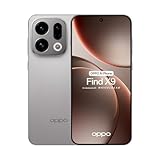
- 6.59 inches, AMOLED, 1B colors, 1256 x 2760 pixels
- 512GB Storage, 12GB RAM
- Android 16, Mediatek Dimensity 9500 (3 nm), Octa-core (1x4.21 GHz C1-Ultra & 3x3.5 GHz C1-Premium & 4x2.7 GHz C1-Pro)
- Rear: 50 MP, f/1.6, 23mm (wide), 1/1.4", 1.12µm, multi-directional PDAF, OIS, 50 MP, f/2.6, 73mm (periscope telephoto), 1/1.95", 0.61µm, 3x optical zoom, multi-directional PDAF, OIS, 50 MP, f/2.0, 15mm, 120˚ (ultrawide), 1/2.76", 0.64µm, multi-directional PDAF, Front: 32 MP, f/2.4, 21mm (wide), 1/2.74", 0.8µm
- 157 x 73.9 x 8 mm (6.18 x 2.91 x 0.31 in)
What to do when a setting is missing
The combined menu has a different name
Search Settings for Home screen, Lock screen, style, wallpaper or Clock. OPPO’s support pages are localized; the instructions surfaced for India and Nepal can use wording that differs from another country’s interface. OPPO’s Singapore support page also documents theme and lock-screen wallpaper changes at its regional help center.
All Flux Themes or the In use card is absent
Confirm that the phone is running ColorOS 16, then reopen the combined settings page. A carrier or regional build may expose theme editing under a nearby style category instead. If a theme was installed but cannot be edited, apply it first and return to All Flux Themes; the documented clock workflow starts from the In use card.
Long-pressing does not show resize choices
Make sure you are pressing an app icon or folder on the Home Screen, not an icon inside the app drawer or a widget. If the resize control still does not appear, that item or launcher build does not provide the tall, wide or large format. The surrounding layout can only adapt when the launcher supports the selected size.
The wallpaper picker rejects a video or Motion Photo
Try a still image to confirm that the wallpaper service works. Then check whether the file type and length meet the picker’s limits. Motion Photo and video support is not universal, and the absence of an option is a compatibility signal rather than an error in the steps.
Full-screen AOD is not listed
Open Settings > Home screen, Lock screen & style > Clock and enter a clock theme’s editor. If no full-screen control appears, check the installed ColorOS version and model documentation. OPPO states that hardware support and the actual presentation vary, so a phone can run ColorOS 16 without exposing this mode.
Best Value

- 6.82 inches, LTPO AMOLED, 1B colors, 1440 x 3168 pixels
- 512GB Storage, 12GB RAM
- Android 16, Qualcomm SM8850-AC Snapdragon 8 Elite Gen 5 (3 nm), Octa-core (2x4.6 GHz Oryon V3 Phoenix L + 6x3.62 GHz Oryon V3 Phoenix M)
- Rear: 200 MP, f/1.5, 23mm (wide), 1/1.12", PDAF, OIS, 200 MP, f/2.2, 70mm (periscope telephoto), 1/1.28", PDAF (15cm - ∞), OIS, 3x optical zoom, 50 MP, f/3.5, 230mm (periscope telephoto), 1/2.75", PDAF, OIS, 10x optical zoom, 50 MP, f/2.0, 14mm, 123˚ (ultrawide), 1/1.95", PDAF, Front: 50 MP, f/2.4, 21mm (wide), 1/2.75", PDAF
- 163.2 x 77.0 x 8.7 mm or 9.1 mm
AI text styles are unavailable or look different
AI options can depend on software version, regional laws, cloud availability, account status and network requirements. OPPO warns that some AI features may not be present at launch. Use the standard font controls when the AI option is unavailable, and avoid treating a promotional preview as a guarantee for your handset.
Check your version, model and region before troubleshooting further
ColorOS 16’s global rollout is approximate and subject to change. OPPO says timing and feature delivery can vary by device model, region, carrier and development progress. Its product page also notes that some features depend on hardware and that AI functions can vary with local law, cloud availability, software version, account and network requirements: read the published ColorOS 16 qualifications.
For that reason, do not use the appearance of a feature in a global announcement as a device-by-device compatibility matrix; the available official material does not provide one. Instead:
The Tool Desk
Outbyte PC Repair FREERepair Windows errors before they cause bigger problemsFix Now →Outbyte Driver Updater FREEScan for outdated or missing drivers - takes under a minuteDriver Scan →- Open your phone’s software-information page and record the installed ColorOS version.
- Note the exact model and whether the phone was supplied by a carrier.
- Install any update offered for that model, then revisit Home screen, Lock screen & style.
- Compare the labels in your local Settings app with the paths in this guide.
- If a feature remains absent, contact OPPO support for your country with the model, region and software build; those details determine eligibility more reliably than a screenshot from another market.
The OPPO Find X9 Series was announced as the debut platform for ColorOS 16, but that does not mean every later or earlier OPPO model has identical customization controls. Existing owners should use the settings exposed on their current device rather than replacing a phone solely to obtain a styling option.
Sources and update context
The procedures and qualifications in this guide follow OPPO’s own documentation: the October 15, 2025 global announcement, the global ColorOS 16 product page, and regional support instructions for India, Nepal and Singapore. Support labels and feature availability can change with later builds, so the Settings app on the phone remains the final authority.
Quick Recap
Product prices and availability are accurate as of the date/time indicated and are subject to change. Any price and availability information displayed on Amazon at the time of purchase will apply.

