
iTechGuides is reader-supported. When you buy through links on our site, we may earn an affiliate commission. As an Amazon Associate I earn from qualifying purchases. Learn more
Cook unfamiliar British seafood by matching the method to the cut and texture, not by applying one universal time. Delicate fillets need close attention because fish can overcook quickly; a small whole fish can be enclosed with aromatics or cooked over direct heat; firm fish can carry stronger seasoning in stews, fishcakes and croquettes. Thickness, species and the recipe determine the actual cooking time.
This guide shows how to approach megrim (Cornish sole), coley (saithe), gurnard, squid and cuttlefish, then explains how to choose a method, ask a fishmonger for preparation, and check current local availability and sustainability.
Start with the cut, texture and skin
Before choosing a recipe, identify what is in front of you. A thin fillet behaves differently from a steak or a whole fish, even when they come from related species. Discover Seafood’s cooking guidance stresses that most fish has a delicate texture and a surprisingly short cooking time, so a timer copied from another species can leave a thin portion dry before a thick one is ready.
What’s actually slowing this PC down?
Pick the symptom - the matching free tool is one click away.
| What you have | Useful methods | What to watch |
|---|---|---|
| Thin, delicate fillet | Shallow-frying, pan-frying, grilling, steaming or gentle baking | Soft flesh can break when turned; the narrow thickness means cooking moves quickly. |
| Thicker fillet or steak | Baking, roasting, grilling or inclusion in a sauce or broth | Judge the thickest point, not the thin edge. Follow the named recipe for temperature and timing. |
| Small whole fish | En papillote, roasting, grilling or barbecue cooking | Ask for scaling and gutting if needed. Bones add flavour but require careful serving. |
| Firm, flaky fish | Fishcakes, croquettes, stews, broths and strongly seasoned dishes | Firm flesh can tolerate assertive flavours, but it can still dry out under intense heat. |
| Cuttlefish or squid | Recipe-specific frying, stuffing, grilling or barbecue methods | Use the recipe’s instructions rather than borrowing a timing from another seafood dish. |
Skin is another practical clue. Thin skin that is dried well can become crisp in a pan, under a grill or in a hot oven. If the skin is left on, place it against the hot surface first and avoid moving the fish until it has formed enough crust to release. A fish spatula is useful for turning delicate fillets, but it is an optional aid rather than a requirement.
#1 Best Overall

- Great for lifting, turning and transferring whole fish, filets, seafood cakes and more
- Sturdy, oversized, stainless steel head
- Beveled edge helps slide beneath foods
- Slots in head allow grease to drain
How do I choose a less familiar British fish?
Use six questions at the counter: what cut is available, how firm is the flesh, is the skin on, how much bone will you handle, how strong is the flavour, and what is available locally today? Species names alone do not guarantee a particular portion. A fishmonger can tell you whether the fish is whole, cut into steaks or supplied as fillets, and can scale, gut or fillet it for your planned dish.
Cut and handling
Whole fish gives you a natural portion shape for roasting, grilling or enclosing in paper. Fillets are convenient but may have fragile edges and a line of pin bones. Steaks and cuttlefish pieces are thicker and need a recipe written for that form. Ask the fishmonger to remove bones or prepare the fish if you are unfamiliar with the species; this is often more useful than changing the cooking method.
Flesh firmness
Soft flesh suits short, gentle cooking and methods that reduce handling, such as steaming or baking in a covered parcel. Firm, flaky flesh can be folded into mixtures or simmered in a broth without disintegrating immediately. Texture does not eliminate the risk of overcooking: intense heat, especially on a barbecue, can dry seafood rapidly.
Availability and sustainability
Availability changes with port, season, weather and local supply. The Fishmongers’ Company describes Discover Seafood as a UK-wide resource linking consumers with ports, fishers, fishmongers, retailers, seasonal seafood, recipes and preparation guides. Its purpose includes helping people move beyond the familiar “big five,” but a species listed in a guide may not be in your shop on a particular day.
Stock status is also location-specific. The Discover Seafood page for saithe (coley) notes that stock health varies across areas of the UK and recommends checking the Marine Conservation Society’s current Good Fish Guide. Ask where the fish was caught and which fishery or method supplied it, then use current local advice rather than treating a species name as a sustainability guarantee.
How do you cook megrim (Cornish sole)?
Megrim, also called Cornish sole, is a flatfish with soft flesh and thin skin. That skin can crisp when the fish is fried, grilled or roasted. Discover Seafood also lists baking, deep-frying, shallow-frying and steaming as suitable approaches, so the best choice depends on whether you have a whole fish, a skin-on fillet or a boneless portion.
Rank #2

- Stainless steel - Ensures durability for long-term use
- Slotted design - Allows efficient drainage during cooking
- Wooden handle - Provides comfortable and ergonomic grip
- Dishwasher safe - Enables easy and quick cleaning
- Satin finish - Offers a classic look with smooth texture
Pan- or shallow-fry a skin-on fillet
- Have the fishmonger scale and trim the fillet if necessary, and remove any obvious pin bones.
- Pat the skin and flesh dry. Moisture prevents browning and encourages the fillet to move in the pan.
- Use a lightly oiled pan at medium to medium-high heat. Put the fillet skin-side down and leave it undisturbed while the skin firms.
- Turn only when the fillet releases easily. Because megrim is soft, support it with a broad spatula rather than gripping the flesh.
- Finish according to the recipe’s stated heat and timing. Thickness varies, so do not substitute a fixed number of minutes from another flatfish.
Serve the crisp skin immediately. A simple accompaniment keeps the delicate flavour visible, while a sharp sauce can balance the richness created by frying.
Steam, bake or roast megrim
Steaming is useful when you want the flesh to remain tender and avoid turning it. For baking, a little liquid in the dish creates steam and helps prevent a thin portion from drying. Roasting or grilling gives more surface colour and suits skin-on pieces, but watch the fish closely because the thin flesh cooks quickly.
Recipe starting point
Discover Seafood lists megrim with crushed potatoes and seaweed tartare as a named recipe idea. It demonstrates a useful contrast: soft, crisped fish paired with a substantial potato element and a strongly flavoured, seaweed-based sauce. Follow that recipe for its precise preparation, oven or pan settings and timing rather than importing a generic sole schedule.
What can I cook with coley?
Coley is the common name used for saithe. Its cooked flesh is firm and flaky, and its more distinctive flavour makes it a good match for assertive seasoning. Treat it as a practical alternative when you want a fish that can hold together in a mixture, broth or strongly flavoured dish rather than a very mild, fragile fillet.
Fishcakes and croquettes
Firm coley can be combined with a potato or other binding mixture, shaped, coated and cooked as fishcakes. Croquettes use the same structural advantage in a smaller format. Keep pieces reasonably large when mixing so the cooked fish remains identifiable, and season boldly enough to complement its flavour. The recipe should specify whether the fish is cooked before shaping and how the finished cakes are browned.
Do these 3 things before closing this tab:
1Repair Windows errors before they cause bigger problems2Scan for outdated or missing drivers - takes under a minute3Clear out junk files and repair common Windows errorsAsian-style broth
Discover Seafood lists an Asian broth with coley. This is a natural use for flaky flesh: the fish contributes substance while aromatic, spicy or savoury broth ingredients provide enough intensity for its flavour. Add the fish at the stage specified by the recipe and avoid prolonged boiling, which can break the flakes apart and make them dry.
Rank #3
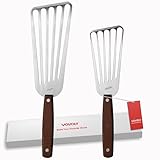
- [2-Size Set] The stainless steel fish spatula set includes 2 slotted spatulas with different sizes, meet your different uses
- [Thin Curved Slotted Blade with Beveled Edge] The blade of our fish spatula is made of premuim stainless steel. Precision ground ,curved design and beveled edge make it easy to slide under food.
- [ Flexible But Strong Blade ] This stainless steel egg turner perfectly balances flexibility and strength, performs well even in your small carbon steel or cast iron skillets, packaged in an elegant box.
- [Comfortable Full Tang Handle] The wood handle of our frying spatulas is full tanged, will not snap easily like others, meticulously polished providing comfortable grip.
- [Easy to Clean] With simple design, this slotted fish turner is quite easy to clean by hand.
Other full-flavoured dishes
Coley works where a recipe calls for a firm white fish and includes sauces, spices or other strong ingredients. Ask whether the fish is supplied as a fillet, steak or portion before shopping, because the shape changes how it should be added and how quickly it cooks. Use the thickest piece as your reference and rely on the recipe’s instructions.
How can I cook gurnard?
Gurnard can be bought as a whole small fish or as prepared portions. Discover Seafood’s general guide includes small whole gurnard among fish suited to en papillote, and its recipe index includes red gurnard with peperonata and salsa verde as well as a spicy gurnard fish-finger sandwich.
Small whole gurnard en papillote
- Ask the fishmonger to scale and gut the fish, unless you are comfortable doing that yourself.
- Place the fish on baking paper or foil with a small number of aromatics and any liquid specified by your recipe.
- Fold and seal the parcel so steam and the fish’s own juices remain inside.
- Bake at the recipe’s stated temperature. The parcel reduces evaporation, but the fish still cooks according to its size and thickness.
- Open carefully because escaping steam is hot, then check the thickest part before serving.
The point of en papillote is control: the enclosed environment traps juices and perfume without requiring a heavy sauce. Do not overload the parcel with vegetables or liquid; a small amount of aromatics gives the fish room to cook rather than stew.
Outdated Drivers Are Slowing You Down
One free scan finds every outdated or missing driver and matches the right update for your exact hardware.Free scan · exact hardware matchPC Slower Than It Used to Be?
A free scan shows the junk files, broken settings and background clutter dragging Windows down - then fixes them in one click.Free scan · Windows 10 & 11Gurnard with vegetables and herbs
Red gurnard with peperonata and salsa verde uses two contrasting accompaniments: sweet, soft peppers and a fresh herb sauce. It is a useful template for a whole fish or sturdy portion when you want the seafood to remain the centre of the plate while adding bold flavour around it.
Gurnard fish fingers
The spicy gurnard fish-finger sandwich in Discover Seafood’s index shows that prepared fillets can be cut into practical portions, coated and cooked for a sandwich. Confirm that the fish has been pin-boned, cut evenly and cooked according to the recipe; uneven strips will finish at different times.
How should I cook squid and cuttlefish?
Squid and cuttlefish need recipe-specific treatment. The available guidance identifies cuttlefish steaks as suitable for barbecuing and lists recipes for crispy cuttlefish and stuffed squid, but it does not establish a universal timing rule. Use the complete recipe, including its preparation, heat level and timing, instead of assuming that every squid or cuttlefish portion behaves the same way.
Rank #4

- Ideal for lifting, turning and transferring whole fish filets and more
- Beveled edge slides beneath food
- Slots in head allow grease to drain
- Sturdy, stainless steel construction
- Soft, comfortable, non-slip handle
Cuttlefish steaks on a barbecue
Strong barbecue heat can create useful browning, but it can also dry seafood when it is left on too long. Prepare steaks to the recipe’s stated size, preheat the barbecue as directed and stay beside it while cooking. Turn as instructed and remove the pieces promptly when the recipe says they are ready.
The Tool Desk
Outbyte Driver Updater FREEScan for outdated or missing drivers - takes under a minuteDriver Scan →Outbyte PC Repair FREEClear out junk files and repair common Windows errorsFree Scan →Crispy cuttlefish
A crispy preparation depends on surface dryness, coating and heat. Follow the recipe for cleaning, slicing, seasoning and frying. Work in batches if instructed so the cooking surface stays hot; crowding can lower the heat and produce a greasy rather than crisp result.
Stuffed squid
Stuffed squid combines a relatively thin outer body with a denser filling, so the recipe’s order matters. Check whether the filling is cooked before stuffing, how tightly the squid should be packed and whether the dish is baked, braised or otherwise heated. Secure the opening as directed and use the recipe’s stated endpoint rather than a generic squid time.
Which cooking method fits your seafood?
Baking and roasting
Baking is adaptable for fillets, steaks and whole fish. A little liquid in the dish creates steam and can protect delicate flesh. Roasting uses drier, more intense heat and is helpful when you want colour on the surface. In both cases, arrange portions in a single layer and use the recipe’s temperature and timing for that species and thickness.
En papillote
Paper or foil parcels trap the fish’s juices with a small number of aromatics. This is particularly suitable for small whole fish such as gurnard. Seal the parcel securely, leave room for steam and open it away from your face.
Pan-frying and shallow-frying
These methods suit skin-on megrim and other appropriate fillets. Dry the fish, use enough oil to prevent sticking and turn with a broad spatula. Delicate flesh can tear if you repeatedly move it or use a narrow utensil. A fish spatula is helpful but not essential.
Best Value

- 【Food Grade Stainless Steel】 This spatula made of high quality stainless steel, heat up to 600°F , Lightweight yet durable, it offers superior thickness and durability compared to other metal spatulas.
- 【Easy to Hold】Designed with a smooth handle that provides a comfortable, non-slip grip. Its ergonomic design ensures it is lightweight . The balanced construction and secure grip offer comfort and control, even during extended periods of use.
- 【Versatile Use】 slotted design allows for precise and effortless flipping, making it perfect for delicate foods such as fish, eggs, and vegetables. The long and wide blade simplifies grilling, flipping, and frying tasks.
- 【Easy to Clean & Store 】 After use, just wipe with hot water or put it in the dishwasher, you can easily clean and remove excess fat and food.
- 【Product Include 】 1 X Slotted spatula (11.2 x 3.15 inch/ 27.5 x 8.2 cm). If there are ever any issues, just contact us and we will resolving issues within 24 hours
Grilling
Grilling exposes the surface to direct heat and is suitable for megrim or other portions where a recipe calls for it. Keep the fish at the recommended distance from the element and monitor it closely. Thin fillets can go from browned to dry in a short period.
Barbecuing
Barbecue heat is intense. It can work for cuttlefish steaks and robust portions, but overcooking dries seafood. Clean and oil the grate as the recipe directs, avoid moving the food unnecessarily, and remove it when the individual recipe says it is done.
Steaming
Steaming provides gentle, moist heat and reduces the need to turn soft fish. It is listed for megrim and can suit other delicate cuts when a recipe specifies it. Keep the steamer covered and use the recipe’s guidance for portion thickness.
Recommended Free Tools
A practical workflow for an unfamiliar species
- Identify the form. Confirm whether you have a whole fish, fillet, steak, squid body or cuttlefish steak.
- Ask for preparation. Request scaling, gutting, filleting or pin-bone removal when you need it.
- Choose a named recipe. Start with a species-specific recipe such as megrim with crushed potatoes and seaweed tartare, coley Asian broth, red gurnard with peperonata and salsa verde, spicy gurnard fish fingers, crispy cuttlefish or stuffed squid.
- Match the method. Use frying for skin crispness, steaming or enclosed baking for delicate flesh, and firm fish in mixtures or broths.
- Measure thickness. The thickest portion determines progress; thin edges will finish first.
- Follow the recipe exactly. Use its temperature, order of ingredients and timing. There is no reliable universal time for all British seafood species.
- Handle gently. Turn soft fillets once, if at all, and serve whole fish with attention to bones.
- Check today’s sourcing advice. Ask where the fish came from and consult current regional sustainability guidance.
Common mistakes and how to avoid them
- Using cod timing for every white fish: species, cut and thickness differ. Use the recipe written for your fish.
- Starting with wet skin: moisture prevents crisping. Pat megrim or another skin-on fillet dry before frying or grilling.
- Overloading a parcel: too many vegetables or excess liquid changes the cooking environment. Use the small number of aromatics specified.
- Turning fragile fish repeatedly: soft flesh breaks. Wait for a crust to form and use a broad spatula.
- Leaving seafood over direct heat: barbecue and grill heat can dry seafood quickly. Stay with the food and follow the recipe’s endpoint.
- Ignoring bones: ask the fishmonger to pin-bone fillets or explain where bones remain in a whole fish.
- Assuming availability equals sustainability: stock health varies by UK area and changes over time. Check current local advice, including the Marine Conservation Society’s Good Fish Guide.
Where to buy and what to ask
Begin with an independent fishmonger, fish counter or retailer that can explain the catch and preparation. Say how you intend to cook the fish: “I want a skin-on fillet for shallow-frying,” “I need a small whole fish for a parcel,” or “I am making fishcakes.” This gives the seller enough information to suggest a workable cut.
Ask these specific questions:
- Is this species fresh, previously frozen or thawed?
- Can you scale, gut, fillet or pin-bone it?
- Which cut is best for the recipe I am using?
- Where was it caught, and what fishing method was used?
- Is there a comparable local species available today if this one is unavailable?
The Fishmongers’ Company reported in June 2026 that UK businesses were using hake, coley, monkfish and rock salmon on menus. That demonstrates commercial use, not a promise that every species will be stocked in your area. Treat the day’s counter selection and current regional advice as the deciding information.
A quick decision guide
| If you want… | Try… | Why it fits |
|---|---|---|
| Crisp skin and a quick meal | Skin-on megrim, shallow-fried or grilled | Its thin skin can crisp and its flesh is soft. |
| A fish that holds in a mixture | Coley (saithe) fishcakes or croquettes | Cooked flesh is firm and flaky. |
| Aromatic, enclosed cooking | Small whole gurnard en papillote | The parcel traps juices and a small amount of aromatics. |
| A strongly flavoured bowl | Coley in an Asian broth | Its distinctive flavour suits assertive seasoning. |
| Direct-heat seafood | Cuttlefish steaks on a barbecue | The method is specifically listed, but timing must come from the recipe. |
| A coated seafood sandwich | Spicy gurnard fish fingers | The recipe index provides a species-specific starting point. |
Final principles for confident cooking
Less familiar British seafood is not a single category with one technique. Megrim rewards careful handling and crisp skin; coley gives you firm flakes for fishcakes, croquettes and full-flavoured broths; gurnard can be enclosed whole or turned into fish fingers; squid and cuttlefish demand the instructions of the specific dish. Match the method to the cut, keep an eye on thickness, and use the fishmonger and current sustainability guidance as part of the cooking process.
Quick Recap
Product prices and availability are accurate as of the date/time indicated and are subject to change. Any price and availability information displayed on Amazon at the time of purchase will apply.
Free tools Windows power users keep installed
One-click scans. No signup required.

