
The Tool Desk
Outbyte PC Repair FREERepair Windows errors before they cause bigger problemsFix Now →Outbyte Driver Updater FREEFix the driver behind crashes, sound loss and screen glitchesFind Drivers →iTechGuides is reader-supported. When you buy through links on our site, we may earn an affiliate commission. As an Amazon Associate I earn from qualifying purchases. Learn more
The safest, most reusable pattern is machine interface → on-premises connectivity or edge layer → transport and ingestion → industrial IoT applications. Use a machine’s supported native interface when it provides the data and security you need. Use an industrial protocol gateway or edge translator for legacy, proprietary, or mixed-vendor equipment. From that edge layer, send selected, contextualized data to a broker or platform with OPC UA client/server, OPC UA PubSub over MQTT, or another interface the platform explicitly supports.
Do not treat this as a simple cable or cloud-connector project. You must verify each installed controller, preserve asset and production context, define what happens during outages, and design the connection around operational-technology (OT) reliability and safety. A telemetry-only path is materially different from a path that can issue commands to a machine.
The machine-to-platform architecture
A production connection normally has four layers. Keeping them separate makes troubleshooting, security reviews, and future equipment changes much easier.
What’s actually slowing this PC down?
Pick the symptom - the matching free tool is one click away.
1. Machine and control layer
Sensors, actuators, PLCs, distributed-control systems, CNC equipment, robots, and machine controllers generate the values you want to collect. A device may expose an OPC UA server, a vendor protocol, a fieldbus interface, a database, files, or no externally supported interface at all. The model, firmware, optional license, and installed configuration matter more than the machine’s marketing name.
#1 Best Overall

- Multiple Internet access methods is offered: Global frequency LTE 4G/3G & Ethernet port & ADSL.
- Router fucntion is supported: Routing, VPN and firewall.
- Support graphical programming (Node-RED) to quickly develop edge computing functions to meet unique functional requirements.
- Suitable for a variety of industrial IoT scenarios, supporting Modbus RTU/TCP protocol conversion and other popular PLC common protocols.
- Modular design, uses can expand different types of IO modules: DI, DO, AI, AO, IO. Easily slide to achieve quick access to the IO expansion machine, to meet the needs of more scenarios.
At this layer, identify whether a value is a raw measurement, a calculated status, an alarm, a mode, a setpoint, a recipe, a production count, or a command. A platform cannot infer those distinctions reliably from a numeric tag alone.
2. Connectivity and edge layer
An OPC UA client, an OPC UA server, an industrial protocol gateway, or an edge connectivity product reads the southbound machine interfaces. It can normalize names and units, aggregate several machines, buffer data, and enforce a boundary between the plant network and the platform connection. This is where most legacy integration work belongs.
The OPC Foundation’s reference architecture includes machines, industrial connectivity software, edge brokers, gateways, cloud brokers, MES, databases, dashboards, and analytics components. These are component categories rather than a required bill of materials; the exact arrangement depends on the plant’s equipment and operating model. See the OPC Foundation Cloud Initiative Reference Architecture.
PC Slower Than It Used to Be?
A free scan shows the junk files, broken settings and background clutter dragging Windows down - then fixes them in one click.Free scan · Windows 10 & 11Crashes, No Sound, or Screen Glitches?
Random freezes, missing sound and display glitches usually trace back to one bad driver. Find and replace yours safely.Free scan · under a minute3. Transport and ingestion
The edge layer forwards selected data to an on-premises broker, a cloud broker, or the IoT platform itself. OPC UA client/server is an interactive option for a client reading from a server. OPC UA PubSub supports publish/subscribe delivery, including a standardized MQTT mapping that can carry OPC UA information through a broker. MQTT supplies brokered transport; it does not, by itself, define what a “spindle speed,” “good part,” or “planned downtime” means.
4. Information and application layer
Historians, MES, asset-management systems, dashboards, analytics, and ERP applications consume the ingested data. They need stable asset identity, timestamps, quality, units, and production relationships—not an undifferentiated stream of tag names. OPC UA’s scope includes device-to-enterprise and device-to-cloud information exchange; the current overview is documented by the OPC Foundation.
Start with the use case, not the protocol
Write down the outcome before selecting a connector. “Connect the plant to the cloud” is too vague to test or secure.
- Monitoring: current values, machine state, alarms, and utilization for operators.
- Historian and analytics: time-series values, events, quality, retention, and analytical features.
- Production traceability: batches, work orders, materials, personnel, and genealogy.
- Maintenance: runtime, cycles, fault codes, condition indicators, and service history.
- Supervisory control or commands: a fundamentally higher-risk path requiring engineering, authorization, and safety review.
Specify the required signals, sampling or event cadence, retention period, acceptable latency, availability target, data owners, and business decision the data will support. Decide whether the platform must receive data only or whether any system is allowed to write back. Begin with read-only telemetry when that meets the objective.
Recommended Free Tools
Rank #2
- Multiple Internet access methods is offered: Global frequency LTE 4G/3G & Ethernet port & ADSL.
- Router fucntion is supported: Routing, VPN and firewall.
- Super Powerful Edge Computing Capabilities
- Support graphical programming (Node-RED) to quickly develop edge computing functions to meet unique functional requirements.
- Suitable for a variety of industrial IoT scenarios, supporting Modbus RTU/TCP protocol conversion and other popular PLC common protocols.
Inventory every machine and interface
Build an equipment register and verify each entry against the installed device and its vendor documentation. Do not infer support from a product family name or a protocol checkbox in an old drawing.
| Inventory item | What to record | Why it affects the design |
|---|---|---|
| Equipment identity | Machine, line, cell, controller model, generation, firmware, and physical location | Two machines with the same brand can expose different interfaces and licenses. |
| Available data | Tags, data blocks, alarms, events, counters, modes, recipes, and calculated values | Shows whether the required use case can be met without adding logic or sensors. |
| Protocol and license | OPC UA, vendor protocol, fieldbus, database, file export, API, and any server or client license | Determines whether a native connection is possible and what gateway drivers are needed. |
| Network details | Addressing, VLAN or zone, firewall rules, routing, bandwidth, and existing remote access | Defines where an edge component can be placed without crossing unsafe boundaries. |
| Operational constraints | Allowed maintenance windows, restart behavior, CPU and memory headroom, environmental rating, and support contacts | A connector must not destabilize a controller or violate the machine’s support terms. |
| Safety and control impact | Whether a tag is informational, interlocked, safety-related, or writable | Separates low-risk telemetry from command paths that need formal engineering review. |
Capture the namespace or address space for OPC UA, the exact driver required for a legacy protocol, maximum connection limits, and any restrictions on polling rate. Record clock sources and time zones as well; inconsistent clocks can make an otherwise correct event sequence unusable.
Choosing the connection path
Use native OPC UA when the device really supports it
OPC UA client/server is a strong choice when the controller, machine, or supervisory system exposes the information you need with an acceptable security configuration. It provides structured information models and defined security capabilities rather than only untyped values. Before committing, verify the namespace, node identifiers, companion information model, certificates, supported security policies, user authentication, and the platform client’s compatibility.
Support is not universal. A PLC may require an add-on license, expose only a subset of its data, or implement an older profile. Test the installed endpoint, not a brochure specification. The OPC Foundation describes OPC UA as spanning industrial devices through enterprise and cloud systems at its technology overview.
Use a gateway or edge translator for legacy and mixed equipment
A gateway is appropriate when a machine speaks a proprietary protocol, uses an older fieldbus, lacks a usable northbound interface, or must be aggregated with equipment from several vendors. The gateway reads each southbound protocol and exposes a consistent northbound method such as OPC UA, MQTT, or a platform connector.
Check the exact southbound driver, licensing model, supported firmware, throughput, buffering, update policy, environmental requirements, and vendor support lifecycle. A gateway that can read registers is not automatically able to interpret alarms, recipes, quality codes, or production context. Keep a tested mapping document under change control.
Use a vendor connector only when its boundaries are acceptable
A vendor-specific connector can reduce integration effort inside an existing equipment ecosystem. Evaluate portability, data export, support duration, identity management, and whether the connector locks the plant into one platform. Confirm how it behaves when the vendor service or remote connection is unavailable.
Rank #3
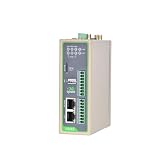
- Reliable North America LTE Cat 1: Specifically designed for North American carriers (Verizon, AT&T, T-Mobile). LTE Cat 1 provides a cost-effective and highly stable connection for IoT applications, featuring Band 2/4/5/12/13/25/26 for extensive coverage and carrier-grade reliability.
- Edge Computing & Python Programmable: Powered by a high-performance ARM Cortex-A8 processor. Supports Python secondary development, allowing you to perform data pre-processing, filtering, and local logic control at the edge, reducing cloud bandwidth costs and latency.
- Rich Industrial I/O & Interfaces: Equipped with 1x RS232 and 1x RS485 serial ports, plus 4x Digital Inputs (DI) and 4x Digital Outputs (DO). It offers a versatile solution to bridge the gap between legacy serial equipment and modern sensors for comprehensive data acquisition.
- Extensive Protocols & Cloud Ready: Supports industrial protocols including Modbus RTU/TCP, MQTT, OPC UA, and HTTP. Seamlessly integrates with major cloud platforms like AWS IoT Core and Azure IoT Hub, as well as InHand’s DeviceManager for centralized remote management.
- Industrial-Grade Durability & Security: Built with a rugged metal housing and designed for harsh environments with a wide operating temperature range (-20°C to 70°C). Features multi-level security with IPsec/OpenVPN and hardware watchdog for 24/7 unattended operation.
OPC UA, MQTT, and gateways compared
| Option | What it does | Best fit and checks |
|---|---|---|
| OPC UA client/server | Structured industrial communication with information modelling and defined security capabilities. | Native device or supervisory-system support. Check namespaces, companion models, certificates, security policy, and client compatibility. |
| OPC UA PubSub over MQTT | Publishes OPC UA-modeled data through a broker using a standardized MQTT mapping. | Edge-to-cloud or cloud-to-cloud telemetry. Check broker support, payload mapping, certificates, topic conventions, and offline behavior. |
| Industrial protocol gateway or edge translator | Converts or aggregates machine-side protocols into platform-side interfaces. | Legacy or mixed-vendor machines. Check the exact driver, licensing, updates, throughput, environmental rating, and northbound protocol. |
| Vendor-specific connector | Uses a supplier’s supported tooling to connect its equipment or platform. | Existing vendor ecosystem or required proprietary features. Check portability, support lifecycle, export options, and integration boundaries. |
The practical question is not “Which protocol is best?” Compare each option on installed-equipment support, information semantics, direction of data flow, latency, resilience, security and identity management, integration effort, lifecycle support, operating ownership, and total cost. A claim that a device “supports MQTT” does not prove that its data is correctly modeled or useful to the receiving application.
Free tools Windows power users keep installed
One-click scans. No signup required.
Preserve machine and production context
Normalize data at the edge or in a governed information layer. At minimum, every published signal should have:
- a stable asset path and human-readable name;
- a defined unit, engineering range, and data type;
- a source timestamp and, where useful, an ingestion timestamp;
- a quality or validity state that distinguishes good, stale, substituted, and bad values;
- machine mode, state, alarm, and reason codes where the use case needs them;
- line, cell, work center, product, batch, work order, and shift context when production analysis depends on them;
- an explicit read-only or writable classification.
ISA-95 helps organize the relationship between equipment, manufacturing operations, and enterprise systems. The OPC Foundation’s ISA-95 summary describes automation and control as typically supporting Levels 1 and 2, manufacturing-operations-management systems as Level 3, and ERP systems as Level 4. The point is not to force every plant into a rigid hierarchy; it is to make clear why a raw tag is insufficient for production decisions.
OPC UA companion specifications can add domain-specific models. For machinery, the current OPC UA for Machinery Part 1: Basic Building Blocks release 1.04.1 was published January 1, 2026. Check whether the installed equipment and platform implement the same model version and required profiles.
Implementation: a controlled sequence
- Define the use case and data contract. List signals, event types, cadence, retention, latency, availability, consumers, and whether commands are in scope. Document units, quality rules, timestamps, and naming before configuring a connector.
- Complete the equipment inventory. Confirm controller models, firmware, interfaces, licenses, network zones, tag availability, vendor restrictions, clock sources, and safety impact with the people who maintain the machines.
- Test the native interface. If an OPC UA endpoint exists, validate a small read-only set of nodes, certificates, security policies, namespace stability, and server load. Do not assume every exposed node is supported for production use.
- Select and place the edge function. For legacy or mixed protocols, choose a gateway with explicit driver support and put it in a reviewed OT network zone. Decide whether it will normalize names, buffer data, terminate certificates, or merely forward traffic.
- Design the northbound route. Choose OPC UA client/server, OPC UA PubSub over MQTT, or another documented ingestion method. Define broker ownership, authentication, topic or address-space conventions, payload schema, routing, retry, buffering, and behavior when the platform is unreachable.
- Map context and quality. Preserve asset identity, units, timestamps, status, alarms, production relationships, and read/write permissions. Reject or quarantine values that fail validation instead of silently converting them.
- Secure a pilot. Use a limited machine or cell and read-only telemetry when possible. Test normal operation, controller restart, gateway restart, certificate renewal, network interruption, clock drift, duplicate messages, stale data, and recovery from an outage.
- Validate with operations. Have operators and controls engineers compare platform values with local displays and historian records. Confirm that polling, subscriptions, and reconnects do not affect scan time, controller load, alarm handling, or safety functions.
- Approve production rollout. Record the as-built architecture, firewall rules, identities, certificates, mappings, backups, recovery steps, support owner, and change-control requirements. Roll out by cell or line so a fault has a bounded impact.
Design MQTT and outage behavior deliberately
When MQTT is used, decide who owns and operates the broker, how clients authenticate, which topics they may publish or subscribe to, and how retained messages and quality states are handled. Define payload versioning so a renamed tag or added field does not break consumers.
Specify what the edge component does when the broker or cloud platform is unavailable. Options include store-and-forward buffering, bounded queues, dropping low-value samples, preserving alarms, or declaring data stale. Set a maximum buffer duration and document whether timestamps represent measurement time or publish time. A reconnect storm after an outage can overload a broker or controller unless backoff and rate limits are configured.
The OPC Foundation’s 2026 cloud-initiative material describes PubSub and MQTT mapping work for cloud communication; consult the OPC UA Interoperability for Industrie 4.0 and IoT brochure for that context. MQTT remains a transport choice, not a substitute for an industrial information model.
Rank #4
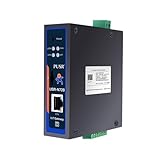
- Powerful Edge Computing Capabilities: 1000 points+data acquisition+analysis
- Multiple Interface: Ethernet+2*RS485
- Protocol Conversion: Modbus to MQTT+Json, DL645 to MQTT+Json
- Rich Communication Protocol: MQTT/TCP
- Data Encryption: TCP+SSL, MQTT+SSL SD Card for Data Storage:To ensure data integrity
Security for an OT connection
OT systems prioritize performance, reliability, availability, and safety. NIST SP 800-82 Rev. 3 is the final guide published September 28, 2023; its guidance is available at NIST SP 800-82 Rev. 3. NIST also published an initial public draft of Rev. 4 dated September 21, 2026, with comments due November 30, 2026; it is a draft, not a final replacement, at NIST SP 800-82 Rev. 4 initial public draft.
Do not expose a machine-control network directly to the internet or bypass plant segmentation simply to reach a cloud service. Use the site’s approved zones, conduits, firewalls, remote-access controls, and monitoring. Place brokers and gateways where the OT security architecture permits them, and minimize the ports, routes, and identities required.
OPC UA includes mechanisms such as encryption, message signing, sequence numbers, X.509 certificate identification, user authentication, and access rights. The OPC Foundation overview describes these capabilities. Their existence in a standard does not make a deployment secure: certificates must be issued, validated, rotated, revoked, and backed up; policies must be selected; and permissions must follow least privilege.
- Use unique identities for gateways, clients, servers, and operators.
- Prefer encrypted and signed sessions supported by all participating products.
- Restrict write access; separate telemetry credentials from command credentials.
- Back up certificates, private keys, configuration, and mapping files under controlled access.
- Log authentication, configuration changes, certificate events, rejected messages, and reconnects.
- Patch gateways and servers through an approved OT change process, with rollback plans.
- Review vendor remote access, support accounts, and expiration dates.
A cloud connection does not automatically authorize cloud-to-machine control. If commands are required, define who can issue them, how they are validated, what interlocks remain local, how a command is logged, and how operators can override or stop it. Safety functions should remain within their engineered safety systems.
Independent reader supportYour contribution helps us test, update, and keep practical guides available for everyone.Commissioning checks and common failures
The endpoint is visible but values are missing
Check that the required nodes or registers are actually enabled, licensed, and readable by the configured identity. Verify namespace indexes, data types, array handling, scaling, and quality codes. A successful TCP connection proves only network reachability, not useful data access.
Values arrive with the wrong units or meaning
Compare raw values with the machine documentation and local HMI. Correct scaling, signedness, byte order, engineering units, and state-code mappings at the governed mapping layer. Preserve the original source identifier so a later audit can trace the transformed value.
Data stops during a network outage
Inspect edge buffering, queue limits, retry backoff, broker session settings, and clock behavior. Confirm whether the platform marks delayed data with its original measurement timestamp and whether alarms are prioritized over routine samples. Test a prolonged outage rather than only a brief cable pull.
Best Value
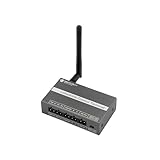
- [ALL-IN-ONE ACQUISITION & CONTROL]: Unlike standard sensors that only read data, this hybrid terminal integrates 1x RS485 (Modbus RTU), 1x Analog Input (0-10V), and 1x Relay Output (3A). It allows users to monitor industrial sensors (like soil moisture, flow meters) and control actuators (pumps, valves, fans) simultaneously with a single, cost-effective device.
- [FAIL-SAFE EDGE LOGIC (OFFLINE OPERATION)]: Critical for agriculture and safety systems. The device supports programmable local logic rules (e.g., "If Soil Moisture < 20%, Turn ON Relay"). It executes these commands locally, ensuring the automation continues to run reliably even if the LoRaWAN network connection is lost or unstable.
- [DEEP PENETRATION 915MHz CONNECTIVITY]: Operating on the standard US 915MHz LoRaWAN frequency, this node provides robust signal penetration through walls and reliable coverage up to 4km (2.5 miles) in open environments. Ideal for sprawling farms, greenhouses, and factory campuses where Wi-Fi cannot reach. Compatible with Helium, TTN, and private gateways.
- [SEAMLESS INDUSTRIAL RETROFIT]: Designed to upgrade legacy systems to the cloud without replacing expensive machinery. The RS485 interface acts as a Modbus Master to read data from energy meters, PLC systems, or weather stations. Housed in a compact DIN-Rail mountable case with 12-24V wide voltage input for easy installation in control cabinets.
- [VERSATILE I/O FOR SYSTEM INTEGRATORS]: Beyond Modbus, it features optocoupler-isolated digital inputs and analog interfaces. Perfect for diverse IIoT applications such as HVAC monitoring, automated irrigation, tank level management, and building automation. Supports OTAA/ABP Class A/C modes for flexible power management.
Reconnects affect the controller
Reduce subscription or polling load, use change-based reporting where supported, increase reconnect backoff, and check the controller’s connection limits and CPU usage. Coordinate any change with the controls engineer and test during an approved window.
Duplicate or out-of-order messages appear
Design consumers to use message identifiers, source timestamps, sequence numbers, or idempotent writes as appropriate. At-least-once delivery can produce duplicates; do not assume arrival order equals production order.
Certificates or credentials expire
Maintain an inventory with owner and expiration date, stage replacement certificates, verify trust stores on both ends, and test renewal before the old credential is revoked. A certificate rotation procedure that exists only in a project document is not an operating control.
Operating the connection after go-live
Assign an owner for each layer: machine interface, gateway, broker, platform ingestion, data model, and security. Keep the equipment and software inventory current, including firmware, connector versions, certificates, firewall rules, mappings, backups, and support contacts.
Monitor more than network uptime. Useful health signals include last successful source read, last publish time, queue depth, oldest buffered sample, certificate lifetime, message rejection count, data-quality rate, and controller or gateway resource use. Alert on stale data and degraded quality, not only on a completely disconnected device.
Use formal change control for tag renames, controller replacement, gateway updates, broker policy changes, platform schema changes, and new write permissions. Re-test the data contract and recovery behavior whenever equipment, platform, or connectivity changes.
What the project will require
There is no universal bill of materials or price because requirements depend on the installed machines, protocol licenses, network zones, data volume, retention, and support model. A credible physical-product category is an industrial IoT edge gateway or industrial protocol gateway. Select by verified interfaces and environmental, security, and lifecycle requirements—not by consumer-router specifications or a single-board computer’s availability.
Quick wins for a faster PC:
Clear out junk files and repair common Windows errorsFree Scan →Scan for outdated or missing drivers - takes under a minuteDriver Scan →Repair Windows errors before they cause bigger problemsFix Now →Budget and staffing should account for interface licenses, gateway or edge software, broker or platform ingestion, engineering and commissioning, network and firewall work, certificate and identity management, data modeling, backups, monitoring, training, and ongoing support. Confirm exact compatibility and commercial terms with the equipment and platform suppliers before purchase.
A practical decision checklist
- Is the objective telemetry, traceability, analytics, maintenance, or control?
- Does each installed machine expose the required data through a supported interface?
- Can native OPC UA provide the needed model, quality, security, and performance?
- If not, which gateway driver reads the exact legacy protocol and firmware?
- Where will the edge component, broker, and platform connection sit in the OT network?
- How will units, timestamps, quality, asset identity, and ISA-95 production context be represented?
- Is the northbound method OPC UA client/server, OPC UA PubSub over MQTT, or another documented route?
- What is buffered, dropped, retried, or marked stale during an outage?
- Which identities can read, publish, subscribe, or write, and how are certificates rotated?
- How will operations verify that the connection does not affect scan time, alarms, interlocks, or safety?
- Who owns monitoring, backups, updates, incident response, and change approval after deployment?
Erich Barnstedt, Microsoft Chief Architect for Standards, Consortia and Industrial IoT, described OPC UA as “the established, worldwide data modeling standard for Industrial IoT” in the OPC Foundation’s 2023 brochure. That statement captures OPC UA’s role, but a successful plant connection still depends on the installed device’s implementation, a compatible information model, a correctly designed edge path, and an OT-approved operating process.
Quick Recap
Product prices and availability are accurate as of the date/time indicated and are subject to change. Any price and availability information displayed on Amazon at the time of purchase will apply.

