
Quick wins for a faster PC:
Repair Windows errors before they cause bigger problemsFix Now →Fix the driver behind crashes, sound loss and screen glitchesFind Drivers →Clear out junk files and repair common Windows errorsFree Scan →iTechGuides is reader-supported. When you buy through links on our site, we may earn an affiliate commission. As an Amazon Associate I earn from qualifying purchases. Learn more
Sometimes—but MCP does not inherently use 17 times as many tokens as a command-line interface. The headline ratio comes from a benchmark that compared MCP’s full search response with CLI output restricted to two fields. In a separate file-reading example, the reported comparison was about 3,400 tokens for MCP versus 200 for CLI, but its counting method and test conditions were not documented in the available copy. The practical answer depends on what tools and schemas your agent loads, which response fields it returns, and how the integration is configured.
What the 17× MCP-versus-CLI result measured
A 2026 benchmark by Ary Rabelo ran the same Google query through SerpApi’s MCP server and the author’s serp CLI, using the same SerpApi Python library. Its largest reported gap compared MCP’s default, complete response with CLI output projected to only title and link:
| Configuration | Reported tokens | What was returned |
|---|---|---|
| MCP complete/default | 6,047 | Complete response |
| MCP compact | 4,577 | Compact response |
| CLI complete | 5,321 | Complete response |
| CLI compact, no field projection | 3,940 | Compact response |
CLI compact, --fields title,link |
351 | Only the selected fields |
The 6,047-to-351 comparison is about 17.2 to 1, but it is not a like-for-like measurement of protocol overhead: the CLI response intentionally contains less information. When both complete outputs are compared, the figures are 6,047 and 5,321. When both are compact and the CLI still has no field projection, they are 4,577 and 3,940. Rabelo says the compact versions remove the same five SerpApi metadata blocks; the CLI also minifies JSON, while MCP pretty-prints it. Read the benchmark and its configuration.
Why MCP can add tokens beyond the returned result
Tool definitions occupy context
An MCP client can list available tools, including their names, descriptions, and input schemas. In Rabelo’s tested setup, the SerpApi search tool definition accounted for 771 estimated tokens per turn. The CLI executable itself added approximately zero tokens in that comparison. This is a setup-specific schema cost, not a fixed charge for every MCP tool or client.
#1 Best Overall
![Arduino® UNO™ Q 4GB [ABX00173]- Hybrid Board, Qualcomm Dragonwing QRB2210 microprocessor (MPU) & STM32U585 Microcontroller(MCU), AI Vision, Voice, IoT, Robotics, Linux Debian OS, Wi-Fi 5, USB-C](https://m.media-amazon.com/images/I/51cl4xygwGL._SL160_.jpg)
- Dual-Brain Hybrid Power: Combines the Qualcomm Dragonwing QRB2210 MPU (Quad-core Arm Cortex-A53 @ 2.0 GHz CPU, Adreno GPU, AI acceleration) and the real-time, low-power STM32U585 MCU for advanced applications like object recognition, voice commands, and motion detection.
- AI & Linux Capabilities: Unlocks AI-powered vision and sound solutions; runs Linux Debian OS for coding in Python and supports the Arduino ecosystem with libraries and Sketches; quick start with Arduino App Lab.
- Advanced Features: Equipped with 4 GB LPDDR4 RAM, 32 GB eMMC built-in storage, ideal for single-board computer (SBC) mode, running multiple simultaneous high-level processes, more complex AI or ML models, extensive logs. Dual-band Wi-Fi 5 (2.4/5 GHz), Bluetooth 5.1, and high-speed headers for vision, audio, and display peripherals.
- Seamless Expansion & Connectivity: Features the classic UNO form factor for shields compatibility, an 8x13 LED matrix, and a Qwiic connector for easy expansion with Modulino nodes; power and connect via the USB-C connector.
- Intended Use & Development: The perfect platform for prototyping robotics or IoT projects, empowering innovators with a unified development experience to mix Arduino Sketches, Python scripts, and containerized AI models in a single interface.
Some hosts may cache repeated prompt context, reducing the marginal cost of a tool definition in a warm session. Caching behavior varies; check whether the particular client and model actually cache that content. A schema that is sent or counted again still matters in contexts where it is not cached, and adding tools or servers can increase the amount of tool-description context.
Tool responses can be large—or deliberately narrow
Once a call runs, the response content is another cost. Returning full records, metadata, or pretty-printed JSON can use more tokens than returning a small set of relevant fields. The benchmark’s largest ratio is driven substantially by that difference in output selection. A more useful comparison asks whether both interfaces returned the same information, not just which label—MCP or CLI—was attached to the call.
Rank #2
- Dual-Brain Hybrid Power: Combines the Qualcomm Dragonwing QRB2210 MPU (Quad-core Arm Cortex-A53 @ 2.0 GHz CPU, Adreno GPU, AI acceleration) and the real-time, low-power STM32U585 MCU for advanced applications like object recognition, voice commands, and motion detection.
- AI & Linux Capabilities: Unlocks AI-powered vision and sound solutions; runs Linux Debian OS for coding in Python and supports the Arduino ecosystem with libraries and Sketches; quick start with Arduino App Lab.
- Advanced Features: Equipped with 2 GB LPDDR4 RAM, 16 GB eMMC built-in storage, ideal to develop in PC-connected mode, running the OS, Python scripts, and basic network services (SSH) without a demanding GUI or heavy multitasking; great for lightweight AI and memory-optimized TinyML applications, needing local storage for basic OS and core libraries. Dual-band Wi-Fi 5 (2.4/5 GHz), Bluetooth 5.1, and high-speed headers for vision, audio, and display peripherals.
- Seamless Expansion & Connectivity: Features the classic UNO form factor for shields compatibility, an 8x13 LED matrix, and a Qwiic connector for easy expansion with Modulino nodes; power and connect via the USB-C connector.
- Intended Use & Development: The perfect platform for prototyping robotics or IoT projects, empowering innovators with a unified development experience to mix Arduino Sketches, Python scripts, and containerized AI models in a single interface.
Token estimates depend on the counting method
Rabelo estimated tokens by dividing character counts by four. That is a rough proxy, not a count from every model’s tokenizer, so treat the absolute totals as estimates and the within-test comparisons as more informative. Different output formats and text can tokenize differently even when character counts are similar.
The Tool Desk
Outbyte Driver Updater FREEFix the driver behind crashes, sound loss and screen glitchesFind Drivers →Outbyte PC Repair FREERepair Windows errors before they cause bigger problemsFix Now →A separate file-reading example reported a different gap
An indexed copy of the exact-title article reports roughly 3,400 tokens and 280 ms for an MCP structured file-reading setup, compared with roughly 200 tokens and 45 ms for CLI with raw output. The accessible copy does not establish the token-counting method, file contents, model, runtime conditions, or number of trials. Treat those numbers as what that example reported, not as independently verified results or a general MCP-versus-CLI benchmark. It is also a different task from Rabelo’s SerpApi search test, so the two sets of figures should not be combined.
Rank #3
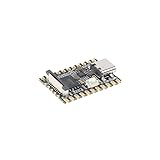
- Single core ARM Cortex-A7 32-bit core, integrated with NEON and FPU
- Built in Micro's self-developed 4th generation NPU, with high computational accuracy and support for mixed quantization of int4, int8, and int16. Among them, int8 has a computing power of 0.5 TOPS and int4 has a computing power of up to 1.0 TOPS
- Built in self-developed 3rd generation ISP3.2, supports 4 million pixels, and supports various image enhancement and correction algorithms such as HDR, WDR, and multi-level denoisin
- It has powerful encoding performance, supports intelligent encoding, adapts to save bit rates according to the scene, and saves more than 50% of the bit rate compared to conventional CBR mode, making the captured images high-definition, smaller in size, and doubling the storage space
- The design with built-in RISC-V MCU supports low-power fast startup, 250ms fast capture, and simultaneous loading of AI model library, enabling facial recognition to be completed within 1 second
How to compare MCP and CLI for your agent
Benchmark the exact client, server, model, and operation you plan to deploy. Keep the comparison controlled and account for both what is present before a tool call and what the call returns.
- Match the task and information. Run the same query or operation through each interface and compare outputs containing the same fields. If one output is intentionally narrower, report that as a separate configuration.
- Count standing tool context. Include tool names, descriptions, and input schemas that the host makes available to the model. Record whether the host resends or caches that context.
- Measure the response separately. Track returned content per call, including metadata and formatting. Test field selection or compact output only when both integrations can provide equivalent information.
- Use the target model’s tokenizer where possible. If you use a character-based estimate, label it as an estimate and avoid presenting it as a universal token count.
- Compare latency under equivalent conditions. Use the same machine, host, network, query, and runtime conditions, and distinguish cold from warm sessions. The reported 280 ms and 45 ms figures belong only to the separate file-reading example described above.
- Include deployment needs in the decision. Consider whether standardized discovery, shared access across clients, authentication, governance, or reusable tools matter for your use case, alongside token and latency costs.
When MCP’s additional context may be worthwhile
MCP provides a standardized way for a compatible client to discover tools and their input schemas. The official overview describes tools as functions the model can choose to execute, while the Python SDK documents clients listing tool names, descriptions, and schemas. Those capabilities can be useful when tools need to be shared or discovered across compatible hosts; whether they justify their context cost depends on the deployment. MCP overview · Python SDK documentation.
Rank #4

- 【POWERFUL ESP32‑S3 CONTROLLER】Built‑in Xtensa 32‑bit LX7 dual‑core processor, 512KB SRAM, 8MB PSRAM, 16MB Flash for stable AI voice computing and multitask processing.
- 【Preloaded Dual AI Platforms】Comespre-installed with complete Deepseek and OpenAI voice dialogue projects.Experience intelligent voice interaction instantly. (Note: OpenAI functionality requires your own API key.)
- 【STABLE WIRELESS & CLEAR AUDIO】Integrated 2.4GHz Wi‑Fi + Bluetooth 5 (LE); dedicated audio decoding module for natural, responsive voice interaction.
- 【USER‑FRIENDLY VISUAL & PLUG‑AND‑PLAY】2” TFT‑SPI color screen shows real‑time chat; modular design, no extra wiring, ready to use after setup.
- 【FULL LEARNING SUPPORT】45 programmable GPIOs, rich interfaces, online web tutorials, free technical support for beginners & developers.
Other approaches can reduce tool-description context, but they are distinct from an MCP-versus-CLI benchmark. In a 2025 Google Drive-to-Salesforce example, Anthropic reported reducing tool-definition context from 150,000 tokens to 2,000—98.7%—by letting an agent inspect relevant code and call tools programmatically. That result describes Anthropic’s example and mechanism, not a general MCP saving. Anthropic’s code-execution example.
PC Slower Than It Used to Be?
A free scan shows the junk files, broken settings and background clutter dragging Windows down - then fixes them in one click.Free scan · Windows 10 & 11Crashes, No Sound, or Screen Glitches?
Random freezes, missing sound and display glitches usually trace back to one bad driver. Find and replace yours safely.Free scan · under a minuteWhat has changed in MCP’s protocol context
The MCP maintainers’ July 28, 2026 specification announcement describes a stateless protocol core and cache hints for list responses such as tools/list, along with deterministic ordering. These changes may affect how some implementations handle repeated tool-list context, but they do not by themselves eliminate the tokens in tool responses. Client and server support can differ, so verify the versions and caching behavior in the environment you use. MCP specification announcement.
Quick Recap
Product prices and availability are accurate as of the date/time indicated and are subject to change. Any price and availability information displayed on Amazon at the time of purchase will apply.

