
iTechGuides is reader-supported. When you buy through links on our site, we may earn an affiliate commission. As an Amazon Associate I earn from qualifying purchases. Learn more
Use a mop for routine damp cleaning and rinsing. Choose a wet-dry vacuum when you need to collect a substantial amount of liquid or slurry, provided the machine is designed for wet pickup and has a floor attachment compatible with your surface. The tools are complementary rather than interchangeable: the right choice depends on how much moisture is present, what the floor and finish can tolerate, and the procedure specified by the flooring manufacturer.
The short answer: match the tool to the job
A mop is the sensible starting point for ordinary hard-floor cleaning. A controlled amount of cleaning solution on a mop can lift everyday soil, and the mop can be rinsed and wrung as you work. Metro’s floor-care guidance specifically describes damp mopping for wood and gives separate recipes for several floor types. Its instructions also advise testing a cleaner on a small area first.
A wet-dry vacuum has a different primary role: liquid pickup. It becomes useful when a spill, leak, wash-down, or maintenance operation leaves more liquid than a mop can conveniently collect. The New York State Office of General Services (OGS) describes using a floor squeegee with a wet/dry vacuum to gather floor-stripper slurry, followed by a cold-water mop rinse. That is a documented heavy-maintenance sequence, not a reason to use floor stripper in a home.
Quick wins for a faster PC:
Scan for outdated or missing drivers - takes under a minuteDriver Scan →Repair Windows errors before they cause bigger problemsFix Now →Fix the driver behind crashes, sound loss and screen glitchesFind Drivers →Neither tool is automatically safe on every floor. Check the floor maker’s care instructions, the cleaning-product label, and the vacuum manual before introducing water or chemicals. Hardwood is not generally rated for excessive and repeated water exposure, while ceramic tile, stone, and vinyl are identified by the U.S. Department of Energy’s Building America Solution Center as suitable choices for areas likely to get wet. The actual material, seams, grout, finish, and installation still determine the safe method.
#1 Best Overall

- PORTABLE: Lightweight, 2.5-gallon wet dry shop vac offers unparalleled mobility
- IDEAL FOR SMALL MESSES: Perfect for the home, garage, cars, trucks and vans
- EASY TO STORE: Compact size, carry handle and cord wrap feature allow for easy storage
- TWO-IN-ONE CAPABILITY: Shop vacuum can be used as a blower for added versatility
- DESIGNED FOR TIGHT SPACES: 1-1/4 in. shop vacuum accessories allow for maneuverability in tight areas
What a mop and a wet-dry vacuum actually do
A mop controls and distributes moisture
A mop applies a thin, controlled layer of solution, loosens soil, and removes it when the mop is rinsed and wrung. That makes it well suited to routine cleaning, where the goal is to leave the floor clean without flooding it. A damp method is especially important on wood and on any surface whose finish or joints can be damaged by standing water.
Mopping is also the finishing step in many cleaning sequences. After a wet-dry vacuum has collected liquid, a clean-water mop can remove remaining residue or detergent. The OGS floor-stripping example uses exactly this division of labor: mechanical collection first, then a mop rinse.
A wet-dry vacuum collects larger amounts of liquid
A wet-dry vacuum is designed for tasks in which liquid must be gathered and removed rather than spread across the surface. In the cited OGS training material, a squeegee pushes stripper slurry into a manageable path and the vacuum collects it. For a household spill, the same category of tool may be appropriate when the quantity is too large for a mop or towels, but only if the model’s instructions permit wet pickup and the supplied floor tool is suitable.
Crashes, No Sound, or Screen Glitches?
Random freezes, missing sound and display glitches usually trace back to one bad driver. Find and replace yours safely.Free scan · under a minuteWindows Errors? Fix Them Before They Spread
Repair common Windows errors and clear accumulated junk for a smoother, more stable PC - no reinstall needed.Free scan · no reinstallThe cited guidance does not establish that every wet-dry vacuum works on every floor, removes every kind of liquid, or outperforms a mop in ordinary cleaning. It also does not provide model-level data for suction, noise, maintenance, price, capacity, or storage. Treat the category as task-specific equipment, not as a universal mop replacement.
Choose by situation and floor
| Situation | Practical starting point | What to check |
|---|---|---|
| Routine hard-floor cleaning | Damp mop | Use a method and cleaner appropriate to the floor and finish; do not leave standing water. |
| Hardwood or a wood finish | Controlled damp cleaning | Avoid excessive or repeated water exposure and follow the flooring maker’s care instructions. |
| A spill or heavy liquid cleanup | Wet-dry vacuum if the model is designed for wet pickup | Confirm liquid-pickup instructions and use a compatible floor attachment. |
| Floor stripping or similar maintenance | The prescribed maintenance equipment and sequence | The OGS example uses a squeegee and wet-dry vacuum for slurry, then a mop rinse. Stripping is not ordinary household cleaning. |
A step-by-step decision process
1. Estimate the amount and behavior of the liquid
Start with the physical problem, not the product category. A lightly soiled floor that needs routine damp cleaning calls for a mop. A tipped container, appliance leak, wash-down, or liquid that has pooled in a large area may justify a wet-dry vacuum. If the liquid is only a thin film, a vacuum can add unnecessary equipment and cleanup; if it is deep enough to spread or migrate into joints, a mop alone may be slow and may move the liquid rather than remove it.
Identify whether the liquid is clean water, a cleaning solution, or a slurry containing soil and finish. The OGS example concerns stripper slurry in a controlled maintenance operation. Do not assume that a household vacuum can handle chemicals, abrasive solids, or foaming solutions merely because it can pick up water. The manual must state what wet materials are allowed.
Rank #2

- CORE ADVANTAGE. Vacuum wet/dry messes AND mop tough stains simultaneously—no pre-sweeping! Clean pet-messy floors faster and more efficiently.
- PET-FOCUSED DESIGN. Powerfully tackles hair & odors! Features a tangle-free brush, hair guard to prevent clogs, & specialized pet solution to remove stains, neutralize odors, and leave freshness.
- VERSATILE USE. Safely cleans all hard floors (tile, wood, laminate, vinyl, linoleum) plus area rugs/mats. One machine for your whole house.
- CLEAN/DIRTY WATER SEPARATION. Dual-tank system keeps fresh solution and dirty water separate, preventing cross-contamination for a truly hygienic clean.
- VALUE BUNDLE & PURPOSE. Includes: 1 tangle-free roller brush, 2 bottles (8oz each) of Pet Solution & self-cleaning tray. Every purchase helps BISSELL save homeless pets!
2. Identify the floor material and finish
Find the flooring documentation if possible. “Hard floor” is not one care category: finished wood, ceramic tile, natural stone, and vinyl have different tolerances, seams, and recommended cleaners. The DOE Building America Solution Center distinguishes wet-prone flooring such as ceramic tile, stone, and vinyl from hardwood’s limitations with excessive, repeated water exposure.
Look beyond the surface label. A floor can have vulnerable edges, open joints, a coating, or an installation detail that changes the safe amount of moisture. If the manufacturer specifies a particular cleaner, dilution, application method, or drying procedure, that instruction takes priority over a generic recipe.
3. Check the cleaning product
Use only a product identified as suitable for the floor and finish. Metro’s guidance provides floor-specific cleaning recipes but cautions that a cleaner should be tested on a small area first. Perform that test in an inconspicuous location, allow the area to dry, and look for dulling, discoloration, tackiness, or other change before cleaning a larger section.
Never infer chemical compatibility from the tool. A wet-dry vacuum’s ability to collect liquid does not establish that its tank, seals, hose, filter, or floor head can tolerate a particular detergent, disinfectant, finish remover, or solvent. Follow the vacuum manufacturer’s permitted substances and disposal instructions.
4. Decide whether collection or scrubbing is the main task
If the main job is loosening ordinary soil and spreading a controlled amount of cleaner, choose a mop. If the main job is removing a volume of liquid already on the floor, choose a wet-dry vacuum that explicitly supports wet pickup. For some jobs, use both: collect the bulk liquid first, then mop with the prescribed rinse or cleaner.
5. Confirm the attachment and operating procedure
Before buying or using a wet-dry vacuum, verify that the model includes or supports a floor tool intended for liquid pickup. A general-purpose nozzle may not provide the control needed on a finished floor. Read the manual for setup, filter requirements, maximum liquid level, movement technique, emptying, and cleaning. The available evidence supports checking these points but does not establish a universal specification shared by all models.
Rank #3
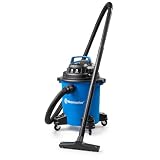
- MADE FOR: Everyday wet and dry pick-up
- POWERFUL AIRFLOW: 65 CFM easily sucks up more debris
- EXTENDED CLEANING REACH: 16-feet of cleaning reach with hose and power cord
- FEATURES: 8 accessories, including a cartridge filter for dry pick-up and a foam wet filter for wet pick-up
- COMPLETE VAC ORGANIZATION: On-board hose, cord and accessory storage
How to mop routine floors without over-wetting them
- Read the floor and cleaner instructions. Confirm the surface, finish, dilution, and approved application method. If the product is new to the floor, test it on a small hidden area as Metro advises.
- Remove loose debris first. Dry soil can become abrasive mud when mixed with water. Use the floor-safe dry-cleaning method recommended for the surface.
- Prepare a controlled amount of solution. Do not turn routine cleaning into a flood. The goal is a damp mop, not standing water.
- Work in manageable sections. Rinse and wring the mop so soil is not redistributed. Keep an eye on seams, edges, and places where liquid can collect.
- Rinse when the instructions call for it. If the cleaner requires a clear-water rinse, use a clean, well-wrung mop. This is the same kind of finishing step described after slurry collection in the OGS maintenance example.
- Allow the surface to dry. Remove visible pools and improve ventilation where appropriate. On wood, avoid repeated wet passes and follow the flooring maker’s drying guidance.
Routine damp cleaning does not mean that every floor should be mopped with the same recipe. Metro’s guidance separates recipes by floor type, and the OGS quick-reference card directs users to manufacturer recommendations for products and procedures. Those instructions should govern when they differ from a general method.
When and how a wet-dry vacuum fits
For a substantial spill
First protect people from slipping and keep liquid away from electrical equipment. Then verify that the vacuum is configured for wet pickup exactly as its manual describes. Use the compatible floor attachment, collect the liquid without forcing it into seams or under trim, and stop at the stated tank limit. After the bulk is removed, use the floor-approved mop method if a rinse or residue removal is required.
The evidence does not support naming a particular household model or promising that any vacuum is safe for a specific finish. A product listing that merely says “wet/dry” is not a substitute for the operating manual’s instructions about attachments, liquids, and surfaces.
For maintenance slurry
In the 2021 OGS floor-care training example, a squeegee gathers floor-stripper slurry and a wet/dry vacuum collects it; a cold-water mop rinse follows. This sequence illustrates why the tools complement each other: the squeegee concentrates the material, the vacuum removes the bulk, and the mop performs controlled rinsing.
Floor stripping is specialized maintenance. It involves chemicals, finish removal, waste handling, and procedures that are not part of ordinary household cleaning. Do not copy the chemical or stripping operation onto a residential floor unless the flooring and product manufacturers explicitly permit it and you understand the required safety procedure.
For repeated wet work
If you regularly handle leaks, wash-downs, or maintenance liquids, select equipment based on the documented task rather than occasional convenience. Confirm wet-pickup capability, the floor attachment, permitted liquids, capacity and emptying procedure, and how the machine is cleaned and stored. Because comparative household testing was not established, treat claims about performance, noise, upkeep, or durability as unverified unless they come from a reliable test or the manufacturer’s documentation.
Rank #4

- Beast Series High-Performance Motor with 320 Air Watts of Power, 20kPa
- Equipped with High-Efficiency Cartridge Filter & Dust Bag for Capturing Fine Dust Particles Down to 1 Micron in Size
- 25-Feet of Cleaning Reach with Premium Kink-Resistant Hose and Power Cord
- 9 Accessories, including a Car, Utility, and Crevice Tool for Various Tasks
- Complete Vac Organization with On-Board Hose, Cord and Accessory Storage
Floor-specific considerations
Hardwood and other wood floors
Use the least amount of moisture that achieves the cleaning result. Metro’s guidance describes damp mopping wood, while the DOE Building America Solution Center warns that hardwood is not generally rated for excessive and repeated water exposure. That combination points to controlled, infrequent damp cleaning rather than wet vacuuming as a routine habit.
What’s actually slowing this PC down?
Pick the symptom - the matching free tool is one click away.
Keep spills from remaining on the surface, but do not respond by repeatedly washing the floor. Check the finish manufacturer’s instructions for cleaner, mop dampness, and drying. A wet-dry vacuum should be considered only for an unusual volume of liquid and only when its manual and the flooring instructions support the use.
Ceramic tile
Ceramic tile is identified by the DOE resource as appropriate for areas likely to get wet. That does not eliminate concerns about grout, movement joints, edges, or the cleaner used. For routine soil, a floor-approved damp mop is usually the simpler approach. For a large spill, a compatible wet-pickup vacuum can remove bulk liquid before a prescribed rinse.
Stone
Stone is also listed by the DOE resource among flooring options for wet-prone areas. “Stone” covers many materials and finishes, so use the specific care instructions for the installed product. Avoid assuming that a cleaner suitable for ceramic tile is suitable for every stone surface. Confirm the vacuum attachment and liquid compatibility before using wet pickup.
Vinyl
Vinyl appears in the DOE guidance as a suitable choice for areas likely to get wet. Follow the flooring maker’s instructions for cleaner concentration and moisture, particularly around seams and edges. A mop remains appropriate for routine damp cleaning; a wet-dry vacuum is a task tool for larger liquid collections, not a requirement for everyday care.
The Tool Desk
Outbyte Driver Updater FREEFix the driver behind crashes, sound loss and screen glitchesFind Drivers →Outbyte PC Repair FREERepair Windows errors before they cause bigger problemsFix Now →What to compare when choosing equipment
For a mop
- Moisture control: The design should let you wring or otherwise control how wet the head becomes.
- Floor compatibility: Confirm that the head and cleaning method are approved for the material and finish.
- Rinsing workflow: Routine cleaning requires a practical way to rinse or replace a soiled head without spreading dirt.
- Product instructions: The mop does not make an unsuitable chemical safe; follow the cleaner and floor instructions.
For a wet-dry vacuum
- Explicit wet-pickup capability: The manual, not only the product name, should describe liquid operation.
- Compatible floor attachment: Look for a tool intended for collecting liquid from floors and verify that it suits the surface.
- Liquid and chemical limits: Check what substances are allowed, what must be filtered, and how waste is disposed of.
- Operating and care procedure: Follow setup, tank-level, emptying, cleaning, and storage instructions.
- Task fit: Buy for the spills or maintenance work you actually expect, not as a presumption that the machine replaces routine mopping.
The available sources do not provide reliable, apples-to-apples comparisons of household models for performance, noise, upkeep, price, or storage. Those are valid shopping questions, but they require model-specific evidence beyond the floor-care guidance summarized here.
Best Value

- Terrific Suction : Our wet and dry vacuum cleaners with 2 HP motors provide 660W power, and the powerful suction deals with daily wet/dry pickup quickly.
- Portable and Compact : The 4-gallon durable pp tank is perfect for small messes and the wheel-base and top handle make it easy to carry on the job.
- Versatile and Handy : The nozzles and brush meet different cleaning needs; with an 15 ft cord and 6 ft hose, easy to reach further and higher without bending over or repeatedly moving the machine.
- Easy to Assemble and Use : Comes ready to use out of the box, just snap on the casters and piping. Easily switch to the blowing mode.
- Applications Target : Lightweight, versatile, suitable for home, basement, garage, workshop, woodshop, hotel, car wash, laundry, shop, etc.
Common mistakes and how to correct them
Using a wet-dry vacuum for every cleaning session
Liquid pickup is the documented use. Using a vacuum on a lightly damp floor can add setup, emptying, and equipment-cleaning work without improving routine soil removal. Use a damp mop for ordinary cleaning unless the task genuinely involves collecting a substantial amount of liquid.
Assuming “wet safe” means “flood safe”
A floor listed as suitable for wet-prone areas can still be damaged by prolonged water, poor installation, aggressive chemicals, or liquid entering joints. Use controlled moisture and follow the floor manufacturer’s procedure.
Ignoring the finish
The same base material can behave differently with different finishes. Confirm the finish instructions and test an unfamiliar cleaner in a small area, as Metro recommends.
Recommended Free Tools
Skipping the manual because the vacuum has a wet/dry label
Wet pickup may require a particular configuration, attachment, filter arrangement, or liquid limit. Follow the exact manual for the chosen machine. The category label alone does not establish compatibility with a floor, cleaner, or slurry.
Leaving residue after collection
Removing bulk liquid does not necessarily remove cleaner or soil film. If the floor or product instructions call for rinsing, finish with a clean, well-wrung mop. The OGS sequence places a cold-water mop rinse after slurry collection for this reason.
Treating floor stripping as routine cleaning
Stripping is a specialized maintenance process. The OGS example documents equipment sequence, not permission to strip a household floor. Use only a procedure designed for the specific floor and finish.
A practical decision checklist
- Is this routine damp cleaning, or do I need to collect a large amount of liquid?
- What exact flooring material and finish are installed?
- What does the flooring manufacturer say about water, cleaner, rinsing, and drying?
- Have I tested an unfamiliar cleaner on a small, inconspicuous area?
- If using a vacuum, does its manual explicitly permit wet pickup for this liquid?
- Is the floor attachment compatible with the surface?
- Will the job require a mop rinse after liquid collection?
- Am I dealing with a specialized maintenance chemical or slurry rather than ordinary household soil?
What the available guidance can—and cannot—tell you
The sources support a clear division of labor: damp mopping for routine floor cleaning, wet/dry vacuuming for collecting substantial liquid or maintenance slurry, and combined use when a job requires both bulk removal and controlled rinsing. They also support extra caution with repeated water exposure on hardwood and attention to manufacturer instructions for every floor and product.
Free tools Windows power users keep installed
One-click scans. No signup required.
They do not establish a best household vacuum model, a universal mop design, a numerical cleaning-performance advantage, a noise or durability ranking, current prices, or a guarantee that a particular machine is safe on a particular finish. Make those decisions from the exact floor and equipment manuals, and treat any product claim as unverified until it is supported by documentation or a trustworthy test.
Bottom-line choice
For normal floor care, buy or use a mop and keep the moisture controlled. Add a wet-dry vacuum when your real problem is collecting a substantial spill, leak, or maintenance slurry, and verify wet-pickup instructions and floor-tool compatibility first. On many jobs the best answer is both tools in sequence: vacuum or squeegee away the bulk liquid, then mop with the floor-approved rinse. The floor material, finish, cleaning chemical, and manufacturer’s instructions should decide the final method.
Quick Recap
Product prices and availability are accurate as of the date/time indicated and are subject to change. Any price and availability information displayed on Amazon at the time of purchase will apply.

