
iTechGuides is reader-supported. When you buy through links on our site, we may earn an affiliate commission. As an Amazon Associate I earn from qualifying purchases. Learn more
You can run Open WebUI on a rented Linux VPS without running an AI model on that same server. For many setups, the VPS hosts the web interface while Ollama runs elsewhere or a hosted OpenAI-compatible API supplies responses. Choose a server based on that division of work, then install Open WebUI with Docker, persistent storage, and a stable secret key.
Decide where the AI model will run
Open WebUI is the interface; model inference is a separate workload. Decide which arrangement you want before choosing a VPS, because it changes what the server must handle.



Host only Open WebUI on the VPS
The VPS runs the interface and its application data. Open WebUI can connect to a separately hosted Ollama server or an OpenAI-compatible hosted API. In this arrangement, do not size the VPS as though it must load and run the model. You still need to account for the interface, stored data, users, and expected traffic.
Run Open WebUI and inference on the same VPS
The server must then support both the web application and the model workload. Requirements depend on the model, workload, and concurrent users. The Open WebUI documentation does not establish a universal minimum VPS size, so a low advertised entry price is not evidence that a plan can run local inference.
#1 Best Overall
What to check before buying a VPS
Compare the actual plan configuration, not just the provider’s starting price. Check these details on the plan page before you commit:
- Memory and CPU: Match resources to the interface workload and user concurrency; add the model workload if inference will run locally. No universal minimum is established by the cited Open WebUI documentation.
- Storage: Allow room for Open WebUI’s persistent application data, uploads if used, and backups. A Docker named volume can preserve application data when the container is replaced.
- Network and region: Consider latency for users and any model service, transfer limits, and which ports you expose publicly.
- Operations: Check available access controls, backup options, monitoring, recovery procedures, and how you will apply updates.
- Billing: Confirm recurring charges, traffic or backup add-ons, and whether billing is hourly or monthly. Advertised prices and plan details can change.
As a price reference, DigitalOcean’s VPS page advertises shared CPU Droplets starting at $4 per month and lists Linux distributions and Docker as available options. That is a provider-advertised starting price, not a quote for a particular Open WebUI workload or a recommendation to use the smallest plan. Verify the current price and configuration before purchase. DigitalOcean Droplet pricing
Prepare the Linux server
After provisioning a Linux VPS, secure administrative access and restrict network exposure before inviting users. Install Docker using the procedure for your server’s Linux distribution, then confirm Docker can run containers. Open WebUI’s Quick Start calls Docker “Officially supported and recommended for most users.” Open WebUI Quick Start
Install Open WebUI with persistent data
The official Docker example publishes container port 8080 on host port 3000, mounts the named volume open-webui at /app/backend/data, sets WEBUI_SECRET_KEY, and configures automatic restart. Use the current official instructions to generate a strong secret key; do not use a sample placeholder as a real secret.
Rank #3
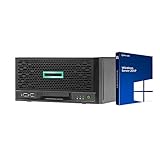
- HP MicroServer Gen10 Plus Tower Server for Business with Microsoft Windows Server 2019 OS!
- Intel Xeon E-2224 Quad-Core 3.4GHz 8MB CPU, Up To 4.6GHz Turbo
- 32GB (2 x 16GB) DDR4 PC4-21300 2666MHz Unbuffered Memory
- 16TB (4 x 4TB) 7.2K 6Gb/s SATA 3.5" HDDs in RAID
- Hard drives and memory upgrades included separately NOT installed, installation required.
docker run -d -p 3000:8080 -v open-webui:/app/backend/data -e WEBUI_SECRET_KEY=your-generated-secret-key --name open-webui --restart always ghcr.io/open-webui/open-webui:mainReplace your-generated-secret-key with the strong key you generated, and store it securely so you can reuse it when recreating or updating the container. Keep the named volume: it retains chats, users, and settings across updates. Recreating a container without the same stable WEBUI_SECRET_KEY can log users out. The official Quick Start provides the installation details and current image options. Open WebUI Quick Start
The documentation’s compressed Linux/amd64 image sizes, checked September 28, 2026, were 176 MB for :slim and 1.66 GB for :main. These are download sizes, not RAM requirements or proof of a suitable runtime configuration; image sizes vary by build and architecture. Open WebUI Quick Start
Rank #4
Connect a model service and verify the deployment
Once the interface is running, configure it to use the Ollama server or OpenAI-compatible API you chose. Then test access and data persistence before opening the service to other users.
Quick wins for a faster PC:
Repair Windows errors before they cause bigger problemsFix Now →Scan for outdated or missing drivers - takes under a minuteDriver Scan →Clear out junk files and repair common Windows errorsFree Scan →- Open the VPS address using the host port you published—in the example, port 3000—and complete the initial sign-in setup.
- Configure the connection to your separately hosted Ollama service or OpenAI-compatible API, then send a test prompt.
- Restart or update the container and confirm that you can sign in and that chats and settings remain available.
- Arrange backups, monitoring, and an update and recovery process before inviting users.
Before exposing the deployment beyond its intended users, review authentication and network access carefully. Persistent storage protects data across container updates, but it is not a substitute for backups.
Best Value
How to make the final plan choice
If inference is hosted elsewhere, select a Linux VPS with Docker access and enough resources for the interface, data, and expected user load. If the VPS will also run a model, choose only after accounting for that model and workload; the available documentation does not support naming one minimum configuration. The right plan cannot be determined from the starting price alone.
Quick Recap
Product prices and availability are accurate as of the date/time indicated and are subject to change. Any price and availability information displayed on Amazon at the time of purchase will apply.

