
iTechGuides is reader-supported. When you buy through links on our site, we may earn an affiliate commission. As an Amazon Associate I earn from qualifying purchases. Learn more
Choose the smart-home platform first, then verify the exact doorbell model and the specific functions you need. A logo saying Google Home, Apple Home, Alexa, or Matter does not guarantee that doorbell presses, live video, two-way talk, automations, person detection, and recordings all work in that platform. Confirm those capabilities in the manufacturer’s current documentation before you buy.
Next check the installation: transformer voltage and capacity for a wired model, chime behavior, Wi-Fi strength at the front door, weather suitability, and the cost and retention period of video storage. The right choice is the model that satisfies your ecosystem, wiring, network, and recording requirements at the same time.
Start with the smart-home ecosystem
A video doorbell can have several layers of compatibility. It may appear in an assistant app, send a press notification to a smart display, stream video when requested, expose a camera feed to an automation, or keep recordings only in the manufacturer’s app. These are different capabilities, and support for one does not prove support for the others.
Windows Errors? Fix Them Before They Spread
Repair common Windows errors and clear accumulated junk for a smoother, more stable PC - no reinstall needed.Free scan · no reinstallOutdated Drivers Are Slowing You Down
One free scan finds every outdated or missing driver and matches the right update for your exact hardware.Free scan · exact hardware matchMake a feature-by-feature checklist
Write down the actions your household expects before comparing products:
#1 Best Overall

- Meet the wired Nest Doorbell; with 2K HDR video and Gemini, it knows what’s at your door and and what to do next (Gemini features require a Google Home premium subscription; try it for 1 month at no cost to you)[4]
- No need to recharge or replace batteries; the Nest Doorbell keeps you plugged into home, day and night
- The Nest Doorbell keeps your data safe with encrypted video, two-step verification, and enhanced security through your Google Account; and a green LED light lets you know when it’s processing or streaming video
- With an Advanced subscription to Google Home Premium, know more about what’s happening with notifications like “Person with flowers”[3]; get even more detailed descriptions and tap to see a summary of what happened[3]
- Video is crisp and clear in 2K HDR, the Nest Doorbell’s highest resolution yet[1,2]; see rich color and details, see in the dark with night vision, and see the bigger picture with an expanded 166° field of view[1]
- Receive a doorbell-press alert on phones and preferred smart speakers or displays.
- Open a live video stream from the assistant app or a voice command.
- Speak with visitors using two-way audio.
- Show the camera automatically on a compatible display when someone presses the bell.
- Use motion, person, or package events in smart-home automations.
- Review, download, or share recorded clips.
- Keep the camera working if the manufacturer’s cloud service or subscription changes.
For each shortlisted model, find an official compatibility page that names the exact model and mark each requested action as supported, limited, or unavailable. Treat an assistant badge as a starting point, not as a complete capability guarantee.
Look up the exact model and generation
Doorbells that share a product family name can use different radios, power systems, apps, and integration APIs. A battery version may have lower video resolution or different event-history rules than a wired version. A second-generation device may expose different assistant features than a third-generation replacement. Record the complete model name, generation, region, and wired or battery variant before checking compatibility.
What Google Home, Apple Home, Alexa, and Matter actually establish
Google Home
Google’s compatible-device directory explains how Google Home works with partner products and Matter devices. It is ecosystem guidance, not a certification that every doorbell exposes every camera function. Confirm whether the model supports live viewing, talk, alerts, and automations rather than assuming all partner devices behave alike.
Quick wins for a faster PC:
Scan for outdated or missing drivers - takes under a minuteDriver Scan →Repair Windows errors before they cause bigger problemsFix Now →Apple Home
Apple documents Matter support in iOS 16.1 and later. Its Matter documentation says a Matter accessory can be added through the Home app or a HomeKit-based app and then controlled in Apple Home, Siri, Control Center, and compatible third-party HomeKit apps. That establishes platform capability; it does not prove that a particular video doorbell is Matter-certified or that video, audio, recording, and notifications are all represented through Matter.
Alexa
Amazon’s device-type requirements describe the interfaces an integration needs for doorbell events and full- or half-duplex audio. This is developer guidance, not a consumer product list. A product can meet one integration requirement yet omit another feature that you expect, so verify the named model and the actions supported in the manufacturer’s app and Amazon’s current device listing.
Matter is not a promise of a complete camera experience
Matter improves the chance that devices from different manufacturers can join a common platform, but it does not erase device-class limits. A doorbell may use Matter for a basic event or accessory identity while keeping live video, recordings, advanced detection, settings, or firmware updates in its own app. Ask exactly which functions are Matter-enabled and which require the vendor account.
Use the same comparison axes for every shortlist
A consistent checklist prevents a familiar brand name from hiding an installation or subscription problem.
| Axis | What to verify | Why it matters |
|---|---|---|
| Ecosystem and exact model | Official support for Google Home, Apple Home, Alexa, or your chosen platform, including supported functions | Compatibility can vary by model, generation, region, and capability |
| Alerts and viewing | Doorbell-press alerts, live stream, two-way audio, and smart-speaker or display support | These are the interactions most households use every day |
| Wiring and power | Transformer voltage and VA, battery operation, approved adapters, and regional requirements | Incorrect power can prevent installation or damage equipment |
| Chime | Mechanical or electronic chime support, required connectors, and wireless-chime limitations | Determines whether an existing in-home alert can be retained |
| Video and recording | Resolution, field of view, event history, continuous recording, and local or cloud storage | Camera quality and retention are separate purchase decisions |
| Network and placement | Wi-Fi coverage at the mounting point, weather and temperature rating, and mounting constraints | A compatible platform cannot fix a weak signal or unsuitable location |
| Privacy and ongoing cost | Account requirements, cloud terms, encryption claims, subscription features, and cancellation rules | Monthly or annual services can exceed the hardware cost over time |
Do not fill a comparison table with guessed values. If a manufacturer does not state a field, record it as not stated and treat that uncertainty as a reason to investigate before buying.
Check wiring, transformer capacity, and chime behavior before ordering
Wired doorbells need the right electrical supply
“Existing doorbell wires” is not enough information. A wired camera may require a specific alternating-current range and minimum transformer capacity. Requirements are model- and region-specific; never transfer one manufacturer’s numbers to another product.
Rank #2
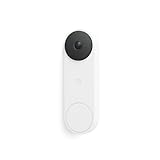
- Meet the wired Nest Doorbell; with 2K HDR video and Gemini, it knows what’s at your door and and what to do next (Gemini features require a Google Home premium subscription; try it for 1 month at no cost to you)[4]
- No need to recharge or replace batteries; the Nest Doorbell keeps you plugged into home, day and night
- The Nest Doorbell keeps your data safe with encrypted video, two-step verification, and enhanced security through your Google Account; and a green LED light lets you know when it’s processing or streaming video
- With an Advanced subscription to Google Home Premium, know more about what’s happening with notifications like “Person with flowers”[3]; get even more detailed descriptions and tap to see a summary of what happened[3]
- Video is crisp and clear in 2K HDR, the Nest Doorbell’s highest resolution yet[1,2]; see rich color and details, see in the dark with night vision, and see the bigger picture with an expanded 166° field of view[1]
For the Google Nest Doorbell (wired, 3rd gen) in North America, Google specifies a 16–24 VAC, 10–40 VA, 50/60 Hz transformer. Its compatibility guide says a transformer label can be checked and describes measuring voltage across disconnected doorbell wires with a multimeter as the most accurate method. Turn off power before handling wiring, follow local electrical rules, and use a qualified professional if you are uncertain.
Understand the chime requirements
For the second- and third-generation wired Nest models, Google says the included chime connector must be installed when the doorbell is connected to a wired chime. The connector provides constant power and protects the chime; omitting it can cause buzzing or unexpected chimes.
The same model does not support battery-powered wireless doorbell chimes. When using Google’s optional Indoor Power Adapter, wired chimes are not supported. These are Nest-specific conditions, not universal rules, so use the selected manufacturer’s installation guide for any other doorbell.
When an adapter or battery model is safer
If the house lacks doorbell wiring or has an unsuitable transformer, a battery model or an approved indoor power adapter may avoid rewiring. Check the exact installation instructions, charging or replacement interval, weather exposure, and what happens to the existing chime. An adapter that powers the camera may not power a wired chime, and a battery model may require a separate in-home notification method.
Separate camera quality from recording retention
Resolution describes the image; it does not tell you how long clips remain available. Compare these separately:
- Image specification: resolution, HDR behavior, night performance, field of view, and whether the image covers a package area as well as a visitor’s face.
- Event history: how many hours or days of clips are included, maximum clip length, and whether previews are shortened.
- Continuous recording: whether 24/7 capture is available, which plan enables it, and how many days are retained.
- Storage location: local recording, cloud recording, or a hybrid, plus export and deletion controls.
- Account dependency: whether viewing, setup, or playback stops when a subscription ends.
For the wired third-generation Nest model, Google lists up to six hours of event video previews, with clips up to 10 seconds. Google lists separately sold Home Premium plans with up to 30 days of event history on the Standard plan and up to 60 days on the Advanced plan. The Advanced plan is required for up to 10 days of continuous 24/7 history. Plan prices and terms can change, so check the current offer before treating those services as part of the purchase budget.
A concrete example: Google Nest Doorbell (wired, 3rd gen)
The official specification page makes this model a useful example of why ecosystem, wiring, chime, and storage checks must be combined. It is a conditional fit for a Google Home household whose wiring meets the stated requirements.
| Item | What Google states | Buying implication |
|---|---|---|
| Video | 2K HDR | Check mounting angle and field of view separately; resolution alone does not guarantee a useful package view |
| Included event previews | Up to six hours; clips up to 10 seconds | Longer history requires a separately sold plan |
| Extended event history | Up to 30 days with Standard Home Premium; up to 60 days with Advanced Home Premium | Verify current plan terms and regional availability |
| Continuous history | Up to 10 days of 24/7 history with Advanced Home Premium | Continuous recording is not included with the basic hardware purchase |
| Transformer | 16–24 VAC, 10–40 VA, 50/60 Hz in North America | Measure or verify the existing transformer before installation |
| Chime | Included chime connector required with a wired chime; wireless battery-powered chimes are incompatible | Plan the in-home alert method before removing the old bell |
| Assistant notifications | Notifications to phones, Hey Google-enabled speakers and displays, and Alexa-compatible speakers and displays | Notification reach does not establish complete Alexa feature parity |
Google’s comparison page shows another important trade-off: the wired third-generation model is listed at 2K HDR, while the battery model is listed at 960p HDR, and their included event-history formats differ. The battery-versus-wired decision therefore affects image detail and storage behavior as well as installation convenience. See the official comparison for the current model details.
Google’s reviewed specifications do not establish Apple Home support for this wired model. Do not present it as a cross-platform choice merely because it can send notifications to Alexa-compatible speakers and displays.
Rank #3

- Meet the wired Nest Doorbell; with 2K HDR video and Gemini, it knows what’s at your door and and what to do next (Gemini features require a Google Home premium subscription; try it for 1 month at no cost to you)[4]
- No need to recharge or replace batteries; the Nest Doorbell keeps you plugged into home, day and night
- The Nest Doorbell keeps your data safe with encrypted video, two-step verification, and enhanced security through your Google Account; and a green LED light lets you know when it’s processing or streaming video
- With an Advanced subscription to Google Home Premium, know more about what’s happening with notifications like “Person with flowers”[3]; get even more detailed descriptions and tap to see a summary of what happened[3]
- Video is crisp and clear in 2K HDR, the Nest Doorbell’s highest resolution yet[1,2]; see rich color and details, see in the dark with night vision, and see the bigger picture with an expanded 166° field of view[1]
Check the network and physical location
Test Wi-Fi at the mounting point
Stand where the doorbell will be installed and check the signal with the same phone or network tool used elsewhere in the house. A strong connection beside the router says little about a metal door, masonry wall, porch ceiling, or street-facing corner. Look for a stable connection during the times you expect visitors, not just a momentary speed result.
Free tools Windows power users keep installed
One-click scans. No signup required.
Plan the route for power and network access without pinching wires or creating a path for water. If the doorbell depends on a cloud service, an internet outage can remove remote viewing even when the camera still has power. Ask whether the device buffers events locally and how it behaves after the connection returns; do not assume that behavior unless the manufacturer documents it.
Verify weather, temperature, and view
Read the model’s environmental limits and mounting instructions. A camera rated for rain may still need a suitable angle, a sealed cable entry, and clearance from a roof edge where runoff falls directly on it. Check that the lens is not aimed at a bright lamp or the rising or setting sun. Measure the distance from the button to the visitor’s face and the floor area where packages are left; a wide specification is not a substitute for correct placement.
Independent reader supportYour contribution helps us test, update, and keep practical guides available for everyone.Installation and compatibility verification: a safe sequence
- Inventory the household platform. Record whether the primary experience is Google Home, Apple Home, Alexa, or a mixed environment. List the phones, speakers, displays, and automations that must receive events.
- Choose candidate models by exact name. Include generation, wired or battery version, and region. Open the manufacturer’s current compatibility page and note support for each required action.
- Inspect the existing doorbell system. Identify the transformer, chime type, wire condition, and whether a second button or intercom shares the circuit. Photograph labels with power off if you need to consult an installer.
- Verify electrical values. Compare the transformer label with the selected model’s voltage and VA requirements. If documentation calls for a measurement, use a suitable multimeter across disconnected doorbell wires and follow electrical safety procedures.
- Confirm chime behavior. Determine whether the included connector must be installed, whether the old chime remains usable, and whether an adapter or battery configuration disables it.
- Check the network at the door. Test Wi-Fi where the camera will sit, account for walls and weather, and plan a legitimate network improvement if the signal is unreliable.
- Price the complete ownership model. Add any approved adapter, transformer work, installation labor, replacement batteries, and recording subscription. Do not count an advertised cloud retention period as included until the plan terms say so.
- Install exactly as instructed. Shut off the circuit, use the supplied hardware and connector, seal the mounting point, restore power, and complete setup in the manufacturer’s app before adding assistant integrations.
- Test every promised action. Press the button, wait for alerts on each target device, open live video, test two-way talk, trigger an automation, and confirm where a clip appears and how long it is retained.
Battery versus wired: choose for the whole system
Wired is strongest when the circuit is correct
A suitable wired circuit avoids charging interruptions and can support continuous operation, but only when voltage, VA capacity, chime wiring, and the model’s connector requirements all match. Installation may require electrical work, and an adapter can change chime behavior.
Battery is useful when wiring is absent or unsuitable
A battery doorbell can be installed where no acceptable transformer exists, but include charging access, cold-weather effects, wake-up behavior, and the desired event-history format in the decision. The Google comparison cited above lists 960p HDR for its battery model versus 2K HDR for the wired third-generation model; that difference may matter more than the convenience of avoiding wires.
Recommended Free Tools
Apple Home Collection: announced does not mean available
On October 13, 2026, Apple announced the Apple Home Collection, made with LG Electronics and Schneider Electric, including the LG Video Doorbell Wired. Apple says setup and management use Apple Home and describes end-to-end encryption in Apple Home. The newsroom announcement says the lineup begins availability in December, with selected accessories starting in early 2027.
As of that announcement, the doorbell is future availability rather than a product you should assume is in stock. The announcement does not establish a price, video resolution, recording subscription, Matter profile, chime requirements, or regional stock. Recheck those details after launch before making it the basis of an Apple Home installation.
Troubleshoot the common compatibility failures
The doorbell powers on but the chime is silent
- Confirm that the model supports the existing mechanical or electronic chime.
- Install the manufacturer-supplied chime connector if the instructions require one.
- Check whether an indoor power adapter disables wired-chime operation.
- Do not substitute a battery-powered wireless chime unless the model explicitly supports it.
Alerts arrive, but live video or talk does not
- Separate notification compatibility from camera-stream and two-way-audio compatibility.
- Check that the assistant account and manufacturer account are linked to the same household and region.
- Review permissions for microphone, camera, local network, and notifications.
- Test live viewing in the manufacturer’s app; if it fails there, an assistant integration cannot repair the underlying network or power problem.
The camera repeatedly disconnects
- Recheck Wi-Fi strength at the mounting location, not beside the router.
- Inspect the transformer and wire connections against the exact model’s requirements.
- Look for water ingress, loose mounting wires, or a power adapter that is not approved for the model.
- Confirm whether the router’s band, security mode, or client-isolation setting blocks the device.
Recordings disappear sooner than expected
- Identify whether you are viewing a short preview, event history, or continuous recording.
- Check which plan is active and whether its retention period applies in your region.
- Export important clips before the stated retention period expires.
- Do not assume that an assistant integration stores a second copy of the manufacturer’s recordings.
Privacy and long-term ownership questions
Before installation, read how the account handles household members, visitor access, shared clips, deletion requests, encryption, and retention. Decide who can view live video and who can change automations. A doorbell faces public space, so position it to collect the needed approach and package area without unnecessarily recording neighboring windows or private rooms.
Calculate a five-year ownership cost from the hardware, installation, power accessories, battery replacements, and any recording plan. Compare the value of longer history or continuous recording with your actual need: many households need only prompt alerts and occasional event review, while others require a documented history for deliveries or incidents. Because plan prices and features change, record the current terms and renewal date rather than relying on an old comparison.
What’s actually slowing this PC down?
Pick the symptom - the matching free tool is one click away.
Final buying checklist
- Exact model and generation are named on the platform’s official compatibility page.
- Every required function—press alerts, live video, two-way talk, display viewing, automations, and recording access—is confirmed separately.
- Wired voltage and VA requirements match the measured or documented transformer.
- Chime connector, adapter, and wireless-chime rules are understood.
- Wi-Fi is reliable at the mounting location.
- Weather, temperature, field of view, and mounting angle suit the doorway.
- Included event history, clip length, continuous recording, and subscription retention are clear.
- Account, privacy, sharing, and deletion controls are acceptable.
- All one-time and recurring costs fit the household budget.
- After installation, each promised alert, stream, conversation, automation, and playback path has been tested.
If any item remains unknown, pause the purchase and obtain the model-specific answer from the manufacturer or an installer. That short check is more reliable than choosing a doorbell because its packaging carries a familiar smart-home logo.
Quick Recap
Product prices and availability are accurate as of the date/time indicated and are subject to change. Any price and availability information displayed on Amazon at the time of purchase will apply.

