
iTechGuides is reader-supported. When you buy through links on our site, we may earn an affiliate commission. As an Amazon Associate I earn from qualifying purchases. Learn more
There is no single “hacker laptop.” The right choice depends on the operating system you need to run, the work you plan to do, and whether your wireless hardware supports the specific testing features you need. No current laptop models, prices, or independent test results are established here, so this guide focuses on how to assess compatibility rather than presenting an unsupported “best” ranking.
What makes a laptop suitable for cybersecurity work?
Start with the workload, not a marketing label. Coursework and browser-based labs have different needs from running virtual machines, compiling software, or capturing network traffic. Decide which tasks you expect to do, then assess the exact laptop configuration against them.
Kali Linux says it is tailored to experienced penetration testers and supports a wide variety of hardware, including USB-based wireless devices. That is a general statement about the distribution, not a guarantee that every laptop or component will work. Check the particular model, its components, firmware, and the operating system you intend to install. Kali Linux: What is Kali Linux?
- Virtual machines: Check memory and storage capacity, and whether the configuration can be upgraded. The evidence available here does not establish a universal minimum specification.
- Compiling and local labs: Consider the processor, memory, cooling, and storage in the exact configuration. Compare workload requirements rather than relying on a “cybersecurity” label.
- Network and wireless work: Check the built-in wireless card and its driver, then determine whether your intended task requires an external adapter.
- Everyday coursework: Give weight to portability, screen, battery life, ports, repairability, and cost alongside Linux compatibility.
How should you verify Kali Linux compatibility?
Broad Linux support is only a starting point. Compatibility can differ between laptop generations and configurations, and a successful installation does not by itself establish that networking, graphics, suspend, or input devices work as intended.
#1 Best Overall

- Dual USB-A & USB-C Bootable Drive – works on almost any desktop or laptop (Legacy BIOS & UEFI). Run Kali directly from USB or install it permanently for full performance. Includes amd64 + arm64 Builds: Run or install Kali on Intel/AMD or supported ARM-based PCs.
- Fully Customizable USB – easily Add, Replace, or Upgrade any compatible bootable ISO app, installer, or utility (clear step-by-step instructions included).
- Ethical Hacking & Cybersecurity Toolkit – includes over 600 pre-installed penetration-testing and security-analysis tools for network, web, and wireless auditing.
- Professional-Grade Platform – trusted by IT experts, ethical hackers, and security researchers for vulnerability assessment, forensics, and digital investigation.
- Premium Hardware & Reliable Support – built with high-quality flash chips for speed and longevity. TECH STORE ON provides responsive customer support within 24 hours.
- Identify the exact configuration. Record the model generation and the components in the specific SKU, especially its wireless card, graphics hardware, and storage.
- Check the intended operating-system setup. Decide whether Kali will be installed directly or run in a virtual machine. Verify the relevant components and firmware for that arrangement.
- Match the hardware to your tasks. If the workflow depends on a feature such as wireless monitor mode, verify that feature specifically rather than treating general Linux compatibility as proof.
- Assess practical fit. Check upgradeability, ports, battery life, screen, and repairability against how and where you will use the laptop.
Do not infer performance, battery life, or model-level compatibility from the distribution’s general hardware-support statement. Those claims require evidence for the exact laptop configuration.
Do you need a special Wi-Fi adapter for Kali Linux?
Not for every task. For wireless testing, however, the adapter and driver determine whether features such as monitor mode and packet injection are available. Kali’s wireless troubleshooting guidance treats these as distinct compatibility issues and discusses attaching USB wireless cards in virtualized setups. Kali Linux: Troubleshooting Wireless Drivers
Rank #2

- [ULTRA-RUGGED DESIGN] MIL-STD-810G and IP65 certified. Built to survive 6-foot drops, heavy rain, and extreme vibrations. Features a magnesium alloy chassis with an integrated carry handle for maximum portability
- [4G LTE - WORK ANYWHERE] Integrated 4G LTE Multi-Carrier Mobile Broadband. Stay connected to the internet in remote areas or on the road without relying on Wi-Fi or phone hotspots. True mobile freedom for field professionals
- [1200-NIT SUNLIGHT READABLE] 13.1" XGA Touchscreen with CircuLumin technology. At 1200 nits, it is nearly 4x brighter than a standard laptop, ensuring perfect visibility under direct, intense sunlight
- [LINUX UBUNTU PRE-INSTALLED] Fast, secure, and bloatware-free. Optimized for developers, network engineers, and diagnostic software that thrives in a stable, open-source environment
- [LEGACY SERIAL PORT] Features a native RS-232 Serial Port, HDMI, and USB 3.0. Essential for connecting directly to industrial machinery, CNCs, and automotive diagnostic tools without unreliable adapter
A USB adapter may be useful if the laptop’s built-in radio does not support the feature you need, or if Kali runs in a virtual machine and the adapter can be attached to it. It is not a guaranteed fix: verify the exact chipset and driver, and confirm support for the specific task before buying. A generic “Kali-compatible” description is not enough to establish monitor-mode or injection support.
Free tools Windows power users keep installed
One-click scans. No signup required.
Will Kali Linux work on a MacBook?
It depends on the Mac’s model and year. Kali’s installation guidance warns that newer T2- and M1-era Apple hardware may run Linux poorly or not at all; it also notes that some devices can have built-in wireless or trackpad issues. Treat those cautions as model-dependent, not as a verdict on every Mac. Check current guidance for the exact Mac before choosing it for a Kali setup. Kali Linux: Installing Kali on Mac Hardware
Rank #3
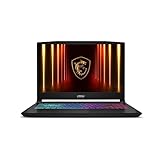
- Intel Core i9 HX Power for Elite Gaming: Dominate demanding titles with the Intel Core i9-14900HX and its 24-core hybrid architecture, delivering fast load times, high FPS, and smooth multitasking.
- GeForce RTX 5070 With Ray Tracing & DLSS 4: Powered by NVIDIA Blackwell, the RTX 5070 delivers stronger ray tracing, higher FPS, faster AI upscaling, and more responsive gameplay—ideal for competitive and cinematic gaming.
- QHD 165Hz, 100% DCI-P3 for Ultra-Clear Combat: The QHD 165Hz display reveals more detail, reduces motion blur, and boosts visibility in fast-paced games while delivering richer, more accurate colors.
- Cooler Boost 5 for Sustained Performance: Dual fans and a 5-heat-pipe share-pipe design keep the CPU and GPU cool, maintaining stable frame rates during long gaming marathons.
- 4-Zone RGB Keyboard + Full Game-Ready Ports: Customize your setup with a 4-zone RGB keyboard and highlighted WASD keys. Includes USB-C Gen 2, HDMI up to 8K, multiple USB-A ports, RJ45, Wi-Fi 6E & Hi-Res Audio.
Choose hardware for the work, not the “hacker” label
Cybersecurity work spans more than laptop-based Wi-Fi testing. Kali’s tools catalog groups wireless tools across 802.11, Bluetooth, RFID, and software-defined radio, illustrating why the workflow should drive the hardware decision. Kali Linux Tools: kali-meta
Before choosing a machine, write down the operating system, workload, wireless features, memory and storage needs, and portability requirements that matter to you. Then verify those needs against the exact laptop configuration. Kali is a toolset intended for experienced penetration testers; owning a capable computer does not replace the knowledge needed to use it, and security testing should be conducted only with authorization.
Quick Recap
Best Value

- LINUX COMMANDS. ZERO SEARCHING. – Keep essential Linux and Unix command lines directly beneath your fingertips, so you can code, troubleshoot and work faster without breaking focus.
- YOUR DESK. SMARTER. – Commands are clearly grouped by networking, directory navigation, processes, users, files and system management for quick answers exactly when you need them.
- BUILT FOR EVERY LINUX USER – A practical go-to reference for beginners and seasoned programmers working with Kali, Red Hat, Ubuntu, openSUSE, Arch, Debian and other distributions.
- ROOM TO CODE, WORK & PLAY – The extended 31.5 x 11.8-inch Pixiecube desk mat provides ample space for a laptop or keyboard and mouse, while the soft 2 mm surface adds everyday comfort.
- BUILT FOR REAL-WORLD WORKDAYS – A rugged stitched edge helps prevent fraying, and the water-resistant, stain-resistant surface protects against scratches, spills and everyday wear—because smarter desks should work harder.
Rank #4

- ✅For beginners, refer image-7, its a video boot instruction, and image-6 is "boot menu Hot Key list"
- ✅16-IN-1, 64GB Bootable USB Drive 3.2 , Can Run Linux On USB Drive Without Install, All Latest versions.
- ✅Including Windows 11 64Bit & Linux Mint 22.3 (Cinnamon)、Kali 2026.02、Ubuntu 26.04、Zorin Pro 18、Tails 7.8.1、Debian 13.5.0、Garuda 2026.03、Fedora Workstation 44、Manjaro 25.06、Pop!_OS 22.04、Solus 2026.04、Archcraft 26.05、Neon 2026.06、Fossapup 9.5、Sparkylinux 8.3, All ISO has been Tested
- ✅Supported UEFI and Legacy, Compatibility any PC/Laptop, Any boot issue only needs to disable "Secure Boot"
Product prices and availability are accurate as of the date/time indicated and are subject to change. Any price and availability information displayed on Amazon at the time of purchase will apply.
Recommended Free Tools

