
Recommended Free Tools
iTechGuides is reader-supported. When you buy through links on our site, we may earn an affiliate commission. As an Amazon Associate I earn from qualifying purchases. Learn more
Choose the game before you choose the class. The Demon Hunter is a playable class in Diablo III, not one of the classes listed for Diablo IV in the official material covered here. Blizzard has announced the Demon Hunter’s return in Diablo V, but that description is still preliminary. If you want the Demon Hunter’s evasive, ranged combat now, play Diablo III. If you are starting Diablo IV, choose among its own classes and shape your character through that game’s skill-tree system rather than looking for a one-to-one replacement.
This guide matches the choice to combat distance, movement, weapons versus magic, control abilities, companions, build experimentation and the game or expansion you actually own. It does not rank classes by power: the cited official material provides descriptions and customization systems, not popularity statistics, performance tests or a universal “best” class.
| # | Preview | Product | Price | |
|---|---|---|---|---|
| 1 |

|
Diablo 3 Eternal Collection - Nintendo Switch | $34.28 | Buy on Amazon |
| 2 |

|
Diablo III Eternal Collection (PS4) | $24.89 | Buy on Amazon |
| 3 |
|
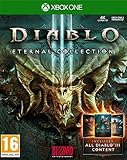
Diablo III Eternal Collection (Xbox One) | $28.55 | Buy on Amazon |
| 4 |

|
Diablo 3 Eternal Collection - Nintendo Switch | $36.50 | Buy on Amazon |
First, identify which Diablo game you are choosing
Class names do not carry across the series as a single shared roster. A Demon Hunter comparison means something different in each installment, so establish the game first.
Outdated Drivers Are Slowing You Down
One free scan finds every outdated or missing driver and matches the right update for your exact hardware.Free scan · exact hardware matchWindows Errors? Fix Them Before They Spread
Repair common Windows errors and clear accumulated junk for a smoother, more stable PC - no reinstall needed.Free scan · no reinstall| Game | Demon Hunter status | What that means for your decision |
|---|---|---|
| Diablo III | Playable class | You can choose the Demon Hunter directly and experience its ranged, mobile, evasive design. |
| Diablo IV | Not listed as a Diablo IV class in the official material covered here | You are choosing among Diablo IV’s own classes and their skill trees. A class with an agile or ranged theme is only an approximate fantasy match, not the same class. |
| Diablo V | Announced among the first three revealed classes | The Demon Hunter is a future option. Blizzard’s early description mentions twin crossbows, shadow attacks and leaps, but the complete combat, progression and build details are not yet established. |
That distinction prevents the most common mistake: buying or starting one game while expecting a class that belongs to another. For an immediate Demon Hunter experience, look for a Diablo III edition such as Diablo III: Eternal Collection where it is sold, and verify the current platform and edition before purchasing. For Diablo IV, make the decision from its available roster and systems rather than from a remembered Diablo III class list.
#1 Best Overall
- Signs of the end times draw powerful heroes from all over sanctuary to rise up and defeat an evil reborn
- Challenge death itself as maltha-angel of death-attempts to harness the infernal powers of the black soul stone
- Commanding the powers of blood, bone, and armies of undead, the Necromancer joins the fight
- Supported play modes-TV mode, Tabletop mode, Handheld mode. Game file size:15.7 GB
What the Diablo III Demon Hunter is built to do
Blizzard’s Diablo III Game Guide describes a class that survives by staying mobile, attacking from range and interfering with enemy movement. Its defining experience is not simply “using bows” or “shooting quickly”; it is the constant relationship between distance, positioning and escape.
Ranged attacks create the basic rhythm
The Demon Hunter fights primarily from outside immediate melee range. You identify a target, create or preserve space, deliver focused attacks and reposition before enemies can surround you. This suits players who enjoy selecting targets and controlling the angle of an encounter instead of standing in the middle of a pack and trading blows.
Ranged play does not mean you can ignore danger. A projectile-focused character still has to read enemy approaches, choose a safe firing position and move when that position is compromised. The class’s challenge is maintaining useful distance while continuing to deal damage, not remaining stationary at the edge of the screen.
The Tool Desk
Outbyte PC Repair FREEClear out junk files and repair common Windows errorsFree Scan →Outbyte Driver Updater FREEScan for outdated or missing drivers - takes under a minuteDriver Scan →Evasion is part of defense, not decoration
Defensive rolls and jumps are central to the class fantasy. They let you break contact, cross a dangerous gap or escape an attack pattern. Blizzard summarizes the emphasis this way:
“Evasive skills like defensive rolls and jumps, as well as targeted attacks that hamstring and slow enemies, are as crucial to survival as any arrow in a hunter’s quiver.”
— Diablo III Game Guide, Blizzard Entertainment
The practical implication is that movement is an active defensive resource. A player who enjoys pressing an escape at the right moment will usually get more from the Demon Hunter than a player who wants a mostly stationary rotation.
Slows and hampering attacks reward target selection
The official description specifically calls out attacks that hamper and slow enemies. Those effects buy time for another shot, make a retreat safer and help separate a dangerous target from the rest of a group. They also make target priority meaningful: controlling the enemy that is about to reach you can be more valuable than simply attacking the nearest enemy.
Rank #2
- The Diablo III: Eternal Collection is an unparalleled action role-playing experience and contains Diablo III, the Reaper of Souls expansion set, and the Necromancer class together in one definitive volume
- Rise as one of humanity's last defenders -Crusader, Barbarian, Witch Doctor, Demon Hunter, Monk, Wizard, or Necromancer-and level up with devastating powers and legendary loot
- Diablo III Signs of the end times draw powerful heroes from all over Sanctuary to rise up and defeat an evil reborn
- Diablo III Reaper of Souls Challenge Death itself as Malthael-Angel of Death-attempts to harness the infernal powers of the Black Soulstone
- Rise of the Necromancer Commanding the powers of blood, bone, and armies of undead, the Necromancer joins the fight*
Weapons are the fantasy anchor
The Demon Hunter’s identity is weapon-led rather than spell-led. If you want the visual and tactile logic of crossbows, arrows and deliberate ranged attacks, the class is a direct fit in Diablo III. If your preferred fantasy is commanding magic, relying on companions or fighting face-to-face, another archetype may feel more natural.
Who should choose it
- Choose the Demon Hunter if you like attacking from range and constantly adjusting your position.
- Choose it if rolls, jumps and other evasive decisions sound as important to you as damage numbers.
- Choose it if slowing or hampering targets is satisfying and you enjoy choosing which enemy to control first.
- Choose it if a weapon-focused character appeals more than a primarily magical one.
Who may prefer another style
- A player who wants close-range contact in every encounter may find continual repositioning less satisfying.
- A player who prefers a spellbook, elemental effects or a heavily magic-led identity may want a different class fantasy.
- A player who wants companions or summoning to be the center of play should compare those systems directly in the game they plan to play.
- A player who dislikes aiming, target selection or movement under pressure should not assume that a ranged class is automatically easier.
The official class description does not establish a current “best build,” balance ranking or endgame superiority. Treat the Demon Hunter as a playstyle choice, not a promise of a particular power level.
Compare playstyles instead of chasing a supposed universal best class
When a class roster changes between installments, compare the experience you want to repeat every minute rather than trying to transfer a class name. The following axes are useful for any Diablo choice.
| Decision axis | Question to ask yourself | If you prefer this | What to investigate in the chosen game |
|---|---|---|---|
| Combat distance | Do you want enemies beside you or at the end of a firing line? | Long range | How the class creates space, survives pressure and handles enemies that close the gap. |
| Movement | Should movement be an offensive tool, a panic button or mostly optional? | Frequent repositioning | Mobility skills, escape timing and whether attacks remain effective while moving. |
| Weapon versus magic | Do you want attacks to look and feel like physical weapons or spells? | Weapon-led combat | Weapon dependence, targeting style and how much the class’s identity comes from equipment. |
| Control | Do slows, hampering effects or other forms of enemy disruption sound essential? | Control and kiting | Which skills restrict enemies and whether control supports your preferred distance. |
| Companions | Should your character act alone or rely on summoned or allied entities? | Companion-centered play | How companions are acquired, directed and integrated into the class’s core loop. |
| Build experimentation | Do you want to commit to a narrow identity or switch among several approaches? | Frequent experimentation | The game’s skill, passive, enhancement and key-passive choices, plus how easily you can revise them. |
| Access | Which game and expansion do you already own? | Use existing access | Whether the class is in your edition and whether campaign or expansion content requires another purchase. |
These are comparison questions, not a publisher-issued ranking. They help you describe the moment-to-moment experience precisely enough to make a personal choice.
How Diablo IV’s build system changes the question
If you are selecting a class in Diablo IV, start with the game’s customization structure. Blizzard describes class skill trees that combine skills, passives, enhancements and key passives. That means a class should not be reduced to one famous build or one surface-level fantasy.
Skills define what you actively do
Active skills determine the actions you press during combat. When comparing a class to the Demon Hunter’s ranged-and-evasive feel, look for the actual combination of attack distance and movement options available to that class, not merely a weapon name or a marketing label.
Passives shape the underlying priorities
Passives influence how a build behaves without requiring another button press. They can make a class lean more heavily toward particular damage patterns, defenses or resource decisions. Two characters in the same class can therefore feel different even when they share a broad theme.
Rank #3
- UK IMPORT VERSION , REGION FREE WORKS IN CANADA
Enhancements and key passives create branches
Enhancements modify the role of a skill, while key passives provide larger directional choices. Together, these layers are why “Which class is just like Demon Hunter?” has no automatic one-line answer in Diablo IV. A class may support an agile weapon build, a slower defensive build or another approach depending on the choices you make, but the official material cited here does not establish a one-to-one Demon Hunter equivalent.
Use a three-stage test before committing
- Read the class fantasy. Decide whether its weapons, magic, companions or close-range identity appeals to you.
- Inspect the skill categories. Check whether the available skills support your preferred distance and movement rhythm.
- Check the branching choices. Confirm that passives, enhancements and key passives leave room for the experimentation you want.
This approach is more reliable than selecting a class because someone describes it as “the Diablo IV Demon Hunter.” That shorthand can hide important differences in defense, targeting and resource management.
What the Lord of Hatred expansion changes for Diablo IV choices
Blizzard’s Lord of Hatred overview dates the expansion rollout to April 2026. It introduces the Paladin and Warlock classes, while also describing major skill-tree updates as permanent updates available across the game.
Separate permanent systems from expansion access
Those are two different questions. A permanent skill-tree update can affect the game broadly, while a newly introduced class remains expansion content. Do not assume that owning the base game grants access to every class announced for the expansion.
Campaign access has an ownership requirement
The overview states that campaign access requires purchasing the expansion. Verify the edition and ownership requirement at the time you buy or return to the game, because product packaging and access rules can change. If your goal is simply to explore the base game’s class system, establish what your current license includes before planning around an expansion class.
Quick wins for a faster PC:
Scan for outdated or missing drivers - takes under a minuteDriver Scan →Repair Windows errors before they cause bigger problemsFix Now →When an expansion class is the right answer
Consider Paladin or Warlock only if you specifically want one of those newly introduced identities and are prepared to meet the relevant ownership requirement. Do not select an expansion class merely because you assume it replaces the Demon Hunter. The available descriptions do not establish that either class reproduces the Demon Hunter’s ranged, evasive weapon loop.
Independent reader supportYour contribution helps us test, update, and keep practical guides available for everyone.Three practical decision paths
You want the Demon Hunter itself right now
- Choose Diablo III, where the class is playable.
- Expect a ranged, weapon-focused loop built around maintaining distance.
- Practice defensive rolls and jumps as part of normal defense, not as emergency moves reserved for a boss.
- Use hampering and slowing attacks to control the targets that threaten your firing position.
- Verify the edition and platform before buying; the official class material confirms the class relationship but does not establish current store inventory.
You want to play Diablo IV today
- Ignore the expectation that every class from an earlier installment must be present.
- List your preferred combat distance, movement frequency and weapon-versus-magic fantasy.
- Review the class’s skills, passives, enhancements and key passives.
- Choose the branch that supports your preferred rhythm, recognizing that one class can support multiple builds.
- Check whether your intended content is in the base game or tied to an expansion.
You are willing to wait for Diablo V
- Treat the announced Demon Hunter as a future option, not a currently playable class.
- Use Blizzard’s early description—twin crossbows, shadow attacks and leaps—as a direction, not a complete build guide.
- Wait for confirmed combat, progression and build details before making a purchase or power-leveling assumption.
- Expect the final class design to be capable of changing because the announcement is preliminary.
Common mistakes when comparing the classes
Mistake: treating the franchise roster as universal
A class can be central to one installment and absent from another. Always write down the game title before comparing abilities or watching build advice.
Rank #4
- Region Free Australia
- 100% Compatible With USANintendo Switch Console
- 100% Compatible with USA Nintendo Switch Account
- Work Exactly the Same as Local USA Version
Mistake: calling a similar fantasy an identical class
“Ranged,” “agile” or “weapon-based” describes only part of an experience. The Demon Hunter’s combination of distance, evasive movement and enemy-hampering attacks is more specific than any one label.
Mistake: assuming a class has one permanent build
Diablo IV’s documented skill-tree structure is deliberately layered. Skills, passives, enhancements and key passives can produce different priorities inside one class, so evaluate the branches rather than a single screenshot or tier-list label.
What’s actually slowing this PC down?
Pick the symptom - the matching free tool is one click away.
Mistake: confusing permanent updates with expansion ownership
An update that applies across the game does not automatically make every expansion class or campaign available. Separate system changes from content access when checking what you can play.
Mistake: using an early announcement as a finished review
The Diablo V Demon Hunter announcement confirms a concept and a few motifs, not a final skill roster, progression model or balance position. Keep conclusions proportional to the information Blizzard has actually released.
Mistake: choosing from an imagined ranking
No relevant official statistics establish class popularity, player outcomes or a universal power order in the material covered here. Choose the combat loop you will enjoy repeating, then reassess when official details or your own play time provide new evidence.
A concise checklist before you create a character
- Have I chosen the installment first?
- Is the Demon Hunter actually playable in that installment?
- Do I want ranged attacks and frequent repositioning, or a different combat distance?
- Do defensive rolls, jumps and slowing attacks sound enjoyable as routine decisions?
- Would I rather emphasize weapons, magic, companions or another fantasy?
- In Diablo IV, have I inspected skills, passives, enhancements and key passives instead of judging the class by its name?
- Am I separating base-game systems from Lord of Hatred classes and campaign access?
- For Diablo V, am I treating the Demon Hunter as announced future content whose details may change?
- Have I checked the current edition, platform and ownership requirements before spending money?
The right answer is therefore conditional: choose the Diablo III Demon Hunter for its specific mobile ranged loop, choose a Diablo IV class by its available skill-tree branches and your preferred combat rhythm, and treat the announced Diablo V version as a future possibility until Blizzard publishes the remaining details.
Quick Recap
Product prices and availability are accurate as of the date/time indicated and are subject to change. Any price and availability information displayed on Amazon at the time of purchase will apply.

