
iTechGuides is reader-supported. When you buy through links on our site, we may earn an affiliate commission. As an Amazon Associate I earn from qualifying purchases. Learn more
“Build a map piece by piece” can mean two different things: a player can reveal areas while exploring, or a creator can assemble a world from terrain modules. The ideas connect, but the actions do not. If you are playing, you need the game’s specific surveying or exploration mechanic; if you are designing, you need a layout and a way to generate or edit terrain. This guide covers both without treating any one game’s controls, map scale, or rules as universal.
What does “piece by piece” mean?
A map piece might be a surveyed area that appears on a player’s map, a tile or chunk generated by the game, or a larger terrain module that a creator uses to assemble a location. Those pieces can look similar on a screen while representing very different systems. A player may be charting a fixed or already-generated world; a creator may be choosing how its terrain and points of interest fit together.
Incremental mapping matters in both cases. For a player, charted ground can make navigation easier and may unlock game actions or information. For a creator, working in stages makes it easier to check whether terrain, resources, destinations, and routes form a playable world. In either case, the useful unit is the one the game or tool actually uses—not necessarily a square tile.
If you mean a particular game, its name is essential for exact instructions. The examples below show how systems differ; they are not interchangeable recipes.
#1 Best Overall
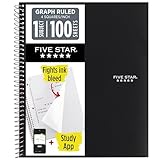
- Ideal for graphing, charts and engineering projects.
- 1-subject notebook. 100 double-sided, graph ruled sheets. 4 squares per inch.
- Sheets measure 8-1/2 in. x 11 in. when torn out. Overall notebook size is 11 in. x 9-3/4 in. Tough pockets help prevent tears and hold 8-1/2 in. x 11 in. loose sheets.
- High-grade paper fights ink bleed. Perforated pages for easy tear out. Front cover is water-resistant to help protect your notes all year.
- Spiral Lock wire helps prevent snags on clothes and backpacks. Made with SFI approved paper. Recyclable - remove reinforcement tape on pocket and recycle the rest.
How do I map the world as I explore?
Use a repeatable exploration loop: choose an area, carry out the game’s mapping action or explore it, check that the area has been recorded, then decide where to go next. The action might be automatic, manual, tied to a tool, or governed by a minigame. Do not assume that walking through a place reveals it, or that a map updates at the same scale as your movement.
- Check how the game defines a survey area. Look for the map legend, exploration tutorial, journal, or other in-game explanation. Determine whether a selection marks a square, radius, tile group, or named region, and whether the game distinguishes explored terrain from terrain that is merely visible.
- Pick a reachable first area. A nearby survey area is often easier to assess than a distant frontier. Before committing, consider the route, hazards, supplies, and whether you can return safely. The best next area is not always the largest one available; it is the one whose information or reward justifies its risk.
- Complete the game’s mapping action. Follow the game’s own prompt or interaction. If charting uses a skill check or minigame, treat its stated range and difficulty rules as specific to that game. A failed or incomplete action may leave the map unchanged.
- Confirm what was added. Reopen the map or exploration view and check the boundaries, landmarks, and any new information. If the game distinguishes a visited place from a fully surveyed one, verify which status you achieved.
- Choose the next area based on a goal. Extend into an adjacent region for a safer route, or choose a farther one when a destination, resource, event, or objective makes the added risk worthwhile.
This loop is a planning framework, not a claim about universal controls. Some games reveal terrain automatically; others require a deliberate action. A game’s own interface and documentation take precedence.
Bestia: a concrete surveying example
Bestia’s “World Exploration” documentation, last updated 2026-08-07, describes a manual surveying minigame. Its survey tiers cover 1 km, 3 km, and 5 km. In that game, a larger survey range and greater distance from already explored land increase difficulty. These are Bestia mechanics, not standard survival-game map sizes or difficulty rules.
Bestia also describes reasons beyond navigation to chart territory: explored land enables certain spells, AI-assisted movement, event announcements, and mineral prospecting. That makes surveying a progression and utility system as well as a way to fill in a map. A player deciding whether to survey should therefore weigh the value of those game-specific benefits against the stated difficulty of the attempt.
Rank #2

- 1 subject notebook comes with 100 graph ruled, double-sided sheets with 5 squares per inch
- Sheets measure 7-1/2" x 10-1/2" when torn out with an overall size of 8" x 10-1/2". Perforation easily tears out with clean edges.
- Graph ruling is ideal for plotting graphs, drawing curves and more. Notebook is 3-hole punched to store in your favorite binder.
- Covers are coated for durability and have writable label on front cover. Available in Black.
- Assembled in U.S.A. with U.S. and foreign parts
How do I reveal the map one area at a time?
Start by identifying what the game counts as “revealed.” A map may show an area after it is visited, after it is surveyed, or after a separate discovery action. Some interfaces also distinguish explored data from current visibility. If the game stores map information at a finer resolution than the survey action, the visible boundary may not match the internal detail.
For example, Bestia represents explored regions as map squares and stores explored area at a minimum resolution of 100 m, according to its documentation. That does not mean every game uses 100 m squares, or that the player chooses a 100 m survey target. The survey range and the stored map resolution are separate concepts.
When extending a frontier, use the map to plan a connected route rather than selecting areas solely to maximize coverage. A chain of charted regions can help you keep bearings and recognize the route back. A distant survey may be more valuable when it answers a concrete question—such as where a destination lies—than when it only adds unexplained map space. Whether those benefits apply depends on the game.
Quick wins for a faster PC:
Clear out junk files and repair common Windows errorsFree Scan →Scan for outdated or missing drivers - takes under a minuteDriver Scan →- For safe expansion: favor an adjacent area and note a clear return route before entering unfamiliar terrain.
- For a goal-driven expedition: identify the destination or resource you are trying to reach, then chart the areas that reduce uncertainty along the way.
- For a risky survey: check the game’s displayed range, difficulty, or other stated cost before committing. Do not infer an attempt’s odds from another game’s mechanics.
- After a new area appears: use its landmarks and boundaries to update your route, rather than assuming the entire region is safe or fully explored.
How should I lay out a survival-game map?
If you are creating a map, begin with the player’s loop rather than with a collection of attractive terrain pieces. Ask what the player does, what they need to find, where they are meant to go, and how they can travel between those places. A map is useful when its terrain supports those decisions—not just when it looks varied.
Rank #3
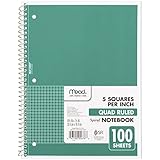
- 1 subject notebook comes with 100 graph ruled, double-sided sheets with 5 squares per inch
- Sheets measure 7-1/2" x 10-1/2" when torn out with an overall size of 8" x 10-1/2". Perforation easily tears out with clean edges.
- Graph ruling is ideal for plotting graphs, drawing curves and more. Notebook is 3-hole punched to store in your favorite binder.
- Covers are coated for durability and have writable label on front cover. Available in Green.
- Assembled in U.S.A. with U.S. and foreign parts
Roblox Creator documentation recommends keeping track of the design before building: “To start, get a piece of paper or open up a word editor to keep track of the document.” That advice is about planning and editing a Roblox map in Roblox Studio; it is not a recipe for an in-game survival crafting mechanic. The same planning principle can still help a creator working in another editor.
- Write down the player loop. List the actions that define a typical outing, such as leaving a safe start, gathering something, reaching a destination, and returning or progressing. Use only actions that fit the game you are designing.
- Sketch major anchors. Mark the starting area, important destinations, resource areas, terrain zones, and the routes that might connect them. Keep the first sketch broad; precise terrain detail is less useful before the major relationships make sense.
- Check distances and choices. Consider whether the player can recognize a useful route, whether alternatives exist, and whether a trip is likely to have a meaningful decision. Exact distances depend on movement speed, hazards, and the game’s scale, so they should be set through the project’s own iteration rather than borrowed from another title.
- Build broad terrain forms. Use the editor’s terrain tools or modules to establish the large shapes first. Then add smaller details that help players understand where they are and what can be reached.
- Place resources and landmarks together. A resource should have a reason to be found and a place in the player’s loop. A landmark can help with orientation, signal a destination, or frame a route; avoid placing features without considering how a player encounters them.
- Inspect the layout from useful angles. Check the map view as well as the player’s ground-level view. A route that appears obvious on a top-down sketch may be hidden or confusing at player height.
- Playtest and revise. Observe where players hesitate, miss a destination, or find a route too easy or difficult. Adjust the layout, then test again. The sketch is a starting model, not proof that the map works.
Give terrain more than one job
Terrain can shape movement, signal boundaries, provide resources, and give a region a recognizable identity. Colossi Games’ 2021-11-05 account of level design for Gladiators: Survival in Rome describes modular topographic blocks including cliffs, corners, roads, meadows, slopes, and bends. The team says it assembled blocks according to presets to create locations such as forests, caves, and villages.
That account offers a useful design lens, not a universal module list. Vegetation can contribute to a location’s look and provide resources; rocks and cliffs can influence routes and suggest where an area ends. A module is more valuable when its visual role and gameplay role reinforce each other. Still, the right pieces depend on the project’s movement, resources, and world style.
Do these 3 things before closing this tab:
1Fix the driver behind crashes, sound loss and screen glitches2Repair Windows errors before they cause bigger problems3Scan for outdated or missing drivers - takes under a minuteAre maps made of tiles, chunks, or larger regions?
There is no single map unit. The word “piece” can describe what a player surveys, how the game stores or generates terrain, or what a creator places in an editor. Keep those layers separate when planning or following instructions.
Rank #4

- LASTS ALL YEAR. GUARANTEED!* Water resistant covers protect your notes all year.
- High-quality paper resists ink bleed** so notes stay clear and legible. Notebook has 100 graph ruled sheets, 4 squares per inch.
- Includes storage pocket to hold loose sheets from the notebook. Patented, reinforced storage pocket helps prevent tears.***
- Spiral Lock wire prevents coil snags so it won’t get caught on your clothes or backpack. The Neat Sheet perforated pages easily tear out with clean edges.
- Perforated sheets measure 11" x 8-1/2" when torn out. Overall size of 11" x 9 1/8". Available in Teal.
| Example | What the “piece” represents | How it is used | What not to assume |
|---|---|---|---|
| Bestia | Explored regions shown as map squares; the documentation states a minimum stored-area resolution of 100 m. | Players manually survey areas using game-specific 1 km, 3 km, and 5 km range tiers. | Do not treat those ranges or the 100 m resolution as a general map standard. |
| Factorio | A tile grid grouped into 32×32-tile chunks. | The Factorio Wiki describes the map as generated chunk by chunk. | Factorio is not a survival-game source here; its structure illustrates that a game’s technical map units can differ from a player’s exploration areas. |
| Gladiators: Survival in Rome | Larger modular 3D topographic blocks, such as slopes, roads, and cliffs. | Colossi Games describes assembling blocks according to presets for locations. | These blocks are a creator-facing design approach, not a player’s survey grid or a standard chunk size. |
The comparison shows why “reveal a chunk” is not safe generic advice. A player-facing region, a generation chunk, and an editable terrain module answer different questions. If you are choosing a game or tool, check five things: piece size, whether a piece is generated or surveyed, what it costs or takes to extend the frontier, how visibility and explored data are saved or shared, and whether mapping changes access to resources, movement, or objectives. The answers may be documented differently, so avoid treating an editor’s unit as a player-facing map mechanic.
How do procedural regions and landmarks help players navigate?
A procedural world can use recognizable environmental features to help players orient themselves. The Facepunch Rust Wiki’s “The Map,” accessed 2026-10-09, documents biome regions, roads, rivers, and monuments as features of Rust’s world. Those are useful examples of how landmarks and terrain can make a generated map legible. They are not a promise that every generated world has identical placements, nor do they establish a map-building mechanic.
For players, learn the map’s visual language: notice which features indicate a biome, route, or destination, and compare those cues with what you see in the world. A map marker can help identify a location, but it does not necessarily explain whether the route is safe or passable. For creators, use recognizable features deliberately. A river might define a boundary or guide travel; a road might connect destinations; a monument might serve as a prominent reference point. Whether those features work depends on how the game’s procedural generation and traversal rules treat them.
What changes from game to game?
The broad strategy—understand the map unit, choose a useful next area, and connect terrain to goals—travels well. The implementation does not. Before following any game-specific guide, confirm the title and, where relevant, the edition or version. A guide for a manual survey minigame will not explain an automatically generated map, and a terrain-editor workflow will not tell a player how to unlock an in-game chart.
Best Value

- SUNEE 1 SUBJECT NOTEBOOK: Single subject spiral notebook with 100 sheets/200 Pages of graph paper, you'll have plenty of space for notes and assignments. Get the best value with our graph paper notebook and stay organized.
- GRAPH NOTEBOOK: Each 8" x 10-1/2" grid notebook features 100 double-sided sheets with red margin lines and is 3-hole punched, easily transfer to your favorite binder. It's the ideal grid paper notebook for all your academic and professional needs.
- 3-HOLE PUNCHED DESIGN: Designed with 3-hole punched graph paper, this math notebook integrates seamlessly into standard binders; Perfect for who need to keep their notes organized in one place, notebook grid clutter in your study or work area.
- CLEAN TEAR-OUT: Micro-perforated pages ensure a neat tear-out, leaving you with 10 1/2" x 7 1/2" sheets. Accommodates double-sided writing. Sunee graph paper spiral notebook offers premium quality at an affordable price. A graphing notebook is perfect for students, teachers, and professionals.
- DURABLE & FUNCTIONAL DESIGN: Water-resistant plastic cover provides extra protection, making this spiral graph paper notebook ideal for on-the-go, frequent transfers in and out of backpacks, briefcases, and vehicles. The double-sided pockets are great for storing loose papers and handouts, making this one subject graph spiral notebook a practical choice for students and professionals.
- Controls and interface: the exact key, menu, tool, or interaction for surveying is game-specific.
- Map scale: a kilometer range, tile size, or chunk dimension belongs to the system that defines it.
- Costs and risks: games may attach difficulty, resources, or hazards to exploration differently; the examples here do not establish a universal cost.
- Persistence and sharing: whether explored data stays saved, appears for other players, or changes with a generated world must be checked in that game.
- Rewards: map discovery may be informational only, or it may affect movement, resources, events, or progression.
Common mistakes when mapping or designing incrementally
Assuming every “piece” is a tile
A square on a map may represent a survey region without being the game’s underlying terrain unit. Conversely, a chunk used by procedural generation may never appear as a selectable map piece. Check how the game or editor defines its unit before planning around it.
Exploring for coverage instead of purpose
Revealing more territory can feel productive, but unexplained coverage may not help with navigation or progression. Choose areas based on the information, resource, route, or destination they might provide. In a design, likewise, a region should support a player goal or a readable route rather than merely fill space.
Designing terrain before the player loop
A detailed landscape can still be confusing if the start, resources, and destinations have no useful relationship. Sketch those anchors first, then decide what terrain makes the journey interesting and understandable.
PC Slower Than It Used to Be?
A free scan shows the junk files, broken settings and background clutter dragging Windows down - then fixes them in one click.Free scan · Windows 10 & 11Crashes, No Sound, or Screen Glitches?
Random freezes, missing sound and display glitches usually trace back to one bad driver. Find and replace yours safely.Free scan · under a minuteTreating one game’s numbers as a rule
Bestia’s survey ranges and difficulty modifiers are specific to Bestia. Factorio’s chunks illustrate a generation structure, while Colossi’s terrain blocks describe a design method. None of those values or abstractions establishes how another survival game works.
Skipping the check after a survey or build
After a player surveys, verify the map actually changed and note what remains unknown. After a creator adds a region, inspect it from both the map and player perspectives and test its routes. In either activity, a completed action is not the same as a useful result.
What you need for exact instructions
To give reliable button-by-button directions, a guide needs the game name and often its platform or version. To give editor instructions, it needs the editor and the intended output—such as a hand-built layout, modular locations, or procedural terrain. Without those details, the dependable advice is to identify the game’s map unit and rules first, then build or explore in stages that connect regions to routes and goals.
For a creator, a paper sketch or simple text document is enough to begin; Roblox Creator documentation explicitly recommends either paper or a word editor for tracking the design. A graph-paper notebook is optional, not a requirement. The plan matters more than the medium.
What’s actually slowing this PC down?
Pick the symptom - the matching free tool is one click away.
Quick Recap
Product prices and availability are accurate as of the date/time indicated and are subject to change. Any price and availability information displayed on Amazon at the time of purchase will apply.

