
iTechGuides is reader-supported. When you buy through links on our site, we may earn an affiliate commission. As an Amazon Associate I earn from qualifying purchases. Learn more
The reliable way to add Android Auto to a car whose factory system does not support it is to replace or supplement the factory radio with an Android Auto-compatible aftermarket head unit (also called a receiver). The receiver must fit the exact vehicle and preserve the functions you need, such as steering-wheel controls, the reversing camera, an external amplifier, and factory settings.
A USB socket alone cannot make a car compatible, and a wireless Android Auto adapter cannot add Android Auto to a radio that lacks Android Auto support. First confirm the vehicle’s current compatibility; if the original system is unsupported, select a compatible receiver, plan the required wiring and dash parts, install it, then pair your phone using a wired or wireless method supported by that receiver.
What you need to add Android Auto
Android Auto displays compatible phone functions—such as navigation, calls, messages and supported media—on the car’s screen. The display connection is controlled by the car’s infotainment system or by an aftermarket receiver. Android Auto is integrated into supported Android phones, so installing a separate Android Auto app is not the way to upgrade an incompatible factory radio.
Recommended Free Tools
For a retrofit, you need all of the following:
- An Android Auto-compatible aftermarket head unit if the factory system is not compatible.
- A receiver that physically and electrically fits your exact make, model, year, trim and existing audio configuration.
- The correct dash kit, wiring harness, antenna adapter, USB connection and vehicle-interface parts, where required for that vehicle.
- A supported Android phone, an active mobile-data plan and a good USB cable for wired Android Auto.
- A phone that meets Google’s wireless requirements, including 5 GHz Wi-Fi support, when using wireless Android Auto.
The exact parts cannot be named safely without the vehicle details. Two cars with the same model name can use different openings, connectors, amplifiers or factory features, so compatibility must be checked before buying anything.
#1 Best Overall

- Keep Your Phone in Your Pocket: Turn factory wired CarPlay or Android Auto into a wireless setup and keep using your car’s original screen. This 2-in-1 wireless adapter is ideal for households with both iPhone and Android phones sharing a vehicle. Connects to one phone at a time; disconnect the current phone before connecting another.
- Plug and Play for Everyday Drives: Just plug the adapter into your car’s USB data port and pair your phone via Bluetooth. After the initial setup, it reconnects automatically on later drives, so you can skip the usual plug-and-unplug routine—whether it’s your morning commute or a quick errand. Keep Bluetooth and Wi-Fi enabled.
- Less Clutter Around the Console: A compact wireless adapter that helps reduce phone cable clutter running across your console every time you drive. The mini dongle takes up little space and includes two extension cables for USB-A and USB-C data ports, making the adapter easier to position around recessed or hard-to-reach ports.
- Your Usual Apps, Now Wireless: Follow your route, put on a playlist, take a call, or use voice commands through CarPlay or Android Auto. Bluetooth 5.4 handles pairing, while Wi-Fi 6 carries the wireless connection. Works with your car’s supported steering wheel, knob, and touchscreen controls, with fewer phone cables to manage.
- Check the Fit Before You Buy: Your car needs factory wired CarPlay for a compatible iPhone (iOS 10 or later), or factory wired Android Auto for a compatible Android phone running Android 11 or later. Connect your phone with a USB data cable first to check that the matching system works. Not for BMW, Tesla, or aftermarket head units. Video playback, screen mirroring are not supported.
Check whether the factory system is really incompatible
Do not assume that an older car is automatically excluded, and do not assume that a USB port means Android Auto is available. Check the owner’s manual and the vehicle manufacturer’s current compatibility information for the precise model year and trim. Look for Android Auto in the infotainment, phone-projection or smartphone-integration section, rather than relying on the presence of a USB socket.
Use the car’s own menus
- Turn on the vehicle and open the infotainment system’s settings or connection menu.
- Look for a phone-projection option that specifically names Android Auto.
- Connect the phone with a known-good data cable to the port identified for phone integration, if the manual identifies one.
- If the system offers only Bluetooth calling, Bluetooth audio or generic USB media playback, that does not by itself establish Android Auto compatibility.
If the manual and the manufacturer’s compatibility information disagree, contact the manufacturer with the vehicle identification details and trim. Google’s Android Auto guidance also recommends checking with the manufacturer when compatibility is uncertain.
Understand what a USB port can and cannot do
A USB port may provide charging, read files from a storage device or connect to a manufacturer-specific phone interface. It does not automatically contain the software, display integration or certification needed for Android Auto. Google’s troubleshooting guidance explicitly warns that not every car with a USB port is compatible.
Quick wins for a faster PC:
Fix the driver behind crashes, sound loss and screen glitchesFind Drivers →Clear out junk files and repair common Windows errorsFree Scan →Scan for outdated or missing drivers - takes under a minuteDriver Scan →The retrofit route: choose an Android Auto-compatible receiver
When the factory radio does not support Android Auto, the documented physical upgrade is an aftermarket receiver that does. The receiver replaces the original display and radio electronics, or is installed in an available dash opening, depending on the vehicle. It becomes the system that communicates with your phone.
Choose the receiver only after checking the vehicle-specific installation information. A receiver advertised as Android Auto-compatible is not necessarily compatible with every dashboard or wiring system.
Fit and dashboard opening
Confirm the opening size and shape, the available depth behind the dash, and whether the vehicle requires a single- or double-opening installation. The dash kit must match the vehicle so the receiver is supported and the finished trim looks intentional. Do not force a receiver into an opening or assume that a generic trim panel will accommodate the factory controls.
Wiring and antenna connections
Identify the vehicle’s radio connector, antenna plug and USB arrangement. Some installations need a vehicle-specific wiring harness, an antenna adapter or a USB extension that routes the receiver’s port to the original location. Check whether the receiver’s harness is compatible with the vehicle without cutting factory wiring.
PC Slower Than It Used to Be?
A free scan shows the junk files, broken settings and background clutter dragging Windows down - then fixes them in one click.Free scan · Windows 10 & 11Crashes, No Sound, or Screen Glitches?
Random freezes, missing sound and display glitches usually trace back to one bad driver. Find and replace yours safely.Free scan · under a minuteSteering-wheel controls
If the car has audio, track or call buttons on the steering wheel, verify that the receiver and the required interface can retain them. Retention is not automatic; it depends on the vehicle, the receiver and the interface used during installation.
Reversing camera and parking features
Check whether the factory reversing camera can connect to the new receiver and whether the required adapter is available for that vehicle. Also verify any parking sensors or display features that currently appear through the factory radio. A receiver may support a camera input while still requiring a vehicle-specific adapter to use the original camera.
Rank #2

- Compatible with wired-only Android Auto systems
- Requires Android 11+
- Multifunctional button for easy phone pairing and switching
- Connects unlimited phones, perfect for road trips
- Plug & play setup, no tech skills needed
Amplifier and speaker configuration
Vehicles with a factory amplifier, premium speakers or a separate audio module may need an interface that translates the receiver’s output. Confirm the signal path before ordering. A receiver can be physically installed yet produce poor results or no sound if the factory amplifier is not integrated correctly.
Factory settings and vehicle information
Some cars use the original radio for settings or status messages. Determine which functions depend on it, such as clock adjustment, vehicle personalization or warning displays. Ask the receiver supplier or an installer how those functions are retained, moved to another menu or lost with the replacement.
Compare receiver options by the functions that matter
Compare only receivers confirmed to fit your exact vehicle. The most useful comparison is not a generic screen-size or feature list; it is the total result after the necessary accessories and installation are included.
| Decision area | What to verify | Why it matters |
|---|---|---|
| Android Auto connection | Wired, wireless or both | Determines whether you need a USB cable each drive and whether your phone meets wireless requirements. |
| Screen and controls | Screen size, physical buttons, knobs and viewing position | A larger screen is not useful if it blocks vents, is hard to reach or does not suit the dash. |
| Vehicle fit | Opening, depth, dash kit and mounting hardware | Prevents an incompatible unit from being ordered. |
| Factory controls | Steering-wheel buttons, camera, amplifier, speakers and vehicle settings | Shows which interface parts are needed and which functions may change. |
| USB arrangement | Receiver port location and compatibility with the car’s existing socket | Lets you place the connection where the driver can use it and avoid a charge-only socket. |
| Installation | DIY complexity or professional installation | Complex factory integration can make an apparently simple swap time-consuming. |
| Support | Firmware updates, documentation and vehicle-interface support | Helps resolve pairing, compatibility and retained-function problems later. |
| Total price | Receiver plus dash, harness, adapters and installation | The receiver’s advertised price is not the complete retrofit cost. |
Current prices, labor charges and vehicle fitment vary, and no single receiver or accessory kit is suitable for every car. Treat a product listing as a starting point until the supplier confirms your vehicle details.
Choose wired or wireless Android Auto
Wired Android Auto
Wired Android Auto connects the phone to the receiver with a USB data cable. Google’s cited English UK setup guidance specifies Android 9.0 or later, an active data plan, a compatible car or stereo and a high-quality USB cable. Requirements can change and may vary by region, so check the current phone and vehicle information before relying on a particular Android version.
Wired operation is often the simpler retrofit choice because the phone communicates directly through the receiver’s USB connection. It also charges the phone while connected. The cable must support data, not only charging, and it must be in good condition.
Free tools Windows power users keep installed
One-click scans. No signup required.
Wireless Android Auto
Wireless Android Auto removes the cable during normal use, but it does not remove the compatibility requirement. The car or receiver must already support wireless Android Auto, and the phone must meet Google’s wireless requirements, including active mobile data and 5 GHz Wi-Fi support.
A wireless adapter is designed to work with a compatible Android Auto system. It cannot turn a factory radio with no Android Auto support into an Android Auto receiver. If the original radio is incompatible, install a compatible receiver first; then consider whether an adapter is appropriate for that receiver and phone.
Plan the installation before removing the factory radio
Gather the vehicle information and parts list before the dashboard is opened. This prevents the common situation in which the receiver fits the opening but cannot connect to the factory camera, amplifier or steering-wheel controls.
Rank #3

- Upgrade to Wireless CarPlay & Android Auto The 2 in 1 Wireless CarPlay and Android Auto Adapter converts your factory wired system into a wireless experience. It’s perfect for families using both iPhone and Android phones, allowing effortless switching without unplugging or swapping cables. This adapter is compatible with over 1,000 vehicle models—supporting 800+ with wired CarPlay and 500+ with wired Android Auto. Works with iPhone 6 or later and Android 11 or above devices.
- Fast Easy Setup & Auto Reconnection No app or complicated setup required. Just pair once via Bluetooth and enjoy automatic reconnection in under 3 seconds every time you drive. Powered by advanced 2.4GHz + 5GHz dual-band chips, this 2 in 1 CarPlay Adapter connects quickly—your maps, music, and calls are ready almost instantly.
- OEM-Level Wireless Performance & Vehicle Control Our car adapter maintains the full functionality and preserves the seamless experience of your original CarPlay or Android Auto system—including Apple Maps, Google Maps, Spotify, Siri, and Voice Assistant—while supporting factory controls such as touchscreen, steering wheel buttons, rotary knobs, and voice commands.
- Ultra-Compact & Flush-Fit – Clean Look, No Clutter Teeran Android Auto & CarPlay wireless adapter comes in a compact, space-saving design, about the size of a U.S. dollar coin, helping keep your car interior neat and clutter-free. The tapered design plugs in tightly and sits flush with the USB port. Once installed, the device is nearly invisible—no dangling wires, no bulky clutter, no loose connections. Includes both USB-A and USB-C extension cables to fit hidden or angled ports in different car layouts.
- Smarter & Safer – Built for Real-World Driving Designed to handle everyday use, this Android CarPlay adapter offers efficient heat dissipation vents and is certified to operate between -20°C to 70°C. Built-in protection helps prevent overheating, short circuits, and voltage surges—reducing concerns about performance or safety on long summer drives. Tested for vibration resistance to support stable performance on bumpy roads.
Information to record
- Make, model, model year and trim.
- Existing screen or radio type and whether the vehicle has navigation.
- Number and location of USB ports.
- Factory amplifier, premium audio branding or separate audio modules.
- Steering-wheel buttons, reversing camera, parking sensors and other displays routed through the radio.
- Whether the radio is integrated into climate controls or vehicle settings.
Parts to confirm
- Android Auto-compatible receiver.
- Vehicle-specific dash kit and mounting hardware.
- Wiring harness and, if needed, a steering-wheel-control interface.
- Antenna adapter.
- Camera or amplifier interface when the vehicle requires one.
- USB extension or socket adapter if you want to retain a convenient factory USB location.
These are possible requirements, not a universal shopping list. The vehicle’s wiring and equipment determine which parts are necessary.
The Tool Desk
Outbyte PC Repair FREERepair Windows errors before they cause bigger problemsFix Now →Outbyte Driver Updater FREEFix the driver behind crashes, sound loss and screen glitchesFind Drivers →Installation options
Professional installation
Professional installation is sensible when the car has complex factory integration, a factory amplifier, a camera, unusual dash construction or controls that must be retained. Give the installer the exact receiver and vehicle information and ask for a written list of included and excluded interfaces. Confirm that the finished system will retain the functions you care about before work begins.
Do-it-yourself installation
A DIY installation requires safe trim removal, correct wiring and careful testing. Disconnect the vehicle battery only according to the vehicle and receiver instructions, and avoid probing unknown connectors. Use the vehicle-specific harness and interface rather than cutting factory wiring when a compatible option exists.
- Read the receiver manual and the vehicle-specific installation instructions completely.
- Verify that the receiver, dash kit, harnesses and interfaces match the exact vehicle.
- Remove the factory trim and radio using the correct tools, keeping screws and clips organized.
- Assemble the receiver and dash kit away from the vehicle where practical.
- Connect the vehicle harness, antenna, USB lead and any camera, amplifier or steering-wheel interfaces.
- Mount the receiver without pinching wires or obstructing ventilation and refit the trim.
- Restore power, configure the receiver and test every retained vehicle function before finalizing the installation.
If a connector does not match, stop and verify the part number and vehicle configuration. Do not force it or assume that wire colors are universal.
Set up wired Android Auto after installation
- Start the vehicle and let the new receiver complete its initial setup.
- Enable the phone’s mobile data and unlock the phone.
- Connect the phone to the receiver’s Android Auto-capable USB port with a high-quality data cable.
- Read and accept the on-screen permissions on the phone and receiver.
- Allow the phone to provide the requested contacts, messages, calls and location access if you want those Android Auto functions.
- Confirm that the Android Auto interface appears on the receiver’s display.
- Place a test call, start navigation and play audio while parked to verify the microphone, speakers and controls.
If the phone only charges, try the receiver’s designated Android Auto port, another known-good data cable and another compatible phone if available. A charge-only cable or USB socket will not create Android Auto support.
Set up wireless Android Auto after installation
- Confirm that the receiver specifically supports wireless Android Auto and that the phone meets the current wireless requirements.
- Turn on Bluetooth, Wi-Fi and mobile data on the phone.
- Start the pairing process from the receiver’s phone or wireless-projection menu.
- Pair the phone when its Bluetooth name appears and approve the Android Auto permissions.
- Wait for the receiver to establish the wireless Android Auto session; the first connection can require the phone to remain unlocked.
- Test navigation, calls, audio and steering-wheel controls while parked.
Wireless setup can fail if the phone lacks 5 GHz Wi-Fi support, mobile data is disabled or the receiver supports only wired Android Auto. In those cases, use the supported wired connection or change to a receiver and phone combination that meets the wireless requirements.
Test the retrofit before considering it finished
Perform these checks in a safe location before relying on the new system on the road:
- Android Auto starts reliably after the vehicle is restarted.
- Navigation audio and music play through the intended speakers.
- The receiver’s microphone supports a test call.
- Steering-wheel volume, track and call buttons behave as expected.
- The reversing camera appears when reverse is selected, if the vehicle has one.
- Parking sensors or other retained displays still operate as intended.
- The factory amplifier wakes and shuts down correctly without unwanted noise.
- The phone charges during wired use, if charging is expected from that port.
- The receiver does not reboot, disconnect or lose settings during a short drive.
Document any function that does not work and return to the wiring and interface documentation before changing settings. A missing feature may be caused by an absent vehicle interface rather than by Android Auto itself.
Independent reader supportYour contribution helps us test, update, and keep practical guides available for everyone.Troubleshoot common problems
The car has USB but Android Auto never appears
USB alone is not proof of compatibility. Check whether the factory radio supports Android Auto. If it does not, an Android Auto-compatible aftermarket receiver is required. If a compatible receiver is already installed, confirm that the cable is a data cable and that it is connected to the receiver’s Android Auto-capable port.
Rank #4
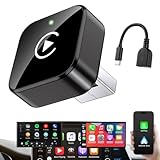
- Revolutionary Miniaturized Design, 50% More Compact – Featuring an ultra-sleek and low-profile form factor, this wireless CarPlay adapter integrates almost seamlessly into your vehicle’s USB port, maintaining a clean and unobtrusive presence within the cabin. Engineered with an upgraded minimalist construction, it enables effortless wireless integration with factory-wired Apple CarPlay, providing seamless access to music, navigation, call functions, and other CarPlay features
- Plug-and-Play Operation with Instant Auto-Reconnect – Requires no complex configuration. After initial Bluetooth pairing, the adapter automatically reconnects upon ignition, delivering a seamless and efficient user experience every time. Leveraging advanced Bluetooth technology, it delivers doubled connection speeds—activating CarPlay faster than you can shift into drive
- Dual-Band Enhanced Performance – Equipped with a 2.4GHz + 5GHz dual-band chipset, the adapter delivers 100% improved throughput, significantly enhanced stability, and near-zero latency. Enjoy flawless audio streaming, real-time navigation, and crystal-clear hands-free communication
- Advanced Thermal Management – Eliminates Overheating – Designed with specialized side venting for optimized convection cooling, this adapter operates up to 35% cooler than sealed competitors. It maintains consistent temperature levels and reliable performance even under extended use or high-demand conditions.
- Secure Connection with Intelligent Angled Design – The ergonomically tapered backplate ensures a snug and vibration-resistant fit in USB ports of varying depths. Rigorously tested over 500 hours under vibration simulations, it guarantees a stable connection—eliminating loosening, wobbling, or cable strain
The phone charges but the wired connection fails
Replace the cable with a high-quality USB data cable, inspect the phone and receiver ports and try the designated USB lead supplied with the installation. Confirm that the phone has active data and meets the current Android Auto requirements. A damaged cable can deliver power while failing to carry a stable data connection.
Wireless Android Auto will not pair
Verify wireless support on both the receiver and phone. Turn on Bluetooth, Wi-Fi and mobile data, check 5 GHz Wi-Fi support and remove an old Bluetooth pairing before starting a new pairing process. If the receiver supports only wired Android Auto, wireless pairing is not available without changing the hardware; an adapter still requires an Android Auto-compatible receiver.
The steering-wheel controls stopped working
Check whether the installation includes the vehicle-specific steering-wheel-control interface and whether it was configured for the correct vehicle. Recheck its wiring and the receiver’s control-learning or assignment settings. Do not assume that restoring the receiver’s factory settings will restore a missing interface.
The factory camera or amplifier does not work
Confirm that the vehicle requires a camera or amplifier adapter and that the adapter is compatible with the exact factory equipment. Check power, ground, signal connections and the receiver’s camera-input or audio-output settings. If the original radio carried vehicle settings or warning messages, ask the installer whether a separate interface is needed to preserve them.
Do these 3 things before closing this tab:
1Clear out junk files and repair common Windows errors2Scan for outdated or missing drivers - takes under a minute3Repair Windows errors before they cause bigger problemsThe receiver repeatedly disconnects
For wired use, test another high-quality cable and inspect the USB connection for looseness. For wireless use, check phone battery-saving restrictions, Bluetooth and Wi-Fi status and the receiver’s firmware documentation. If the problem follows one phone but not another, the phone configuration is the likely variable; if it occurs with multiple phones, inspect the receiver, USB lead and vehicle interface.
What Android Auto cannot do in an unsupported car
Android Auto cannot be enabled by downloading an app onto the original radio, plugging a phone into any available USB socket or adding a wireless adapter to a non-compatible system. Those actions do not add the receiver-side software and display integration required for Android Auto.
The retrofit also does not guarantee that every factory feature will survive a radio replacement. Steering-wheel controls, cameras, amplifiers, parking information and vehicle settings depend on the interfaces available for the specific car. Confirm those functions before purchase, not after the dashboard has been disassembled.
A practical decision path
- Identify the exact vehicle: record make, model, year, trim and audio equipment.
- Check factory compatibility: use the manual and current manufacturer information; do not use the USB socket as the test.
- Choose the connection mode: select a receiver with wired Android Auto, wireless Android Auto or both, based on your phone and usage.
- Confirm fitment: verify opening size, depth, dash kit, wiring, antenna and USB connections.
- Confirm retained functions: check steering-wheel controls, camera, amplifier, speakers, parking features and vehicle settings.
- Calculate the complete project: include the receiver, all required interfaces and either your installation time or professional labor.
- Install and test: pair the phone, test Android Auto and verify every retained factory function before driving normally.
This process answers “How do I add Android Auto to my car?” without assuming that one receiver or adapter fits every vehicle. The essential hardware change is an Android Auto-compatible receiver when the factory system is not compatible; the remaining decisions are vehicle-specific fitment, retained functions and wired versus wireless operation.
Requirements can change
Google’s Android Auto Help pages reviewed on October 13, 2026, describe Android Auto as integrated into the phone and specify the compatible-car or compatible-stereo requirement. The English UK guidance cited for wired use lists Android 9.0 or later, active data and a high-quality USB cable; wireless guidance lists active data and 5 GHz Wi-Fi in addition to a compatible phone and car or stereo. Google may change support requirements, and requirements can vary by region, phone and vehicle, so verify the current information before buying hardware or relying on a particular Android version threshold.
Quick Recap
Product prices and availability are accurate as of the date/time indicated and are subject to change. Any price and availability information displayed on Amazon at the time of purchase will apply.

