
What’s actually slowing this PC down?
Pick the symptom - the matching free tool is one click away.
iTechGuides is reader-supported. When you buy through links on our site, we may earn an affiliate commission. As an Amazon Associate I earn from qualifying purchases. Learn more
The “new Honda NSX” is not a 2025 or 2026 model. It refers to the second-generation NSX, whose production Honda concluded in December 2022. The NSX Type S was the final version, limited to 350 cars worldwide. Its lasting distinction is a three-motor hybrid layout: a twin-turbo V6 and electric motor drive the rear wheels through a nine-speed dual-clutch transmission, while two front electric motors provide electrically assisted all-wheel-drive torque distribution.
That architecture makes the NSX an important comparison point against modern supercars, but the available evidence does not support naming an overall winner. A fair comparison requires the same model year, market, measurement convention and test conditions. Honda’s figures establish how the NSX was engineered; they do not provide an apples-to-apples ranking against every current Ferrari, McLaren, Lamborghini or other rival.
What “new Honda NSX” means in 2026
Searches for a “2025 Honda NSX” can create the impression that a new generation is on sale. Honda’s August 3, 2021 announcement instead described the second-generation car’s final model, the NSX Type S, and said production would conclude in December 2022. There is no evidence in the supplied Honda material of a separate 2025 or 2026 NSX generation.
The second-generation production run
The second-generation NSX was Honda’s hybrid supercar program. Its production history ended in December 2022, so any purchase now concerns an existing car rather than a current factory order. Honda announced a worldwide Type S run of 350 cars. That makes the Type S a defined, limited final edition rather than an open-ended trim level.
#1 Best Overall

- Package Dimensions: 36.0 cms (L) x 20.4 cms (W) x 6.4 cms (H)
- Product Type: Toy Figure
- Package Quantity: 1
- Country Of Origin: Philippines
Why the Type S matters in a comparison
Because the Type S closed the second-generation program, it is the relevant terminal point when discussing the “new” NSX. The 350-car announcement establishes rarity, but the supplied sources do not establish today’s transaction prices, resale premiums, regional allocations or whether every announced car reached every market. Those questions require market-specific, current records rather than assumptions based on the production number.
The NSX powertrain: three motors around a twin-turbo V6
The NSX’s defining engineering choice was not simply adding a battery to a conventional rear-drive supercar. Honda described a three-motor Sport Hybrid Super Handling All-Wheel Drive (Sport Hybrid SH-AWD) architecture in which the electric machines have different jobs.
Rear power unit
At the rear, a twin-turbocharged V6 works with a direct-drive electric motor and a nine-speed dual-clutch transmission. This arrangement combines combustion power, electric assistance and rapid gear changes in one rear power unit. Honda’s technical overview lists the V6 engine’s maximum output as 373 kW and maximum torque as 550 Nm.
Recommended Free Tools
Those are engine-component ratings. They are not a combined system-output figure, and they should not be presented as the total power of the car after adding the electric motors. The supplied technical material does not provide a single, independently verified combined-output number that can be compared directly with rival system ratings.
Rank #2

- 1 :32 Scale Model Car Size: 5.83x 2.56x 1.65 inch. Just the right size for little ones to grasp. It's Made of non-Toxic Water-Based Paint,So it Doesn’t Contain Formaldehyde and any Other HarmfulCute cars for kids ages 3-5.
- High quality toy car models:Toy car opening doors and engine compartment, the model car has movable parts, lights and hood open to see the motor.
- Function: Pull back model car, engine sound and light. Press the two wheels of the rear car to trigger the engine sound and lights, and open the door to trigger the lights of the front and rear lights. Place the car on the ground, hold down the car body and pull it back, the model car will drive forward.
- Car Toys for Kids:Exquisite Packaging,Interesting Functions,Solid Materials,Suitable for Christmas and Birthday Gifts.With a collection of souvenirs for friends and family. It can be displayed to increase beauty and appreciation.
- Material:toy car made of zinc alloy and excellent ABS material, rubber tiresit, is stronger and more resistant to fall than ordinary plastic. detailed interior and exterior trim.It's Made of non-Toxic Water-Based Paint,So it Doesn’t Contain Formaldehyde and any Other Harmful.
Two front electric motors
Two additional electric motors sit at the front. Honda’s description gives them a role in electrically assisted all-wheel-drive torque distribution. Unlike a mechanical all-wheel-drive system that depends on a driveshaft and differentials to apportion torque, this layout can use the front motors as independently controlled sources of propulsion and torque management. The important comparison point is the placement and purpose of the motors, not an unsupported claim about a particular cornering result.
What the layout means in practice
- Combustion engine: twin-turbo V6 mounted in a rear power unit.
- Electric motors: two at the front and one directly driving at the rear.
- Transmission: nine-speed dual-clutch unit in the rear power unit.
- Drivetrain: electrically assisted all-wheel-drive torque distribution.
- Published engine figures: 373 kW and 550 Nm for the V6, not combined system output.
Honda marketed this arrangement as a “human-centered supercar” and a “New Sports eXperience.” Those are Honda’s descriptions of the intended driver experience, not independent test conclusions. They explain the design brief: combine immediate electric control with the response and character of a mid-mounted twin-turbo engine.
How to compare the NSX with a modern supercar
“Modern supercar” is too broad to produce a meaningful ranking by itself. A current hybrid coupe, a rear-drive V8, an all-wheel-drive V12 and a track-focused special edition can all occupy the same price or performance conversation while using different rules. Use the following framework before comparing specifications.
Quick wins for a faster PC:
Scan for outdated or missing drivers - takes under a minuteDriver Scan →Repair Windows errors before they cause bigger problemsFix Now →Fix the driver behind crashes, sound loss and screen glitchesFind Drivers →| Comparison axis | What to record | What is established for the second-generation NSX |
|---|---|---|
| Market and model year | Country, model year, production status and edition | Production ended in December 2022; Type S was the final version, with 350 announced worldwide |
| Powertrain and electrification | Combustion layout, turbocharging, motor count, motor placement and battery role | Twin-turbo V6 plus three electric motors: two front and one rear direct-drive motor |
| Drivetrain and transmission | Rear- or all-wheel drive, mechanical or electric torque distribution, and transmission type | Electrically assisted all-wheel-drive torque distribution and a nine-speed dual-clutch transmission |
| Power and torque | Whether a figure is an engine component rating or a combined system rating | Honda lists 373 kW and 550 Nm for the V6 component; a comparable combined figure is not established here |
| Performance testing | Acceleration, top speed, lap time, test surface, weather, tires and timing method | No matched independent test set against named current rivals is established |
| Ownership | Service access, specialist equipment, warranty and current parts support | Honda’s launch information described designated NSX PERFORMANCE DEALER locations and specialist-trained engineers; present network status varies by market and is not established here |
Powertrain comparison: where the NSX remains unusual
It is a propulsion system and a torque-management system
Many supercar comparisons treat electrification as a simple power supplement. The NSX’s front motors are also part of its all-wheel-drive strategy. That distinction matters: the engineering question is not only how much power the motors add, but how their placement lets the control system distribute torque between the front wheels while the rear unit handles the V6, rear motor and transmission.
Rank #3
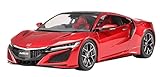
- The chassis employs the same frame as the real car, with authentic rendering suspension.
- Highly detailed V6 engine included.
- Features a realistic depiction of the cockpit interior with excellent detail such as door interior panels.
- Includes decals and stickers to recreate markings, plus window masking stickers.
- Metal transfers are used to capture mirror surfaces and emblems.
A rival with one rear electric motor, two rear motors or no electric motors at all should therefore be compared by architecture, not by the word “hybrid.” Two cars can both be called hybrids while offering very different traction, control and packaging solutions.
Engine-output figures need careful labeling
The NSX’s 373 kW and 550 Nm figures describe the V6. A table that places those numbers beside a competitor’s combined electric-and-combustion rating would mix measurement categories. A sound comparison labels each value as engine output, motor output or total system output and states the source’s test convention.
Performance: what can and cannot be concluded
The supplied Honda material does not provide a matched set of acceleration times, top speeds, lap times, weights or independent instrumented tests for the NSX and current rivals. It would therefore be inaccurate to declare that the NSX is faster, slower or a better performer overall.
Do these 3 things before closing this tab:
1Repair Windows errors before they cause bigger problems2Fix the driver behind crashes, sound loss and screen glitches3Clear out junk files and repair common Windows errorsUse manufacturer claims and test results separately
Manufacturer specifications describe the car under the maker’s stated conditions. Independent tests add a different layer of evidence, but only when the test methods are comparable. For example, a launch-control acceleration time measured on one tire, surface and temperature should not be treated as directly equivalent to a figure measured with different tires or a different timing convention.
Rank #4

- Crafted from durable materials such as 100% die - cast metal and premium rubber tires
- Our high - end casting method allows for feature rich details, such as an opening hood, doors , detailed interior, and trunk
- Scale is 1:24
- Collect them all
- Suitable for ages 8+
A practical evidence checklist
- Confirm that both cars are from the same comparison year or clearly explain the model-year difference.
- Use the same units and identify whether power is stated in kW, horsepower or a combined-system rating.
- Separate manufacturer claims from independent instrumented results.
- Record tire specification, test surface, weather and timing method when quoting acceleration or lap times.
- Do not turn a component rating into a total-system claim.
Usability and ownership of a discontinued hybrid supercar
Specialist servicing was part of the launch plan
Honda’s 2016 launch information said NSX maintenance was supported through designated NSX PERFORMANCE DEALER locations equipped for the car and staffed by Honda-recognized service engineers. That is relevant because the NSX combines high-voltage hybrid hardware, three electric motors, turbocharging and a dual-clutch transmission.
The statement describes Honda’s launch support structure. It does not prove that every location remains open, that every market has identical coverage or that parts and technicians are currently available everywhere. Buyers of an existing car should verify local support directly before purchase.
Discontinued does not mean identical ownership everywhere
A used NSX’s practical ownership case depends on country, mileage, condition, prior maintenance and access to qualified technicians. The supplied evidence does not establish current prices, running costs, fuel economy, warranty coverage or resale values, so those figures should not be inferred from the car’s original positioning.
Do not confuse first-generation restoration news with second-generation support
Honda separately announced a restoration pathway in Japan for first-generation NSX vehicles, with planned work beginning in 2026. That announcement concerns the earlier NSX and does not establish a restoration program, application status, pricing or overseas availability for the second-generation car.
Best Value
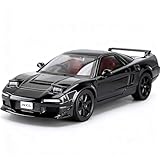
- 1 :32 Scale Model Car Size: 5.83x 2.56x 1.65 inch. Just the right size for little ones to grasp. It's Made of non-Toxic Water-Based Paint,So it Doesn’t Contain Formaldehyde and any Other HarmfulCute cars for kids ages 3-5.
- High quality toy car models:Toy car opening doors and engine compartment, the model car has movable parts, lights and hood open to see the motor.
- Function: Pull back model car, engine sound and light. Press the two wheels of the rear car to trigger the engine sound and lights, and open the door to trigger the lights of the front and rear lights. Place the car on the ground, hold down the car body and pull it back, the model car will drive forward.
- Car Toys for Kids:Exquisite Packaging,Interesting Functions,Solid Materials,Suitable for Christmas and Birthday Gifts.With a collection of souvenirs for friends and family. It can be displayed to increase beauty and appreciation.
- Material:toy car made of zinc alloy and excellent ABS material, rubber tiresit, is stronger and more resistant to fall than ordinary plastic. detailed interior and exterior trim.It's Made of non-Toxic Water-Based Paint,So it Doesn’t Contain Formaldehyde and any Other Harmful.
Where the NSX fits among current supercars
The NSX is best understood as a technical reference point rather than a current-model benchmark. Its three-motor layout and electric all-wheel-drive control remain useful when comparing supercars that pursue hybridization in different ways. Its production status, however, is different from that of a newly launched model: the Type S ended the program, and any example available now is from existing inventory or the used market.
Choose the NSX as a comparison candidate when
- You want to study a hybrid system with two front motors and a rear direct-drive motor.
- You are comparing electrically assisted all-wheel-drive torque distribution with mechanical or rear-drive alternatives.
- You value a limited final edition whose worldwide production was announced at 350 cars.
- You are prepared to evaluate specialist servicing in your own market rather than assume nationwide support.
Use a different benchmark when
- You need a currently produced car with an active factory order process.
- You require directly comparable current acceleration, top-speed or lap-time testing.
- You need published current pricing, operating costs or resale data that is not established for the NSX in this comparison.
Common mistakes in “NSX versus supercar” articles
- Calling it a 2025 model: the second-generation production history ended in December 2022.
- Adding the V6 figure to an assumed motor figure: 373 kW and 550 Nm are engine-component ratings, not a verified combined output.
- Treating “hybrid” as one technology: motor count and placement determine how the system contributes to propulsion and torque distribution.
- Ranking cars without matched tests: different tires, conditions and timing methods can reverse an apparent advantage.
- Assuming launch-era dealer coverage is unchanged: verify specialist support in the market where the car will be maintained.
- Using first-generation restoration information: that program is not evidence about second-generation maintenance or restoration.
Bottom line: a fair modern-supercar comparison
The second-generation Honda NSX compares with modern supercars most convincingly as an engineering concept: a twin-turbo V6, three electric motors, a nine-speed dual-clutch transmission and electrically assisted all-wheel-drive torque distribution in one human-focused package. The NSX Type S was its final form, limited to 350 cars worldwide, and production ended in December 2022.
What the available evidence cannot establish is an overall performance or value winner against today’s named rivals. For that judgment, use same-year, same-market specifications and independently verified tests, then account for the practical difference between owning a discontinued specialist car and ordering a current production supercar.
Quick Recap
Product prices and availability are accurate as of the date/time indicated and are subject to change. Any price and availability information displayed on Amazon at the time of purchase will apply.

