
Free tools Windows power users keep installed
One-click scans. No signup required.
iTechGuides is reader-supported. When you buy through links on our site, we may earn an affiliate commission. As an Amazon Associate I earn from qualifying purchases. Learn more
SteamOS is Valve’s Linux-based gaming operating system, and Proton is the compatibility layer that runs Windows games on it. That combination lets a Steam Machine play many Windows-only titles without native Linux ports, but compatibility is not universal or identical across devices. A game’s Steam Machine badge, not a general assumption about your Steam library, is the best guide to the experience you should expect.
Valve’s Machine rating checks controller access, launcher usability, text entry, hardware warnings and a default 30-fps-at-1080p performance target. The rating is separate from Steam Deck testing, although Valve says a Steam Deck Verified game is also Machine Verified. SteamOS desktop mode adds flexibility for other software and launchers, but it does not guarantee that every external game works.
What SteamOS is and why it matters for compatibility
A Linux base with a console-style interface
SteamOS is built on Linux and is designed to present a focused, controller-friendly gaming interface. Valve describes it as an open Linux platform where users can install software and content, while noting that the Steam Client itself is proprietary and that some third-party drivers are included. The result is closer to a console experience than a conventional desktop distribution when you stay in the main Steam interface.
The operating-system model matters because most PC games are released for Windows. A Linux operating system cannot simply execute a Windows game’s files as if they were native Linux programs. SteamOS therefore relies on Proton rather than requiring every developer to create and maintain a separate Linux build. Valve’s SteamOS overview says Proton supported “over 18,000 titles last we checked.” Valve does not provide a measurement date for that figure, so it should be treated as a qualified product-page statement, not a current 2026 count.
#1 Best Overall

- TMR Joysticks - Offering higher sensitivity, greater precision, and enhanced durability.
- 8BitDo Exclusive Wireless Technology - “8Speed”, it delivers an exceptionally stable 2.4G connection with ultra-low latency under 1ms. Engineered for rock-solid reliability, it features strong anti-interference and a 10m range with virtually no lag.
- Trigger Mode Switch - Easily switch between linear Hall Effect triggers and non-linear tactile triggers for optimal control across different gaming scenarios.
- 1000Hz Polling Rate (for 2.4G and wired connection). Customizable 6-Axis Motion Control. Turbo function. Rumble vibration. Support 8BitDo Ultimate Software V2.
- 2 Pro back paddle buttons, extra R4/L4 bumpers, and tactile bumpers & D-pad for enhanced control and faster response. Includes a multifunctional charging dock and USB-C adapter for seamless connectivity.
Proton is a compatibility layer, not an emulator guarantee
Proton translates the Windows game’s calls to graphics, audio, input and other system functions so they can work with Linux and the hardware exposed by SteamOS. Steam can install and manage Proton versions for you, but each game still has its own engine, copy protection, launcher, anti-cheat behavior, video codecs and controller implementation. Those differences explain why one Windows title can run perfectly while another has a launcher failure, missing feature or unacceptable performance on the same machine.
Valve’s Steamworks documentation calls Proton a work in progress. Proton-specific blocking bugs or performance problems can therefore lead to an Unsupported rating. A native Linux build may also be considered: if it fails compatibility checks or has significant issues, Valve says it tests the Windows build under Proton and submits whichever result is more favorable. A native build is not automatically the version that determines the customer-facing badge.
Do all Steam games work on Steam Machine?
No. SteamOS and Proton make a large portion of the Windows catalogue playable, but they do not make every Steam game compatible. The practical answer is title-specific: open the store or library page for the game you care about and inspect the Steam Machine rating.
What each compatibility badge means
| Badge | Meaning on the device | What you may need to do |
|---|---|---|
| Verified | The title passes Valve’s compatibility checks without configuration work needed to access its functionality. | Normally launch and play using the default setup. |
| Playable | The game functions but has a qualification that requires user action. | You might select a community controller layout, operate a launcher, use a virtual keyboard or change a setting. |
| Unsupported | The title does not function on the device because of Proton incompatibility or a specific hardware issue. | Changing graphics settings is unlikely to remove the underlying blocker. |
| Unknown | Valve’s compatibility review is incomplete, so the customer-facing experience is not established by its review. | You would need independent evidence or your own test; Unknown does not mean confirmed incompatibility. |
These definitions come from Valve’s Steam Deck and Steam Machine Compatibility Review documentation. A missing badge and an Unsupported badge are not interchangeable: the former means insufficient review information, while the latter identifies a known blocker under Valve’s criteria.
Is Steam Deck Verified the same as Steam Machine Verified?
No. Valve says Steam Deck and Steam Machine ratings are independent. You should look for the Machine badge when deciding whether a title is suitable for this PC. Valve also states an explicit one-way relationship: a game that is Steam Deck Verified is also Steam Machine Verified. That does not mean every Deck category transfers in both directions, so do not infer a Machine result from a Deck Playable, Unsupported or Unknown label.
Rank #2

- Compatible with Windows and Android.
- 1000Hz Polling Rate (for 2.4G and wired connection)
- Hall Effect joysticks and Hall triggers. Wear-resistant metal joystick rings.
- Extra R4/L4 bumpers. Custom button mapping without using software. Turbo function.
- Refined bumpers and D-pad. Light but tactile.
What Valve checks for a Machine Verified rating
The Machine badge describes a reviewed experience, not a promise that every player will obtain identical frame rates or image quality. Valve’s current checklist includes the following areas:
- Controller access: users must be able to reach all content without first changing in-game settings.
- Correct button glyphs: prompts should match the controller actually in use.
- Text entry: fields such as names, chat or account details need workable text input.
- Launcher navigation: any required launcher must be usable with a controller.
- Hardware and operating-system messaging: the game should not warn that the device hardware or Linux distribution is unsupported.
- Performance target: the default Machine configuration is evaluated against 30 frames per second at 1080p.
The 30-fps-at-1080p figure is a review threshold in Valve’s documentation, not a benchmark published for every title. It does not promise that a demanding game will always render at 1080p, that all visual settings will be high, or that your television, display mode and updates will match Valve’s test conditions.
How to check a game before installing it
- Open the game’s Steam store page or library entry. Find the compatibility information associated with the Machine rather than relying on a generic SteamOS or Deck label.
- Read the exact badge. Verified, Playable, Unsupported and Unknown imply different levels of certainty and user involvement.
- Open the detailed compatibility notes when available. Look for controller-layout requirements, launcher steps, text-entry limitations or other warnings.
- Check how the game starts. A title that launches a separate account or publishing client may be Playable only if that client can be operated with a controller.
- Set expectations from the review criteria. The Machine checklist targets a default 30 fps at 1080p; it is not a title-specific graphics preset or performance guarantee.
- Recheck after major updates. Game patches, launcher changes, Proton revisions and anti-cheat updates can alter behavior even when the underlying hardware has not changed.
This process is more reliable than assuming that a large Steam library behaves uniformly. Compatibility belongs to the game-and-device combination, not to the store account as a whole.
How a Windows game runs through Proton
Launch and translation path
When you start a Windows build from SteamOS, Steam selects a Proton environment for that title. Proton supplies the translation layer and supporting components, while SteamOS provides the Linux kernel, drivers and device services. The game remains a Windows build; Proton adapts its expected Windows interfaces to the Linux-based platform.
Why two games with similar graphics can behave differently
Compatibility is affected by more than rendering load. A game can fail because of its launcher, copy-protection system, kernel-level anti-cheat, video playback, middleware, account sign-in flow or an input screen that cannot be navigated from the controller. A title may also launch but fall below the review target because of a Proton performance issue. Valve’s documentation specifically allows Proton blocking bugs and performance problems to produce Unsupported results.
Rank #3
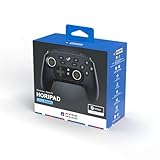
- Rechargeable wireless pro controller designed for Steam for Windows 11/10 & Steam Deck
- Dedicated buttons for quick access to Steam menus
- Capacitive Touch Thumbsticks, gyro sensor, programmable buttons, & more
- Also functions as an XInput controller for Windows 11/10 (wired mode only)
- Compatible with Steam and Steam Deck
Native Linux builds do not automatically settle the question
Some games ship a Linux executable, but Valve’s review process can compare it with the Windows build under Proton. If the Linux version fails compatibility checks or has significant problems, Valve says it tests the Windows version and uses whichever result is more favorable. The badge therefore represents the reviewed user experience, not simply the existence of a Linux download.
Quick wins for a faster PC:
Fix the driver behind crashes, sound loss and screen glitchesFind Drivers →Repair Windows errors before they cause bigger problemsFix Now →Scan for outdated or missing drivers - takes under a minuteDriver Scan →Steam Machine hardware and what is still subject to change
Valve’s current Steam Machine page describes a PC running SteamOS 3, based on Arch Linux. The listed configuration is:
| Component | Valve’s listed specification |
|---|---|
| CPU | Semi-custom AMD Zen 4, 6 cores and 12 threads |
| GPU | Semi-custom AMD RDNA 3 |
| System memory | 16 GB DDR5 |
| Video memory | 8 GB GDDR6 |
| Operating system | SteamOS 3 |
Valve warns that some specifications may change before availability. Treat the table as the currently published configuration, not an immutable final specification. Hardware capability also does not override software blockers: a faster GPU cannot make an incompatible launcher controller-navigable, and extra memory cannot fix a Proton feature that a game requires but does not support.
Independent reader supportYour contribution helps us test, update, and keep practical guides available for everyone.Can you install other launchers on SteamOS?
Yes, SteamOS includes a desktop mode where you can install other launchers and software. Valve presents this as part of the platform’s PC flexibility, and its SteamOS page explains that users can add software or content. Desktop mode is useful for applications that are not presented in the console-style Steam interface, for managing files and for trying a launcher outside the normal Steam workflow.
That flexibility is not a compatibility certification. A launcher may install but fail to display correctly at a chosen resolution, require a mouse and keyboard, depend on unsupported anti-cheat or fail during account sign-in. A game launched outside Steam may also lack the per-title Proton configuration and controller mappings that Steam supplies. Evaluate each launcher and game separately rather than treating desktop mode as proof that every Windows application works.
Do these 3 things before closing this tab:
1Repair Windows errors before they cause bigger problems2Fix the driver behind crashes, sound loss and screen glitches3Clear out junk files and repair common Windows errorsRank #4

- MODERNIZED DESIGN — Experience the modernized design of the XBOX Wireless Controller with sculpted surfaces and updated geometry that enhances comfort and control during long gaming sessions.
- PRECISION PERFORMANCE — Stay on target with a hybrid D-pad and textured grips on triggers, bumpers, and back case for improved accuracy and handling.
- SHARE BUTTON: Seamlessly capture and share content such as screenshots, recordings, and more with the new Share button.
- VERSATILE CONNECTIVITY — Connect via USB-C for plug-and-play on console and PC, or quickly pair and switch between supported devices with XBOX Wireless and Bluetooth support.
- BUILT-IN AUDIO SUPPORT — Plug in compatible headsets using the 3.5mm audio jack for direct voice chat and immersive in-game sound.
Troubleshooting a Playable or Unknown game
The game launches but the controls are wrong
- Use the game’s controller-layout selector and choose a layout that supplies the missing commands.
- Check whether the title is waiting for text entry; bring up the on-screen keyboard or connect a physical keyboard.
- Look for launcher prompts that require a pointer. A Playable rating can assume a manual interaction before gameplay.
The launcher is the blocker
Confirm that the launcher can be navigated entirely with the controller and that account or consent screens are reachable. If the launcher requires a one-time mouse action, perform it in desktop mode, then return to the game interface. This may make a Playable title practical, but it does not convert the official badge to Verified.
Performance is below expectations
Remember that Valve’s 30-fps-at-1080p criterion describes the review configuration. Lowering resolution or demanding graphics options can help a title that is merely heavy, but it will not solve a known Unsupported condition caused by Proton, anti-cheat or hardware incompatibility. Check for game and Proton updates before changing several settings at once so you can identify what affected behavior.
How to choose between Steam Machine, another SteamOS PC and a conventional PC
Use these decision points rather than a single claim about “Steam compatibility”:
- Games you actually play: inspect the Machine badge for your essential titles.
- Setup tolerance: choose Verified-heavy libraries if you want console-like launching; accept Playable or Unknown only if you are comfortable with manual configuration.
- Input needs: prioritize games whose menus, launchers and text fields meet the controller criteria if you plan to play from a sofa.
- Performance expectations: treat the 30-fps-at-1080p target as a review baseline, then seek title-specific evidence for higher frame rates or quality settings.
- Software flexibility: use desktop mode when you need other applications, but verify each external launcher independently.
- Hardware certainty: remember that Valve’s posted Steam Machine specifications may change before availability.
Valve’s Steam Hardware pages provide broader context for its hardware and Verified program, while the compatibility documentation remains the authoritative place to interpret the individual badges.
Quick Recap
Product prices and availability are accurate as of the date/time indicated and are subject to change. Any price and availability information displayed on Amazon at the time of purchase will apply.

