
What’s actually slowing this PC down?
Pick the symptom - the matching free tool is one click away.
iTechGuides is reader-supported. When you buy through links on our site, we may earn an affiliate commission. As an Amazon Associate I earn from qualifying purchases. Learn more
South Korea’s semiconductor industry depends on memory chips because memory is both its export specialty and the part of the chip market most directly exposed to global investment cycles. Samsung Electronics and SK hynix anchor production of DRAM, NAND, DDR5 and high-bandwidth memory (HBM). When cloud companies build AI data centers, demand and prices for those products can lift Korean exports quickly. When electronics orders weaken or memory prices fall, the same concentration can pull down export revenue, factory utilization and the wider industrial cycle.
The dependence is large enough to show up in national trade data. The Ministry of Trade, Industry and Resources (MOTIR) reported semiconductor exports of $173.48 billion in 2025, up 22.1% year on year from $142.09 billion in 2024. InvestKOREA reported that semiconductors represented 20.8% of South Korea’s total exports in 2024. Those figures describe an economy whose performance is unusually sensitive to memory demand, pricing and product mix.
Why memory chips matter so much to South Korea
South Korea is not equally exposed to every type of semiconductor. Its strongest position is in memory, a category that stores data rather than performing the calculations handled by most logic or system chips. Memory products are standardized enough to trade globally, but their prices can change sharply when supply and demand move out of balance. That combination gives Korea a powerful export engine and a pronounced boom-and-bust risk.
Two companies form the industrial center of this model: Samsung Electronics and SK hynix. Their Korean operations span conventional DRAM, newer DDR5 memory, NAND flash and HBM used with AI accelerators. A single memory cycle therefore affects chip factories, materials suppliers, equipment purchases, electricity demand, shipping and the trade balance at the same time.
#1 Best Overall
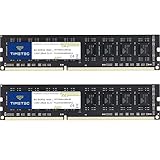
- [Color] PCB color may vary (black or green) depending on production batch. Quality and performance remain consistent across all Timetec products.
- DDR3L / DDR3 1600MHz PC3L-12800 / PC3-12800 240-Pin Unbuffered Non-ECC 1.35V / 1.5V CL11 Dual Rank 2Rx8 based 512x8
- Module Size: 16GB KIT(2x8GB Modules) Package: 2x8GB ; JEDEC standard 1.35V, this is a dual voltage piece and can operate at 1.35V or 1.5V
- For DDR3 Desktop Compatible with Intel and AMD CPU, Not for Laptop
- Guaranteed Lifetime warranty from Purchase Date and Free technical support based on United States
The export scale
| Measure | Value | Qualification |
|---|---|---|
| South Korean semiconductor exports, 2025 | $173.48 billion | MOTIR figure; 22.1% higher than 2024 |
| South Korean semiconductor exports, 2024 | $142.09 billion | MOTIR annual figure |
| Total Korean ICT exports, 2025 | $264.29 billion | MOTIR annual figure |
| Total Korean ICT exports, 2024 | $235.05 billion | MOTIR annual figure |
| Global semiconductor market, 2024 | $677.2 billion | InvestKOREA estimate published in 2025 |
| Semiconductors’ share of Korea’s total exports, 2024 | 20.8% | InvestKOREA calculation |
InvestKOREA separately reported $141.9 billion in Korean semiconductor exports for 2024. The small difference from MOTIR’s $142.09 billion reflects different statistical definitions and reporting systems, not a different direction of travel. Both sources show a record-scale export sector.
How global demand reaches Korean factories
The transmission mechanism is straightforward: a customer’s investment decision changes orders for memory, those orders alter prices and production plans, and the resulting export value flows into Korea’s trade and industrial data.
- Data-center investment creates demand. Cloud providers and other operators add servers when AI services, search, software and analytics require more computing capacity.
- Servers require several kinds of memory. AI accelerators use HBM for very high-bandwidth access; server processors use DDR5 as system memory; enterprise storage uses NAND-based solid-state drives.
- Chip buyers place larger or smaller orders. Memory manufacturers and electronics companies adjust inventories in response to expected utilization, not just current sales.
- Prices change the export result. Even if physical shipments are flat, a price increase can raise export revenue. A price decline can reduce revenue despite similar unit volumes.
- Korean output affects the wider economy. Semiconductor exports feed suppliers, logistics firms, construction and capital spending, while weaker prices can delay equipment orders and investment.
MOTIR described the 2025 record as the result of “AI server investment expansion” that drove continuing increases in memory demand and prices. Its 2024 reporting also noted strong server-SSD demand. AI is therefore not an abstract technology trend for Korea; it is a direct order and pricing channel.
Do these 3 things before closing this tab:
1Clear out junk files and repair common Windows errors2Scan for outdated or missing drivers - takes under a minute3Repair Windows errors before they cause bigger problemsWhy HBM and DDR5 can outperform ordinary memory
Not all bits of memory generate the same revenue or face the same competitive pressure. Product mix increasingly determines whether a memory upturn is broad or concentrated in premium products.
| Product | Where it is used | Why it matters to Korea’s exports |
|---|---|---|
| General-purpose DRAM | PCs, phones, servers and other systems | Large volumes, but prices are highly cyclical and sensitive to inventory corrections |
| DDR5 | Newer server and desktop platforms | Higher-value memory generation that benefits from platform upgrades and server demand |
| HBM | Memory stacks attached closely to AI and high-performance accelerators | Premium product tied to AI-server deployment and accelerator supply |
| NAND flash | SSDs, phones and other data-storage products | Benefits from enterprise storage demand, but is exposed to a separate oversupply and pricing cycle |
MOTIR explicitly said that general-purpose memory prices fell in the fourth quarter of 2024 while high-value DDR5 and HBM led overall chip-export growth. That distinction explains how Korea can report rising export value even when parts of the DRAM market are weak. It also means that an AI-led cycle can look healthy in headline data while commodity memory producers and customers remain under pressure.
Rank #2

- A-Tech 16GB RAM Module, DDR4 SO-DIMM 260-Pin, 3200MHz PC4-25600 (PC4-3200AA)
- Non-ECC Unbuffered, JEDEC DDR4 Standard 1.2V Operating Voltage
- Compatible with select Laptop, Notebook, Mini PC, and All-in-One (AIO) systems. Please verify your system's memory type, form factor, and maximum supported capacity before purchasing
- Not compatible with desktop DIMM, non DDR4 memory, or ECC memory types such as RDIMM, LRDIMM, and ECC UDIMM
- Increases available memory capacity to enhance system responsiveness, application performance, and multitasking capabilities.
HBM is a demand amplifier, not a replacement for all memory
HBM serves the narrow, bandwidth-intensive connection between an AI accelerator and its memory. It is sold into a specialized part of the server stack, so its growth depends on accelerator shipments, packaging capacity, qualification and the pace of data-center construction. HBM can lift average export value, but it cannot fully cancel a broad collapse in PC, smartphone or conventional server demand.
DDR5 links AI investment to mainstream servers
DDR5 is system memory rather than accelerator-attached HBM. It benefits when server operators refresh platforms and add general compute capacity. Because it is used beyond AI systems, DDR5 can provide a broader base of demand, although its pricing still follows the memory cycle.
NAND follows storage economics
NAND flash supplies SSDs and other storage devices. Enterprise SSD orders can rise with data-center construction, yet NAND also responds to consumer electronics and inventory decisions. A strong HBM market therefore does not guarantee a strong NAND market.
Memory versus system semiconductors
System semiconductors include logic processors, connectivity chips, sensors and power devices. Their value is often tied to a specific design, software ecosystem or manufacturing process. Memory is more interchangeable, which makes buyers sensitive to quoted market prices and makes producers vulnerable to rapid capacity changes.
| Characteristic | Memory semiconductors | System semiconductors |
|---|---|---|
| Primary Korean exposure | DRAM, DDR5, HBM and NAND production | More varied and less central to the export story described here |
| Pricing behavior | Often moves sharply with global supply, inventories and spot or contract prices | More dependent on product design, contracts and application demand |
| AI connection | HBM and server DDR5 are direct infrastructure inputs | Processors and accelerators determine computing capability, but Korea’s documented export sensitivity is especially strong in memory |
| Main shock to Korea | Memory price or volume downturn quickly changes export receipts | Demand changes are important but less concentrated in the memory-specific channel |
This specialization is an advantage when memory demand grows faster than the rest of the semiconductor market. It is a vulnerability when customers reduce inventories, delay servers or buy from competing suppliers.
Rank #3

- Disclaimer: Maximum Speed requires overclocking/PC BIOS adjustments. Maximum speed and performance depend on system components, including motherboard and CPU
- Hand-sorted memory chips ensure high performance with generous overclocking headroom
- VENGEANCE LPX is optimized for wide compatibility with the latest Intel and AMD DDR4 motherboards
- A low-profile height of just 34mm ensures that VENGEANCE LPX even fits in most small-form-factor builds
- A solid aluminum heatspreader efficiently dissipates heat from each module so that they consistently run at high clock speeds
What happens when memory prices fall
A price decline does not have one fixed effect. The outcome depends on whether it affects commodity products alone, premium products as well, or physical shipment volumes.
Outdated Drivers Are Slowing You Down
One free scan finds every outdated or missing driver and matches the right update for your exact hardware.Free scan · exact hardware matchWindows Errors? Fix Them Before They Spread
Repair common Windows errors and clear accumulated junk for a smoother, more stable PC - no reinstall needed.Free scan · no reinstallCase 1: Commodity DRAM weakens while HBM and DDR5 stay firm
This is the least damaging version. Lower prices for general-purpose DRAM reduce margins and some export value, but premium products can keep the overall mix and revenue elevated. MOTIR’s late-2024 description matches this pattern: general-purpose prices fell, yet DDR5 and HBM supported total growth.
Case 2: Server investment slows
If cloud and enterprise customers postpone new capacity, orders for HBM, DDR5 and server SSDs can soften together. Korean exporters then face both weaker volumes and pressure to cut prices. Equipment spending and supplier orders may be delayed because memory manufacturers no longer need every planned wafer or production line immediately.
Case 3: Broad electronics demand contracts
A downturn in phones, PCs and consumer electronics adds weakness in conventional DRAM and NAND. The export shock is larger because AI-related demand may not be sufficient to offset losses across several end markets.
Case 4: Supply expands faster than demand
Memory makers can increase capacity in anticipation of growth. If customers do not absorb that output, inventories rise and prices fall. Because the products are globally traded, producers cannot rely on domestic demand to stabilize the cycle.
The Tool Desk
Outbyte Driver Updater FREEFix the driver behind crashes, sound loss and screen glitchesFind Drivers →Outbyte PC Repair FREERepair Windows errors before they cause bigger problemsFix Now →Rank #4
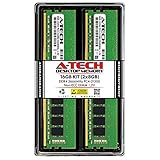
- Compatible with select DDR4 Desktop computers + Easy to install at home, no expertise required
- Maximize your system's performance, boost loading speeds and multitask with ease
- Backed by A-Tech's Lifetime Warranty + Friendly tech support team available to help before and after your purchase
- 16GB RAM Kit ( 2 x 8GB Modules ) | DDR4 DIMM 288-Pin | Speeds up to 2666MHz (2667MHz), PC4-21300 / PC4-2666V
- NON-ECC Unbuffered | 1Rx8 or 2Rx8 - Single or Dual Rank | JEDEC DDR4 standard 1.2V
- Trade effect: lower chip prices reduce export receipts, even when shipment counts change little.
- Corporate effect: margins, cash flow and capital-expenditure plans become more volatile.
- Industrial effect: equipment, materials, construction and logistics suppliers feel the slowdown after chip orders weaken.
- Macroeconomic effect: a sector representing 20.8% of 2024 exports can move the trade balance and growth outlook.
Are Samsung and SK hynix exposed to the same cycle?
Both companies are exposed to the global memory cycle because both anchor Korea’s DRAM, NAND and advanced-memory position. Their risk is not identical, however. Product mix, customer qualification, manufacturing yield, packaging capability, investment timing and exposure to different end markets can change how each company experiences a given quarter.
It would be misleading to assign one combined DRAM, NAND or HBM market share without a current, consistently defined market-share table. The available official figures establish Korea’s export dependence and the two companies’ central industrial role, but they do not support a single up-to-date share number across all three categories.
Why geography matters
Memory demand is global, and Korean exports follow the location of electronics assembly, cloud infrastructure and device production rather than only final consumers. In 2024, China including Hong Kong accounted for $97.9 billion of Korean ICT exports, according to MOTIR’s reporting. In 2025, semiconductor exports rose strongly to Taiwan, Vietnam, India, the European Union, the United States and Japan, while exports to China including Hong Kong declined 0.9%.
| Market or region | Why it matters | What a change can signal |
|---|---|---|
| China and Hong Kong | Major electronics manufacturing and ICT demand base | Weakness can reduce orders even when global AI investment remains strong |
| Taiwan | Critical semiconductor and electronics hub | Changes may reflect regional supply-chain and accelerator activity |
| United States | Large cloud, AI and enterprise-technology market | Data-center investment can support HBM and server memory |
| European Union and Japan | Industrial, automotive and electronics demand | Manufacturing cycles can broaden or offset regional weakness |
| Vietnam and India | Growing electronics assembly and technology production locations | Rising shipments can indicate supply-chain diversification |
Geographic concentration creates two-way exposure. Diversification toward several destinations can reduce dependence on one buyer, but it does not remove the underlying dependence on a synchronized global electronics and data-center cycle.
The upstream weakness: imported equipment and inputs
Korea’s strength is greatest in finished memory production, not complete self-sufficiency. The Korea Institute for International Economic Policy has reported continued dependence on imported precision equipment and upstream inputs. A memory boom can therefore increase Korea’s export income while also increasing its need for foreign tools, materials and components.
Best Value
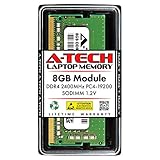
- Compatible with select DDR4 Laptop, Notebook computers + Easy to install at home, no expertise required
- Maximize your system's performance, boost loading speeds and multitask with ease
- Backed by A-Tech's Lifetime Warranty + Friendly tech support team available to help before and after your purchase
- Single 8GB RAM Module | DDR4 SO-DIMM 260-Pin | Speeds up to 2400MHz, PC4-19200 / PC4-2400T
- NON-ECC Unbuffered | 1Rx8 or 2Rx8 - Single or Dual Rank | JEDEC DDR4 standard 1.2V
This creates several vulnerabilities:
- Supply interruption: restrictions or shortages in specialized equipment can delay capacity expansion or maintenance.
- Currency and cost exposure: imported inputs become more expensive when exchange rates or supplier pricing move against Korean manufacturers.
- Technology controls: United States export controls and industrial policies in the United States, European Union and Japan can affect which tools and processes are available.
- Chinese competition: expanding Chinese memory capacity can add price pressure, particularly in products that are less differentiated.
These risks operate independently of the normal memory cycle. Prices may be strong while equipment access is constrained, or prices may be weak just as companies face large commitments to new tools and facilities.
How to read Korea’s semiconductor data
Headline export growth is useful but incomplete. A careful assessment should separate five questions:
- Is growth volume-driven or price-driven? Rising export value can come from higher prices, more units, or both.
- Which products are growing? HBM and DDR5 growth has different implications from commodity DRAM or NAND growth.
- Are server and AI orders broadening? Strong HBM demand may be concentrated among a small set of accelerator and cloud customers.
- Where are shipments going? A rise to the United States or Taiwan does not automatically compensate for weakness in China, Europe or consumer-electronics markets.
- What is happening upstream? Equipment imports, factory investment and policy restrictions can reveal constraints before they appear in export totals.
For this reason, the most informative dashboard combines MOTIR’s monthly and annual export data with product-level pricing, server and SSD demand, destination figures, capital-spending plans and supply-chain policy announcements.
Free tools Windows power users keep installed
One-click scans. No signup required.
What the dependence means for Korea’s economic outlook
South Korea benefits disproportionately when the world is expanding AI infrastructure. Memory is installed in every layer of that infrastructure, and premium HBM and DDR5 can raise the value of each shipment. The 2025 record demonstrates how quickly that channel can lift national exports after a previous record year.
The same structure makes downturns consequential. Korea cannot control global cloud spending, smartphone inventories, Chinese competition or foreign export controls. It can improve resilience by moving toward higher-value products, broadening destinations, developing domestic equipment and materials capabilities, and maintaining financial flexibility through the cycle. Those measures reduce the damage from a memory slump, but they do not eliminate the basic fact that global demand sets the pace.
Bottom line
South Korea’s semiconductor industry is dependent on memory chips because memory is its largest and most globally traded semiconductor strength. AI-server construction currently channels demand into HBM, DDR5 and server SSDs, helping explain semiconductor exports of $173.48 billion in 2025. Yet the dependence cuts both ways: price declines, inventory corrections, weaker electronics demand, Chinese competition or restricted access to imported equipment can transmit rapidly into Korean exports and industrial activity. Product mix and geography determine how severe each cycle becomes.
Quick Recap
Product prices and availability are accurate as of the date/time indicated and are subject to change. Any price and availability information displayed on Amazon at the time of purchase will apply.
Recommended Free Tools

