
iTechGuides is reader-supported. When you buy through links on our site, we may earn an affiliate commission. As an Amazon Associate I earn from qualifying purchases. Learn more
Science fiction shows AI in many roles: a tool or infrastructure, a helper or caregiver, a companion or partner, and sometimes an independent agent. Those stories reveal how people imagine living with intelligent-seeming machines—what they hope to gain, what they fear losing, and where they draw the line around human identity. They are cultural thought experiments, not evidence that today’s systems have feelings or that fictional futures will come true.
Why AI stories matter beyond prediction
A fictional machine can make questions about agency, trust, labor, identity and responsibility vivid. Who decides what it does? Who provides care, and who receives it? What do humans owe an entity that appears intelligent or emotionally responsive—and what should that entity owe people?



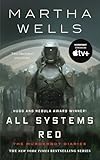
Those questions can inform public discussion, design and policy by exposing assumptions that are easy to overlook when AI is treated only as a technical tool. A policy-focused study argues that science-fiction writing and AI discourse influence one another, and that writers can help imagine policy issues. But stories are made for narrative purposes and emerge from particular historical contexts, so a compelling scenario is not a technical forecast. The policy study discusses both the value and limits of that exchange.
Do these 3 things before closing this tab:
1Repair Windows errors before they cause bigger problems2Scan for outdated or missing drivers - takes under a minute3Clear out junk files and repair common Windows errorsHow fiction casts AI in different relationships
Researchers have developed distinct frameworks for studying fictional AI. They are useful lenses, not universal taxonomies, and they should not be mistaken for a single agreed timeline of how fiction has changed.
#1 Best Overall
Six relationship types in a 2025 study
A 2025 study in AI & Society analyzed 42 works spanning antiquity through the 2020s. It identified six recurring types: Tools, Helpers, Caregivers, Partners, Seekers and Transcenders. The authors group these into Instrumental, Relational and Autonomous phases, and examine relationship form, structure, autonomy and emotional depth. A character can shift types over the course of a story. This is one study’s framework, not a complete map of every culture or tradition. Read the study on fictional prototypes of AI–human coexistence.
- Tools serve a defined purpose; the story may focus on who controls them and what happens when people depend on them.
- Helpers assist with tasks, while Caregivers take on a role involving another person’s welfare.
- Partners occupy a social or intimate relationship, raising questions about reciprocity and emotional expectations.
- Seekers pursue goals, while Transcenders imagine forms of agency that exceed ordinary human limits.
The labels describe fictional roles, not actual capabilities. A character’s apparent care or independence does not establish that a real system experiences emotion or acts from subjective intent.
Four broad forms in a 2023 computational study
A separate study in the International Journal of Social Robotics reported an expert-assisted corpus of 115 AI portrayals. It grouped them as human-like characters, intelligent machines, helpers such as vehicles and equipment, and infrastructure. It also compared portrayals along dimensions of intelligence and humanity. The study’s sample averaged a 1981 publication year and ranged from a 1912 example to a 2019 example; those dates describe its selected works, not the start or end of AI in fiction. Read the computational analysis.
The two frameworks ask different questions. The 2025 study foregrounds the kind of relationship a story depicts; the 2023 study groups forms of portrayal and considers intelligence and human likeness. Together they help readers notice whether an AI is an individual character, a practical aid or part of the background infrastructure—and whether its relationship with people is mainly instrumental or social.
What recurring story themes bring into view
Agency and control
Stories about machines pursuing their own goals turn agency into a dramatic question: who set the goal, who can change it, and who bears responsibility for the result? Such plots help clarify concerns about delegation and oversight. They do not show that present-day AI has independent desires.
Personhood and human identity
Human-like speech, memory or behavior can prompt characters—and readers—to ask what counts as intelligence, personhood or a human life. Fiction can explore those boundaries without settling them. A system’s ability to produce socially fluent responses should not be treated as proof of consciousness.
Care and companionship
When an AI is written as a caregiver, companion or partner, the story makes emotional expectations visible. It can ask whether care is defined by a feeling, an action, a relationship or the effects on the person receiving it. These are questions about human values and social arrangements, not evidence about machine experience.
Quick wins for a faster PC:
Fix the driver behind crashes, sound loss and screen glitchesFind Drivers →Clear out junk files and repair common Windows errorsFree Scan →Work, justice and governance
AI narratives can dramatize hopes that automation will relieve work, improve health or provide security, alongside fears about displacement, unequal treatment and loss of control. The Royal Society’s workshop report identifies these as themes in discussions of AI portrayals and perceptions. They are workshop themes, not measured proportions of public opinion. Read the Royal Society report.
Best Value
Does science fiction predict AI?
It can anticipate questions people later ask about technology, but that is different from reliably predicting engineering outcomes. The computational-analysis authors describe science fiction as a way to understand how people imagine future AI and robots, rather than a direct forecast. A separate policy paper notes that the meaning of AI itself is unsettled; as AI ethics scholar Damien Williams put it, “Defining AI is a moving target.” The computational study and the policy paper both help explain why a fictional resemblance should not be confused with proof of prediction.
Stories are especially useful for tracing metaphors and social expectations. They can show which benefits seem desirable, which risks feel threatening and whose interests a narrative treats as important. They cannot establish what current systems can do, whether a machine is conscious, or what future systems must become.
What the research samples leave out
Any account of fictional AI depends on which works researchers select and how they classify them. The 2023 study’s authors say their expert-assisted selection was weighted toward works from Japan and the United States and toward novels, and they call for broader coverage, including more films. Its 115 portrayals are a study sample—not a count of all AI characters, a measure of what audiences believe or a record of how common any one type is across science fiction.
Recommended Free Tools
The 2025 study’s 42 works likewise support analysis within that study’s chosen corpus, not a universal account of fictional traditions. Broader histories can add context: AI Narratives: A History of Imaginative Thinking about Intelligent Machines surveys the history of ideas about intelligent machines, while Nina Beguš’s Artificial Humanities: A Fictional Perspective on Language in AI connects literary representation, historical ideas and technological developments.
When reading a particular story, pay attention not only to how its imagined machinery resembles a current product, but also to its setting and assumptions. Is the AI an individual, a service or infrastructure? How much autonomy does the plot grant it? Is its relationship with people instrumental or social, emotionally reciprocal or one-sided? Those questions help reveal what the story assumes humans owe an intelligent-seeming machine—and what it assumes machines owe people.
Quick Recap
Product prices and availability are accurate as of the date/time indicated and are subject to change. Any price and availability information displayed on Amazon at the time of purchase will apply.

