
Recommended Free Tools
iTechGuides is reader-supported. When you buy through links on our site, we may earn an affiliate commission. As an Amazon Associate I earn from qualifying purchases. Learn more
Yes, Samsung’s memory-chip business can make phones and other electronics more expensive, but not by a fixed one-for-one amount. AI infrastructure is absorbing high-bandwidth memory (HBM), server DRAM and enterprise SSD capacity. When that demand tightens related DRAM or NAND supply, chip average selling prices (ASPs) and device makers’ input costs can rise. A phone manufacturer may pass through some of the increase, absorb it in its margin, change specifications, source from another supplier or offset it with promotions.
The effect is therefore strongest in products with large memory content or little pricing flexibility. Servers and enterprise storage feel it first; PCs, tablets, phones and consumer SSDs can follow as supply is reallocated. Samsung’s financial disclosures show the direction of this cycle, not a universal percentage increase for every retail product.
What Samsung’s memory business actually supplies
Samsung is a major producer of both volatile memory and non-volatile storage. The categories that matter to consumer prices are:
- DRAM: Working memory used by phones, PCs and servers. Mobile devices generally use low-power LPDDR, while PCs and servers use products such as DDR5.
- HBM: Stacked, very high-bandwidth DRAM used alongside AI accelerators. It consumes more advanced packaging and manufacturing capacity than ordinary memory.
- NAND: Flash storage used in phones, memory cards, solid-state drives (SSDs) and enterprise storage arrays.
- Enterprise SSD components: NAND combined with controllers and firmware for data-center workloads. AI services increase demand for fast storage as well as compute memory.
Samsung’s own estimate, citing DRAMeXchange data, puts its share of DRAM revenue at 38.4% in the first quarter of 2026, compared with 34.0% for 2025 and 41.5% for 2024. Those figures describe revenue share, not the percentage of every chip shipped, and they show why Samsung’s production decisions can influence the broader market without making it the only price setter.
#1 Best Overall

- READ/WRITE SPEEDS UP TO 180/130 MB/S: Load fast and play faster. With read and write speeds of up to 180 MB/s and 130 MB/s¹, you can sprint through load screens and quickly jump between games.
- STORAGE CAPACITIES FROM 128GB TO 1TB: Level up your gaming library with a wide range of storage options, from 128GB to 1TB—including your high-res files, photos, and 4K videos.
- EXTENSIVE COMPATBILITY: Sonic and his friends power up everything you play on from original Nintendo Switch and Steam Deck to action cams and drones. All Sonic the Hedgehog PRO Plus microSD cards include a full size SD adapter.
- 6-PROOF PROTECTION WITH 10-YEAR LIMITED WARRANTY: The Sonic the HedgehogTM PRO Plus microSD card stands up to life's biggest bosses—like water and extreme temperatures. ² ³ ⁴ ⁵ ⁶ ⁷ ⁸ ⁹
- MAGICIAN SOFTWARE: Samsung Magician Software helps you unlock unstoppable Sonic the HedgehogTM PRO Plus microSD card performance. It includes product authenticity verification and drive health monitoring.¹⁰
| Period | Samsung-reported DRAM revenue share | How to interpret it |
|---|---|---|
| Q1 2026 | 38.4% | Company estimate using DRAMeXchange data; a quarterly snapshot |
| 2025 | 34.0% | Full-year share reported by Samsung |
| 2024 | 41.5% | Full-year share reported by Samsung |
A high share gives Samsung significant influence over supply and contract negotiations, but phone and PC makers can also buy from other memory manufacturers, use inventory accumulated earlier or redesign a product around different capacities.
How AI demand tightens conventional memory supply
AI servers consume several kinds of memory
Training and operating large AI models requires HBM beside accelerator processors, conventional server DRAM for system memory and high-performance SSDs for datasets, checkpoints and model-serving infrastructure. Cloud companies are ordering complete server systems, so demand is not limited to one chip type.
Samsung said its Memory Business achieved record quarterly revenue and operating profit in the fourth quarter of 2025 despite limited supply availability. The company attributed the result to strong conventional DRAM demand, expanded HBM sales and an overall increase in prices. This combination matters to consumers because it indicates that the same supplier is seeing unusually strong demand across both specialized AI memory and more familiar DRAM products.
Quick wins for a faster PC:
Repair Windows errors before they cause bigger problemsFix Now →Scan for outdated or missing drivers - takes under a minuteDriver Scan →Capacity moves toward higher-value products
Memory factories cannot instantly switch every wafer, process step or packaging line from one product to another. Suppliers may prioritize HBM and server output because those products command higher prices or are covered by large, strategic contracts. Samsung’s 2026 interim report says overall supply shortages are likely to persist while suppliers continue prioritizing server-focused output.
Rank #2

- EXTREME ENDURANCE FOR MONITORING DEVICES: Capture your crucial moments in high-resolution, even in harsh conditions; Engineered to deliver long lasting performance, the Samsung PRO Endurance SSD is a perfect fit for CCTV, dash cams and body cams
- BUILT TO LAST UP TO 140K HOURS OF RECORDING: With capacities up to 256GB*, the PRO Endurance records and rewrites up to 140K hours (over 16 years)**; Plus, with a warranty up to 5 years***, you can rest assured that your data endures
- RECORD & PLAY IN FHD/4K: PRO Endurance simplifies large file transfers with read/write speeds up to 100/40MB/s;**** Plus, FHD & 4K resolution support ensures that crucial moments are recorded in high-res so every detail is documented when it matters most
- CRITICAL DATA, SAFEGUARDED: After rigorous testing, it stands up against magnets¹, X-rays², water³, drop⁴, wearout⁵ and stays cool under pressure with operating temperatures ranging from -25°C to 85°C⁶
- WORLD'S #1 FLASH MEMORY BRAND: Experience the performance and reliability from the world's #1 brand for flash memory since 2003;****** All firmware & components, including Samsung's world-renowned DRAM & NAND, are produced in-house
That does not mean a shortage of HBM automatically creates the same percentage shortage in mobile LPDDR or consumer NAND. It means capacity, equipment, packaging and investment are being allocated according to demand. A tighter market for one category can coincide with balanced or falling prices in another, especially when inventories differ.
How a memory-chip increase reaches a retail price
The transmission from a chip quote to a shelf price normally follows this sequence:
- Demand changes: AI-cloud expansion raises orders for HBM, server DRAM and enterprise SSDs.
- Supply is reallocated: Manufacturers devote more output and packaging resources to those products, leaving less flexible capacity for some conventional parts.
- Component ASPs move: Contract prices, spot prices or both rise in the affected category. The timing depends on the buyer’s agreement and inventory.
- Device costs change: A phone, PC or SSD maker pays more for the memory fitted in each unit or for replacement inventory.
- The manufacturer chooses a response: It can raise the retail price, reduce a discount, change RAM or storage tiers, absorb the cost, renegotiate other components, or accept a lower margin.
- Retail conditions determine what shoppers see: Currency movements, taxes, channel inventory and promotions can hide or amplify the component change.
Because several decisions intervene, a 10% increase in a memory contract would not imply a 10% increase in a phone’s retail price. Memory is only one part of a device’s bill of materials, and the maker may have purchased months of inventory at an earlier price.
Free tools Windows power users keep installed
One-click scans. No signup required.
What Samsung’s results reveal about the cycle
| Reporting period | Consolidated revenue | Operating profit | What the figure shows |
|---|---|---|---|
| Q4 2025 | KRW 93.8 trillion | KRW 20.1 trillion | Record quarterly Memory Business revenue and operating profit were reported amid higher memory prices and limited supply. |
| FY 2025 | KRW 333.6 trillion | KRW 43.6 trillion | Full-year company results; consolidated figures include businesses beyond memory. |
| Q4 2024 | KRW 75.8 trillion | KRW 6.5 trillion | Prior-year quarterly consolidated comparison supplied by Samsung. |
| Q1 2024 | KRW 71.92 trillion | KRW 6.61 trillion | Earlier quarterly consolidated comparison supplied by Samsung. |
These are Samsung Electronics consolidated numbers, so they should not be treated as the profit or revenue of a single memory product. The important evidence for prices is the company’s explanation that higher ASPs, strong demand and constrained availability supported the Memory Business in late 2025.
Rank #3
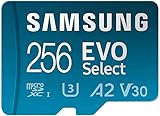
- ALL THE SPACE YOU NEED: Store tons of media on your phone, load games or download more apps on your tablet at top-notch speed, making transfers seamless and reliable
- FAST AND SMOOTH: With superfast U3, class 10 rated transfer speeds of up to 130MB/s¹,²and UHS-I Interface³ big apps load and run smoothly, while 4K video remains sharp with A2, V30, and USH-I Interface
- EXPAND AND STORE BIG: Find your perfect fit from 64GB, 128GB, 256GB and 512GB; Select the best capacity for all your memories. Speed class: U3
- YOU'RE FULLY PROTECTED: EVO Select Plus provides reliable storage and takes on life’s adventures with water⁴, temperature⁵, X-ray⁶, ⁷magnet, drop⁸, and wears⁹ out protection; Backed by a 10-year limited warranty; Proofs are for the microSD card and do not include the adaptor
- FLASH MEMORY CARD: Performance and reliability you can count on from the flash memory brand; All firmware and components are produced in-house
Why HBM prices and phone-memory prices can move differently
| Memory type | Main buyers | Supply and pricing characteristics | Potential consumer effect |
|---|---|---|---|
| HBM | AI accelerators and high-end data-center systems | Specialized stacked DRAM and advanced packaging; demand is concentrated and capacity is constrained. | Usually indirect for phones, through factory allocation and supplier investment. |
| Server DDR5 DRAM | Cloud and enterprise servers | Large-volume contracts and strong AI infrastructure demand can tighten availability. | Raises server bills first; can compete with other DRAM capacity. |
| Mobile LPDDR | Smartphones and tablets | Pricing depends on handset production, inventories and how much capacity suppliers assign to mobile parts. | Changes the cost of each phone’s RAM configuration, but pass-through varies by brand and model. |
| Client and enterprise NAND | PCs, phones, removable storage and SSDs | Highly cyclical; supply can be tight in one segment while excess inventory weighs on another. | Changes storage-tier costs and SSD prices, sometimes before handset prices. |
For this reason, a news report about soaring HBM prices is not a reliable standalone forecast for a particular phone’s LPDDR or UFS storage price. Buyers should identify the actual memory category in the product they plan to purchase.
What it means for smartphones
Memory content is rising in premium models
Phones increasingly ship with more RAM and larger flash-storage options to support on-device AI features, high-resolution cameras, games and longer software support. More gigabytes per unit increase exposure to component prices. A model with a larger RAM or storage tier has more cost at stake than an otherwise identical entry configuration.
Manufacturers have several ways to avoid a visible surcharge
Competition is intense in smartphones, so a maker may keep the advertised price unchanged while reducing trade-in value, shortening a promotion, changing the default storage tier or accepting a lower margin. It can also use a different memory supplier if qualification and supply reliability allow. Conversely, a flagship positioned around AI features may launch at a higher price while the company describes the change as a broader product upgrade rather than a memory surcharge.
What’s actually slowing this PC down?
Pick the symptom - the matching free tool is one click away.
Samsung’s FY2024 mobile outlook said major-component prices were expected to increase as hardware specifications advanced. It said the Mobile eXperience business would seek profitability by expanding Galaxy AI and emphasizing flagship sales. That is a strategy response, not a published formula linking a memory-cost change to a specific Galaxy price.
Rank #4

- EXPAND YOUR STORAGE. Insert your card to add massive storage up to 1.5TB[1] to your Android smartphones and tablets, digital cameras, and laptops.
- SPACE FOR MORE. With expansive capacities up to 1.5TB[1], capture and store hours of Full HD video[4], movies, music, games, photos, and podcasts.
- MOVE FILES FAST. Use your card with the SANDISK QuickFlow microSD UHS-I Card USB-A Reader[6] to achieve up to 195MB/s[2] read speeds [128GB-1.5TB models] and offload your content fast.
- LOAD APPS IN A SNAP. Rated A1[3], the SANDISK Ultra microSD card is optimized for faster app launch and overall app performance.
- EASY CONTENT MANAGEMENT. Easily back up, organize, and transfer your photos and videos with the SANDISK Memory Zone desktop or Android mobile app[5].
Samsung’s 2026 flagship line is a useful example, not a universal benchmark
Samsung identifies the Galaxy S26 family as its 2026 flagship line. Its memory configuration, regional pricing and promotions must be checked for the exact model and market. The existence of a flagship line does not establish how much of its retail price comes from memory or whether a future price change is caused by DRAM, NAND, display, camera, processor, currency or marketing decisions.
Independent reader supportYour contribution helps us test, update, and keep practical guides available for everyone.Effects on PCs, tablets, SSDs and servers
PCs and tablets
PCs with DDR5 system memory and larger SSDs are exposed to both DRAM and NAND cycles. A manufacturer can preserve a headline price by offering less RAM or storage, using a slower tier, or discounting less aggressively. Tablets face a similar trade-off, although sealed designs make later upgrades impossible and therefore make the original capacity choice more important.
Consumer and enterprise SSDs
SSD prices respond mainly to NAND supply, controller costs, inventory and the mix between client and enterprise products. AI data centers can tighten enterprise SSD availability even when a particular consumer NVMe model remains discounted. Conversely, a NAND oversupply can push consumer SSD prices down while server demand is strong. Exact model pricing and compatibility are retailer- and time-dependent.
Do these 3 things before closing this tab:
1Clear out junk files and repair common Windows errors2Scan for outdated or missing drivers - takes under a minute3Repair Windows errors before they cause bigger problemsServers and cloud services
Servers buy memory in much larger quantities than phones, so contract-price changes can affect capital-expenditure plans quickly. Cloud providers may spread higher hardware costs across service prices, defer purchases or improve utilization. Those decisions can eventually influence the price of AI applications, hosting and storage, but the pass-through is several steps removed from Samsung’s chip quote.
Best Value
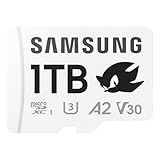
- READ/WRITE SPEEDS UP TO 180/130 MB/S: Load fast and play faster. With read and write speeds of up to 180 MB/s and 130 MB/s¹, you can sprint through load screens and quickly jump between games.
- STORAGE CAPACITIES FROM 128GB TO 1TB: Level up your gaming library with a wide range of storage options, from 128GB to 1TB—including your high-res files, photos, and 4K videos.
- EXTENSIVE COMPATBILITY: Sonic and his friends power up everything you play on from handheld gaming consoles to action cams and drones. All Sonic the Hedgehog PRO Plus microSD cards include a full size SD adapter.
- 6-PROOF PROTECTION WITH 10-YEAR LIMITED WARRANTY: The Sonic the HedgehogTM PRO Plus microSD card stands up to life's biggest bosses—like water and extreme temperatures. ² ³ ⁴ ⁵ ⁶ ⁷ ⁸ ⁹
- MAGICIAN SOFTWARE: Samsung Magician Software helps you unlock unstoppable Sonic the HedgehogTM PRO Plus microSD card performance. It includes product authenticity verification and drive health monitoring.¹⁰
How much do memory chips add to a phone?
Samsung’s disclosures do not provide a universal consumer figure, and no single percentage applies to all phones. The answer depends on:
- RAM and storage capacity installed in the specific model;
- the mix of LPDDR, UFS or other memory components;
- the contract price and purchase date;
- how much inventory the manufacturer already owns;
- the phone’s processor, display, camera and modem costs;
- regional taxes, currency and retailer margins; and
- whether the maker absorbs the increase or changes its promotion.
A useful calculation is conceptual: the memory-cost change per device equals the price change per gigabyte multiplied by the number of gigabytes purchased, adjusted for the supplier’s contract and yield. The retail effect then depends on the maker’s margin and competitive position. Without those inputs, assigning a dollar amount would be speculation.
Should you buy a phone, RAM or an SSD before prices rise?
There is no guaranteed date on which every memory product will become more expensive. Use the following decision process instead of reacting to a headline:
Windows Errors? Fix Them Before They Spread
Repair common Windows errors and clear accumulated junk for a smoother, more stable PC - no reinstall needed.Free scan · no reinstallCrashes, No Sound, or Screen Glitches?
Random freezes, missing sound and display glitches usually trace back to one bad driver. Find and replace yours safely.Free scan · under a minute- Check the exact product: Identify whether it uses mobile LPDDR, PC DDR5, client NAND or an enterprise SSD. HBM news alone is not enough.
- Check your timing: If you need the device or upgrade within the next few weeks, a good current price and return policy matter more than trying to call the memory cycle.
- Compare the complete configuration: A discounted phone with less storage may be worse value than a slightly dearer tier that meets your needs for several years.
- Watch inventory signals: Repeated stock-outs, shortened promotions and capacity changes are more useful than one supplier’s quarterly result.
- Keep compatibility in view: Desktop RAM and SSD upgrades require the correct interface, capacity limits and physical format. A price rise does not make an incompatible part a sensible purchase.
- Buy only the capacity you can use: Paying for an unnecessary high-memory tier exposes you to more component cost without improving your experience.
For a planned PC or SSD upgrade, compare several capacities and reputable sellers over time. For a phone, evaluate the total ownership period, software-support promise and storage requirement rather than assuming a memory-price headline predicts the launch price.
What to watch through 2026
Samsung’s interim report expects overall supply shortages to persist while suppliers prioritize server-focused output. The most useful indicators are therefore product-specific:
- contract and spot-price trends for the memory category you need;
- announced AI-server capacity and HBM production expansion;
- inventory levels reported by memory suppliers and device makers;
- phone and PC makers’ RAM and storage configurations;
- the length and value of retail promotions; and
- whether suppliers describe shortages, balanced supply or excess NAND inventory.
A sustained shortage can raise input costs, but a new factory, weaker device demand or inventory correction can reverse prices. Samsung’s results establish a mechanism and a direction of pressure; they do not determine every retailer’s price.
The practical conclusion
Samsung’s memory business affects electronics prices by influencing how much DRAM, HBM and NAND is available, which products receive manufacturing capacity and what suppliers charge. AI demand is pulling capacity toward servers and specialized memory, creating a credible risk of higher costs for some phone, PC and SSD configurations. The retail outcome remains a business decision: manufacturers balance component costs against competition, specifications, promotions, inventories and margins. Treat Samsung’s figures as an important market signal, not as a promise that your next phone or SSD will rise by a fixed amount.
Quick Recap
Product prices and availability are accurate as of the date/time indicated and are subject to change. Any price and availability information displayed on Amazon at the time of purchase will apply.

