
The Tool Desk
Outbyte Driver Updater FREEFix the driver behind crashes, sound loss and screen glitchesFind Drivers →Outbyte PC Repair FREEClear out junk files and repair common Windows errorsFree Scan →iTechGuides is reader-supported. When you buy through links on our site, we may earn an affiliate commission. As an Amazon Associate I earn from qualifying purchases. Learn more
Bully was difficult to make because Rockstar had to reshape its open-world approach around a school setting, build a combat system suited to that setting, and adjust the game world for features added late in development. Former developer Andrew Wood described production pressure and design changes in a GamesRadar retrospective. Dan Houser later said Rockstar’s limited creative bandwidth helps explain why a sequel never materialized. The available sources do not include a newly published interview with the exact headline “Dan Houser Reveals Rockstar’s Struggle to Make Bully.”
What made Bully difficult to develop?
Take-Two announced Bully on May 9, 2005, as a Rockstar Vancouver game for PlayStation 2 and Xbox. Its setting, Bullworth Academy, gave Rockstar a very different design problem from the crime-focused city sandbox associated with Grand Theft Auto: the action had to work within a school and its surrounding neighborhoods, rather than rely on a broad urban environment.
| # | Preview | Product | Price | |
|---|---|---|---|---|
| 1 |
|
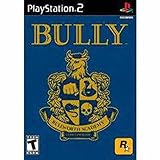
Bully PS2 - PlayStation 2 | $89.95 | Buy on Amazon |
| 2 |

|
New Take 2 Interactive Sdvg Bully Scholarship Edition Product Type Xbox 360 Game Action Adventure | $34.99 | Buy on Amazon |
| 3 |

|
Bully: Scholarship Edition (Renewed) | $39.99 | Buy on Amazon |
| 4 |

|
Bully: Scholarship Edition Bilingual | $37.19 | Buy on Amazon |
GamesRadar’s retrospective credits Dan Houser with devising the concept and writing the story with Jacob Krarup. It describes the game as a smaller world that opens up over time. The scale was more contained than a GTA city, but the school setting still needed to support exploration, social encounters, and action without simply reproducing the conventions of a crime game.
Changing the open-world formula
According to GamesRadar, the team reused much of the RenderWare engine and code from Vice City, while concentrating on brawler-style combat. That meant the setting shaped more than the story: fights, movement, and equipment had to feel appropriate to Bullworth. The retrospective contrasts the schoolyard premise and improvised equipment with the firearms and cars readers associate with Rockstar’s crime games, and points to bikes and skateboards as different ways to move around.
#1 Best Overall
- Great humor and voices bring the hilarious story to life
- Takes groundbreaking and original gameplay and humorous tongue-in-cheek storytelling to an entirely new setting: the schoolyard
- As a troublesome schoolboy, you'll stand up to bullies, get picked on by teachers and play pranks on malicious kids
- You'll also win or lose the girl and ultimately learn to navigate the obstacles of the fictitious reform school, Bullworth Academy
- At long last, stand up for the nerds, geeks, and unrepresented!
This was an adaptation of Rockstar’s open-world design, not simply a smaller GTA map. The school and nearby neighborhoods supplied the playable space, while the tone and combat were built around a troublesome student’s life at an academy. Take-Two’s original announcement described the player as a troublesome schoolboy navigating Bullworth Academy.
Late changes and production pressure
GamesRadar recounts a crisis around the 2005 E3 demo and reports that Sam Houser was unhappy with progress beforehand. Former developer Andrew Wood recalled severe stress and long hours. Those are retrospective accounts attributed to Wood and GamesRadar; they do not establish a quantified schedule, a universal experience across the team, or a development budget.
Rank #2
- Bully Scholarship Edition Product Type Xbox 360
Wood also recalled that skateboards were implemented late, requiring changes to level geometry so the feature could work with the environment. This illustrates a practical challenge in an interconnected open world: a new movement option affects the spaces players traverse, not just the character animation or controls. The retrospective also describes changes to the game’s visual direction, but the available sources do not provide independent confirmation or a detailed production timeline for those changes.
Crashes, No Sound, or Screen Glitches?
Random freezes, missing sound and display glitches usually trace back to one bad driver. Find and replace yours safely.Free scan · under a minutePC Slower Than It Used to Be?
A free scan shows the junk files, broken settings and background clutter dragging Windows down - then fixes them in one click.Free scan · Windows 10 & 11How Bully differed from Grand Theft Auto
| Design element | Bully | Rockstar’s crime-game model, as contrasted by GamesRadar |
|---|---|---|
| Setting | Bullworth Academy and nearby neighborhoods | A broader city sandbox |
| World scale | A smaller area that opens up over time | A larger urban environment |
| Combat emphasis | Brawler-style fighting | Combat associated with crime games, including firearms |
| Movement and equipment | Bikes, skateboards, and comic improvised equipment | Cars and firearms |
This comparison reflects the choices described in the GamesRadar retrospective, not a comprehensive comparison of every system in either series. Bully retained an open-world structure while changing the setting, scale, combat emphasis, and movement options to fit its school story.
Rank #3
- 8 new missions, 4 new classes, hilarious new characters, added two-player mode, new unlockables, and new rewards
- With 82 missions, 45 lessons, loads of mini games and collectibles, Bully provides over 30 hours of entertainment
- Over 100 voiced characters to socially interact with among several social groups - jocks, nerds, preppies, greasers, teachers, townies, carnies and, of course, girls
- Decide whether you have a positive or negative effect when interacting or accepting missions; you can say hello to fellow classmates or deliver mean wedgies
- New high-resolution textures and dynamic lighting and shadow system
What was Dan Houser’s role, and what did he say about a sequel?
GamesRadar credits Dan Houser with the original concept and, alongside Jacob Krarup, the story. In Take-Two’s May 9, 2005 announcement, Rockstar Games president Sam Houser said, “We are really excited about the first title to be developed by our Rockstar Vancouver studio.”
Houser’s 2011 explanation
In a Game Developer interview published November 18, 2011, Dan Houser said Rockstar did not want to start a sequel immediately. He favored letting a game’s reception settle before deciding what to do next, saying, “You have to make the right game before you release it.” He also said the company had “limited bandwidth and limited studios, and more games to make than we’ve started.” At that time, he described Bully as a property Rockstar might revisit if a team and a suitable slot became available.
His later explanation
GameSpot reported on September 29, 2025, that Houser cited the small size of Rockstar’s lead creative and senior leadership groups, as well as limited bandwidth, when explaining why Bully 2 had not happened. This was a retrospective explanation reported from a public appearance at Los Angeles Comic Con—not an announcement that a sequel is in production. The 2011 comments left open a possible return; the 2025 report explained why no sequel had materialized by then.
What’s actually slowing this PC down?
Pick the symptom - the matching free tool is one click away.
What the available record does—and does not—establish
The sources establish the original announcement date, announced platforms, broad setting, and attributed recollections of development challenges. They do not establish an audited labor figure, budget, sales total, or the length of a cancelled sequel’s production. Nor do they document a current sequel announcement. The original announcement names PlayStation 2 and Xbox; it is not evidence of present-day edition availability or compatibility.
The GamesRadar account is a retrospective featuring former developer Andrew Wood, and its publication date was not established in the material reviewed. Its production details are best read as attributed recollections rather than independently confirmed studio records. A separate Guardian interview from September 13, 2013, discusses performance capture and Bully’s use of child performers, but does not alter the central explanation Houser gave about Rockstar’s capacity to take on another project.
Quick Recap
Sources
- Take-Two Interactive / Business Wire, “Rockstar Games Announces Bully,” May 9, 2005
- GamesRadar+, “‘Bully was chaotic from the day I started’: Inside the making of Rockstar’s ‘GTA in boarding school’”
- Chris Morris, Game Developer, “Dan Houser On How Rockstar Does It,” November 18, 2011
- Blair Marnell, GameSpot, “Former Rockstar VP Talks GTA 6, Explains Why Bully 2 Never Happened,” September 29, 2025
- Keith Stuart, The Guardian, “Grand Theft Auto 5 – inside the creative process with Dan Houser,” September 13, 2013
Product prices and availability are accurate as of the date/time indicated and are subject to change. Any price and availability information displayed on Amazon at the time of purchase will apply.

