
What’s actually slowing this PC down?
Pick the symptom - the matching free tool is one click away.
iTechGuides is reader-supported. When you buy through links on our site, we may earn an affiliate commission. As an Amazon Associate I earn from qualifying purchases. Learn more
Programmable mouse buttons let you assign a physical button to a mouse function, keyboard input, or—in some software—a sequence of inputs. To use one in a PC game, configure the button in your mouse’s software or onboard profile, then bind the corresponding input to an in-game action if the game supports it. Extra buttons do not have a universal game meaning, and features such as per-game profiles and macros vary by mouse, software mode, and game.
What a programmable mouse button actually does
A programmable button is a physical switch whose usual input can be replaced by an assignment. Depending on the mouse and its configuration software, that assignment might be another mouse function, a keyboard key or key combination, or a macro made from several events. Logitech’s software documentation, for example, lists mouse functions, keystrokes, multikey macros, media controls, hotkeys, shortcuts, and other assignment types. That is an example of what one vendor’s software may offer—not a feature list guaranteed on every mouse.
The button itself does not know what “reload,” “open inventory,” or “use ability” means. Its assignment produces an input; the game decides whether that input corresponds to an action. A common setup is to make a side button send a keyboard key, then bind that same key to an action in the game’s controls. Alternatively, if the game recognizes the button’s mouse input directly, you may be able to bind it as a mouse button without translating it to a keyboard key.
Microsoft’s Win32 mouse-input documentation describes XBUTTON1 and XBUTTON2 as common extra mouse buttons. As Microsoft puts it: “The XBUTTON1 and XBUTTON2 buttons are often located on the sides of the mouse, near the base.” Those names identify common extra-button inputs; they do not guarantee that every game will expose them as bindable controls or assign them the same action.
#1 Best Overall

- HERO Gaming Sensor: Next generation HERO mouse sensor delivers precision tracking up to 25600 DPI with zero smoothing, filtering or acceleration
- 11 programmable buttons and dual mode hyper-fast scroll wheel: The Logitech wired gaming mouse gives you fully customizable control over your gameplay
- Adjustable weights: Match your playing style. Arrange up to five 3.6 g weights for a personalized weight and balance configuration
- LIGHTSYNC technology: Logitech G LIGHTSYNC technology provides fully customizable RGB lighting that can also synchronize with your gaming (requires Logitech Gaming Software)
- Mechanical Switch Button Tensioning: A metal spring tensioning system and metal pivot hinges are built into left and right computer gaming mouse buttons for a crisp, clean click feel with rapid click feedback
How the input gets from your hand to the game
- You configure an assignment. The mouse maker’s software can apply an assignment in a desktop profile, a game-specific profile, or—in supported cases—a profile saved to the mouse itself.
- You press the physical switch. The mouse or its software produces the assigned mouse event, key event, or macro sequence. The implementation varies by hardware and software.
- The operating system receives device input. The device exposes controls through its input interface. Microsoft’s GameInput documentation explains that a HID device’s report descriptor defines the buttons, switches, and axes available through that interface.
- The game handles what it supports. The game’s input system must recognize the resulting event, and its controls must allow that input to be bound or used. A remap to a keyboard key can be useful when that key is accepted by the game, but it does not make the game support every possible mouse feature.
This is a useful mental model, not a claim that all gaming mice send inputs through one identical path. Hardware, driver or configuration software, operating-system interfaces, and game input handling can differ. If a button works in one application but not another, the difference may be the selected mouse profile, the input the mouse is sending, or the second application’s handling of that input.
Remaps, profiles, onboard memory, and macros
These terms describe different parts of the setup. A remap changes what a button sends. A profile groups assignments and may be selected for a particular game or application. Onboard memory stores some settings in the mouse, where supported. A macro is a sequence of events rather than a single replacement input.
Rank #2
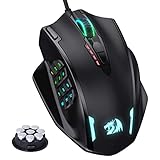
- Professional Gaming Mouse - Redragon M908 optical gaming mouse is designed with up to 12400 DPI, 5 adjustable DPI levels (500/1000/2000/3000/6200 DPI) meet your multiple needs, either for daily work or gaming. DPI can be adjusted freely by ±100 from 200 to 12400 via software. 1000 Hz polling rate, 30G acceleration and high-precision Pixart PAW3327 Sensor giving you a greater edge over your competition.
- RGB Backlight & Programmable Buttons - 16.8 million RGB LED color options (LED Backlight can be disabled). 18 programmable buttons, 5 memory profiles each with a dedicated light color for quick identification. Comes with 8-piece weight tuning set (2.4g x8), easy to change the weight to suit your games.
- Comfort & Precision At Your Hands - Redragon M908 gaming mouse is an essential computer accessory for die-hard with its aggressive design for hands! You will be amazed by the unmatched comfort, lethal accuracy and killer precision of our durable, desktop and laptop pro gaming mouse!
- High-end Design - Redragon M908 Mouse features 6 buttons and 12 MMO programmable side buttons. Durable smooth TEFLON feet pads for ultimate gaming control. 6ft braided-fiber cable with gold-plated USB connector ensures greater durability.
- Die-hard Players Choice - Whether you are targeting, aiming, slashing or attacking, a professional gaming mouse is your basic weapon! The mouse will be your ideal partner. Compatible with Windows 2000/ME/XP/03/VISTA/7/8/10 system for programmable using and Mac OS for normal using.
| Configuration approach | Where the assignment is managed | What to expect |
|---|---|---|
| Desktop or application profile | Companion software on the computer | Some software can select separate assignments for different games or applications. Logitech’s G600 documentation describes Automatic Game Detection for application-specific assignments. |
| Onboard profile | Stored in the mouse on supported models | Logitech says G600 assignments and DPI settings can be written to the mouse and used on another computer without additional software or configuration. That statement applies to the documented G600 behavior; it should not be assumed for every model or every type of assignment. |
| Macro | Configured in supported mouse software or profile | A macro can combine mouse events and keystrokes, include delays, and offer repeat options in the documented Logitech software. Available controls and behavior depend on the device and software mode. |
The profile distinction matters. Logitech’s G600 documentation says application-specific profiles do not work in onboard-memory mode. In other words, saving a configuration to the mouse can help carry settings between computers, but it does not necessarily preserve every convenience available when desktop software is actively selecting a profile. Logitech’s G502 support article separately documents onboard assignments for a mouse function, keystroke, or multikey macro, along with DPI and report-rate settings. Those are examples for the named models, not universal specifications.
The Tool Desk
Outbyte PC Repair FREERepair Windows errors before they cause bigger problemsFix Now →Outbyte Driver Updater FREEScan for outdated or missing drivers - takes under a minuteDriver Scan →Macro behavior can also change between modes. Logitech’s macro documentation describes event delays and repeat options, and says repeat options are unavailable in onboard-memory mode for the documented software. Do not assume that a macro created in a desktop profile will run identically from onboard memory, or that a mouse stores all macro features onboard. Check the documentation for the exact model and software version.
Rank #3
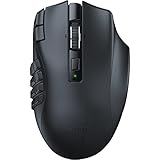
- 19 PROGRAMMABLE BUTTONS — Armed with ergonomically positioned buttons that provide an arsenal of commands at the fingertips for mapping out the essentials or going all out with advanced macros
- RAZER HYPERSPEED WIRELESS (2.4 GHZ) AND BLUETOOTH — Unleash seamless, low-latency performance that's 25% faster than other wireless tech or switch to Bluetooth for longer hours of gaming
- POWERED BY RAZER HYPERSCROLL TECHNOLOGY — Perform repeated commands rapidly or blaze through content in free-spin mode, or activate tactile mode for enhanced precision and satisfying feedback
- LONG BATTERY LIFE — With up to 400 hours on Bluetooth and 250 hours of seamless low-latency gaming on Razer HyperSpeed Wireless (2.4GHz), last longer in the heat of battle with this mouse before having to replace its battery
- FOCUS PRO 30K OPTICAL SENSOR — Razer’s brand-new sensor provides flawless tracking performance on a wider variety of surfaces including glass —supported by intelligent functions for enhanced aim and control
Set up a button for a game
The labels and screen layout vary by manufacturer and software version. Logitech’s instructions provide a concrete example of selecting a profile and assigning a command, but other mice may use different menus. Use this sequence as a reliable workflow rather than expecting identical buttons or labels in every app.
- Open supported configuration software and confirm the mouse appears. Use the software that supports your exact mouse model. If the mouse is not detected, confirm the model and software compatibility before changing game settings.
- Choose the profile you intend to use. Select the default profile for a one-size-fits-most assignment, or create/select a game-specific profile if the mouse and software support application detection. Make sure the profile is associated with the game you intend to launch.
- Select the physical button in the configuration view. Identify it by its location or the software’s button diagram. Avoid changing several buttons at once: assigning one, testing it, and then moving on makes it easier to spot a mistaken selection.
- Choose the output type. Assign a mouse function if that is what the game can bind; assign a key or key combination if you want the button to act like a keyboard input; choose a macro only if the software supports it and the game’s rules allow its use. Available choices are model- and software-specific.
- Bind the resulting input in the game. Open the game’s controls or key-binding settings and assign the mouse input or keyboard key that the button now sends to the intended action. If you remapped the button to a key, bind that key—not an assumed universal “side button” action.
- Test somewhere safe. Try the control in a menu, training area, or other low-risk setting. Verify both that the mouse sends the intended input and that the game responds to it.
- Check persistence if you need the setting on another computer. Confirm that your particular model stores the assignment you need onboard and that the feature works without its companion software. Save or select the relevant onboard profile as the model’s instructions describe.
When a button does not work
Diagnose the setup from the physical button toward the game. That helps distinguish a mouse configuration problem from a game-binding limitation.
Rank #4

- 【Extensive Fully Programmable Buttons】16 customizable buttons can improve your gaming skills and performance by complex custom button macro coding of reconfiguration and assignment. The button custom function combines multiple keys into one button that reducing your arsenal of spells (actions) and response time. 12 of 16 thumb grip programmable buttons were designed by different inclination angles to fit for your thumb tip to click.
- 【Dual Modes with Ultra-Speed Wireless Technology】UtechSmart VENUS Pro RGB Wireless MMO Gaming Mouse is a new revolution of RGB MMO gaming mouse. It has 2.4 GHz data transmission technology with Mini signal receiver(Nano) and stable 1. 5m wire transmission that provides professional-level performance. VENUS Pro overcomes the traditional limitation of wireless latency and connectivity which offers stable and fast data transmission with 10-meter reception boundary. You can take this mouse anywhere!
- 【Endurable Battery Life】 UtechSmart Venus Pro Wireless RGB MMO gaming mouse has special auto sleeping mode and low power consumption mode or extending the battery life of wireless mode. Large battery (1000mA) capacity which offers to recharge over 300 times and single 2 hours fully charge. The wireless mode lasts up to 70 hours that fulfill your long-time gaming experience. Moreover, UtechSmart actuation software provides battery specify consumption monitoring for you.
- 【Customizable Mouse High Precision Optical Sensor】Thousands of customers and professional gamers have tested and verified its function. Venus Pro has an UtechSmart custom PixArt PMW3335 ultra-accurate Optical sensor. Up to 16000 DPI with 5 DPI switchable stages and 1000 Hz polling rate that offers you an incomparable MMO and FPS gaming experience. The huge adjustable DPI range from 100-16000 comes with UtechSmart user-friendly software that can perfectly tweak the performance of mouse accuracy.
- 【Ergonomic Design Ensures Your Comfortable】Great as a real mouse stuck in your hand. The UtechSmart Venus Pro Wireless RGB MMO gaming mouse is flawlessly designed to alleviate wrist fatigue while being able to firmly hold the mouse in your hand. The grinding coating on the mouse surface increases the friction between your hand and the mouse. Grinding coating also provides gamer a extra comfortable sweat-resistant and skin-friendly gaming mouse.
- The wrong action happens. Reopen the mouse software and check the selected button, assignment, and active profile. Then check whether the game has a different binding for the input being sent.
- The button works on the desktop but not in the game. Confirm that the game-specific profile is active and associated with the correct application. If the software uses application detection, a profile that is not selected for the running game will not provide the assignments you expected.
- A key remap works elsewhere but not for the intended game action. Check the game’s own control settings and verify that the assigned key is bound there. The mouse sends an input; it cannot make a game accept a key or action that the game does not support.
- A stored profile behaves differently from the desktop profile. Check whether switching to onboard-memory mode removes application-specific switching or macro options. Logitech documents that application-specific G600 profiles do not work in onboard-memory mode and that repeat options are unavailable in onboard-memory mode for its documented macro software.
- A macro does not repeat or does not match the desktop version. Review the software’s repeat and delay settings, then check which features are supported in the active mode. Macro behavior is not established universally across mouse models.
- The game cannot bind the extra button directly. Try a supported keyboard-key assignment and bind that key in the game, if the game allows it. If the game does not accept the resulting input, a mouse remap cannot override that limitation.
Some games have their own rules about macros or automated inputs, and anti-cheat policies are game-specific. The available documentation cited here does not establish a universal rule for all games. Check the rules for the particular game before using a macro in play; a technically configurable function is not automatically permitted by every game.
Windows Errors? Fix Them Before They Spread
Repair common Windows errors and clear accumulated junk for a smoother, more stable PC - no reinstall needed.Free scan · no reinstallOutdated Drivers Are Slowing You Down
One free scan finds every outdated or missing driver and matches the right update for your exact hardware.Free scan · exact hardware matchChoosing a mouse for programmable controls
If you are shopping for the capability, compare the actual model documentation rather than relying only on button count or a “gaming” label. Logitech’s G600 and G502 support materials illustrate why: they document particular profile, onboard-memory, and assignment behaviors, but they do not establish current availability, retail price, or identical behavior in other mice.
Best Value
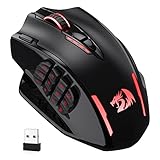
- Wireless/Wired, 2 Ways to Use - Dual modes of 2.4Ghz wireless and USB-C wired mode assemble with 12 side buttons MMO gaming mouse feature. Wireless/wired mode plus easy-access keybinding shortcuts maximize your damage.
- Lightning-Fast Is Not Just Saying - With improved Optical Pixart 3335 gaming sensor, M913 registers each click/swipe instantaneously within 1ms. Efficiency, accuracy and low-latency are all in the box.
- Stay Power-On Day to Night - Low-consumption advanced chip combo with a long lasting battery capacity, guaranteeing its use for long-hours. Eco mode reduces the usage of backlit and levels up the durability of 45 hours (backlit ON) to 80 hours.
- 5 DPIs Designed for Esports - Equipped with 5 onboard DPI levels (1000/2000/4000/8000/16000) which allow you to switch among different needs at ease. Personalizable DPI ± 100 meets your unique need and shorten the get-used-to time.
- Uncompromised Driver Support - 16 buttons including 12 side buttons and 16.8 million color lighting effects are all customizable with its own software, even in wireless mode. Ahead to the victory in your exactly wanted way.
- Button count and placement: Decide how many extra controls you can reach accurately. A button is useful only if its placement suits your grip and intended use.
- Profile behavior: Check whether the mouse supports per-game or per-application assignments and how the software selects them.
- Onboard storage: Verify which settings are saved to the mouse, whether they work on another computer, and whether they require companion software.
- Macro support by mode: Look for details about event sequences, delays, repeat behavior, and any limitations when using onboard memory.
- Operating system and game fit: Confirm that the configuration software supports your operating system and that the game accepts the input you plan to send.
For a portable setup, onboard memory can be valuable, but only if it stores the assignment you need. For different controls in different games, desktop software with application-specific profiles may be more important. These are not interchangeable benefits: the right choice depends on whether you value a carried configuration, automatic profile changes, macro features, or a straightforward one-button remap.
What programmable buttons cannot guarantee
Programming changes the input a button produces; it does not guarantee a particular gameplay result. The operating system and game must receive and handle the exposed input, and the game determines which controls can be bound. Nor does “onboard memory” guarantee that every profile or macro option is saved. Logitech’s model-specific documentation demonstrates both capabilities and limitations, while Microsoft’s input documentation describes how exposed controls are defined at the device interface.
For a simple remap, the most dependable approach is to assign one supported input and bind that input in the game. For per-game switching or macros, verify the exact mouse, software mode, and game rules first. The distinction between what a mouse can be configured to send and what a game accepts is the key to understanding why programmable buttons work smoothly in some setups and require adjustment in others.
Quick Recap
Product prices and availability are accurate as of the date/time indicated and are subject to change. Any price and availability information displayed on Amazon at the time of purchase will apply.

