
iTechGuides is reader-supported. When you buy through links on our site, we may earn an affiliate commission. As an Amazon Associate I earn from qualifying purchases. Learn more
Oil futures prices can influence what drivers eventually pay for gasoline, but they do not directly set the pump price. A futures quote reflects the market’s price for crude delivered in a particular future month. The retail price also includes the crude acquired by refiners, refinery margins, gasoline supply and demand, transportation, station operating costs, retailer margins, and federal, state, and local taxes. Those layers mean a futures move may reach the pump with a delay, be amplified by refinery conditions, or be partly offset by other costs.
The clearest way to understand the connection is to follow the price through the U.S. supply chain and compare the same benchmark, product stage, time period, and location.
What an oil futures price actually represents
An oil futures quote is the price agreed in a financial contract for crude oil delivery in a specified future month. The quote is a market signal about expected crude availability, demand, inventories, geopolitical risk, and production conditions. It is not the price a motorist pays and is not necessarily the exact price a refinery pays for every barrel it processes.
Futures trading can affect expectations and trading in related crude markets. Refiners, wholesalers, fuel distributors, and other market participants watch those prices when making purchasing, hedging, and inventory decisions. Physical crude prices, however, also respond to the oil’s quality, location, transportation cost, contract terms, and immediate supply conditions. A futures rally therefore creates pressure through the market rather than an automatic, one-for-one change at every filling station.
#1 Best Overall

- Programmable 3-In-1 Automotive Trip Computer: Diagnostic Scan Tool, And Up To 37 Digital Gauges In One (Vehicle Dependent)
- Real-Time Monitoring Capabilities: Watch Fuel Consumption, Cost-Per-Mile, Coolant Temperature, Engine Speed, Horsepower, And Much More In Real Time. Simple 5-button operation allows you to quickly and easily access the powerful features of the ScanGauge
- Wide Vehicle Compatibility: Works On All 1996 Or Newer Obd2 Cars, Including Gas, Diesel, Propane And Hybrid Vehicles with 16pin OBD2 port
- Diagnostic Trouble Code Functions: Checks For Diagnostic Trouble Codes (Dtcs), Clears The Codes, And Can Turn Off The Check Engine Light
- Simple Power Connection: No Batteries Required - The single connection to the diagnostic connector under the dashboard is all that is needed
Two distinctions prevent most misunderstandings:
- Futures versus spot: a futures contract concerns a later delivery month; a spot price describes a transaction for prompt delivery or near-term settlement.
- Crude versus gasoline: crude is the refinery input, while gasoline is the finished product sold wholesale and then retail.
EIA’s pump-price methodology uses a monthly average composite refiner acquisition cost to represent crude in the retail-price calculation. That is a different measure from a single intraday futures quote.
How a crude-market move travels to the pump
The connection is a chain with several decision points. Each stage can add to, delay, or offset the effect of a crude-price change.
- Futures markets set expectations. A higher price for a future delivery month can signal tighter expected crude supply or stronger expected demand. A lower quote can signal the opposite, although expectations can change before physical barrels change hands.
- Crude is bought by refiners. Refiners acquire crude through physical contracts and spot transactions. Their effective cost depends on the crude grade, location, transportation, and timing, not just the headline futures settlement.
- Refiners turn crude into gasoline. They incur operating, energy, maintenance, compliance, and financing costs. The value of gasoline relative to the crude input determines the refinery margin.
- Wholesale gasoline is traded and distributed. Rack, terminal, and other wholesale prices respond to gasoline inventories, refinery outages, seasonal specifications, blendstock availability, and local demand. These prices can rise even when crude is steady.
- Retailers set station prices. A station’s price reflects its delivered fuel cost plus distribution, credit-card and operating expenses, local competition, and its margin. Taxes are added according to the jurisdiction.
Because these transactions occur on different schedules, the pump price may not move on the same day as a futures quote. A station may still be selling fuel purchased under an earlier wholesale price, while another station has already replenished at a new cost.
The Tool Desk
Outbyte Driver Updater FREEFix the driver behind crashes, sound loss and screen glitchesFind Drivers →Outbyte PC Repair FREEClear out junk files and repair common Windows errorsFree Scan →What makes up a gallon of U.S. gasoline
Crude oil is usually the largest component, but it is only one part of the retail price. EIA separates the price into the following elements:
| Component | What it represents | How it can respond to oil futures |
|---|---|---|
| Crude oil | The crude input cost, represented in EIA’s methodology by the monthly average composite refiner acquisition cost. | A sustained futures move can influence physical crude costs and expectations, but the pass-through depends on benchmark, timing, grade, and location. |
| Refining costs and profits | The difference between a monthly spot gasoline price and the crude acquired by refiners. | Can widen or narrow independently of crude, changing gasoline prices even when crude moves little. |
| Taxes | Estimated federal and state gasoline taxes; local charges can also matter. | Usually do not track daily futures movements and vary by jurisdiction. |
| Distribution and marketing costs and profits | The remaining difference between the retail price and the other measured components, including delivery, station operations, and retailer margin. | Varies with local competition, freight, business costs, and the timing mismatch between wholesale and retail prices. |
EIA cautions that the measured refining and retail components can vary with the calculation period because retail prices may lag spot-market changes. In its methodology, EIA states: “Since there is typically a lag between when the spot price changes to when the retail price changes, the refining costs & profits component and the distribution & marketing costs & profits component can vary from month to month.”
Why the crude benchmark matters
Brent and West Texas Intermediate (WTI) are major crude benchmarks, but they do not describe exactly the same market. Brent is linked to internationally traded seaborne crude, while WTI is associated with U.S. inland crude pricing. Transportation links, regional production, export capacity, and refinery sourcing affect how closely each benchmark tracks a particular gasoline market.
An EIA study found that Brent, rather than WTI, was the main crude-oil price determinant for U.S. spot and retail gasoline during the period it examined. That is a period-specific result, not a timeless rule. EIA notes that before 2010 there was little reason to specify which benchmark mattered more because Brent and WTI prices were similar.
Recommended Free Tools
Rank #2

- [Vehicle Compatibility]: Only compatible with American car brands produced after 2008 as shown in the product image, and Japanese cars and European car brands produced after 2005 (not compatible with all pure electric vehicles)
- [Important]: (Not all car brands support reading oil temperature and transmission temperature and pressure data), a few car brands can display these data using custom PIDs with the assistance of our engineers. Please keep in mind that due to the variation of car brands and production dates, we cannot guarantee that all vehicles can be successfully upgraded
- [Working Principle]: The obd2 meter is connected to the car's 16-pin OBD2 interface via the OBD2 line, and can monitor in real time (water temperature, boost pressure, fuel consumption, speed and other car ECU data). The displayed data is related to the corresponding sensor. Without the corresponding sensor, no data can be read
- [Visual/auditory alarm]: When important ECU data such as water temperature, turbo pressure, exhaust temperature, etc. exceed dangerous values, the driver will be reminded through pop-up windows and sound alarms to prevent greater damage to the vehicle. It also has common fault code clearing and reminder functions
- [Ultimate Customization]:You can upgrade the instrument program, customize different display data combinations, display the data you want on various work interfaces, change the display color, and even personalize your car logo
When evaluating a headline, identify the benchmark, contract month, and quote date. A January Brent futures settlement should not be compared casually with a same-day national retail average or treated as the crude cost in a station’s current inventory.
How much does a $1-per-barrel oil change add to gasoline?
EIA gives a general conversion guideline: a $1 change in crude oil per barrel is about 2.4 cents per gallon of gasoline, based on 42 gallons in a barrel. The arithmetic is $1 divided by 42 gallons, or approximately $0.0238 per gallon.
This is a unit conversion and rough rule of thumb, not a retail-price forecast. It does not say that every $1 futures move will produce a 2.4-cent change at the pump. The actual result depends on:
- whether the move reaches physical crude acquisition prices;
- the time allowed for wholesale and retail prices to adjust;
- refinery margins and outages;
- gasoline inventories, blendstock costs, and seasonal fuel specifications;
- taxes and local distribution expenses; and
- the competitive pricing strategy of individual stations.
If crude rises by $10 per barrel and every other component stayed unchanged, the guideline would imply roughly 24 cents per gallon. In practice, other components rarely remain unchanged, so the observed pump-price change can be smaller, larger, earlier, or later.
Why gasoline prices do not fall as soon as oil prices do
Downward crude moves often appear to reach drivers slowly because the supply chain has inventory and timing effects. A retailer may have bought its current fuel days earlier. Wholesale contracts can reset on a different schedule from futures settlements. Refiners may be processing crude purchased before the decline, and a falling crude price may coincide with a tighter gasoline market that keeps wholesale prices elevated.
The reverse can happen during a crude-price rise: stations with recently purchased lower-cost inventory may delay an increase until that inventory is replaced, while stations that replenish daily may adjust sooner. EIA therefore warns that monthly component estimates are sensitive to the lag between a spot-price change and a retail-price change.
A single day’s futures chart is consequently a poor test of whether gasoline prices are “following” oil. Compare trends over a consistent period and use a wholesale gasoline measure between crude and retail.
Rank #3

- PROFESSIONAL ALL-IN-ONE OBD2 GAUGE: ➤This All-In-One Car HUD with Obd Scanner is specially designed for cars without speedometer/tachometer installed. The professional LCD display can not only help you monitor the speedometer, RPM, water temperature, fuel consumption, turbo pressure in your car, but also read and clear engine fault codes.
- SAFETY FIRST: ➤ More than 30 driving data (such as speed, RPM, water temperature, voltage, turbo pressure, etc.) will be displayed on the HUD display, and you can easily view every detailed data without looking down at the dashboard while driving, so as to prevent engine overload damage and protect vehicle and personnel safety
- PROFESSIONAL CUSTOMIZATION: ➤Committed to solving OBD2 instrument (incompatible with frequent crashes, black screen, pixel bottom, inaccurate data, etc.), the system has its own data fine-tuning function, suitable for Honda, for Toyota, for Volkswagen, and for Mazda models. It is born for them.
- ALARM FUNCTION: ➤ The OBD2 meter displays detailed real-time data to ensure safe driving on the road. It can alert you in the event of turbo pressure, high water temperature, overspeed, RPM alarm, engine trouble codes, etc., to prevent the car from overloading and let you drive safely.
- ADDITIONAL FEATURES: ➤ It can read vehicle data flow information, support unit switching from metric to imperial, and automatically adjust screen brightness, fast data transfer rate. With 1/4 mile, 0-60MPH, 0-100MPH acceleration test, it has automatic sleep mode, so you can leave this OBD meter in the car without unplugging it.
Refining margins can amplify or offset crude movements
Gasoline has its own market. The difference between the value of wholesale gasoline and the crude used to make it is commonly described as a refinery margin or crack spread. A wider crack spread means gasoline is becoming more valuable relative to crude; a narrower spread means the opposite.
What’s actually slowing this PC down?
Pick the symptom - the matching free tool is one click away.
When margins amplify a crude increase
Suppose crude futures rise while refinery outages reduce gasoline supply. Wholesale gasoline can increase by more than the crude component alone because buyers are competing for fewer available barrels. The pump price then reflects both a higher crude input and a higher refining margin.
When margins offset a crude increase
If gasoline demand is weak or inventories are ample, the wholesale gasoline price may rise less than crude, or even fall relative to it. A refinery can face a higher crude cost without an equivalent increase in the value of its gasoline output.
Why seasonal changes matter
U.S. gasoline specifications change by season and region. Reformulated and summer-grade fuels can cost more to produce or distribute, and a refinery outage during a specification change can tighten local supply. Those product-market effects can dominate a short-term crude-price move.
Why drivers in different places pay different prices
National averages conceal substantial local variation. State and local taxes differ. Some areas require special gasoline formulations. Pipeline access, terminal capacity, distance from refineries, weather disruptions, and regional inventories change delivered wholesale costs. Station density and competition influence how much of those costs is passed through.
Two stations a few miles apart can also have different timing. One may have received a new load at a higher rack price; another may still be selling older inventory. Retailers may adjust in different increments or use fuel prices to attract customers to a convenience store. These differences are why a national futures headline cannot predict the exact price at a particular address.
Independent reader supportYour contribution helps us test, update, and keep practical guides available for everyone.How to read an oil-and-gasoline price headline
Use the following checklist before drawing a conclusion:
Rank #4
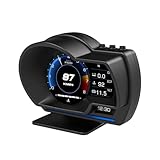
- P6 Speedometer Product Introduction: This heads up display for cars is a brand new upgraded version of the OBD+GPS intelligent instrument panel, with a very beautiful LCD display screen that looks great on your vehicle. Ordinary instruments only have OBD mode, while P6 is an OBD+GPS dual-mode system, which is more stable, smoother, and has richer data display
- Please Note: This obd2 gauge display head up display has dual modes of GPS and OBD, and comes with an OBD cable and USB cable. However, it is worth noting that the OBD system is only applicable to some gasoline vehicles manufactured after 2009; If your car is a diesel or pre-2008 model, you can only use GPS mode. If the OBD system is not compatible, please switch to the GPS system
- Speedometer Function: The functions of the heads up display for cars OBD system include vehicle speed, water temperature, voltage, fuel consumption, speed, single mileage, total mileage, driving time, driving direction, search for stars, altitude time, intake pressure, oil temperature, air-fuel ratio, turbine pressure, intake pressure, acceleration test, brake test, clearing fault codes, reading data flow alarm function; The functions of the heads up display GPS system include vehicle speed, voltage, satellite time, altitude, satellite quantity, driving direction, single mileage, driving time, acceleration test, brake test, and alarm function
- Automatic alarm function: The car head up display has multiple alarm functions that can improve driving safety, such as overspeed alarm, speed alarm, water temperature alarm, and voltage alarm. During normal driving, the ambient light appears blue (automatically adjusts brightness to adapt to the environment); When driving abnormally (such as speeding), the ambient light will turn into a red warning, which better enhances driving safety and safeguards your driving journey
- Product features: This tablet monitor has multiple functions to meet your various needs. HUD has 12 different screens that can be freely switched, bringing you a brand new driving experience; Multiple installation methods allow for easy placement, ensuring clear and natural installation in any corner without obstructing your line of sight
| Question | What to compare | Why it matters |
|---|---|---|
| Which market? | Brent or WTI; futures or spot crude. | Benchmark relationships vary by period, and a futures quote is not the same as EIA’s crude-cost measure. |
| Which product stage? | Crude oil, wholesale gasoline, or retail gasoline. | Refining margins separate crude input costs from the value of the gasoline product; retail adds taxes and distribution. |
| Which time frame? | Contract delivery month, spot observation, and retail survey week. | Retail adjustment can lag spot-market changes. |
| Which place? | U.S. national average, state, region, or individual station. | Taxes, formulations, supply routes, competition, and operating costs vary geographically. |
| What are refineries doing? | Wholesale gasoline relative to crude, inventories, outages, and crack spreads. | Refining economics can raise or lower gasoline prices independently of crude. |
A headline saying “oil rose” is incomplete unless it identifies the benchmark, the contract or spot market, the date, and the gasoline market being discussed.
Dated examples that show the relationship
May 2026 component share
EIA’s historical pump-component table reports that crude oil represented 51.9% of the U.S. regular gasoline retail price in May 2026. That percentage shows why crude is often the largest single influence, while also showing that 48.1% came from refining, taxes, distribution, and marketing components in that month. The share is time-sensitive and should not be treated as a permanent split.
Do these 3 things before closing this tab:
1Scan for outdated or missing drivers - takes under a minute2Clear out junk files and repair common Windows errors3Fix the driver behind crashes, sound loss and screen glitchesMarch 2021 rise
In a March 30, 2021 historical account, EIA reported that U.S. regular gasoline averaged $2.85 per gallon on March 29 after 17 consecutive survey weeks of increases, the longest streak since 1994. EIA attributed the broader rise primarily to higher crude-oil prices and higher wholesale gasoline margins. This is a historical episode, not a current price or forecast.
September 4, 2026 analysis
EIA’s September 4, 2026 analysis described elevated crack spreads and crude prices as contributors to higher pump prices. It presented the retail-price contributors as crude oil, refinery margin, and retail, distribution, and taxes—an example of several components moving together rather than futures alone determining the outcome.
A practical method for estimating the likely effect
For a rough, disciplined estimate rather than a promise, work through these steps:
- Record the exact crude quote. Note Brent or WTI, futures or spot, contract month, settlement date, and the size of the move.
- Convert the crude change. Multiply dollars per barrel by approximately 2.4 cents per gallon. Label the result as a crude-only guideline.
- Check wholesale gasoline. Determine whether the gasoline product price and crack spread moved in the same direction. A widening margin can add to the crude effect; a narrowing margin can offset it.
- Allow for timing. Compare retail prices over several days or weeks rather than expecting a same-day response.
- Adjust for location. Account for the state and local tax structure, formulation requirements, supply route, and local competition.
The result is a range of plausible pressure on prices, not a station-specific forecast. A current contract quote by itself cannot reveal the inventory cost, tax, or margin used by a particular retailer.
PC Slower Than It Used to Be?
A free scan shows the junk files, broken settings and background clutter dragging Windows down - then fixes them in one click.Free scan · Windows 10 & 11Outdated Drivers Are Slowing You Down
One free scan finds every outdated or missing driver and matches the right update for your exact hardware.Free scan · exact hardware matchCommon mistakes to avoid
- “Futures set the pump price.” They influence expectations and crude-market pricing but do not replace physical crude costs, gasoline-market conditions, taxes, or retail decisions.
- “Every $1 move equals 2.4 cents at the pump.” The 2.4-cent figure is EIA’s approximate crude-to-gallon conversion based on 42 gallons per barrel, not a guaranteed retail pass-through.
- “WTI always explains U.S. gasoline.” EIA’s period-specific study identified Brent as the main determinant during the period analyzed; benchmark relevance can change.
- “A lower futures quote should immediately lower gasoline.” Inventory, wholesale contracts, refining margins, and retail timing can delay or offset a decline.
- “The national average applies to every driver.” Taxes, fuel specifications, logistics, competition, and station costs create regional and local differences.
Bottom line
Oil futures prices matter because they shape expectations and can influence the crude costs that feed refineries. The price drivers pay, however, is formed later through wholesale gasoline markets and retail operations. Crude is commonly the largest component, but refining margins, taxes, distribution, local supply, demand, and timing determine how much of a futures move reaches a particular pump—and when.
Quick Recap
Product prices and availability are accurate as of the date/time indicated and are subject to change. Any price and availability information displayed on Amazon at the time of purchase will apply.

