
iTechGuides is reader-supported. When you buy through links on our site, we may earn an affiliate commission. As an Amazon Associate I earn from qualifying purchases. Learn more
For a basic emergency reserve, store at least one gallon of water per person per day for three days—three gallons per person total—for drinking and sanitation. Also keep at least three days of non-perishable food for every household member. These are FEMA’s starting figures, not a maximum: heat, strenuous activity, illness, nursing, children, pets, medical needs and local hazards can require a larger plan.
The official starting point
FEMA’s Ready checklist gives two simple minimums for a short-term emergency kit. The water figure includes both drinking and sanitation, while the food figure is expressed as a duration rather than a calorie target.
| Supply | Minimum starting point | What it means in practice |
|---|---|---|
| Water | 1 gallon per person per day for at least 3 days | Plan on 3 gallons per person for the initial period, then add capacity for pets and special circumstances. |
| Food | At least a 3-day supply of non-perishable food per person | Choose shelf-stable food your household will actually eat, with little preparation and little or no added water. |
Use the figures as a floor for a short disruption. Your local emergency-management office may recommend a longer duration for hazards such as hurricanes, wildfire, winter storms, flooding or extended power outages. A household that depends on electric cooking, refrigeration, powered medical equipment or frequent medication should also plan beyond the bare minimum.
Calculate your household’s water quantity
Use the three-gallon-per-person formula
Multiply the number of people by three gallons. The result is the minimum water volume for the initial three-day period:
#1 Best Overall

- THE ULTIMATE SURVIVAL ESSENTIAL: With 120 servings of entrées meals, ReadyWise Grab & Go Bucket is the perfect starting point for anyone serious about preparing for the future. Stay ready for anything, from power outages to outdoor adventures!
- STORED FOR THE FUTURE: Our bucket offers up to 25 years of shelf life, ensuring your emergency food supply stays fresh. Plus, its stackable design fits conveniently in your pantry, car, or backpack, making it ideal for long term food storage.
- ULTRA CONVENIENT: The split bucket lid is a game changer! It gives you quick access to your emergency food pouches and doubles as a tray and food holder for your servings. Just add water and enjoy a delicious premade meal! Yes, it's that easy!
- ENJOY NUTRITIOUS MEALS: Our emergency supplies offer convenience and tasty, nutrient rich options, including Cheesy Macaroni, Lasagna, Teriyaki Rice, and Chicken Flavored Noodle Soup! Perfect for travel necessities, as well as home and kitchen use.
- OUTDOOR & HOME EMERGENCY: Our meals are your new ally for backpacking supplies or easy freeze dried food storage to keep you fueled during unexpected events or satisfy your craving for a delicious meal. Prepper with READYWISE!
People × 3 gallons = three-day water baseline
| People | Three-day baseline | Planning note |
|---|---|---|
| 1 | 3 gallons | Add water for any pet or individual need. |
| 2 | 6 gallons | Keep the containers accessible without moving heavier supplies first. |
| 4 | 12 gallons | This is the arithmetic result of the FEMA baseline, not a separate FEMA statistic. |
| 6 | 18 gallons | Divide the total among several manageable containers. |
For example, a four-person household starts with at least 12 gallons for three days. That quantity is not all drinking water: the recommendation deliberately covers sanitation as well. Add a separate allowance for pets rather than assuming the human calculation covers them.
Understand what the gallon includes
The gallon-per-person figure is a combined emergency allowance for drinking and basic sanitation. Drinking needs vary with body size, diet, health, temperature and exertion; sanitation can include hand cleaning, minimal washing and other essential hygiene. If you reserve every drop for drinking, you may have no practical water for hygiene.
Increase the amount for heat and exertion
FEMA Community Emergency Response Team (CERT) training material dated August 2019 says an active person needs at least three quarts of drinking water daily. It also warns that heat or intense activity can double that drinking requirement. Those figures are older training guidance, not a universal prescription for every person, and they do not replace medical advice. In a hot environment, during cleanup work or when evacuation requires walking, build extra capacity before the event rather than waiting until supplies run low.
Recommended Free Tools
Account for people who need more
FEMA’s CERT guidance identifies children, nursing mothers and ill people as groups whose needs may be higher. Consider age, pregnancy or nursing, fever, vomiting, diarrhea, mobility limitations and medications that affect hydration. Anyone with a condition requiring a specific fluid plan should follow their clinician’s instructions. If an emergency is likely to last longer than three days, increase both the quantity and the number of containers so the reserve is usable without rationing dangerously.
Rank #2

- BE READY TO GO: At home, out camping, or caught in a day to day rush when disaster strikes, ReadyWise 1 Bucket Bundle Survival Kit has you covered with 132 servings of ready to eat meals, keeping you fueled for any unexpected emergencies!
- PREPARED FOOD STORAGE: Stackable and easy to store in your pantry, car, or emergency kit. With “just add water” convenience, the bucket’s split lid doubles as a handy tray or small table to support your food. Enjoy anytime and anywhere!
- LONG TERM RELIABILITY: With up to a 25 year shelf life, READYWISE Emergency Food Supply keeps you and your family secure during unexpected events, giving you peace of mind and ensuring you're always prepared and protected for the long haul.
- NUTRITIOUS & YUMMY: Our protein meals are high in nutritional value and ideal for a quick emergency meal. Enjoy 3 breakfast options, 8 gourmet entrées, and 2 drink choices, including Cheesy Macaroni and our Whey Milk Alternative.
- EXTREME SITUATIONS (OR NOT): Whether for unexpected situations or just a quick, nutritious meal at home, our emergency food buckets are the perfect solution to save your day with all the nutrients you need to stay fueled!
Store emergency water so it remains usable
Choose suitable containers
FEMA’s 2019 CERT material describes storing water in plastic containers. Use containers made for potable or food storage, with secure closures and no history of holding chemicals. Smaller containers are easier to lift and distribute; larger containers reduce the number of openings but may be unsafe to move when full. Select a total capacity that matches your calculation while leaving room for a separate pet supply.
Place containers in a cool, dark location
Keep stored water away from direct sunlight in a cool, dark place. Avoid locations exposed to fuel, pesticides, cleaning chemicals, exhaust fumes or temperature extremes. A basement, interior closet or shaded utility area may work if it stays clean and does not freeze. Put containers where you can reach them during a power outage or evacuation, not behind a blocked appliance or under unstable shelving.
Rotate and inspect the reserve
The August 2019 CERT document recommends replacing stored water every six months. Treat that as dated training guidance: storage products, filling instructions and local health advice may differ. Follow the container maker’s directions and your local emergency agency’s current guidance. Mark each container with the fill or replacement date, inspect it for leaks, swelling, cloudiness, odor or a damaged seal, and replace anything questionable. Do not rely on an unmarked container whose history you cannot verify.
Quick wins for a faster PC:
Scan for outdated or missing drivers - takes under a minuteDriver Scan →Repair Windows errors before they cause bigger problemsFix Now →Keep access equipment with the water
Store a clean way to pour or dispense water and a method for measuring small amounts. Keep sanitation supplies nearby so the reserve is not opened repeatedly for avoidable tasks. If local authorities issue a boil-water or contamination notice, follow that notice; bottled or stored water may still need a specific treatment method for the situation.
Rank #3

- READY WHEN YOU ARE: At home, out camping, or caught up in the day-to-day rush - when disaster strikes, READYWISE Grab & Go Bucket has you covered with 150 servings of freeze dried meals ready to support you in any situation.
- PREPARED FOOD STORAGE: Stackable and easy to store in your pantry, car, or emergency kit. With “just add water” convenience, the bucket’s split lid doubles as a handy tray or small table to support your food. Enjoy anytime and anywhere!
- LONG TERM RELIABILITY: With up to a 25 year shelf life, READYWISE Emergency Food Supply keeps you and your family secure during unexpected events, giving you peace of mind and ensuring you're always prepared and protected for the long haul.
- NUTRITIOUS & YUMMY: READYWISE protein packed prepper bucket delivers bold, savory & satisfying flavor in every portion. Enjoy quick meals or to boost your emergency food kit with options like Cheesy Macaroni, Pasta Alfredo, Whey Milk Alternative & more.
- EXTREME SITUATIONS (OR NOT): From power outages to packed schedules on busy weekdays, our survival food bucket offers prepared meals you can count on. Nutritious, tasty, and made to save time when you need it most!
Plan the three-day food supply
Count people and eating occasions
Start with three days for each person, then map the food to breakfasts, lunches, dinners and snacks. The FEMA checklist establishes the duration but does not prescribe a calorie number. Build portions that reflect the people in your home rather than buying an abstract “emergency” quantity. Include food for anyone who is pregnant, nursing, ill, elderly, very active or managing a medically required diet.
Prioritize shelf stability and low preparation
FEMA’s Ready Responder toolkit advises selecting foods that require no refrigeration, preparation or cooking, use little or no water, and are foods your family will eat. That makes ready-to-eat items especially valuable when electricity, fuel and clean cookware are unavailable. Examples include sealed canned or pouched proteins, beans, vegetables, fruit, crackers, shelf-stable spreads, cereal, dried fruit and packaged meals that can be eaten as supplied. Choose examples that fit your household’s allergies, religious rules, texture preferences and nutritional needs.
Match food to the equipment you have
If any item is canned, keep a manual can opener in the same kit. Do not assume an electric opener, microwave or electric kettle will work during an outage. Include utensils, cups, napkins and a way to close partially used packages. Foods that need hot water may be useful only when you have a safe, reliable way to heat water and enough water to spare; otherwise they can consume the reserve you intended for drinking and sanitation.
Protect dietary and medical requirements
Read labels for allergens, sodium, sugar, gluten, lactose and other restrictions. Keep required formula, medically necessary nutrition products or other prescribed supplies according to the treating professional’s directions. Rotate emergency foods into normal meals before their quality declines, then replace them with new stock. Familiar foods are more likely to be eaten under stress and make rotation easier.
Rank #4
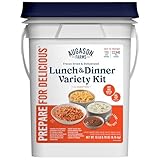
- LONG SHELF LIFE CAMPING COOKING ESSENTIALS - Designed for long term storage in your kitchen, camping supplies, or earthquake emergency kit, this bucket of dehydrated prepared meals ready to eat has 113 servings and a 25-year shelf life.
- EASY MEALS WITH LOTS OF VARIETY - Spanning 13 meal varieties and providing approximately 22,940 total calories inside a convenient 4 gallon bucket, these emergency supplies for instant meals are great for making quick, healthy lunches and dinners.
- JUST ADD WATER AND COOK - Just add water and heat on a stove to prepare these ready to eat meals, no advanced cooking equipment or skills needed.
- IDEAL FOR TRAVEL AND CAMPING MEALS - This shelf stable dehydrated food survival kit is stored in a durable 4 gallon pail that is portable, convenient, and perfect for outdoor camping food meals or at-home meal prep.
- QUICK MEALS AND PREPARED FOODS - Augason Farms Lunch & Dinner meals ready to eat include lasagna marinara, fettuccine alfredo, creamy rice & vegetables, macaroni and cheese, stroganoff pasta, cheesy broccoli rice, Spanish rice, creamy potato soup, cheesy broccoli soup, vegetable stew, black bean burger mix, instant mashed potatoes, and chocolate pudding.
Build a household-adjusted plan
Step 1: List everyone and every animal
Write down residents, frequent guests who may shelter with you, pets and anyone whose needs differ from the average adult. Record allergies, medical diets, infant-feeding needs and mobility limitations. This list drives both quantity and packaging choices.
Step 2: Calculate the water baseline
Multiply the number of people by three gallons. Add a separate pet allowance and an extra margin for hot weather, strenuous work, illness, nursing or evacuation conditions. Keep the arithmetic with the supplies so another household member can verify it quickly.
Step 3: Select three days of food per person
Choose a mix of familiar, shelf-stable foods that can be eaten with little or no water and no refrigeration. Check every item against the household’s dietary list. Add the manual can opener and eating utensils before storing the food.
Step 4: Package for real access
Divide heavy water and food into containers that the people who may need them can lift. Keep one immediately accessible kit for evacuation and a larger reserve in the safest cool, dark storage area available. Label contents and dates on the outside.
Best Value

- TASTES GREAT: Ready Hour freeze-dried food is designed for emergencies but tasty enough for everyday use.
- BE PREPARED: The world is unpredictable. Be ready for anything with our durable and flood-safe container which features a convenient handle for easy transport. Requires no refrigeration.
- LASTS UP TO 25 YEARS: Includes up to 120 total servings. Can be stored anywhere that offers a cool and dry environment.
- USE ONLY WHAT YOU NEED: Made for multiple uses; includes 22 resealable pouches that let you use only what you need and save the rest for later. Re-sealed pouches last up to a year.
- MADE IN THE USA from domestic and imported goods: We proudly manufacture and pack our foods in Salt Lake City, Utah.
Step 5: Rehearse the plan
Open one package, prepare one meal without mains power and move one water container. This reveals missing tools, excessive weight, difficult seals and foods nobody will eat. Correct those problems while normal services are available.
Adjustments for common emergency conditions
Heat waves and strenuous activity
Hot conditions increase fluid loss. If household members will be outdoors, clearing debris or walking to a shelter, increase water before the event. Keep the reserve shaded and avoid leaving containers in a hot vehicle, where temperature can compromise packaging and make water difficult to handle.
Children, nursing and illness
Children may need different amounts and easier-to-use packaging. Nursing mothers and people who are ill may require more fluid than the baseline. Plan for oral rehydration or other medically directed products only when appropriate for the individual, and seek professional guidance for severe dehydration, persistent vomiting or diarrhea.
Do these 3 things before closing this tab:
1Fix the driver behind crashes, sound loss and screen glitches2Repair Windows errors before they cause bigger problems3Scan for outdated or missing drivers - takes under a minutePets
Pets need their own water and food plan. Store food they already tolerate, account for medications and include bowls or a dispensing method. Do not assume a pet can safely share every human food or that the household water calculation covers an animal.
Evacuation and sheltering
A reserve stored at home may not travel with you. Keep a portable portion of water, ready-to-eat food, can opener and utensils where they can be loaded quickly, while maintaining the larger home reserve for people who shelter in place. Follow instructions from local authorities if evacuation orders change the destination or duration.
Quick Recap
Common planning mistakes and fixes
- Counting only drinking water: The FEMA baseline includes sanitation. Keep enough total water for basic hygiene instead of using the entire supply for beverages.
- Buying food that needs a kitchen: Replace items requiring refrigeration, cooking or substantial added water with ready-to-eat alternatives.
- Ignoring the can opener: Put a manual opener in the food container, not in a drawer that may be inaccessible during an outage.
- Storing everything in one heavy container: Divide the total into manageable units so one person can move and dispense it.
- Forgetting rotation: Date containers and foods, inspect them regularly and replace water according to current product and local guidance; the six-month interval comes from FEMA CERT material dated 2019.
- Using unfamiliar foods: Test and rotate foods your household will eat, including medically and culturally appropriate choices.
- Treating the minimum as a guarantee: Three days is a starting duration. Local hazards, official instructions and household conditions may justify a longer reserve.
A simple 72-hour review checklist
- Count people, pets and anyone with special hydration or dietary needs.
- Multiply people by three gallons and record the result.
- Add extra water for heat, intense activity, illness, nursing and pets.
- Choose three days of shelf-stable food for each person.
- Remove foods that require refrigeration, cooking or significant water unless you have a dependable backup method.
- Pack a manual can opener, utensils, cups and dispensing supplies.
- Label water dates and store containers in a cool, dark place away from sunlight and chemicals.
- Keep a portable subset ready for evacuation and review the complete reserve at least twice a year.
Product prices and availability are accurate as of the date/time indicated and are subject to change. Any price and availability information displayed on Amazon at the time of purchase will apply.

