
iTechGuides is reader-supported. When you buy through links on our site, we may earn an affiliate commission. As an Amazon Associate I earn from qualifying purchases. Learn more
Least privilege means giving each person, application, and system process only the access and permissions it needs to do its assigned work. It reduces the potential for mistakes or compromised accounts to expose or alter information—but it does not, by itself, limit how much personal data an organization collects or keeps. That requires data minimization, a related but distinct practice.
What is the principle of least privilege?
NIST defines least privilege as restricting user or process privileges to the minimum necessary for assigned tasks. In practice, that means limiting both the resources an identity can reach and the actions it can perform. A staff account might be allowed to read particular records but not change or delete them; a process might access only the files and services needed to complete its function.
The principle applies to human users and to non-human identities such as applications and system processes. NIST’s least-privilege glossary definition describes the principle, while NIST SP 800-171 Rev. 3 control 03.01.05 calls for necessary authorized access, authorization of security functions and security-relevant information, and periodic privilege reviews. The organization defines the review frequency for its environment.
The Tool Desk
Outbyte PC Repair FREEClear out junk files and repair common Windows errorsFree Scan →Outbyte Driver Updater FREEScan for outdated or missing drivers - takes under a minuteDriver Scan →How does least privilege protect data?
Access control limits who or what can use information and what they can do with it. If an account or process is compromised, narrowly scoped permissions can limit the resources available to an attacker. They can also reduce the harm from an accidental change, such as deleting or overwriting data when a task required only viewing it.
#1 Best Overall

- FAST, STABLE CONNECTION: Simply plug in and keep the smart outlet connected to your stable 2.4GHz network. Enhanced WiFi + Bluetooth connection is faster and more stable. Note: Don't support 5G WiFi.
- HAND-FREE VOICE CONTROL: Smart plugs that work with Alexa & Google Home Assistant. Just use simple voice commands to control your devices. Tips: please connect smart plug to the GHome app first—cannot link directly to Alexa/Google Home.
- SCHEDULES & AUTO-OFF TIMER: Easy to set timers and add schedules to connected devices circularly or randomly, making them work as scheduled like auto-off and auto-on.
- APP REMOTE & GROUP CONTROL: Use your smartphone to turn home appliances on and off anytime, anywhere. Set up a group for all outlet timer indoor, control them with just one tap, and manage multiple smart outlet plugs simultaneously.
- CERTIFIED SAFETY & COMPACT DESIGN: This wifi outlet plug combines assured reliability and a small size. It is ETL and FCC certified, rated at 10A, 1200W, and 120V, and its space-saving compact design fits perfectly into any corner of your home.
Least privilege is not a guarantee that a breach or mistake cannot happen. Its value is limiting the access available to an identity at the time it is used. NIST’s zero-trust architecture guidance describes accurate least-privilege decisions for each request and recommends granting only the permissions—such as read, write, or delete—needed for the task.
How is least privilege different from data minimization?
Least privilege restricts access to data; data minimization restricts the personal information collected, disclosed, processed, or retained. The practices complement each other, but one does not substitute for the other. A service could tightly control access to a full birth date while still collecting more information than its purpose requires.
Rank #2

- WIDE APPLICATION-- The board can be widely used for controlling industry equipment and electrical appliances, such as lights, air-conditioning or refrigerator at your home.
- REMOTELY CONTROLLING YOUR DEVICES-- You can feel to enjoy the remote controlling of your other devices with the Ethernet controller board. The board has integrated the web server, you can control electrical appliances via opening the page on your devices like computer, pad or smart phone when you are in office.
- WITH 16 CHANNEL RELAY-- This Ethernet controller board comes with 16-channel relay. So, you could control up to 16 devices remotely on LAN or WAN at the same time, meet your different requirements.
- RJ45 INTERFACE-- This module is equipped with RJ45 interface, via RJ45 telecommunications connection for network control. It features high stability and high precision, easy to install and operate.
- UNIQUE CONNECT CONTROL-- The module as server can accept client control when connect to remote server as client.
NIST’s privacy glossary defines minimization as limiting personally identifiable information (PII) processing to what is directly relevant and necessary for an authorized purpose, and retaining it only as long as needed for that purpose. Its SP 800-63C guidance gives an example: when a service only needs to know whether someone meets an age threshold, it can request a yes-or-no age attribute instead of a full birth date, where feasible.
Quick wins for a faster PC:
Repair Windows errors before they cause bigger problemsFix Now →Fix the driver behind crashes, sound loss and screen glitchesFind Drivers →Clear out junk files and repair common Windows errorsFree Scan →How to implement least-privilege access
Start with a specific task and the resources it requires, rather than assigning broad access by default. NIST SP 800-171 Rev. 3 requires organizations to define the frequency of privilege reviews; the right roles and cadence depend on the systems and risks involved.
Rank #3
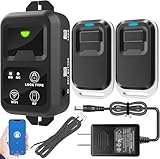
- ✅ The main feature of this kit is that it allows you to open the door simply by pressing the wireless RF remote instead of moving to the door physically when someone visits. The remote communicates with the wireless receiver, which can program up to 40 remotes, and it has a range of 160 feet.
- ✅ EASY USE: Transmits data to a cloud platform through the Wi-Fi Router, which enables you to remotely control the connected appliances via free Tuya Smart App. You can download the iOS version in App Store and the Android version in Google Play.
- ✅ SHARE CONTROL: Share control with your family and friends. Also you can DIY set this by yourself easy handling and can be activated immediately and stably.
- ✅ TIMING FUNCTION: Another feature available if to set timing schedules for the appliances, which can include countdown, scheduled on/off. It’s simple, giving you one less thing to worry about in your busy life.
- ✅ Attention: Specialized for the electric access control lock
- Define the task and its resources. Identify what work an identity must perform and which systems, records, or other resources it needs to reach.
- Map the identities. List the people, applications, and processes that need access. Treat non-human identities as access holders, not as invisible infrastructure.
- Grant the minimum operation and scope. Specify whether the task requires reading, writing, deleting, or another permission, and limit access to the relevant resources. Avoid granting broader rights for convenience when narrower ones will work.
- Separate everyday work from privileged administration. Restrict privileged accounts to defined roles. Privileged users should use non-privileged accounts for ordinary functions, as NIST SP 800-171 Rev. 3 specifies.
- Log and review elevated activity. Keep audit evidence of privileged actions so the organization can assess how elevated access is used.
- Review and adjust permissions. Set an organization-defined review cadence. Reassign or remove privileges that are no longer necessary, including when responsibilities change.
Third-party access and ransomware risk
External support providers and other third parties should not receive standing, unrestricted access simply because they may need to perform a task. Scope access to the resources and actions required for that work, and apply separation of duties where appropriate. CISA’s #StopRansomware Guide recommends zero-trust access policies, least privilege, and separation of duties for third-party access.
Independent reader supportYour contribution helps us test, update, and keep practical guides available for everyone.What to check in an access-control approach
When evaluating an organization’s process or tools, focus on whether permissions can be applied to the actual tasks and identities involved—not on a generic claim that a system is “secure.” Useful checks include:
Rank #4

- 𝐄𝐱𝐭𝐞𝐧𝐝 𝐘𝐨𝐮𝐫 𝐄𝐭𝐡𝐞𝐫𝐧𝐞𝐭 𝐂𝐨𝐧𝐧𝐞𝐜𝐭𝐢𝐨𝐧 𝐓𝐡𝐫𝐨𝐮𝐠𝐡 𝐘𝐨𝐮𝐫 𝐄𝐥𝐞𝐜𝐭𝐫𝐢𝐜𝐚𝐥 𝐒𝐲𝐬𝐭𝐞𝐦 - This device is meant for for areas where thick walls block Ethernet connections, where routers or range extenders do not work. Compatible with all TP-Link powerline adapters.
- 𝐀𝐕𝟏𝟎𝟎𝟎 𝐒𝐩𝐞𝐞𝐝𝐬 𝐔𝐩 𝐭𝐨 𝟕𝟓𝟎 𝐅𝐞𝐞𝐭 - Powered by HomePlug AV2, delivers AV1000 powerline speeds through existing electrical wiring. Speeds cannot exceed your internet plan's limit and may be lower due to wiring quality, distance, and interference.
- Ideal for multi-story homes, basements, attics, and garages.
- 𝐂𝐡𝐞𝐜𝐤 𝐛𝐞𝐟𝐨𝐫𝐞 𝐲𝐨𝐮 𝐛𝐮𝐲 - Adapters must be plugged directly into wall outlets on the same electrical circuit. Does not work with power strips, surge protectors, or extension cords. Place away from large appliances, such as washing machines, refrigerators, and air conditioners.
- 𝐀𝐝𝐯𝐢𝐬𝐨𝐫𝐲 - Performance may be limited or blocked in homes with AFCI breakers, which are standard in many homes built after 2000. Powerline may also not work with routers or gateways using modified, open-source (e.g., DD-WRT), or non-standard firmware.
- Permission granularity and resource scope: Can access be limited by action, such as read or write, and by the specific resources needed?
- Identity coverage: Can the approach account for both people and non-human identities, including applications and processes?
- Administrative separation: Does it distinguish privileged work from routine account use?
- Review and revocation: Can the organization review permissions on its chosen cadence and remove or reassign unnecessary access?
- Audit evidence: Can privileged activity be logged and examined?
- Data minimization: Can the service exchange or retain less personal information when less is sufficient for its purpose?
These checks describe implementation needs, not a ranking of products or a universal configuration. The appropriate roles, permissions, and review frequency depend on the organization’s systems, work, and risk.
Quick Recap
Best Value

- HARDWARE PLUS SECURITY SERVICES: FortiGate-60F Firewall Appliance bundled with 1 year of FortiCare Premium and FortiGuard Unified Threat Protection.
- UNIFIED THREAT PROTECTION (UTP): Secures against advanced online threats with comprehensive web filtering and anti-botnet technologies.
- OPTIMIZED FOR MEDIUM-SIZED BUSINESSES: Tailored for businesses needing robust security without the infrastructure of larger enterprises.
- RELIABLE CUSTOMER SUPPORT: FortiCare Premium ensures high-quality support and service continuity.
- EFFECTIVE PROTECTION: Employs advanced filtering technologies to safeguard against sophisticated threats.
Product prices and availability are accurate as of the date/time indicated and are subject to change. Any price and availability information displayed on Amazon at the time of purchase will apply.

