
iTechGuides is reader-supported. When you buy through links on our site, we may earn an affiliate commission. As an Amazon Associate I earn from qualifying purchases. Learn more
Inflation means the same dollar buys fewer goods and services. If your pay rises more slowly than the prices of rent, food, fuel, medical care and other recurring purchases, your real income falls even when the number on your paycheck is unchanged or higher. The practical response is to measure the price changes that affect your household, rebuild your budget from actual transactions, protect essentials and emergency savings, and revise the plan regularly.
What inflation does to your budget
Purchasing power falls as prices rise
The Federal Reserve defines inflation as an increase in the prices of goods and services over time. The Bureau of Labor Statistics (BLS) puts the household effect plainly: “As prices increase, the purchasing power of the consumer’s dollar declines.” A $100 bill still has a $100 face value, but it buys a smaller quantity of the same basket than it did previously.
Inflation affects a budget through every repeated purchase. A small increase in a weekly grocery bill, a utility rate adjustment, a higher insurance renewal and a larger rent payment can consume money that previously went to savings or discretionary spending. The pressure is greatest when income is fixed, contracts reset slowly, or essential costs take up most of take-home pay.
Free tools Windows power users keep installed
One-click scans. No signup required.
National CPI is a reference, not your personal rate
The Consumer Price Index (CPI) measures a broad, representative basket. Its major groups include food and beverages, housing, apparel, transportation, medical care, recreation, education and communication, and other goods and services. It is useful for describing overall price movement, but it does not reproduce every household’s spending pattern.
#1 Best Overall

- Effective Budget Plan Book – Take control of your finances with the SUNEE budget account book. This all-in-one budget planner allows you to plan and track your income, expenses, savings, and financial goals. Its intuitive layout and easy-to-use sections help you stay organized and make smart decisions to reach financial success. Our financial planner also included a comprehensive guidebook with valuable tips and instructions to help you get the most out of your budgeting planner.
- Full-Page Calendars – Each month’s full-page calendar provides plenty of space to track paydays, bills due dates, appointments, and important events. No more cramped boxes or tight writing areas, you can easily plan and organize your schedule at a glance.
- Colorful Pages Layout and Tabs – This vibrant budget planner features a user-friendly design for easy navigation and organization. Each month includes dedicated budget pages to set financial goals, track income, and plan expenses. Additional sections like debt trackers, savings goals, and bill payment trackers make managing your finances a breeze. The colorful backgrounds on each page offer clear, instant visibility.
- Bonus 4 Stickers and Convenient Design – This monthly budget planner is built for convenience and durability. Water-resistant cover protects against spills, while the elastic band keeps everything secure, and the dual-sided pocket offers extra storage. Plus, we’ve included 4 adorable sticker sheets to personalize your planner and make budgeting more enjoyable. Experience a budget planner that combines practicality with lasting quality.
- UNDATED DESIGN & 1 YEAR USE - Undated finance books start with 1 page-financial goals, 1 page-Mind Map, 1 page-Financial Strategy, 1 page-Tactics, 2 pages-Important Dates, 4 pages-Bill Tracker, 4 pages-Saving Tracker, 8 pages-Debt Tracker, followed by 12 Months(10 pages per month, 1 unique color for each month). 2 pages-Christmas Budgeting, 2 pages-Yearly Summary, 2 pages-Check Register and 12 pages-Notes(dotted). It is UNDATED, so you could start at any time, suitable for 1 year use.
| Measure | What it represents | How to use it |
|---|---|---|
| National CPI | Average price change for a representative basket of consumer purchases | Use it as a broad context check and for official inflation adjustments |
| Personal inflation | Price change in the categories, quantities and brands your household actually buys | Track your receipts, bills and quantities to set realistic category limits |
A household that spends more than average on rent, gasoline, medical care or food can experience faster inflation than the national average when those categories rise quickly. A household that drives little, has a fixed-rate mortgage and substitutes lower-cost foods may experience less. Your own three- or six-month spending record is therefore more useful for decisions about what to cut.
Nominal pay versus real pay
Nominal income is the dollar amount on your paycheck. Real income adjusts that amount for changes in purchasing power. BLS expresses the relationship as:
Real income = nominal income ÷ (current CPI ÷ base CPI)
Windows Errors? Fix Them Before They Spread
Repair common Windows errors and clear accumulated junk for a smoother, more stable PC - no reinstall needed.Free scan · no reinstallCrashes, No Sound, or Screen Glitches?
Random freezes, missing sound and display glitches usually trace back to one bad driver. Find and replace yours safely.Free scan · under a minuteFor example, BLS’s factsheet illustration holds income constant at $50,000 and applies a 2.7% December-to-December CPI increase. The equivalent real income is $48,696.36. This is a measuring tool, not a prediction of your household’s exact cost of living: your spending mix may rise faster or slower than CPI.
A raise can still be a real pay cut if it is smaller than the price increase affecting your recurring purchases. Compare the percentage change in take-home pay with the change in your own essential categories, not just with the gross salary figure.
Read the price data that matters to you
Use the August 2026 CPI release as context
The BLS August 2026 release reported a 3.4% increase in all-items CPI-U over 12 months and a 0.4% seasonally adjusted increase from July. The monthly movements differed by category:
Rank #2
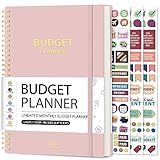
- Effective Budget Planning - Take control of your finances with the budget account book. This comprehensive planner allows you to plan and track your income, expenses, savings, and financial goals in one convenient place. With its intuitive layout and easy-to-use sections, you can stay organized and make informed decisions to achieve financial success.
- User-Friendly Layout - The budget planner features a user-friendly layout designed for easy navigation and organization. Each month, you'll find dedicated budget pages where you can set financial goals, track your income, and plan your expenses. Additional sections include debt trackers, savings goals, bill payment trackers, and more, making it simple to stay on top of your finances.
- Undated Monthly Calendar & Bonus Stickers - Featuring undated calendar each month, you'll have ample space to mark paydays, bills due, appointments, and important dates. Say goodbye to difficult writing spaces. Plus, we've included 3 cute sticker sheets that allow you to personalize your financial organizer and make budgeting more fun. Dates are not pre-printed and are completed by the user.
- Reliable and Convenient Design - Our monthly budget planner is designed for your convenience and built to last. The elastic band keeps everything securely in place, and the dual-sided pocket provides extra storage. Experience a budget planner that combines practicality and durability.
- Master Budgeting with Ease - Our financial planner includes a complete guidebook that provides valuable insights and instructions for optimal usage. From setting financial goals to tracking expenses, this guidebook offers step-by-step guidance and practical tips. Whether you're new to budgeting or an experienced user, this resource will help you make the most of your budget planner, empowering you to achieve financial success.
| Category or measure | August 2026 change | How to interpret it |
|---|---|---|
| All items, 12 months | 3.4% | National annual comparison; not a household forecast |
| All items, one month (seasonally adjusted) | 0.4% | Short-term national movement |
| Gasoline | 3.9% | Can hit drivers more than households that rarely use a car |
| Energy | 2.1% | Includes energy components beyond gasoline |
| Shelter | 0.3% | Relevant weight depends on rent or mortgage and household location |
| Food | 0.1% | Your result depends on foods, package sizes, stores and substitutions |
These figures describe the period through August 2026; they are not a forecast. Compare them with your own bills before changing a category limit. A household whose gasoline bill jumped while food was stable should not make the same adjustment as a household with the opposite pattern.
Build an accurate “as-is” month
Do not start by guessing what you should cut. First establish where the money actually goes. The Consumer Financial Protection Bureau (CFPB) advises reviewing several months so irregular expenses are included, and consumer.gov defines a budget as a written plan for how you will spend money each month.
- Collect income records. Use take-home pay, benefits and other dependable monthly income. Do not count a bonus or uncertain gig income as guaranteed unless you separately label it.
- Export transactions. Download bank and card activity for at least three months. Add cash purchases from receipts or a spending log.
- Gather bills and statements. Include rent or mortgage, utilities, insurance, debt minimums, phone, internet, subscriptions, tuition and medical bills.
- Add irregular costs. Record insurance premiums, school expenses, gifts, taxes, repairs, annual memberships and travel. Divide an annual bill by 12 to create a monthly planning amount.
- Check quantities and prices. For groceries, fuel and household supplies, note both the amount purchased and the unit price. A larger package is not automatically cheaper.
- Reconcile totals. Compare all planned monthly outflows with take-home pay. The difference is the amount available for savings, debt reduction and discretionary spending.
Keep the first version descriptive rather than aspirational. A budget that omits convenience purchases or annual bills will appear balanced until those costs arrive.
Separate essentials, flexible spending and occasional costs
Classification makes the next decision clearer. “Essential” means necessary for safety, housing, work, health or a contractual obligation; it does not mean every purchase you prefer. Some items can move categories as circumstances change.
| Group | Typical examples | First adjustment options |
|---|---|---|
| Essential and recurring | Housing, basic utilities, food, transportation to work, insurance, prescriptions and minimum debt payments | Renegotiate or compare providers at renewal, reduce usage where safe, substitute products and protect payment due dates |
| Flexible recurring | Streaming, dining out, premium plans, convenience delivery and frequent upgrades | Pause, downgrade, consolidate or set a hard monthly cap |
| Occasional or irregular | Repairs, gifts, school costs, annual premiums, travel and replacement purchases | Create a sinking fund and postpone nonessential timing when cash is tight |
Protect housing, utilities, food, work transportation, insurance and minimum debt payments before trimming optional categories. If an essential bill is unaffordable, contact the provider early to ask about a payment arrangement rather than missing the due date.
Calculate the gap and choose adjustments
Find whether spending exceeds income
Add every category, including monthly allocations for irregular expenses, and subtract the total from take-home pay. A negative result means spending exceeds income and the budget must change. A positive result is not automatically spare cash if it is needed for emergency savings, annual bills or debt payments.
Rank #3

- Budget Planner: Stay on top of your finances and achieve your financial goals with our A5 Budget Planner. This beautifully designed budget book combines functionality and style, empowering you to effectively manage your budget month after month.
- Classic Design: The elegant pink cover with the striking "Budget Planner" in gold adds a touch of sophistication to your financial planner. Carry it with pride and make a statement as you take charge of your financial.
- Comprehensive Layout: Our monthly budget planner features a well-thought-out layout that simplifies your budgeting process. With a dedicated monthly budget page, four expense tracking pages, a monthly summary, and a notes section, you have all the tools you need for effective financial planning.
- 14-Month Duration: Unlike many other planners on the market, ours covers a total of 14 months, giving you an extended period of financial organization. Now you can make income and expense records at any time, ensuring every financial decision aligns with your long-term goals.
- Premium Quality and Convenience: Crafted with attention to detail, this budget planner boasts superior quality. The sturdy pink and gold coil binding allows for effortless flipping, while the A5 size makes it the perfect companion for your daily adventures, fitting into your bag or backpack without taking up too much space.
Use a simple worksheet with four columns: category, planned amount, actual amount and next-month limit. At month-end, write the reason for each material difference—for example, a fuel-price jump, a medical bill or an unplanned purchase—so the next limit reflects reality rather than blame.
Target the categories moving fastest for your household
Compare each category’s recent receipts and bills with its three- or six-month average. Prioritize categories where both the price and frequency are rising. Cutting a low-cost item that barely changed will not solve a large rent or transportation increase.
- For housing, check renewal terms, utility usage and whether a move or roommate change is financially realistic after transaction costs.
- For transportation, combine errands, maintain tire pressure, compare fuel stations and evaluate whether a trip can be replaced by transit, walking or a remote option.
- For utilities, reduce waste without compromising health or safety, and ask providers about available rate plans.
- For insurance, compare coverage and deductibles at renewal; never cancel required coverage without understanding the consequences.
- For subscriptions and phone or internet service, list renewal dates and remove overlapping features before the next charge.
Reduce grocery costs without treating nutrition as optional
Plan from prices, meals and waste
Make a short meal plan around foods already on hand, then shop with a list. Compare unit prices, package sizes and quality across several sellers. Store brands, frozen or canned alternatives, seasonal produce and batch cooking can lower cost when they fit your household’s diet and storage capacity. A cheaper package that spoils before use is not a saving.
What’s actually slowing this PC down?
Pick the symptom - the matching free tool is one click away.
Record the price per ounce, pound or item for frequently purchased foods. This creates a personal price history and shows whether a sale is genuinely below your normal price. Delay a nonessential specialty purchase when its price is rising and substitute a comparable ingredient where the result remains acceptable.
Use the USDA Thrifty Food Plan as a reference
The USDA Food and Nutrition Service’s Thrifty Food Plan provides nutrient-dense quantities and costs, with plan costs updated monthly using CPI-U. In August 2026, reference monthly amounts were $253.70 for females age 20–50 and $258.50 for males age 12–13. These are model reference costs for specific age groups, not a spending mandate or a universal household grocery budget.
Adapt the plan for household size, location, allergies, medical needs, cultural foods, cooking facilities and food waste. Compare its categories with your receipts to identify a planning opportunity, not to judge a household whose necessary costs differ.
Rank #4

- 【Take Control Of Your Money】Easily plan your monthly budget, track income & expenses, and stay on top of your finances. This budget planner helps you clearly see where your money goes and avoid overspending.
- 【Designed For Real Life Use】Perfect for young professionals, families, students, and anyone working toward financial goals. Whether managing daily expenses or planning long-term savings, this budget book keeps everything organized.
- 【All-In-One Budget System:】Our monthly budget planner features a well-thought-out layout that simplifies your budgeting process. Includes monthly budget pages, expense trackers, bill organizers, savings goals, and debt trackers. Everything you need to manage money in one convenient planner.
- 【12-Month Duration】Our budget planner covers a total of 12 months, giving you an extended period of financial organization. Now you can make income and expense records at any time, ensuring every financial decision aligns with your long-term goals.
- 【Premium Quality and Convenience】Crafted with attention to detail, this budget planner boasts superior quality. The sturdy pink and gold coil binding allows for effortless flipping, while the metal corner protectors effectively prevent damage to the cover, ensuring long-lasting durability.
Use substitution and comparison shopping deliberately
When prices rise, substitution changes your lived inflation rate. You may change brands, stores, package sizes, quantities or activities. Before a major purchase, MyMoney.gov recommends comparing both price and quality and checking several sellers.
- Compare the total cost of ownership, including delivery, maintenance, fees and replacement parts.
- Check unit prices rather than relying on a large “value” label.
- Bundle errands to reduce fuel and time costs.
- Delay upgrades until the current item fails or the replacement has a clear payback.
- Set a 24-hour pause for nonessential online purchases and a longer review for expensive items.
Substitution is not always appropriate: medication, safety equipment, accessibility products and specialized foods may have limited alternatives. Keep a separate note of categories where quality or health must not be compromised.
Independent reader supportYour contribution helps us test, update, and keep practical guides available for everyone.Keep an emergency fund while trimming spending
The CFPB defines an emergency fund as “a cash reserve that’s specifically set aside for unplanned expenses or financial emergencies.” A buffer prevents a broken appliance, medical bill or temporary income loss from forcing expensive credit or missed essential payments.
Federal Reserve results from its 2025 household-finances survey, reported in 2026, found that 63% of adults could cover an unexpected $400 expense with cash or an equivalent, 55% reported savings for three months of expenses, and 70% could cover at least $500 from current savings. These population results show why a cash reserve matters; they do not prescribe one correct target for every household.
- Choose a specific first target, such as a small repair reserve, then a larger number of months of essential expenses as your situation allows.
- Keep the money safe and accessible rather than in an account designed for volatile returns.
- Automate a sustainable transfer after payday. A small amount maintained consistently is better than an unrealistic target that causes overdrafts.
- Define emergencies in advance, use the fund only for them, and resume contributions after a withdrawal.
When cash flow is tight, reduce flexible spending before eliminating the emergency contribution entirely. If you must pause it temporarily to prevent a missed essential bill, document the pause and set a date to restart.
Review the budget every month—and after major changes
At month-end, compare planned and actual amounts, record what changed and reset the next month’s limits. A monthly review is frequent enough to catch a recurring price increase without forcing you to rebuild the entire plan after every receipt.
Best Value

- EFFECTIVELY MANAGE YOUR MONEY - Our budget planner helps you take control of your finances by providing sections for financial goals, savings, debts, daily expenses, monthly budget, monthly budget review. This finance planner is a good finance book and will help you manage your money effectively.
- PREMIUM QUALITY - Our budget planner is made with high-quality 100gsm paper that reduces ink leakage, fraying, and shade issues. The sturdy and flexible cover,, helps protect the pages. The metal lay-flat twin-wire binding ensures durability and longevity.
- ORGANIZED MONTHLY GOALS & BUDGETS - Our 12-month budget planner helps you set monthly goals, budgets, reviews, and develop good monetary habits, strategies, and action plans. Write down monthly financial goals, put reminders of bills and payments on the calendar, plan your monthly budget in each category, track daily expenses, and review the monthly budget at the end of the month.
- FLEXIBLE USAGE - Our undated finance planner allows you to start at any time and place, making it convenient to use. It has a perfect size of 8.6x5.9 inches and fits in every bag, so it's always at hand.
- CREATE FINANCIAL FREEDOM - Our budget planner is your chance to develop monthly habits, monetary strategies, and action plans to start your journey to long-term financial freedom. It allows you to track monetary flow and review each area for improvements. With this 1-Years budget book, you can take the first step towards financial freedom.
Run an additional review when rent, insurance, utilities, phone or internet prices change; when income changes; after a move, new child or medical event; or when debt terms reset. Check renewal dates for subscriptions and insurance so a higher charge does not appear unexpectedly.
Keep one page or spreadsheet showing current prices for your largest categories, the date each price was checked and the next action. This turns inflation from a vague headline into a set of decisions you can revisit.
Handle debt and interest-rate pressure carefully
Higher market rates can make borrowing more expensive, but the effect depends on your loan terms. Review the APR, balance, minimum payment and reset rules on each statement before reallocating money. Do not sacrifice essential bills or your entire cash buffer to make an aggressive extra payment without a plan for emergencies.
Recommended Free Tools
List debts by required payment first, then evaluate whether a lower-rate refinance, a negotiated hardship arrangement or a different payoff order is actually available to you. Any option should be judged by its total cost, fees, term and effect on monthly cash flow.
An illustrative monthly adjustment
Suppose a household brings home $4,000. Its current plan allocates $1,600 to housing and utilities, $700 to food, $450 to transportation, $350 to insurance and medical costs, $300 to debt minimums, $250 to subscriptions and dining, $200 to irregular-cost savings and $200 to emergency savings. Total outflow is $4,050, a $50 shortfall.
The household could first verify whether the $700 food amount reflects actual receipts, pause or downgrade part of the $250 flexible category, and compare insurance or phone costs at renewal. It might reduce flexible spending by $75, keep the $200 emergency contribution, and redirect $25 from a delayed purchase to close the gap. The numbers are illustrative; the method is to measure first, protect essentials and resilience, then make the smallest sustainable changes.
Quick Recap
Common mistakes to avoid
- Using CPI as your personal budget target: national averages cannot replace your own bills and quantities.
- Counting a raise as a full gain: compare it with the price changes in your essential categories.
- Ignoring irregular expenses: annual premiums and repairs will eventually arrive even if they are absent this month.
- Cutting all savings: removing the emergency buffer can turn a temporary price shock into costly debt.
- Buying a larger package automatically: check unit price, shelf life and actual use.
- Treating a national monthly release as a forecast: use the data to understand context, not to predict your next bill.
Product prices and availability are accurate as of the date/time indicated and are subject to change. Any price and availability information displayed on Amazon at the time of purchase will apply.
Quick wins for a faster PC:
Repair Windows errors before they cause bigger problemsFix Now →Fix the driver behind crashes, sound loss and screen glitchesFind Drivers →Clear out junk files and repair common Windows errorsFree Scan →
