
iTechGuides is reader-supported. When you buy through links on our site, we may earn an affiliate commission. As an Amazon Associate I earn from qualifying purchases. Learn more
An FPGA console recreates PlayStation hardware by configuring a field-programmable chip with a hardware-description core designed to reproduce the system’s behavior. On MiSTer, loading the PSX core changes the FPGA’s digital logic for a PlayStation-oriented implementation; it is not simply a PlayStation emulator running as an ordinary software application. That distinction explains how FPGA consoles work, but it does not mean every game behaves exactly as it did on original hardware. The MiSTer documentation itself lists compatibility trade-offs, timing-sensitive options and video workarounds.
What an FPGA console is doing
An FPGA, or field-programmable gate array, is a chip whose digital logic can be configured after manufacture. A hardware-description core specifies a system for that programmable logic to implement. In the MiSTer platform, selecting and loading a core configures the FPGA for the target system; choosing the PSX core therefore turns the general-purpose platform into a PlayStation-oriented hardware implementation. MiSTer’s documentation describes a core in these terms and explains that loading one reprograms the FPGA logic: MiSTer FPGA Documentation: What Is a Core.
This differs from conventional software emulation, where a program running on a host processor models another machine’s behavior. An FPGA core instead describes hardware behavior for configurable logic. That is a difference in implementation, not a guarantee of perfect equivalence: the result still depends on how completely the core reproduces the target system and how software interacts with it.
Quick wins for a faster PC:
Scan for outdated or missing drivers - takes under a minuteDriver Scan →Clear out junk files and repair common Windows errorsFree Scan →There is also no single “FPGA console” design. MiSTer is a platform that can load cores for different systems, while a dedicated product such as the SuperStation One is built around MiSTer and PlayStation use. Analogue’s openFPGA is another example of core packaging: its developer documentation describes a bitstream accompanied by JSON definitions and managed through the Analogue Platform Framework. These are different examples of the broader idea, not evidence that their cores have identical behavior or compatibility: Analogue Developer Docs: openFPGA overview.
#1 Best Overall

- [Compatible with Various SOMs] Sipeed Tang Console FPGA development board enjoy powerful FPGA performance with configurations up to 60K/138K LUT4s, onboard Mega 138k/60K SOM CPU, 468Kbit SSRAM 2124Kbit BSRAM/1080Kbit SSRAM 6120Kbit BSRAM, 4Gbit 16bit DDR3 RAM/8Gbit 32bit DDR3 RAM. Ensuring smooth operation for your projects and games.
- Rich Expansion] Sipeed Tang Console FPGA Dev Board onboard PCIe Gen2/3 x 1 FPC connector, USB3 x 2 (Type-A, Device, 5Gbps or 10Gbps), USB2 x 2 (Type-A, Host, 1.5Mbps or 12Mbps), HDMI TX x 1 (1080P 30Hz/720P 60Hz), Soft-PHY USB2 x 1 (Typc-C, Device, 480Mbps), PMOD x 2 Standard Pitch Port, microSD slot x1 (Supports 4-bit SDIO/MMC or SPI mode). Support USB JTAG and UART.
- [High Performance] Sipeed Tang Console FPGA single board computer supports multiple Tang Core emulator cores,(NESTang/SNESTang/GBATang/MDTang/SMSTang), Onboard BL616 MCU, supports running TangCore firmware for BL616, which can be used as FPGA debugger. Able to meet different developers' needs.lts small size allows it to fit in a card box, making it highly portable and easy to integrate into any setup.
- [Multi-Mode Functionality] Sipeed Tang Console uses it as an FPGA development board, a RPi5 PCle FPC HAT, a retro gaming console, or a handheld device-endless possibilities in one versatile package. Equipped with dual PMOD and dual 40P interfaces, supports fast switching between emulator cores. The Tang Console offers strong expandability for your custom projects.
- [Gamestick HDMI Gaming Experience] Sipeed Tang Console FPGA Retro Game Console support 1080P HD HDMI output, suitable for different monitors, can be connected to TV/computer/TV set-top Box /PC/Laptop/Projector, perfect to meet your high resolution and game configuration needs. The retro game Console stick also support saving game progress, perfect for gaming at any time
Why recreating a PlayStation takes more than a CPU
A PlayStation game depends on several connected subsystems behaving together. A 2016 Carnegie Mellon University ECE 545 student project report describes the original PlayStation as including a 32-bit MIPS I CPU with two coprocessors and 2 MB of RAM; a GPU with 1 MB of VRAM; an SPU with 512 KB of RAM; a CD-ROM reader; controller input; and two memory-card slots. Those figures come from that 2016 report, and hardware revisions or terminology may vary: Carnegie Mellon ECE 545 Team PSX project report.
To run a game, a core must reproduce enough of the CPU, graphics, sound, memory, disc and peripheral behavior for the software to work. These parts are not independent checkboxes: software can rely on how one subsystem responds while another is operating. A game might therefore expose a timing or compatibility issue even if its images appear correct or its opening sequence runs. The sources cited here do not establish a population-wide compatibility percentage, so it would be misleading to describe a core as compatible with a particular share of all PlayStation games.
Memory and disc behavior matter as much as visible graphics. The PlayStation core documentation, for example, discusses CD seek and speed options and Libcrypt-protected games that require a matching SBI file. Those details show why “the game file loads” and “the game behaves correctly in every case” are different claims. Consult the current core instructions for supported image formats, setup and operational options: MiSTer FPGA Documentation: PSX core.
What’s actually slowing this PC down?
Pick the symptom - the matching free tool is one click away.
Video output is part of the recreation
Original software can change display resolution or shift the image beyond a screen’s visible bounds. MiSTer’s PSX documentation notes that these behaviors can cause sync loss on modern displays. In other words, a video problem is not necessarily evidence that the game itself has failed: the timing or framing produced by the software may be difficult for the chosen display to handle.
The core provides options intended to address particular cases, including fixed horizontal and vertical blanking, cropping and deinterlacing. Fixed blanking can stabilize output and, in relevant cases, preserve the intended 4:3 framing. These are configurable accommodations, not a universal correction that guarantees every game or display will behave identically. The appropriate choice depends on the symptom and how the game presents its image; the core’s documentation is the place to check the available settings and their effects.
Why FPGA does not mean perfect compatibility
“Hardware recreation” describes the implementation approach, not a blanket promise of exact original timing, flawless compatibility or identical output on every setup. The MiSTer PSX documentation makes this practical distinction by documenting both workarounds and options that exchange compatibility for speed or convenience.
Fastboot skips part of startup
Fastboot skips the BIOS sequence. That can make startup more convenient, but MiSTer warns that it may cause bugs in a small number of games. If a title misbehaves with Fastboot enabled, disabling it is a useful troubleshooting step because it restores the skipped startup path rather than changing the game image.
Speed options can break timing-sensitive games
The PSX core offers “unsafe” options that can improve speed or reduce loading time while increasing compatibility risk. Turbo changes CPU, DMA, memory and GTE performance. The documented Turbo levels are described as roughly 10%, 20% or 50% performance increases, respectively; these are setting behaviors stated by the core documentation, not independent benchmark results across games. Faster CD seeking or speed settings can also cause some titles to crash if they depend on original delays.
Rank #2
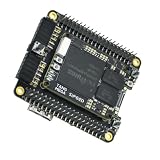
- Package Include: 1PCS* 138K Single Console
For diagnosis, change one relevant option at a time. If a failure begins after enabling Turbo or faster disc behavior, revert that setting and test again. This does not prove that every remaining issue is caused by the core; it narrows down whether an optional speed change is involved.
Some protected games need an SBI file
MiSTer documents Libcrypt-protected games that require a matching SBI file. A missing or mismatched file can therefore be a setup issue rather than evidence that the FPGA cannot run the game. Check the core’s current instructions for the applicable image and SBI requirements before changing unrelated settings.
Independent reader supportYour contribution helps us test, update, and keep practical guides available for everyone.What you need to run the MiSTer PlayStation core
A DIY MiSTer system commonly starts with a Terasic DE10-Nano and add-on boards. MiSTer’s requirements page says an SDRAM add-on is required by multiple cores, including PlayStation. The exact build also depends on the I/O and storage you want, so “MiSTer” alone does not specify which outputs, controller connections or accessories are present: MiSTer FPGA Documentation: Requirements.
Do these 3 things before closing this tab:
1Scan for outdated or missing drivers - takes under a minute2Clear out junk files and repair common Windows errors3Fix the driver behind crashes, sound loss and screen glitchesA packaged MiSTer-based console can reduce assembly work and provide a more purpose-built set of ports, but its included accessories and optical-disc capability depend on the product and bundle. The SuperStation One documentation describes PlayStation-style SNAC controller ports and memory-card slots. SNAC is core-specific, however, so those ports should not be assumed to work with every MiSTer core. Check the product documentation for the particular hardware and intended core: SuperStation Documentation.
DIY MiSTer and SuperStation One at a glance
| Consideration | DIY MiSTer build | SuperStation One |
|---|---|---|
| Setup | Typically assembled around a Terasic DE10-Nano and add-on boards; the requirements page identifies SDRAM as necessary for the PlayStation core. | MiSTer-based console designed around PlayStation use; exact setup and bundled accessories depend on the product configuration. |
| Memory and FPGA details | Requirements vary by build; the cited requirements page establishes the SDRAM add-on requirement but not one universal completed-build configuration. | CNX Software’s January 29, 2025 product overview reports a Cyclone V SX FPGA and 128 MB SDRAM. |
| Original controllers and memory cards | Support depends on the add-ons and core-specific connections in the build; no single universal configuration is established here. | Documentation describes PlayStation-style SNAC controller ports and memory-card slots; SNAC use is core-specific. |
| Original PlayStation discs | The cited MiSTer PSX documentation describes loading supported game images from storage; a physical-disc drive configuration is not established by the requirements page. | The optional SuperDock is the cited path to a CD drive for original PlayStation discs; the base console should not be assumed to include disc reading. |
| Video connections | Depends on the selected I/O hardware and build; the requirements page does not specify one universal analog-and-digital output set. | CNX Software’s January 29, 2025 overview reports HDMI and analog video outputs. |
| Current availability and bundle contents | Not stated by the cited MiSTer requirements page. | Not established by the cited 2025 overview; verify current stock and the exact bundle before purchase. |
The SuperStation One details in the table are reported product information, not a claim that every current package contains the same accessories. CNX Software’s overview, published January 29, 2025, also reports that the optional SuperDock has an M.2 SSD slot in addition to its CD drive: CNX Software: SuperStation One product overview. Verify the actual model and included dock before relying on disc support.
Choosing a setup for your use
The core’s operation is the same conceptual starting point whether it is loaded on a DIY MiSTer stack or a packaged console; the practical differences are the surrounding hardware and included connections. Match the setup to how you intend to play rather than assuming a product label establishes a particular capability.
- Choose a DIY build if you want to assemble the platform. Confirm that the build includes the SDRAM add-on required by the PlayStation core, then check which video and controller I/O boards or accessories are part of that build.
- Choose a packaged system for a more integrated setup. Confirm its stated FPGA, memory, outputs and controller connections, and distinguish standard contents from optional accessories.
- If you want to use original discs, check for the required drive. For the SuperStation One, the cited documentation identifies the optional SuperDock as the path for original-disc reading; the base console should not be described as reading discs without it.
- If you want original controllers or memory cards, check model-specific support. A PlayStation-style port does not establish that every peripheral or every core supports the same connection method.
- If display stability or framing is your concern, review the PSX video options. Resolution changes and image shifts are documented behaviors, and the core provides settings for certain output problems.
What to conclude from the term “FPGA PlayStation”
An FPGA console recreates PlayStation hardware by configuring programmable logic with a system-specific core, then coordinating enough of the target’s processing, graphics, audio, memory, disc and peripheral behavior to run software. This explains why an FPGA implementation is not merely a conventional emulator application. It does not, by itself, establish exact equivalence or universal game compatibility: the available documentation describes concrete exceptions, setup requirements and trade-offs.
Free tools Windows power users keep installed
One-click scans. No signup required.
For MiSTer, the practical checks are whether the build has the required SDRAM, which video and peripheral connections it supplies, whether disc images meet the core’s requirements, and whether optional speed settings are affecting a game. For a PlayStation-focused packaged console, verify the exact bundle—especially when original-disc support depends on an optional dock.
Quick Recap
Product prices and availability are accurate as of the date/time indicated and are subject to change. Any price and availability information displayed on Amazon at the time of purchase will apply.

