
iTechGuides is reader-supported. When you buy through links on our site, we may earn an affiliate commission. As an Amazon Associate I earn from qualifying purchases. Learn more
The ozone hole is a seasonal region of unusually thin stratospheric ozone, most famously over Antarctica during Southern Hemisphere spring. It is not an empty opening in the atmosphere. Because ozone absorbs much of the Sun’s ultraviolet-B (UV-B) radiation, thinning allows more UV-B to reach Earth’s surface. That extra radiation can raise risks of skin cancer, cataracts and immune suppression; alter plant growth and ecological relationships; harm phytoplankton and developing aquatic animals; change biogeochemical cycles; and accelerate damage to outdoor materials. The size of each effect depends on location, season, exposure, species and environmental conditions.
What the ozone hole is and why it matters
Most atmospheric ozone is concentrated in the stratosphere, a layer above the weather where it forms a protective shield. Ozone absorbs much of the Sun’s UV-B before it reaches the ground. When human-made ozone-depleting substances destroy stratospheric ozone, that filtering becomes weaker.
The Antarctic ozone hole is the best-known example because depletion becomes especially severe there each Southern Hemisphere spring. The resulting increase in surface UV-B is regional and seasonal, not a uniform change across the entire planet. The U.S. Environmental Protection Agency (EPA) reports that UV-B measured at the surface in Antarctica can double during the annual ozone hole. That observation describes Antarctic conditions during the ozone-hole season; it is not a global average or a prediction of any one person’s exposure. (EPA: Health and Environmental Effects of Ozone Layer Depletion)
Recommended Free Tools
UV-B is present even where ozone is not unusually depleted. Consequently, ordinary sun protection remains appropriate under normal ozone conditions as well as during periods of depletion.
#1 Best Overall

- SUPERIOR ENDURANCE VS. SWEAT & WATER — From family fun to hardcore competition, Banana Boat Sport Sunscreen provides strong sun protection that stays on so you can play on
- CLINICALLY PROVEN UVA/UVB PROTECTION — This SPF 50+ broad spectrum sunscreen spray protects skin from the sun's harmful UV rays
- LIGHTWEIGHT, BREATHABLE FORMULA — Non-greasy feel won't weigh you down
- HIGH-PERFORMANCE SUNSCREEN — Water & sweat resistant up to 80 minutes
- FREE FROM oxybenzone and octinoxate
Effects on people
Skin cancer risk
Higher UV-B exposure damages skin cells and increases the risk of non-melanoma skin cancers. UV-B also contributes to the development of malignant melanoma. The relationship is not a simple personal dose calculator: actual risk depends on the amount and pattern of exposure, skin type, behavior, geography and other factors. Ozone depletion changes the amount of UV-B reaching the surface; it does not determine an individual’s outcome by itself.
Eyes and the immune system
UV-B is linked to cataracts and can suppress immune-system function. These are established health effects of ultraviolet exposure, but the EPA effects material does not provide a single percentage increase that can be applied to every person living under an ozone-hole event. A person’s exposure can also vary substantially with cloud cover, altitude, reflected light, time outdoors and protective clothing.
What a major EPA model estimates
The most useful large-scale health figures come from the EPA’s Atmospheric and Health Effects Framework (AHEF), not from a count of cases observed during one ozone-hole season. In a May 2020 report, EPA modeled the difference between full implementation of the Montreal Protocol and a scenario with no controls to reduce or avoid emissions of ozone-depleting substances. For people in the United States born from 1890 through 2100, the model estimated that the protocol would prevent approximately:
Rank #2
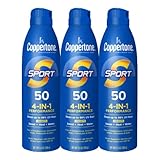
- EASY TO APPLY: Coppertone Sport spray sunscreen has a continuous sprayer for application on any angle, and is easy to apply for quick, even coverage
- UVA/UVB SUN PROTECTION: Broad Spectrum sunscreen stops up to 98 percent of UVA/UVB rays to combat the effects of sun damage to your skin
- WATER RESISTANT SUNSCREEN: Coppertone Sport SPF 50 sunscreen spray is water resistant (80 minutes), and stays on strong when you sweat
- FORMULATED WITHOUT: This spray on sunscreen is free from dyes, PABA, octinoxate and oxybenzone
- BREATHABLE FORMULA: The hydrating sunscreen body spray leaves a light, breathable feeling on your skin
| Outcome | Modeled cases prevented | How to interpret the number |
|---|---|---|
| Skin cancer | 443 million cases | Cumulative U.S. estimate for the specified birth cohort and scenario comparison; not an annual count or a global total. |
| Skin cancer deaths | 2.3 million deaths | Cumulative modeled U.S. deaths for the same cohort and comparison; not observed deaths attributed to one ozone-hole season. |
| Cataracts | 63 million cases | Cumulative modeled U.S. cases for the same cohort and comparison; not a worldwide estimate. |
The figures show the scale of the health benefit from controlling ozone-depleting chemicals. They should not be read as a forecast of how many cases the Antarctic ozone hole will cause in a particular country or year. (EPA, Updating the Atmospheric and Health Effects Framework Model: Stratospheric Ozone Protection and Human Health Benefits, May 2020)
Practical protection
EPA recommends basic measures that reduce personal UV exposure: wear a sun-protective hat, use sunglasses and apply sunscreen. These precautions help whether ozone is depleted or normal; they protect an individual from UV radiation but do not repair the ozone layer or reduce emissions of ozone-depleting substances.
Effects on plants
Direct effects on growth and development
UV-B can affect plant physiology and development and can directly change growth. Plants are not defenseless: many species limit UV penetration, repair cellular damage or adjust their chemistry. Those protective mechanisms differ among species, varieties and growing conditions, so there is no single ozone-hole effect that applies to every crop or wild plant.
Rank #3

- SWEAT & WATER READY — Designed to stay on so you can play on, this effective SPF 50 sunscreen is water, sweat, and heat resistant
- CONTAINS ALOE & VITAMIN E — This breathable sunscreen lotion cares for your skin and protects it from harmful UV rays without the use of oxybenzone or octinoxate
- DERMATOLOGIST TESTED — From boat days and poolside play to hiking and biking, Banana Boat sunscreen delivers reliable sun care protection you can trust
- 12-HOUR MOISTURIZATION — Sunscreen SPF 50 provides 12 hours of moisture to help keep skin soft and smooth while leaving no white cast, GENTLE** FORMULA
- GIANT PROTECTION — 93% say Banana Boat Sport SPF 50 Sunscreen Lotion is gentle & non-irritating on their skin* *Consumer self-assessment after 2 weeks, N=206 **Clinically tested to be gentle on skin when used as directed, NO GREASE
The same UV-B increase can produce different results depending on temperature, water availability, nutrients, light conditions and the plant’s developmental stage. A response measured in one species or field cannot automatically be converted into a universal crop-yield percentage. The EPA effects page identifies the potential for plant harm but does not establish one yield loss applicable to all crops or regions. (EPA: Health and Environmental Effects of Ozone Layer Depletion)
Do these 3 things before closing this tab:
1Repair Windows errors before they cause bigger problems2Fix the driver behind crashes, sound loss and screen glitches3Clear out junk files and repair common Windows errorsIndirect changes can reshape ecosystems
Plant impacts are not limited to visible leaf injury or slower growth. UV-B can alter plant form, the distribution of nutrients, the timing of developmental stages and the production of secondary metabolites. Those changes can modify how plants compete with one another, how herbivores feed, how diseases spread and how organisms interact with vegetation.
Because plants move carbon and nutrients through ecosystems, changes in their chemistry or timing can also influence decomposition and other biogeochemical processes. An apparently small change in a plant trait may therefore have effects beyond the individual plant, while a severe response is not inevitable in every habitat.
Rank #4

- SPF sun protection: Broad spectrum SPF 70 sunscreen lotion with Helioplex technology that delivers UVA/UVB protection from sunburn and harsh summer elements
- Lightweight sunscreen lotion: Designed for fast, even application, with a lightweight sunscreen lotion formulated to leave skin feeling non-greasy
- Dermatologist recommended sunscreen brand: Water-resistant for up to 80 minutes during outdoor activities like swimming, sweating, and sports
- Sunscreen you'll love to wear: Non-greasy sunscreen lotion designed to absorb quickly without a greasy or sticky residue
- Made for family use: Sunscreen lotion is ideal for beach trips and other outdoor activities; easy-to-pack SPF sunscreen for everyday broad spectrum protection
Effects on wildlife and aquatic ecosystems
Phytoplankton at the base of food webs
Phytoplankton are microscopic organisms that support aquatic food webs. As the EPA states, “Phytoplankton form the foundation of aquatic food webs.” Increased UV-B associated with ozone depletion can affect their orientation and movement, lower survival and directly reduce production. Less phytoplankton production means less energy entering the food web, although the consequences depend on the species present, the timing of exposure and the ability of ecosystems to compensate.
Early life stages are especially vulnerable
Research summarized by EPA has found damage from UV-B to early developmental stages of fish, shrimp, crabs, amphibians and other marine animals. Reported effects include impaired larval development and, in especially severe cases, reduced reproductive capacity. Eggs and larvae often have less protection than adults and must develop rapidly, which can make a short exposure window biologically important.
What’s actually slowing this PC down?
Pick the symptom - the matching free tool is one click away.
These findings do not mean every population is declining everywhere. They identify mechanisms by which unusually high UV-B can reduce survival or recruitment in susceptible species. If small marine organisms become less abundant, predators may have less food and the structure of a wider food web may change.
Best Value

- Lightweight, fast-absorbing sunscreen spray: With broad spectrum SPF 70 primes skin for makeup and helps improves skin complexion and radiance
- Non-comedogenic sunscreen: Free of oxybenzone, and PABA, in a non-greasy spray with a smooth, matte finish and a soft-touch feel
- Antioxidant vitamin E nourishes: While Helioplex technology provides stable broad spectrum protection against UVA/UVB rays and environmental stressors
- Water-resistant for up to 80 minutes: Helps guard skin during outdoor activities on sunny days like biking, hiking, boating, gardening, and walking
- 3-pack convenience: Perfect for on the go; keep them around the house and yard for anytime, anywhere sunscreen spray for active lifestyles and daily routines
From individual organisms to food-web effects
Aquatic consequences can accumulate through several steps: UV-B reaches surface waters; sensitive plankton or larvae experience reduced survival, movement or production; fewer organisms reach later life stages; and predators encounter changes in the amount or timing of available prey. Water depth, dissolved substances, mixing, season and species-specific defenses all affect how much UV-B penetrates and which organisms are exposed.
Independent reader supportYour contribution helps us test, update, and keep practical guides available for everyone.Wider environmental effects
Biogeochemical cycles and atmospheric feedbacks
Increased UV-B can alter terrestrial and aquatic biogeochemical cycles. EPA identifies potential changes in sources and sinks of gases including carbon dioxide, carbon monoxide, carbonyl sulfide and ozone. Such changes can create feedbacks that either mitigate or amplify atmospheric concentrations. The direction and size of a feedback depend on the ecosystem and the chain of chemical and biological responses; the existence of a potential feedback is not a prediction that one gas will rise by a fixed amount everywhere.
Faster deterioration of materials
UV-B accelerates the breakdown of synthetic and natural polymers. Outdoor plastics, coatings, rubber and other polymer-containing materials can therefore lose strength, color or useful life more quickly under greater UV exposure. Manufacturers often add UV-protective stabilizers, but those additives reduce rather than eliminate the underlying degradation pathway. The practical effect depends on the material, its formulation, exposure time and local weather.
Why the effects vary from place to place
| Factor | Why it changes the outcome |
|---|---|
| Location and season | The Antarctic ozone hole is a seasonal regional event; surface UV-B elsewhere is not automatically doubled. |
| Amount of exposure | Time outdoors, cloud, altitude, reflected light and protective clothing change the dose reaching a person or organism. |
| Species and life stage | Plants, plankton, larvae and adults differ in repair mechanisms, pigmentation, behavior and sensitivity. |
| Environmental conditions | Temperature, water depth, mixing, nutrients and moisture can amplify or offset UV-B effects. |
| Existing adaptation | Plants and animals may shield, repair or behaviorally avoid UV-B, but those defenses have limits and costs. |
This variability is why a credible explanation describes mechanisms and documented effects rather than assigning one universal percentage loss to all crops, wildlife populations or human beings.
Is the ozone layer recovering?
EPA says atmospheric concentrations of ozone-depleting substances have declined substantially over recent decades. Its basic-science overview projects near-complete recovery toward pre-1980 ozone levels by the middle of this century if international controls continue. That is a projection based on sustained action, not a statement that the Antarctic ozone hole has already disappeared or that every year will show the same conditions. (EPA: Basic Ozone Layer Science)
Recovery matters because restoring stratospheric ozone restores some of the UV-B filtering that people and ecosystems lost during depletion. Until recovery is complete, local and seasonal ozone variation still matters, and the health precautions appropriate for ordinary UV exposure remain useful.
Quick Recap
What can and cannot be concluded
- Established mechanism: less stratospheric ozone means less UV-B filtering and potentially more UV-B at the surface.
- Human health: increased UV-B raises risks associated with skin cancers, cataracts and immune suppression, while individual risk depends on exposure and personal factors.
- Plants: direct growth effects and indirect changes in form, chemistry and timing can influence competition, herbivory, disease and nutrient cycles; responses are species- and environment-specific.
- Wildlife: phytoplankton and early life stages of aquatic animals can be harmed, with possible consequences for food webs, but the evidence does not support a claim that every population is declining.
- Numbers: the EPA’s 443 million, 2.3 million and 63 million figures are cumulative modeled U.S. estimates for a defined birth cohort and policy scenario, not observed annual or global totals.
- Materials and cycles: UV-B can accelerate polymer degradation and alter chemical cycles, with outcomes that vary by material and ecosystem.
- Recovery: ozone restoration is projected under continued global controls, but a recovery projection is not proof that the ozone hole has vanished.
Product prices and availability are accurate as of the date/time indicated and are subject to change. Any price and availability information displayed on Amazon at the time of purchase will apply.

