
Outdated Drivers Are Slowing You Down
One free scan finds every outdated or missing driver and matches the right update for your exact hardware.Free scan · exact hardware matchWindows Errors? Fix Them Before They Spread
Repair common Windows errors and clear accumulated junk for a smoother, more stable PC - no reinstall needed.Free scan · no reinstalliTechGuides is reader-supported. When you buy through links on our site, we may earn an affiliate commission. As an Amazon Associate I earn from qualifying purchases. Learn more
Fungi keep ecosystems working in several connected ways: they decompose dead material, exchange nutrients with living plants, build soil structure, move carbon underground and support food webs. Their benefits are real but not universal; species, climate, soil conditions and land use determine whether a fungal process improves or harms an ecosystem.
The most important distinction is between fungal jobs. Decomposers recycle locked-up nutrients, mycorrhizal fungi partner with roots, and other fungi act as pathogens or food for animals and microbes. Together, these interactions influence plant growth, water movement, biodiversity and the pace at which carbon enters, remains in or leaves soil.
How do fungi keep the planet healthy?
Fungi are the principal biological recyclers of much dead plant material. Their threadlike hyphae release enzymes that break down cellulose and lignin in leaves, wood and roots. The process converts complex material into fungal biomass, carbon dioxide and smaller molecules that other organisms can use. Without it, dead vegetation would accumulate and nutrients such as nitrogen and phosphorus would remain locked in difficult-to-access compounds.
Do these 3 things before closing this tab:
1Scan for outdated or missing drivers - takes under a minute2Clear out junk files and repair common Windows errors3Fix the driver behind crashes, sound loss and screen glitchesDecomposition is not just waste removal. Fungal biomass becomes food for mites, springtails, worms and other soil animals; those organisms feed larger consumers and return additional nutrients through their waste and bodies. The result is a soil food web rather than a simple one-way transfer from dead plants to new plants.
#1 Best Overall

- HARVEST POUNDS, NOT OUNCES: Our 4LB nutrient-dense grain and substrate blend is engineered for heavy, multi-flush yields — more mushrooms per bag than any standard kit. One bag. Maximum output.
- FASTEST COLONIZATION — SEE GROWTH IN DAYS: Our proprietary grain blend accelerates the natural growth cycle. Watch active mycelium establish in days and reach the harvest stage weeks ahead of standard grow kits.
- TRUE SET & FORGET — NO EQUIPMENT NEEDED: No tubs, no tents, no humidifiers. This bag creates its own self-regulating micro-climate from colonization to fruiting. Just add your culture, seal, and let it work.
- 0.2-MICRON FILTER — PROFESSIONAL AIR EXCHANGE: Our precision breathable filter patch delivers optimized gas exchange at every stage of the grow cycle — the same standard used by professional cultivation facilities.
- UNBOX & START IN 5 MINUTES: No tutorials. No extra tools. Self-healing cultivation port is ready immediately. Add your culture and you're growing — five minutes from delivery to first grow cycle.
Fungi also create physical connections through soil. Hyphae wind among mineral particles and organic matter, helping form stable aggregates and pores. Aggregated soil is less prone to crusting and erosion, while its pore network allows water to infiltrate and remain available to roots. These structures can be especially important after heavy rain or during dry periods.
At the landscape scale, fungal communities contribute to plant production, water filtering, carbon cycling and, in some settings, the breakdown of contaminants. Soil organisms also produce compounds used in medicine. Higher soil biodiversity, including fungal diversity, is associated with more effective nutrient cycling and decomposition, greater plant production and lower potential for pathogenicity, although an association does not mean every fungus has the same effect.
What do mycorrhizal fungi do?
Mycorrhizal fungi live in a symbiosis with plant roots. The plant sends photosynthetic carbohydrates to the fungus. In return, the fungus extends a much larger absorbing network through the soil and delivers nutrients and water that roots alone may reach less efficiently. Branched hyphae can explore tiny pores and chemically access nutrients attached to soil particles.
Rank #2

- 100% ORGANIC AND NON-GMO: There's no need to worry about intoxicants that may hinder your plant's growth because the Back to the Roots Mushroom Growing Kit is completely organic and not genetically modified; You can cook them however you want or add them to your favorite dishes
- GROW YOUR PLANT ALL YEAR-ROUND: This organic mushroom indoor kit allows you to grow your own crop all-year round; Just place the box near a window with indirect light, mist twice a day, and you'll see delicious, beautiful mushrooms growing within a week; Included in this kit is an organic plant-based soil infused with mushroom spawn and a booklet with instructions
- CONVENIENT AND EASY: Mushrooms are one of the easiest to grow indoors; All you need to do is open, spray daily with the included mister, and in 10 days you'll be harvesting your own mushrooms right out of the box; Each crop produces three to four servings of mushrooms, and each box can grow up two crops
- THE PERFECT GIFT: The perfect holiday gift, it comes in a beautiful packaging so that it's ready to be given to foodie, garden-loving and eco-conscious friends and family; This kit is also part of our Grow One Give One campaign, simpy share a picture on social media, tag us and use the campaign hashtag, and we'll donate a kit to a classroom of your choice
- GUARANTEED TO GROW: Made in the USA and 100% Guaranteed to grow. If you are not satisfied, simply message us and we will send you a Back To The Roots replacement
There are different mycorrhizal groups and they do not partner with every plant. A 2026 report describing a global analysis of 322 studies and more than 16,000 soil cores said arbuscular mycorrhizal fungi associate with about 70% of land plant species. That figure is an estimate for the analyzed global relationship, not a guarantee that any particular crop, tree or garden plant will benefit from an inoculant.
Ectomycorrhizal fungi are particularly important in forests. University of Florida IFAS Extension reports that this group forms symbioses with approximately 60% of trees and woody plants in temperate and boreal forests. The percentage applies to that habitat and fungal group; it should not be generalized to all plants or all forests.
Mycorrhizal networks can also connect roots of nearby plants, transfer nutrients and alter how plants respond to drought, salinity, pathogens and other stressors. The outcome depends on the fungal species, plant partner, soil chemistry, moisture, temperature and disturbance. A partnership that helps one plant under one condition may provide little advantage, or impose a carbon cost, under another.
Rank #3
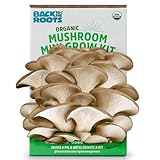
- 100% ORGANIC AND NON-GMO: There's no need to worry about intoxicants that may hinder your plant's growth because the Back to the Roots Mushroom Growing Kit is completely organic and not genetically modified; You can cook them however you want or add them to your favorite dishes
- GROW YOUR PLANT ALL YEAR-ROUND: This organic mushroom indoor kit allows you to grow your own crop all-year round; Just place the box near a window with indirect light, mist twice a day, and you'll see delicious, beautiful mushrooms growing within a week; Included in this kit is an organic plant-based soil infused with mushroom spawn and a booklet with instructions
- CONVENIENT AND EASY: Mushrooms are one of the easiest to grow indoors; All you need to do is open, spray daily with the included mister, and in 10 days you'll be harvesting your own mushrooms right out of the box; Each crop produces three to four servings of mushrooms, and each box can grow up two crops
- THE PERFECT GIFT: The perfect holiday gift, it comes in a beautiful packaging so that it's ready to be given to foodie, garden-loving and eco-conscious friends and family; This kit is also part of our Grow One Give One campaign, simpy share a picture on social media, tag us and use the campaign hashtag, and we'll donate a kit to a classroom of your choice
- GUARANTEED TO GROW: Made in the USA and 100% Guaranteed to grow. If you are not satisfied, simply message us and we will send you a Back To The Roots replacement
Are fungi good for soil?
Often, but “fungi” is too broad a category for an unconditional yes. Decomposer fungi return nutrients; mycorrhizal fungi improve nutrient and water access; hyphae help stabilize aggregates; and some fungi suppress disease organisms. Other fungi infect plants, animals or people, and some produce toxins. Soil health depends on the composition and activity of the whole community.
The Tool Desk
Outbyte Driver Updater FREEScan for outdated or missing drivers - takes under a minuteDriver Scan →Outbyte PC Repair FREEClear out junk files and repair common Windows errorsFree Scan →| Fungal role | Nutritional strategy | Main ecosystem service | Typical habitat examples | What the evidence supports |
|---|---|---|---|---|
| Decomposer | Uses dead organic matter | Breaks down cellulose and lignin; releases nutrients; creates fungal biomass | Forests, grasslands, croplands, wetlands and soils receiving plant litter | Core mechanism of nutrient return, with rates controlled by temperature, moisture, chemistry and litter quality |
| Mycorrhizal mutualist | Receives plant carbon in exchange for nutrients and water | Expands root access, supports plant health, moves carbon belowground | Forest, grassland and agricultural root zones | Widely documented partnership; benefits vary by species and conditions |
| Pathogen or parasite | Obtains resources from living hosts | Can regulate populations and contribute to disease, depending on host and context | All major terrestrial habitats | Not every fungal interaction is beneficial to its host |
| Food-web resource | Consumed by soil animals or aboveground wildlife | Transfers energy and nutrients to consumers; supports spore dispersal | Soils, litter, forests and grasslands | Important connection between fungal production and wider biodiversity |
How fungi improve soil structure
Hyphae physically entangle particles and help organic compounds bind them into aggregates. Aggregates create a mixture of small pores that hold water and larger pores that drain excess water and admit air. This structure can reduce runoff and erosion while making root growth easier. The effect is strongest where living roots, organic inputs and fungal activity persist; repeated tillage, compaction, drought or chemical changes can disrupt it.
How fungi can suppress disease
Some fungi compete with pathogens for space and nutrients, attack them directly or trigger plant defenses. Fungal networks may therefore lower disease pressure in particular soils. This is a community effect, not a promise that adding a named fungus will control every disease. The plant species, pathogen, application method and environmental conditions all matter.
Rank #4

- GROW DUNG-LOVING MUSHROOMS INDOORS: Start growing your own dung-loving edible or medicinal mushrooms indoors! Kit includes everything you need to grow -- just add your own spore syringe or liquid culture!
- INCLUDES MONOTUB, 2 GRAIN SPAWN BAGS, BULK SUBSTRATE & CASING LAYER: The monotub is designed with airflow and humidity controls and requires no high-tech additions. And the manure-loving sterile substrate, injection port bag, and vermiculite provide mediums for colonization, incubation, and growth.
- ALSO INCLUDES FILTERS & INCUBATION PLUGS: We've also included self-adhesive filters and black HOLE PLUGS that fit into the holes on the monotub lid. These are designed to keep out foreign spores and other contaminants while maintaining proper humidity, airflow, and gas exchange.
- PERFECT SPAWN TO BULK RATIO: Simply inoculate the two 2.25lb grain bags with your favorite spores, once colonized break it up and mix in the 10 lbs of bulk substrate. This will make a perfect 3" layer
- KIT CONTENTS: (1) Large 66Q Grower's Select Monotub bin (2) 5lb Bags of Manure loving Bulk Substrate (2) Organic Sterilized 2.25lb Multi-Grain Bags with Injection Ports (1) Quart of Vermiculite casing layer (6) 2.5” self-adhesive Monotub filter disks (6) Monotub Incubating Plugs (1) 8oz Ultra Fine Spray Mister (1) Monotub Liner
Do fungi help store carbon?
Yes, fungi can move plant carbon into soil and help some of it remain there, but the pathway is not one-way storage. Plants transfer photosynthetic carbon to mycorrhizal partners. Fungal hyphae, dead cells and chemically altered residues then enter soil organic matter, where mineral surfaces and aggregates can protect part of that material from rapid decay.
Rutgers New Jersey Agricultural Experiment Station cites an estimate of 13 gigatons of carbon storage performed by mycorrhizal fungi annually, described on its 2025 page as roughly one-third of current annual fossil-fuel carbon-dioxide emissions. That is a cited estimate, not a direct universal measurement of annual net removal, and it should not be treated as an offset for fossil-fuel emissions.
What’s actually slowing this PC down?
Pick the symptom - the matching free tool is one click away.
Fungi also respire. Decomposer metabolism releases carbon dioxide, and mycorrhizal fungi may change how much organic matter free-living decomposers break down. University of New Hampshire describes nutrient-acquisition strategies that can either accelerate soil-organic-matter decay or suppress it through competition with decomposers. The balance is not settled and can differ among ecosystems.
Best Value

- 【 Magical All In One Bag】 Includes injection port, breathable .2 micron filter, fully hydrated, sterile, ready to use!
- 【Wide range of use】Ideal for whatever gourmet or medicinal manure/dungloving genetics you provide (not included!).
- 【Great size】2.5lbs of hydrated and sterilized grain and 2.5lbs of sterilized coir and vermiculite substrate fortified with gypsum and Azomite! Ideal for manure/dung loving varieties! In our testing we found 5lb bags were ideal for speed and yield.
- 【Easy to Use】 The kits arrive pre-sterilized ready for inoculation. We include grow instructions in the box. They are easy to use and require no special skills or equipment.
- 【Yield you'll LOVE】After months of testing, we found that new and experienced growers alike grew 3 ounces or more from EACH BAG! Amount grown depends on variety and environment for the bag.
For a carbon claim to be meaningful, specify the process: carbon entering soil, becoming stabilized in aggregates or minerals, being decomposed, or returning to the atmosphere through respiration. A rise in fungal biomass alone does not prove a net climate benefit.
How fungi support biodiversity and resilience
Fungi occupy several levels of an ecosystem. They feed soil animals, provide food for aboveground wildlife, host or suppress microbes and connect plants to nutrient supplies. Animals then disperse spores, sometimes over distances that allow fungi to colonize new patches. These interactions make fungi part of biodiversity rather than an invisible background service.
Mycorrhizal and decomposer communities also respond to drought, heat, flooding and land-use change. Some species tolerate stress and maintain nutrient flows when others decline; others are highly sensitive and disappear after disturbance. That turnover can change plant competition, decomposition rates and recovery after fire, cultivation or construction.
Royal Botanic Gardens Victoria identifies fungal contributions to pathogen suppression, physical soil stabilization and animal-mediated spore dispersal. The Food and Agriculture Organization describes the wider soil community as a connected system that cycles energy and nutrients, promotes plant growth, filters water, sequesters carbon and degrades some contaminants. Fungi are central participants in each of those processes, but they operate alongside bacteria, plants, animals and minerals.
What fungi cannot be assumed to do
- Not all fungi benefit plants, soil or people; pathogens and toxin-producing species are part of the fungal kingdom.
- Not every commercial or garden inoculant establishes successfully. Existing native communities, soil chemistry, moisture and the plant partner can determine the result.
- Fungal carbon storage cannot be equated with a guaranteed removal of fossil-fuel emissions. Decomposition and respiration may return carbon dioxide to the atmosphere.
- A single percentage or global estimate cannot predict outcomes at one field, forest stand or garden. Evidence strength and scale must stay attached to each number.
What determines whether a fungal benefit appears?
- Species and partners: Identify the fungal group and the plant, host or substrate involved rather than treating all fungi as interchangeable.
- Soil conditions: Check moisture, pH, temperature, nutrients, salinity, organic matter and compaction. These factors influence colonization and enzyme activity.
- Disturbance and land use: Tillage, clearing, pollution, fertilizer regimes and repeated drying can alter fungal networks and the balance between decomposers and mutualists.
- Time and scale: A short-term increase in fungal activity may release nutrients while also increasing respiration. Long-term carbon or biodiversity conclusions require measurements of inputs, losses and community change.
Methods for measuring fungal communities, carbon flows and drought responses remain imperfect. That uncertainty is not a reason to ignore fungi; it is a reason to match each claim to the species, habitat, process and timescale actually measured.
Quick Recap
Product prices and availability are accurate as of the date/time indicated and are subject to change. Any price and availability information displayed on Amazon at the time of purchase will apply.

