
iTechGuides is reader-supported. When you buy through links on our site, we may earn an affiliate commission. As an Amazon Associate I earn from qualifying purchases. Learn more
Customised alternating-current (AC) waveforms can change which electrochemical product forms by controlling when each electrode oxidises or reduces, how strongly it does so, and how long each phase lasts. Unlike ordinary direct-current electrolysis, programmed AC lets a chemist tune polarity, frequency, current or potential, and duty ratio. Studies published from 2021 to 2024 show that these controls can alter chemoselectivity, favour one pathway over another, and reduce catalyst loss in particular organic reactions. They do not yet provide a universal waveform recipe: the best settings depend on the reaction’s redox kinetics, catalyst, solvent, electrodes and cell design.
What customised AC electrolysis changes
In direct-current (DC) electrolysis, current flows in one direction. One electrode remains the anode, where oxidation occurs, and the other remains the cathode, where reduction occurs. Intermediates therefore experience a relatively continuous redox environment.
AC electrolysis periodically reverses electrode polarity. A programmed system can go further by setting the waveform’s current or potential, frequency, shape and duty ratio. Duty ratio is the fraction of each cycle spent in one polarity; an asymmetric cycle might give oxidation and reduction unequal times. These variables determine when electrons are removed or supplied and how long a reactive intermediate remains exposed to each condition.
Do these 3 things before closing this tab:
1Repair Windows errors before they cause bigger problems2Fix the driver behind crashes, sound loss and screen glitches3Clear out junk files and repair common Windows errorsThat timing matters because electrochemical reactions often combine an electron-transfer step with a rapid chemical step. Reversing polarity at the right moment can stop a second electron transfer, allow an intermediate to react chemically, or regenerate a catalyst before it is irreversibly deactivated. The result is not simply “more or less current”; it can be a different product distribution.
#1 Best Overall
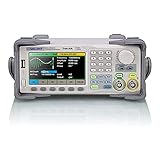
- Dual channel * 40 MHz (Sine wave) * Touch screen display
- 16 bit vertical resolution * Modulation / Sweep / Burst
- TrueArb Technology / Easy Pulse Technology
- Built-in high precision Frequency Counter
- USB / LAN interfaces. Optional GPIB adapter available
How waveform parameters influence products
Frequency sets the timing window
Frequency determines how quickly polarity changes. At low frequency, each half-cycle can last long enough for substantial electrode reactions and follow-up chemistry. At high frequency, the electrode environment changes before slower redox processes can proceed to completion. The useful range is therefore reaction-specific rather than a universal number.
A 2024 review describes frequency-dependent control in amine oxidation. Adjusting the timing can favour a one-electron route associated with arylation instead of a two-electron oxidation route associated with cyanation. The example illustrates a general principle: a waveform can select which redox event has time to occur before the next polarity reversal.
Current or potential sets electron-transfer intensity
Current-controlled operation fixes the electron-flow rate, while potential-controlled operation fixes the driving force at the electrode. Raising either value can accelerate a desired step, but it can also activate competing oxidation, reduction, solvent breakdown or electrode reactions. Comparisons are meaningful only when the control mode, electrode area, cell geometry and charge passed are reported together.
Recommended Free Tools
Duty ratio creates asymmetric oxidation and reduction exposure
A 50:50 square wave gives equal time to both polarities. Changing the duty ratio can provide a longer oxidation phase followed by a brief reduction phase, or the reverse. This is useful when one half-reaction needs more time than the other, or when a short reverse pulse is sufficient to interrupt an unwanted pathway or remove a deposited species.
Waveform shape changes the potential-time history
Square, sine and other programmed shapes do not expose an electrode to the same sequence of potentials. A square wave switches rapidly between set values; a sine wave sweeps continuously; custom asymmetric shapes can include pauses or unequal amplitudes. A 2024 theoretical treatment found that, in an ideal reversible system, square and sine waves can bias selectivity differently. Quasi-reversible reactions can behave differently again, so waveform shape alone cannot reliably predict the product.
Rank #2

- UNI-T Function Arbitrary Waveform Generator UTG962E. Dual channels. Ch1 - Ch2 combining. Output waveform: Sine, square, pulse, ramp, noise, DC, arbitrary. Modulation types: AM, FM, PM, FSK, Line, Log. 24 groups non-volatile arbitrary waveform storage.
- Sampling rate of 200MSa/S. TTL level signal compatible 6 digits high accuracy built-in frequency counter. Frequency counter with output range: 1μHz-60MHz
- Full-band resolution of 1μHz. DDS (direct digital synthesis) method applied. 14 bits vertical resolution. Support frequency scanning and output
- One of the best ready-to-use function generators. Value pack includes: UTG962E function generator, power adapter (USA standard), USB cable power cord, BNC cable, BNC cable with alligator clips, paper manual, eManual
- Budget friendly and intuitive generator for hobbyists, novices, students, small labs, basic projects, ham radio alignment, pro audio measurements. Learn and update skills, work with audio gear, DC offsets, wow & flutter test, amplitudes, receiver test, circuit test, filter troubleshooting, refurbish turntable.
What experiments have demonstrated
Copper-catalysed C–H transformations
The title-matched study used a custom-built device to vary current intensity, frequency and duty cycle in copper-catalysed C–H chemistry. From a common starting-material context, tuned waveforms selected between alkynylation and alkyne difunctionalization. This is a direct demonstration that programmed AC can steer product identity, not merely improve conversion.
The same work identified a catalyst-management benefit. Under DC conditions, copper ions could be reduced and deposit on the counter electrode. Reversing polarity stripped and redissolved deposited copper. In that specific reaction, the amount of deactivated copper catalyst at the end fell from more than 50% to less than 3% under optimised AC conditions. Those figures belong to that catalyst, cell and reaction; they are not a field-wide performance guarantee.
Quick wins for a faster PC:
Clear out junk files and repair common Windows errorsFree Scan →Scan for outdated or missing drivers - takes under a minuteDriver Scan →Repair Windows errors before they cause bigger problemsFix Now →Rapid alternating polarity for carbonyl reductions
A 2021 Journal of the American Chemical Society study used rapid alternating polarity (rAP), a square-wave method that switches electrode polarity on a millisecond timescale while current or potential is held constant. It reported chemoselective carbonyl reductions with outcomes that could not be reproduced using DC electrolysis or chemical reagents. The study also reported implementation of its waveform software in the commercial ElectraSyn 2.0 potentiostat, showing that millisecond switching can be integrated into laboratory instrumentation.
Other reaction classes
A 2024 review catalogued AC-driven organic transformations reported since 2021. Examples include selective amine oxidation; functional-group-tolerant difunctionalization; deuterium labelling; copper and silver catalysis; C–O/C–H and N–S coupling; chemoselective carbonyl and heteroarene reduction; Kolbe coupling; decarboxylative olefination; and methane conversion.
The review describes higher yield, selectivity or both than corresponding DC comparisons in the cited studies. Each result depends on its own substrates, electrolyte, electrodes, solvent, temperature, waveform and work-up. The studies do not establish a single ranking of AC methods across all reaction classes.
Rank #3

- Dual Channel Function Generator: UNI-T UTG932E features dual channels with Ch1-Ch2 combining capability and outputs multiple waveforms including sine, square, pulse, ramp, noise, DC, and arbitrary waveforms
- Advanced Modulation Capabilities: Supports six modulation types including AM, FM, PM, FSK, Line, and Log with 24 groups of non-volatile arbitrary waveform storage
- High Performance Specifications: Features 200MSa/s sampling rate, TTL level signal compatible 6-digit high accuracy built-in frequency counter with output range from 1Hz to 30MHz
- Precision Signal Generation: Utilizes DDS (direct digital synthesis) method with 14 bits vertical resolution and full-band resolution of 1Hz, supports frequency scanning and output
- Complete Package Contents: Includes UTG932E function generator, power adapter (USA standard), USB cable power cord, BNC cable, BNC cable with alligator clips, paper manual, and eManual
Why polarity reversal can improve selectivity
Interrupting a second electron transfer
Suppose an intermediate formed after one electron transfer can either undergo a useful chemical reaction or accept another electron. A polarity reversal can remove the electrode condition needed for that second transfer, giving the chemical route a chance to dominate. The reverse pulse therefore acts as a timed interruption rather than simply a source of opposite current.
Crashes, No Sound, or Screen Glitches?
Random freezes, missing sound and display glitches usually trace back to one bad driver. Find and replace yours safely.Free scan · under a minuteWindows Errors? Fix Them Before They Spread
Repair common Windows errors and clear accumulated junk for a smoother, more stable PC - no reinstall needed.Free scan · no reinstallAllowing chemical steps to catch up
Some intermediates react away from the electrode surface. If electron transfer is repeated too quickly, the intermediate may be over-oxidised or over-reduced before that chemical step occurs. A lower frequency, an off-time or an asymmetric duty ratio can increase the interval available for follow-up chemistry.
Recovering a catalyst from the counter electrode
In metal-mediated electrosynthesis, a catalyst can be reduced to a metallic deposit and removed from solution. A reverse phase can oxidise that deposit back into soluble ions. The copper study demonstrates this mechanism, but whether it works depends on the metal’s redox potentials, the electrode material and the duration and intensity of the reverse pulse.
Changing the local electrode environment
Polarity affects local concentrations of charged intermediates, acid or base equivalents and, in some cells, gas bubbles. Alternation can reduce the time any one species accumulates at an electrode. These effects are coupled to mass transport and cell geometry, so a waveform transferred from a small analytical cell to a larger reactor may not behave the same way.
AC approaches compared
| Approach | Typical control variables | Potential advantage | Important qualification |
|---|---|---|---|
| DC electrolysis | Constant current or potential; fixed polarity | Simpler operation and fewer optimisation variables | Cannot deliberately interrupt or reverse a redox sequence |
| Sine-wave AC | Amplitude, frequency, offset and phase | Continuous potential transition may suit reversible systems | Predicted selectivity differs between reversible and quasi-reversible reactions |
| Square-wave AC | Current or potential, frequency and duty ratio | Sharp, repeatable polarity changes; easy to define asymmetric phases | Switching transients and uncompensated resistance can affect the actual electrode waveform |
| Rapid alternating polarity | Millisecond-scale switching while holding current or potential | Can create chemoselective reductions unavailable under DC in reported work | Requires fast switching electronics, suitable software and careful validation |
| Custom programmed waveform | Multiple amplitudes, durations, ramps, pauses or offsets | Can target a particular sequence of electron-transfer and chemical steps | More degrees of freedom make optimisation and reproduction harder |
How to design a waveform experiment
- Define the competing outcomes. Identify the desired product, the main side product and any catalyst-deactivation pathway. Establish a DC control experiment using the same cell, electrodes, electrolyte, substrate concentration and total charge.
- Choose current or potential control. Use the control mode that keeps the relevant electrochemical variable comparable between runs. Record electrode area, spacing, material and whether the cell is divided or undivided.
- Start with a simple waveform. A 50:50 square wave is easier to interpret than a multi-stage programme. Vary one major factor at a time: frequency, amplitude and then duty ratio. Keep total charge and reaction time visible in the experiment log.
- Screen frequency around the chemistry’s timescale. Include slower cycles that allow chemical follow-up steps and faster cycles that may suppress over-reaction. The useful interval must be measured rather than assumed from another reaction.
- Adjust duty ratio and reverse-pulse strength. If catalyst deposition or over-reduction is observed, test a brief reverse phase. If conversion is low, lengthen the productive polarity or increase its controlled intensity while checking for new side products.
- Measure more than isolated yield. Track conversion, selectivity, faradaic efficiency where available, catalyst remaining in solution, electrode deposits, charge, temperature and electrode appearance. A higher isolated yield can conceal poor selectivity or rapid catalyst loss.
- Confirm the mechanism with controls. Compare DC, AC with the same average current, AC with the same total charge, and a waveform with polarity reversal disabled. These controls distinguish a timing effect from a simple change in delivered energy.
- Report the complete waveform. State shape, amplitude or potential limits, frequency, duty ratio, polarity order, pulse duration, current or potential mode, sampling or switching rate, cell configuration and electrode materials. Without these details, another laboratory cannot reproduce the result.
Instrumentation and practical requirements
Waveform-capable electrochemical equipment must deliver the programmed current or potential accurately through the cell’s resistance and switching transients. The cited rAP work implemented waveform software in an ElectraSyn 2.0 potentiostat; the copper-catalysis study used a custom-built waveform device. These examples show two implementation routes, not a requirement that every AC reaction use one particular instrument.
Rank #4

- 70MHz Dual Channel Arbitrary Waveform Generator:Generate precise signals with dual-channel output, 70MHz frequency range, and 300MSa/s sample rate, perfect for lab and engineering applications.
- High-Resolution 3.6” LCD Display:Enjoy crystal-clear waveform visualization, intuitive menu navigation, and real-time status monitoring, making waveform editing more convenient.
- 150 Built-in Arbitrary Waveforms:Choose from 5 standard waveforms (Sine, Square, Pulse, Ramp, Noise) and 150 built-in waveforms to meet diverse testing needs.
- Supports AM/FM/PM/FSK Modulation & PC Control:Equipped with multiple modulation modes, sweep/burst functions, and remote control via PC software, perfect for advanced experiments.
- Ultra-Thin & Portable Design:Lightweight compact body, quick-access shortcut keys, and easy operation, ideal for on-the-go engineers, students, and lab professionals.
- Potentiostat or galvanostat: verify that it supports polarity reversal at the required frequency and current range.
- Software or hardware timing: confirm that commanded and measured waveforms match, especially for millisecond pulses.
- Cell and electrodes: record electrode composition, surface area, spacing, stirring and whether a separator is present.
- Safety and compatibility: check that switching does not create uncontrolled gas evolution, excessive heating or corrosive transients.
- Data logging: save the actual current, potential and time trace, not only the nominal programme.
A generic household electrolysis device is not equivalent to research instrumentation: it normally lacks controlled waveform generation, analytical measurement and the documentation needed to attribute a product change to frequency or duty ratio.
Independent reader supportYour contribution helps us test, update, and keep practical guides available for everyone.Limits, failure modes and troubleshooting
The waveform works only in one reaction
Redox reversibility, follow-up chemical rates and mass transport differ between substrates. A setting that favours arylation in one amine oxidation may promote over-oxidation in another. Treat every transfer as a new optimisation rather than a plug-in recipe.
Average current hides the important difference
Two programmes can have the same average current but different peak currents, polarity durations and total charge. Compare the full time trace and charge balance. Otherwise a selectivity claim may actually reflect a change in current density or reaction time.
Polarity reversal does not restore the catalyst
If deposits become compact, alloyed or chemically passivated, a short reverse pulse may not redissolve them. Inspect both electrodes, analyse metal content in solution and test the reverse phase separately before attributing catalyst recovery to the waveform.
Scaling changes mass transport
Larger cells alter resistance, mixing, bubble removal and electrode-to-volume ratio. A frequency that works in a small vial can produce a different local environment in a preparative reactor. Scale-up requires re-measuring the delivered waveform and re-optimising the cell, not merely multiplying current.
Best Value

- Arbitrary Waveform Generator adopts large scale FPGA integrated circuit and high-speed MCU microprocessor. The internal circuit adopts the active crystal oscillator as the benchmark. So the signal stability is greatly strengthened.
- Using Dual-channel DDS signal and TTL electric level output to generate precise, stable, low distortion output signal. includes Sine wave, Square wave, Triangle wave, Saw toothwave, Pulse wave, white noise, user-defined waveform etc. each channel can be independently set the parameters.
- With linear sweep(Max. up to 999.9s) and logarithmic frequency sweep functions.Has a frequency measurement, period measurement, positive and negative pulse width measurement and counting function.
- Storage feature: You can store 99 groups instrument state parameters set by the user, can be called up to Reproduce.The frequency output of Sine wave can be up to 15MHz. 200MSa/s sampling rate. It has 60 positions for saving user-defined waveform. Waveform Length of each one is 2048 and vertical resolution is 14 bits
- This Signal Generator is the ideal instrument for electronic engineering, laboratories, production lines, teaching and scientific research.
Apparent selectivity comes from uncontrolled variables
Temperature rise, electrode fouling, pH drift, solvent composition and changing gas coverage can all accompany a waveform change. Keep these variables constant where possible and include repeated runs. Report uncertainty instead of presenting a single best result as a universal value.
What is established—and what is not
The evidence supports AC waveform control as a reaction-specific strategy for changing electrochemical outcomes. Demonstrated effects include product selection in copper-catalysed C–H chemistry, chemoselective carbonyl reduction with rapid alternating polarity, selective amine-oxidation pathways and improved catalyst retention in a specific copper reaction.
There is no established universal model that predicts the best waveform for an arbitrary substrate. The cited reviews and theoretical work also do not establish broad industrial adoption, general scale-up economics or a field-wide performance statistic. Claims about commercial readiness should therefore be separated from the laboratory demonstrations.
Free tools Windows power users keep installed
One-click scans. No signup required.
As University of Queensland organic electrochemist David Cantillo put it, “AC electrolysis can enable transformations that perform poorly under DC and adoption of this technology will significantly grow as additional research on the effect of the AC parameters on the reactivity at the molecular level is conducted.” University of Utah electrochemist Long Luo described the practical challenge this way: “These parameters all control the waveform, which you can play around with until you get the best fit to your reaction.”
For researchers, the practical conclusion is to treat frequency, current or potential, duty ratio and waveform shape as mechanistic variables. Use matched DC controls, record the actual waveform, measure catalyst stability and optimise the complete electrochemical system rather than assuming that AC itself guarantees higher yield or selectivity.
Quick Recap
Product prices and availability are accurate as of the date/time indicated and are subject to change. Any price and availability information displayed on Amazon at the time of purchase will apply.

